Important Tribes in India [UPSC Notes]
Tribes are indigenous communities with distinct cultures and traditions. Learn important tribes in India with crisp UPSC notes for Prelims, Mains, GS-I & Anthropology optional.
Dec, 2025
•5 min read
India’s tribal communities are the living heritage of the nation, shaped by centuries of tradition and a deep connection with nature. From the Santhals and Gonds to the Nagas and Todas, each tribe adds to India’s rich cultural diversity. Recognised as Scheduled Tribes (STs), they preserve valuable traditional knowledge while also highlighting the challenges of inclusive growth and development in modern India.
Tribes in India are a highly important topic for UPSC Prelims and GS Paper II & III of Mains. Let’s learn about Tribes in India in detail!
What is a Tribe?
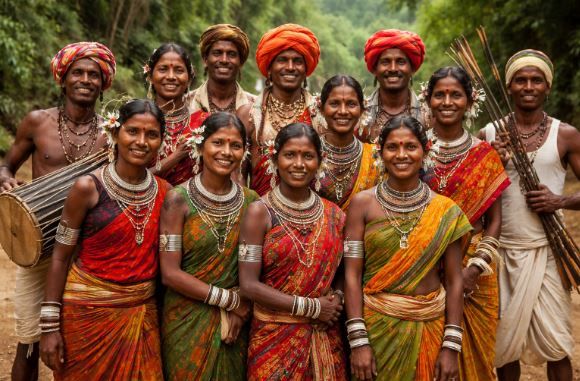
A Tribe is a group of people who share a common origin, culture, language, and traditions, and usually live together in one area with a strong sense of belonging.
Tribes that are officially recognised as socially and economically backwards under Article 342 of the Indian Constitution are called Scheduled Tribes. They are provided special protection and benefits by the government.
- Article 342 grants the President the power to specify tribes/tribal communities as Scheduled Tribes in relation to any state/UT, with consultation from the Governor.
- Article 342(2) grants Parliament the sole authority to include or exclude tribes from the Scheduled Tribes list through the legislative process.
- The Scheduled Tribe population in India is about 10.42 crore, which accounts for 8.6% of the country’s total population according to the Census 2011.
- There are over 705 different Scheduled Tribes in India that are officially recognised under Article 342 of the Constitution.
- Top 5 States by Tribal Population:
- Madhya Pradesh
- Maharashtra
- Odisha
- Rajasthan
- Jharkhand
- 75 tribal groups in India are identified as Particularly Vulnerable Tribal Groups (PVTGs) because they are the most vulnerable.
Constitutional Provisions for Scheduled Tribes in India
The Indian Constitution provides strong legal support to protect, support, and improve the lives of Scheduled Tribes, including special safeguards and reservations.
| Article | Key Details |
|---|---|
| Article 342 | The President may specify tribes/tribal communities as STs after consulting the Governor of the respective States/UTs. |
| Article 16(4) | The state can reserve appointments/posts for backward classes not adequately represented in services. |
| Article 46 | State to promote educational and economic interests of weaker sections, especially SCs/STs, and protect them from social injustice. |
| Article 335 | Claims of ST members are considered in appointments to services, maintaining administrative efficiency. |
| Article 330 | Reserved seats for STs in the Lok Sabha based on population proportion. |
| Article 332 | Reserved seats for STs in State Assemblies |
| Article 334 | Reservations continue for extended periods (initially 10 years, extended multiple times). |
| Schedule V | Special provisions for the administration of the Scheduled Areas and tribal welfare. |
| Schedule VI | Special provisions for tribal areas in Assam, Meghalaya, Mizoram, and Tripura |
| Article 275(1) | Grants to States with Scheduled Areas for welfare schemes |
Also read: Judicial Review in India: Meaning, Scope & Provisions [UPSC]
Important Committees on Tribal Communities of India
The Government of India has set up several commissions and committees to study tribal issues and suggest policies and development measures for Scheduled Tribes.
| Committee Name | Year | Key Focus Areas |
|---|---|---|
| Dhebar Commission | 1960-61 | Functioning of Tribal Advisory Councils, Scheduled Areas administration, tribal development principles, land and forest rights recognition. |
| Bhuria Committee | 1994 | Self-governance of tribes, Panchayati Raj extension in Scheduled Areas, tribal women's status, forest and land issues. |
| Bhuria Commission | 2002-04 | Fifth Schedule implementation effectiveness, tribal land and forests, health and education access, and Panchayat functioning in tribal areas. |
| Mungekar Committee | 2005 | Administration and governance issues in tribal areas; development strategies. |
| Bandopadhyay Committee | 2006 | Development and governance in Left-Wing Extremist (LWE) affected areas with significant tribal populations. |
| Xaxa Committee | 2013-14 | Comprehensive socio-economic, educational and health status of tribal communities; interventional measures for improvement; contemporary challenges. |
Also read: Indian Judiciary UPSC Notes: History, Structure of Courts and Functions
Major Tribal Groups in India
India has many tribal communities, each with its own culture, language, and traditions, and they mainly live in specific regions where certain tribes are more common.
1. Bhil Tribe
- Primary Regions: Gujarat, Madhya Pradesh, Rajasthan, Chhattisgarh, Maharashtra
- Sub-tribes: Bhil Garasia, Tadvi Bhil, Dungri Bhil, Mewasi Bhil, Rawal Bhil, Bhagalia, Bhilala, Pawra, Vasava, Vasave.
- Historical Significance: Known for exceptional archery skills and resistance against British rule; associated with historical leaders like Maharani Ahilyabai Holkar.
- Cultural Features: Traditional agricultural practices, Ghoomar dance tradition.
2. Gond
- Primary Regions: Madhya Pradesh, Chhattisgarh, Maharashtra, Odisha, and Andhra Pradesh.
- Sub-tribes: Dhurwas, Ojhas, Maria Gond, Raj-Gond with hierarchical organisation.
- Historical Significance: Ruled the Gondwana Kingdom,
- Cultural Features: Famous for Gond paintings (a contemporary tribal art form), music, and dance traditions.
3. Santhal
- Primary Regions: Jharkhand, West Bengal, Assam, Odisha, Bihar
- Sub-tribes: Not formally classified into sub-tribes but identified by regional distribution.
- Historical Significance: The Santhal Parganas of Jharkhand became a primary settlement centre.
- Cultural Features: Baha Dance, Soor Diul Festival
4. Mundas
- Primary Regions: Jharkhand, Chhattisgarh, West Bengal, and Bihar
- Sub-tribes: Munda, Kharia (related group)
- Historical Significance: Munda Rebellion (1899-1900) led by Birsa Munda
- Cultural Features: agriculture, hunting, and the collection of forest products
5. Oraons
- Primary Regions: Jharkhand, Chhattisgarh, West Bengal, Odisha
- Sub-tribes: Dhangar (Oraon), Dhangad, Dhanka
- Historical Significance: Oraon Rebellion (1899-1900) against British exploitation and land policies.
- Cultural Features: Totemic clan system, Agriculture-based economy
6. Ho Tribe
- Primary Regions: Jharkhand
- Sub-tribes: Various settlement-based divisions called "Pir"
- Cultural Features: Sohrai, Jom, Durga Puja, Vishwakarma festivals
7. Baiga Tribe
- Primary Regions: Madhya Pradesh, Chhattisgarh, smaller populations in Uttar Pradesh, West Bengal, Jharkhand, Bihar, Odisha, Maharashtra
- Sub-tribes: Bijhwar, Narotia, Bharotiya, Nahar, Rai Maina, Kath Maina
- Historical Significance: Historical resistance to land appropriation and forest restrictions
- Cultural Features: Shifting Cultivation (Bewar/Dahiya), Live-in relationships common, reverse dowry system (man compensates bride's family).
8. Tharu Tribe
- Primary Regions: Uttarakhand, Uttar Pradesh, Nepal
- Sub-tribes: Rana Tharu (largest), other Tharu groups in the plains
- Historical Significance: Rajput migration from the Thar Desert after Maharana Pratap's defeat (16th century), though scholars dispute this.
- Cultural Features: Major Festivals like Maghi (Makar Sankranti), Jitiya(Women's fasting festival for child welfare).
Other Major Scheduled Tribal Groups:
- Khasi Tribe(Meghalaya): Known for a unique matrilineal society where women inherit property and maintain family names.
- Garo Tribe (Meghalaya): Renowned for traditional weaving and handicrafts; also the matrilineal system
- Chakma Tribe (Tripura, Mizoram): Buddhist community with distinct cultural practices and traditional crafts.
- Meitei Tribe (Manipur): Traditional rulers with a unique governance history
- Miao Tribe (Mizoram): Highland community with traditional agricultural practices
- Karbi Tribe (Assam): Known for agricultural practices and cultural traditions
Difference Between PVTGs and the Denotified tribe
India has different categories of vulnerable communities, among which the Particularly Vulnerable Tribal Groups (PVTGs) and Denotified Tribes (DNTs) are distinct groups identified based on different historical and socio-economic conditions.
| Basis | PVTGs | Denotified Tribes (DNTs) |
|---|---|---|
| Meaning | The most vulnerable section among the Scheduled Tribes. | Communities once labelled as “criminal tribes” during British rule. |
| Legal status | Sub-category of Scheduled Tribes | Not necessarily Scheduled Tribes |
| Identification | Identified by the Government of India | Denotified after the Criminal Tribes Act was repealed in 1952 |
| Key features | Low population, low literacy, pre-agricultural economy. | Social stigma, exclusion, and lack of official recognition. |
| Main issue | Developmental backwardness | Historical discrimination and social marginalisation |
Also read: Article 32 of the Indian Constitution: Right to Constitutional Remedies | UPSC Notes
Difference Between SC and ST
Both Scheduled Castes (SCs) and Scheduled Tribes (STs) receive constitutional protection and reservation benefits, but they differ in their origins, social systems, and the reasons for their historical disadvantage. Let’s understand!
| Scheduled Castes (SC) | Scheduled Tribes (ST) |
|---|---|
| Article 341: The President notifies SCs for each state/UT after consultation with the Governor. | Article 342: The President notifies STs for each state/UT after consultation with the Governor. |
| Article 338: National Commission for Scheduled Castes (NCSC) | Article 338A: National Commission for Scheduled Tribes (NCST) [established via 89th Amendment, 2003] |
| Extreme social, educational, and economic backwardness arising specifically from the traditional practice of untouchability within the Hindu caste system. | Primitive traits, distinctive culture, geographical isolation, shyness of contact with the larger community, and overall backwardness. |
| 16.6% of total population | 8.6% of total population |
Also read: Constitutionalism in India | UPSC Polity Concepts
Contributions of Tribal Communities in India
Tribal communities have made significant contributions to India’s freedom struggle, culture, environmental protection, and nation-building, yet their role is often overlooked in mainstream history.
Freedom Struggle Contributions
1. Birsa Munda Movement (1899-1900)
- Led the Munda Rebellion in Chotanagpur against oppressive British land policies and aggressive Christian missionary activities.
- The first organised tribal armed resistance against British colonialism.
- Challenged oppressive Khuntkatti land modifications.
- Birth anniversary (November 15) now celebrated as Janjatiya Gaurav Divas (Tribal Pride Day) across India
2. Santhal Rebellion (1855-1856)
- Led by Siddho and Kanho, tribal brothers from the Jharkhand region.
- Uprising against oppressive British taxation, land seizure, and exploitation by British officials and local zamindars (feudal lords).
3. Historic Tribal Rulers
- Rani Durgavati: Gond ruler who bravely fought Mughal expansion and is remembered as a warrior queen defending tribal independence.
- Rani Kamalapati: Gond queen who resisted outside control and protected tribal rule and traditions.
- Bhil Support to Maharana Pratap: The Bhil tribes provided key military and logistical assistance to Maharana Pratap, employing guerrilla tactics against the Mughals.
Cultural Contributions
- Traditional Knowledge System: Possesses extensive knowledge of medicinal plants and their therapeutic properties.
- Warli Painting: Geometric tribal art form from Maharashtra; now internationally recognised and protected as cultural heritage
- Gond Art: Intricate tribal paintings from Central India; contemporary artists gaining international recognition
- Tribal Textiles: Handwoven fabrics with distinctive patterns; gaining market recognition through TRIFED (Tribal Cooperative Marketing Development Federation).
Contemporary Contributions
- Biodiversity Conservation: Tribes help protect wildlife and forests using traditional ecological knowledge.
- Sustainable Livelihoods: Practice eco-friendly farming and forest use with minimal waste.
- Democratic Participation: A growing role in local governance and legislatures shaping tribal policies.
- Cultural Tourism: Tribal arts and crafts boost income and preserve culture, supported by TRIFED.
Also read: Birsa Munda Jayanti 2025: 150th Birth Anniversary of Bhagwan Birsa Munda
Government Initiatives for Tribal Welfare
The Indian government has implemented comprehensive schemes and programs for the socio-economic development, welfare, and empowerment of tribal communities.
1. Pradhan Mantri Janjati Adivasi Nyaya Maha Abhiyan (PM-JANMAN)
- Objective: Targeted development of Particularly Vulnerable Tribal Groups (PVTGs), the most disadvantaged tribal communities.
- Healthcare Infrastructure: 275 mobile medical units operationalised and 500 Anganwadi centres established to improve maternal and child health services.
- Electrification: Over 75,800 PVTG households electrified to improve living standards and enable digital inclusion
- Water & Sanitation: More than 5,550 PVTG villages connected under the "Nal se Jal" (tap-to-home) water supply scheme to eliminate drinking water scarcity.
2. Dharti Aaba Janjatiya Gram Utkarsh Abhiyan (DA-JGUA)
- Objective: Comprehensive village-level infrastructure and livelihood development across tribal-dominated regions.
- Scale & Coverage: Launched October 2, 2024, covering 63,000 tribal villages benefiting over 5 crore tribal people across 549 districts, 2,740 blocks, and 30 states/UTs.
- Multi-Ministry Framework: Integrates 25 coordinated interventions across 17 central ministries, including road connectivity, water and sanitation, education, and health.
- Infrastructure Components: Focus on basic amenities—schools, health centres, roads, and drinking water facilities—addressing critical service gaps in remote tribal villages.
3. Eklavya Model Residential Schools (EMRS)
- Objective: Provide quality secondary and senior secondary education comparable to Navodaya Vidyalayas, specifically for tribal children in geographically isolated areas.
- Target Group: Students from Class VI to XII, mainly from the Scheduled Tribes.
- Student Capacity: Each EMRS accommodates 480 students.
- Recent Government Initiative: The Prime Minister inaugurated 40 EMRS and laid the foundation stone for 25 new EMRS, with a total investment of over ₹2,800 crore.
4. Education Scholarship and Support Schemes
- Objective: Remove financial barriers to education and increase tribal student enrollment and retention across all educational levels.
- Pre-Matric Scholarships: Provide financial assistance for students in Class I-X to reduce dropouts due to poverty
- Post-Matric Scholarships: Support tribal students pursuing higher secondary, graduate, and postgraduate studies with flexible disbursement mechanisms
5. Particularly Vulnerable Tribal Groups (PVTGs) Development Programme
- Objective: Comprehensive, culturally-sensitive development addressing the most marginalised tribal populations through multi-dimensional interventions.
- Coverage: Benefits 7 lakh families across 22,000 habitations in 200 districts with tailored development plans respecting cultural heritage.
UPSC Prelims PYQ on Important Tribes in India
QUESTION 1
Q1. Consider the following statements about Particularly Vulnerable Tribal Groups (PVTGs) in India:
- PVTGs reside in 18 States and one Union Territory.
- A stagnant or declining population is one of the criteria for determining PVTG status.
- There are 95 PVTGs officially notified in the country.
- Irular and Konda Reddi tribes are included in the list of PVTGs.
Which of the statements given above are correct?
Challenges Faced by Tribal Communities
Despite constitutional safeguards and government schemes, many tribal communities in India still face social, economic, educational, and health challenges that slow their overall development.
- Poverty and Livelihood Insecurity: Many tribal communities depend on forests and agriculture for survival, but limited resources, low income, and lack of alternative jobs keep them trapped in poverty.
- Land Alienation and Displacement: Tribes often lose their traditional land due to mining, dams, industries, and development projects, leading to displacement and loss of livelihood.
- Low Access to Quality Education: Remote locations, poor school infrastructure, language barriers, and high dropout rates limit educational attainment among tribal children.
- Health and Nutrition Issues: Tribal areas face inadequate healthcare facilities, high malnutrition, anaemia, and the prevalence of diseases due to poverty and poor access to services.
- Social Exclusion and Discrimination: Tribal communities often experience social marginalisation, exploitation, and a lack of integration with mainstream society.
- Lack of Infrastructure and Connectivity: Poor roads, electricity, digital access, and communication facilities isolate tribal regions and slow development.
UPSC Mains Previous Year Question Practice
Given the diversity among the tribal communities in India, in which specific contexts should they be considered as a single category? (2022)
Evaluate Your Answer Now!Way Forward
Strong policies, better institutions, active community participation, and sustainable development together can help solve tribal problems while protecting their culture and identity.
- Implement the Forest Rights Act, 2006, comprehensively with community forest resource rights.
- Expand Eklavya Model Residential Schools with quality infrastructure and culturally sensitive curriculum.
- Establish well-equipped primary health centres with ambulance services.
- Establish market linkages for tribal products (NTFP, handicrafts, agricultural products).
Unlock your UPSC Success with SuperKalam
Get instant doubt clearance, customised study plans, unlimited MCQ practice, and fast Mains answer feedback.
Join thousands of aspirants learning with India’s AI-powered mentor today!