Analyse & practice 14 years of PYQs to crack UPSCPractice Now

UPSC Prelims 2022 Analysis

Subject-Wise Weightage

  • Environment & Ecology (18 questions): The highest representation, emphasizing topics like biodiversity, climate change, and maps for environmental hotspots.
  • Economy (16 questions): Focused on fiscal policies, budget trends, and government schemes.
  • Science & Technology (15 questions): Covered emerging technologies, space missions, and their applications.
  • Indian Polity (12 questions): Standard focus on constitutional principles, assertion-based questions, and governance issues.
  • Other Notable Areas: International Relations (11), Art & Culture (7), and Geography (10 combined), with many match the following type questions.
Subject-Wise Weightage
Subject-Wise Weightage in UPSC Prelims 2022

Difficulty Analysis

  • Easy (25 questions): Covered fundamental NCERT concepts and basic factual recall.
  • Medium (48 questions): Required analytical abilities, conceptual clarity, and deeper reasoning.
  • Hard (27 questions): Tested multi-dimensional application and assertion-reasoning skills.
Difficulty Distribution
Difficulty Distribution in UPSC Prelims 2022

Variations in Question Framing

  • Multi-Statement (72 questions): Most questions were assertion-reason or "how many of the above are correct?" formats.
  • Direct (28 questions): Fact-based, often sourced from NCERT and standard books.
  • Match the Following: Commonly seen in Geography, Environment, and Economy questions.
Question Variations
Question Variations in UPSC Prelims 2022

Key Learnings for Future Preparation

  • Leverage Easy Questions (25): Build a strong NCERT foundation to secure these marks.
  • Prepare for Medium-Difficulty Questions (48): Strengthen analytical abilities to handle the majority of the paper effectively.
  • Strategize for Hard Questions (27): Tackle assertion-based and multi-concept questions using elimination techniques.
  • Practice Multi-Statement Questions: Since they dominate the paper, mastering them is essential.
  • Focus on High-Weightage Subjects: Prioritize Environment, Economy, and Science, given their significant share in the exam.
  • Stay Updated with Current Affairs: Particularly for Economy (budget, fiscal policies), Environment, and International Relations, integrate recent developments into your preparation.
The UPSC Prelims 2022 exam balanced factual recall with analytical reasoning, focusing on Environment, Economy, and Science & Technology. It included, multi-statement questions, and interlinking static and current affairs. Strong preparation in these subjects, alongside map skills and staying updated on global developments, is essential for success

QUESTION 1

GS

Medium

Environment & Ecology

Prelims 2022

In the context of WHO Air Quality Guidelines, consider the following statements:

  1. The 24-hour mean of PM2.5 should not exceed 15 ug/m³ and annual mean of PM2.5 should not exceed 5 ug/m³.
  2. In a year, the highest levels of ozone pollution occur during the periods of inclement weather.
  3. PM10 can penetrate the lung barrier and enter the bloodstream.
  4. Excessive ozone in the air can trigger asthma.

Which of the statements given above are correct?

A. 1, 3 and 4

B. 1 and 4 only

C. 2, 3 and 4

D. 1 and 2 only

Explanation

Statement 1 is correct. The WHO recommends that the 24-hour mean of PM2.5 should not exceed 15 ug/m³ and the annual mean should not exceed 5 ug/m³. These are the current most stringent guidelines set by WHO to protect public health.

Statement 2 is incorrect. Ozone pollution typically peaks during sunny and stagnant weather conditions, not during inclement weather like rain or storms.

Statement 3 is incorrect. While PM10 (≤ PM10) particles can enter the deep lungs and cause respiratory issues, it's the much finer PM2.5 (≤ PM2.5) particles and ultrafine particles that effectively penetrate the lung barrier (alveoli) to enter the bloodstream, affecting the heart, brain, and other organs. PM10 typically deposits in larger airways, whereas PM2.5's tiny size allows it to cross into the circulatory system, making it more dangerous. 

Statement 4 is correct. Excessive ozone exposure can trigger asthma attacks and worsen respiratory problems. Ozone irritates the respiratory tract, making it harder to breathe.


QUESTION 2

GS

Hard

Environment & Ecology

Prelims 2022

Consider the following pairs:

Wetland/Lake - Location

  1. Hokera Wetland - Punjab
  2. Renuka Wetland - Himachal Pradesh
  3. Rudrasagar Lake - Tripura
  4. Sasthamkotta Lake - Tamil Nadu

How many pairs given above are correctly matched ?

A. Only one pair

B. Only two pairs

C. Only three pairs

D. All four pairs

Explanation

The correctly matched pairs are:

  • Pair 2: Renuka Wetland - Himachal Pradesh. Located in the Sirmaur district, it is a natural wetland with freshwater springs and inland subterranean karst formations.
  • Pair 3: Rudrasagar Lake - Tripura. It is a lowland sedimentation reservoir in the northeast hills, fed by three perennial streams discharging into the River Gomti.

The incorrectly matched pairs are:

  • Pair 1: Hokera Wetland. It is located in Jammu & Kashmir (near Srinagar), not Punjab. It is a natural perennial wetland contiguous to the Jhelum basin.
  • Pair 4: Sasthamkotta Lake. It is the largest freshwater lake in Kerala, not Tamil Nadu. It is located in the Kollam district.

Since only two pairs (2 and 3) are correctly matched, the correct option is B.


QUESTION 3

GS

Easy

Environment & Ecology

Prelims 2022

The "Miyawaki method" is well known for the:

A. Promotion of commercial farming in arid and semi-arid areas

B. Development of gardens using genetically modified flora

C. Creation of mini forests in urban areas

D. Harvesting wind energy on coastal areas and on sea surfaces
Explanation

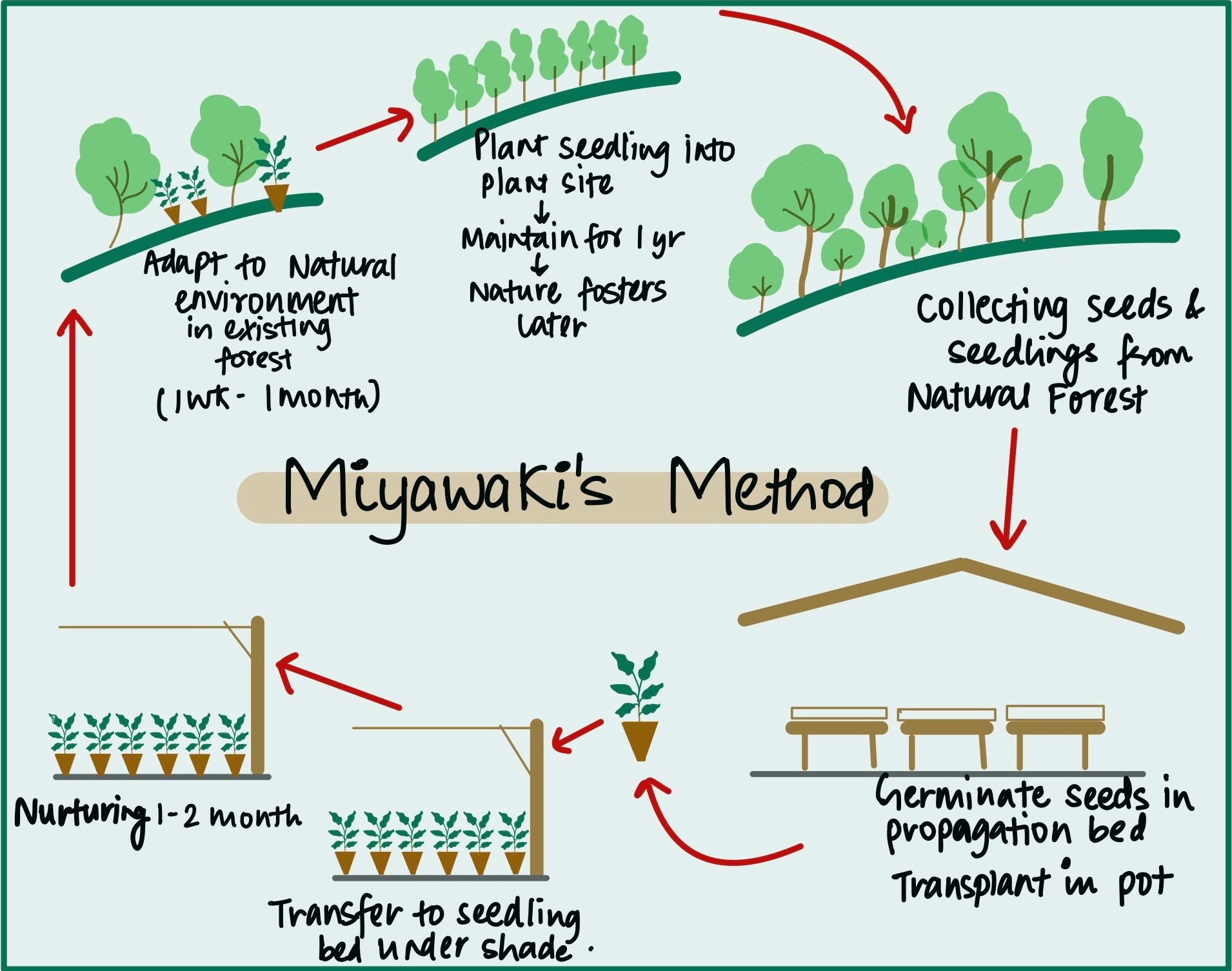
Urban Forests use the Miyawaki method to create urban forests. Miyawaki urban forests are fascinating complex ecosystems, in balance with today's soil and climate conditions. This technique works worldwide irrespective of soil and climatic conditions.

Miyawaki Method

Miyawaki Method

Over 2000 forests were successfully created using this method.

Doctor Akira Miyawaki, botanist and professor, is the inventor of the technique since 1980. He is a recipient of the 2006 Blue Planet Prize, which is the equivalent of a Nobel Prize in ecology.


QUESTION 4

GS

Easy

Environment & Ecology

Prelims 2022

Which of the following is not a bird?

A. Golden Mahseer

B. Indian Nightjar

C. Spoonbill

D. White Ibis

Explanation

The Golden Mahseer (Tor putitora) is a species of large freshwater fish, not a bird. Often referred to as the 'Tiger of the Water', it is native to the Himalayan region and inhabits the rapid streams and rivers of the Indus, Ganga, and Brahmaputra basins. It is recognized by its large golden scales and is currently listed as Endangered on the IUCN Red List. The other options—Indian Nightjar, Spoonbill, and White Ibis—are all avian species found in various habitats across India.


QUESTION 5

GS

Easy

Environment & Ecology

Prelims 2022

Among the following crops, which one is the most important anthropogenic source of both methane and nitrous oxide?

A. Cotton

B. Rice

C. Sugarcane

D. Wheat

Explanation

Methane and nitrous oxide emissions from rice farms could have the same long-term warming impact as about 600 coal plants.

Rice cultivation emits methane and nitrous oxide due to flooded fields and nitrogen-based fertilizers. Flooding creates anaerobic conditions, producing methane released through rice plants. Fertilizers poorly absorbed by rice lead to soil microbes converting nitrogen into nitrous oxide.


QUESTION 6

GS

Easy

Environment & Ecology

Prelims 2022

Consider the following;

  1. Carbon monoxide
  2. Nitrogen oxide
  3. Ozone
  4. Sulphur dioxide

Excess of which of the above in the environment is/are the cause(s) of acid rain?

A. 1,2 and 3

B. 2 and 4 only

C. 4 only

D. 1,3 and 4
Explanation

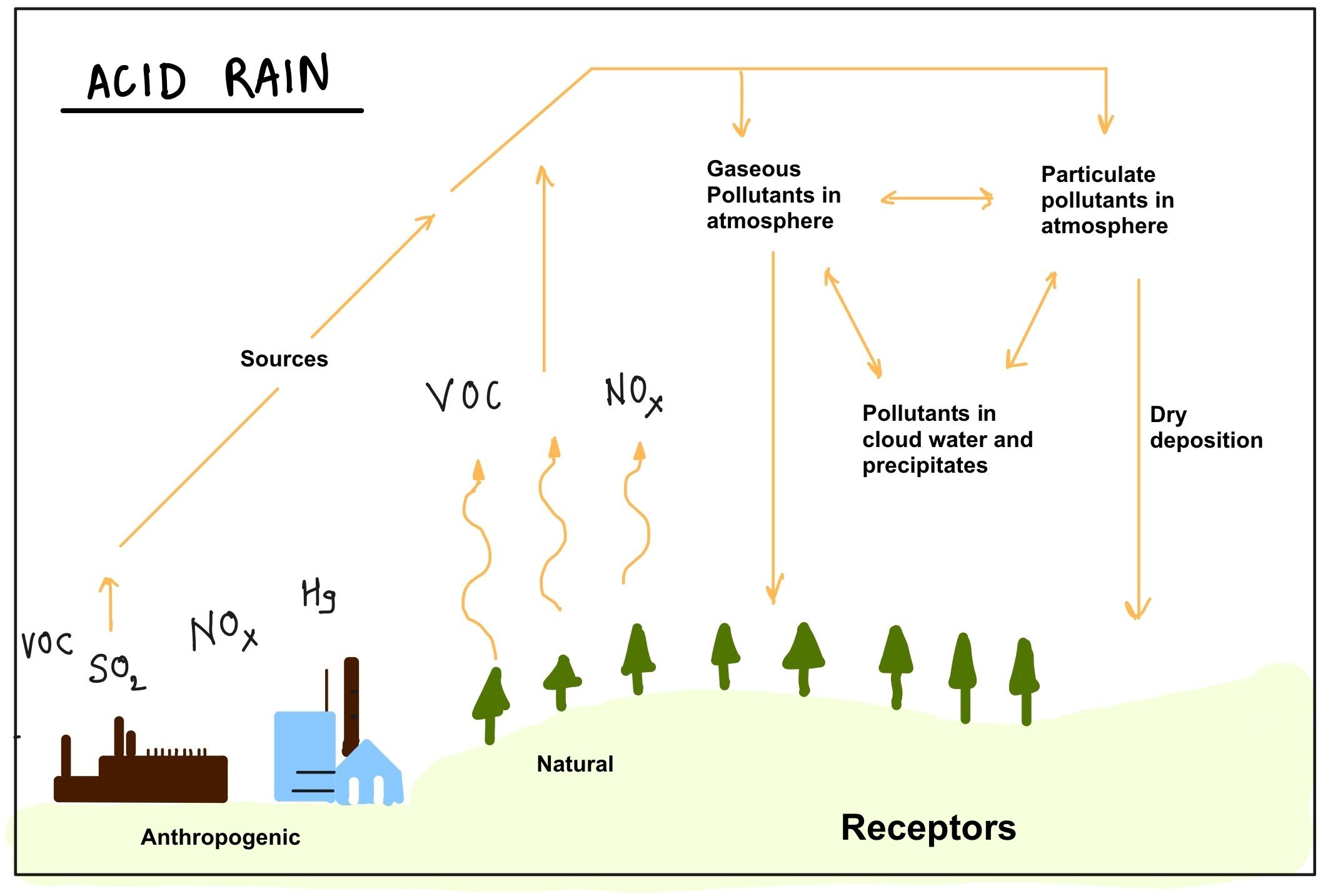
Acid rain is primarily caused by the excess presence of nitrogen oxide and sulphur dioxide in the environment.

  • Carbon monoxide is not a direct cause of acid rain. It is a pollutant that contributes to the formation of ground-level ozone, but it does not lead to the production of acid rain.

  • Nitrogen oxides, which include nitric oxide and nitrogen dioxide, are major contributors to acid rain. When these gases react with water, oxygen, and other substances in the atmosphere, they form nitric acid, a key component of acid rain.

  • Ozone is not a direct cause of acid rain. While ozone can have negative environmental impacts, it is not a precursor to the formation of acid rain.

  • Sulphur dioxide is another primary contributor to acid rain. When Sulphur dioxide combines with water, oxygen, and other substances in the atmosphere, it forms sulphuric acid, which is also a major component of acid rain.

Acid Rain

Acid Rain


QUESTION 7

GS

Hard

Environment & Ecology

Prelims 2022

Which of the following are nitrogen-fixing plants?

  1. Alfalfa
  2. Amaranth
  3. Chickpea
  4. Clover
  5. Purslane (Kulfa)
  6. Spinach

Select the correct answer using the code given below:

A. 1, 3 and 4 only

B. 1, 3, 5 and 6 only

C. 2, 4, 5 and 6 only

D. 1, 2, 4, 5 and 6
Explanation

Out of the listed plants, the following are nitrogen-fixing plants:

  1. Alfalfa
  2. Chickpea
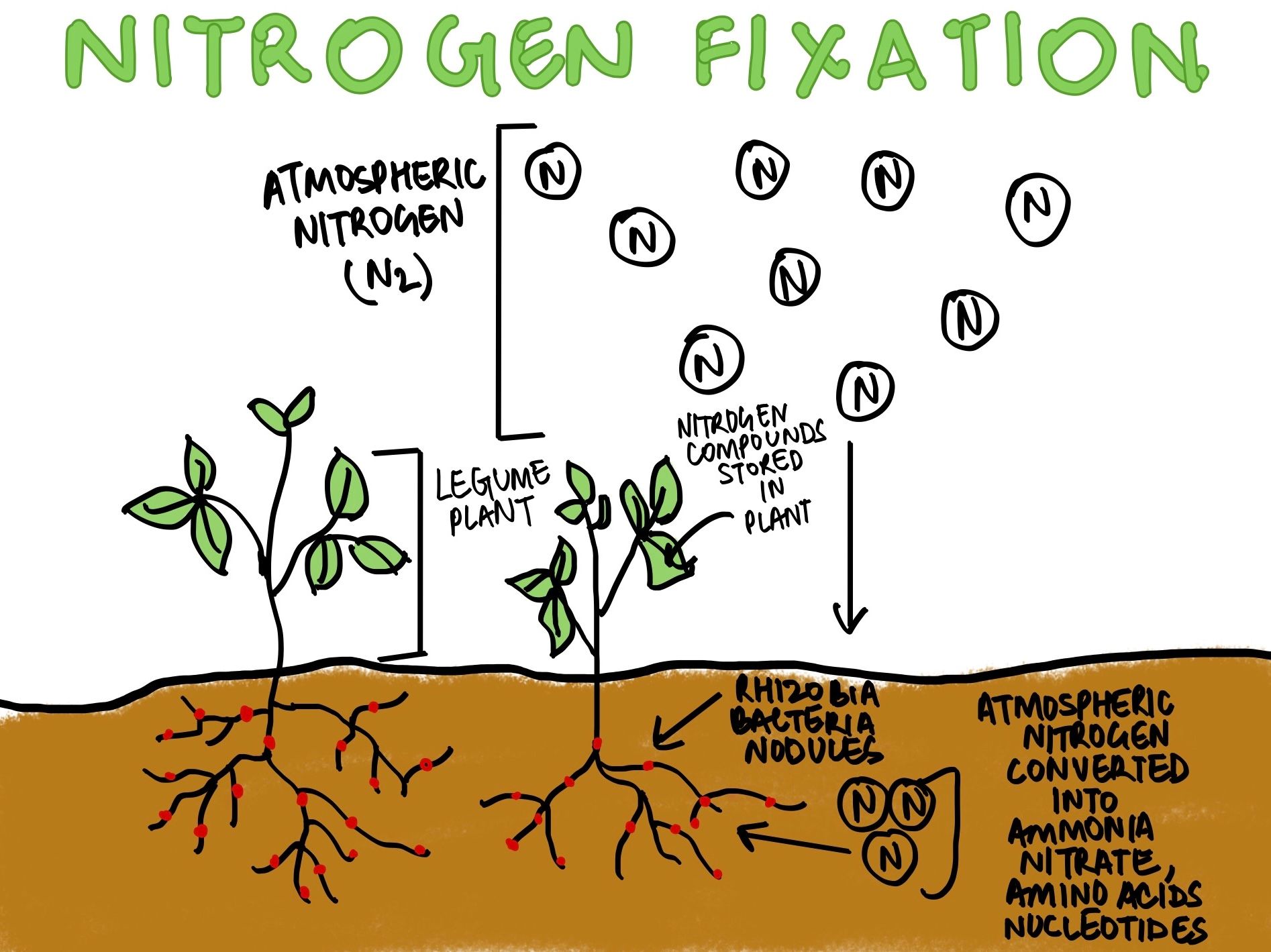
  3. Clover These plants have a symbiotic relationship with bacteria called rhizobia. The bacteria colonize nodules in the plant's roots and fix atmospheric nitrogen into a usable form (nitrates) that the plant can absorb.
Nitrogen Fixation

Nitrogen Fixation

The other options are not nitrogen-fixing plants: 2. Amaranth 5. Purslane (Kulfa) 6. Spinach These plants require nitrogen from the soil but cannot fix it themselves. They rely on soil nitrogen content or applied fertilizers. Remember: Purslane is a weed. If you would have known this piece of information, the question could have been easily solved by simple elimination.

Therefore, the correct answer is (1, 3, 4).


QUESTION 8

GS

Hard

Environment & Ecology

Prelims 2022

Which one of the following lakes of West Africa has become dry and turned into a desert?

A. Lake Victoria

B. Lake Faguibine

C. Lake Oguta

D. Lake Volta
Explanation

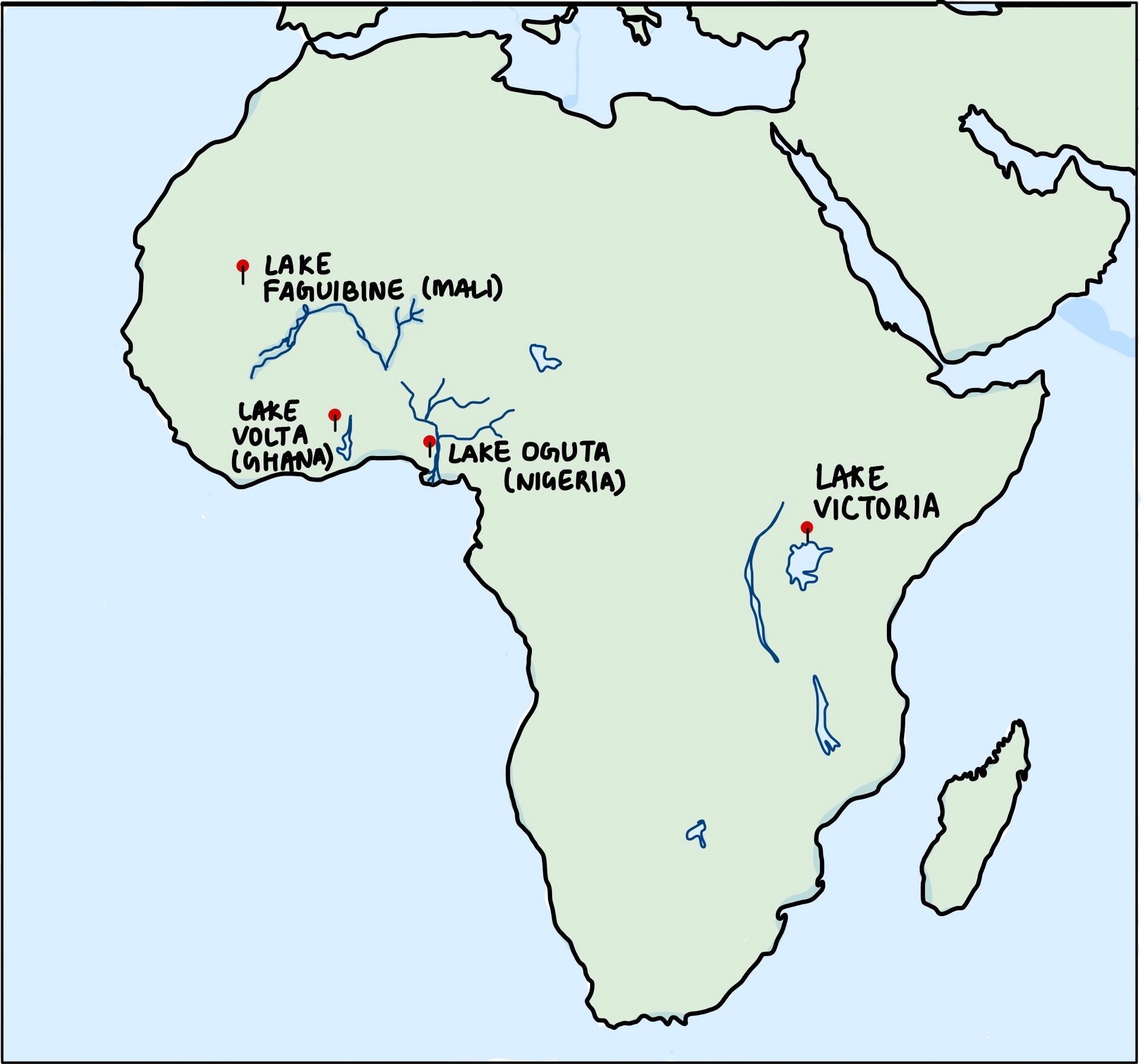
Lake Faguibine in Mali is a prime example of increasing aridity . Here's how it changed over the years, as seen through false-color Landsat satellite images

  • Initially, it was one of the largest lakes in West Africa, fed by the Niger River during floods.
  • In 1974, it spanned approximately 590 square kilometers (230 square miles).
  • A decline in precipitation from the late 1980s led to its gradual drying.
  • By the late 1990s, traditional livelihoods like fishing , agriculture , and livestock herding became impractical.
  • Despite the resumption of normal rainfall after 2000, the lake has remained nearly dry.

Lake Victoria is the largest lake in Africa and remains filled with water. Lake Oguta is located in Nigeria and is still a freshwater lake. Lake Volta is one of the largest artificial lake by surface area in the world and remains filled with water from the Volta River.

Lakes of West Africa

Lakes of West Africa


QUESTION 9

GS

Medium

Environment & Ecology

Prelims 2022

With reference to Indian laws about wildlife protection, consider the following statements:

  1. Wild animals are the sole property of the government.
  2. When a wild animal is declared protected, such animal is entitled for equal protection whether it is found in protected areas or outside.
  3. Apprehension of a protected wild animal becoming a danger to human life is sufficient ground for its capture or killing.

Which of the statements given above is/are correct?

A. 1 and 2

B. 2 only

C. 1 and 3

D. 3 only

Explanation

Statement 1 is Incorrect: While Section 39 of the Wildlife (Protection) Act, 1972, specifies that certain wild animals are the property of the State or Central Government, this does not apply to all wild animals. Specifically, animals categorized as 'vermin' (under Schedule V) are excluded from this provision, making the absolute claim that wild animals are the 'sole property' of the government legally inaccurate.

Statement 2 is Correct: The protection status of a wild animal is determined by its listing in the Schedules of the Wildlife (Protection) Act, 1972. This legal protection is species-specific and applies to the animal wherever it is found, whether it is inside a designated Protected Area (like a National Park or Sanctuary) or outside in human-dominated landscapes.

Statement 3 is Incorrect: Under Section 11 of the Act, the Chief Wildlife Warden can only authorize the capture or killing of a protected animal if they are satisfied that the animal 'has become dangerous to human life' or is disabled/diseased beyond recovery. Mere 'apprehension' or the fear that an animal might become a danger is not a sufficient legal ground; there must be an objective determination of actual danger.


QUESTION 10

GS

Easy

Environment & Ecology

Prelims 2022

"System of Rice Intensification" of cultivation, in which alternate wetting and drying of rice fields is practised, results in:

  1. Reduced seed requirement
  2. Reduced methane production
  3. Reduced electricity consumption

Select the correct answer using the code given below:

A. 1 and 2 only

B. 2 and 3 only

C. 1 and 3 only

D. 1, 2 and 3

Explanation

Statement 1 is Correct: SRI requires significantly fewer seeds (about 5-8 kg/ha) compared to traditional transplanting methods (60-80 kg/ha) because it involves planting single, younger seedlings with wider spacing. Statement 2 is Correct: The practice of Alternate Wetting and Drying (AWD) prevents continuous submergence of fields, reducing anaerobic conditions and thereby significantly lowering methane emissions produced by methanogenic bacteria. Statement 3 is Correct: SRI reduces water requirement by 30-50% due to controlled irrigation; this directly leads to lower electricity or fuel consumption needed for pumping groundwater.


QUESTION 11

GS

Easy

Environment & Ecology

Prelims 2022

"If rainforests and tropical forests are the lungs of the Earth, then surely wetlands function as its kidneys." Which one of the following functions of wetlands best reflects the above statement?

A. The water cycle in wetlands involves surface runoff, subsoil percolation and evaporation.

B. Algae form the nutrient base upon which fish, crustaceans, molluscs, birds, reptiles and mammals thrive.

C. Wetlands play a vital role in maintaining sedimentation balance and soil stabilization.

D. Aquatic plants absorb heavy metals and excess nutrients.

Explanation

Out of the listed functions of wetlands, the one that best reflects the analogy of "kidneys" is option D.

Kidneys in our body function as a filtering system, removing waste products and excess fluids from the blood. Wetlands with their dense vegetation and saturated soils, wetlands act as natural filters for water. Aquatic plants and microbes in wetlands play a crucial role in

  • Phytoremediation: Aquatic plants can absorb and accumulate heavy metals and other pollutants from water.
  • Nutrient cycling: Wetlands help regulate nutrient levels in water by absorbing excess nutrients like nitrogen and phosphorus. This prevents them from flowing into rivers, lakes, and oceans and causing harmful algal blooms.

By filtering pollutants and excess nutrients, wetlands help purify water and maintain healthy aquatic ecosystems. This aligns with the concept of kidneys filtering waste from our blood.


QUESTION 12

GS

Medium

Environment & Ecology

Prelims 2022

Consider the following statements:

  1. "The Climate Group" is an international non-profit organization that drives climate action by building large networks and running them.
  2. The International Energy Agency in partnership with the Climate Group launched a global initiative "EP100".
  3. EP100 brings together leading companies committed to driving innovation in energy efficiency and increasing competitiveness while delivering on emission reduction goals.
  4. Some Indian companies are members of EP100.
  5. The International Energy Agency is the Secretariat to the "Under2 Coalition".

Which of the statements given above are correct?

A. 1, 2, 4 and 5

B. 1, 3 and 4 only

C. 2,3 and 5 only

D. 1, 2, 3, 4 and 5

Explanation

Statement 1 is Correct: The Climate Group is an international non-profit organization launched in 2004 with offices in London, New York, New Delhi, Amsterdam, and Beijing. It drives climate action by building and coordinating large networks of businesses and governments.

Statement 2 is Incorrect: EP100 is a global initiative led by The Climate Group in partnership with the Alliance to Save Energy. The International Energy Agency (IEA) is not the founding partner of this initiative.

Statement 3 is Correct: EP100 brings together a growing group of energy-smart companies committed to improving their energy productivity. By integrating ambitious energy targets into business strategies, these companies drive innovation in energy efficiency and increase competitiveness while meeting emission reduction goals.

Statement 4 is Correct: Several Indian companies are members of EP100. For instance, Mahindra & Mahindra was the first Indian company to join the initiative, followed by others like Dalmia Cement and UltraTech Cement.

Statement 5 is Incorrect: The Climate Group serves as the Secretariat for the Under2 Coalition, not the International Energy Agency. The coalition is a global community of state and regional governments committed to keeping global temperature rise well below 2°C.


QUESTION 13

GS

Medium

Environment & Ecology

Prelims 2022

Which one of the following has been constituted under the Environment (Protection) Act, 1986?

A. Central Water Commission

B. Central Ground Water Board

C. Central Ground Water Authority

D. National Water Development Agency

Explanation

Central Ground Water Authority (CGWA) has been constituted under Section 3 (3) of the Environment (Protection) Act, 1986 to regulate and control development and management of groundwater resources in the country.

Central Water Commission (CWC) - Established in 1945, the CWC is a technical organization under the Ministry of Jal Shakti. It focuses on water resource planning, development, and management in India, but its legal basis comes from other central government acts.

Central Ground Water Board (CGWB) - While it works in close collaboration with the CGWA, the CGWB is a subordinate organization under the Ministry of Jal Shakti, established in 1970. It functions as the technical arm of the CGWA, providing hydrogeological data and technical expertise.

National Water Development Agency (NWDA) - This autonomous agency, established in 1982 under the Ministry of Jal Shakti, operates under the Societies Registration Act, 1860. It focuses on resolving interstate water resource disputes, conducting feasibility studies for water resource development projects, and planning water transfer and linking projects.


QUESTION 14

GS

Medium

Environment & Ecology

Prelims 2022

With reference to polyethylene terephthalate, the use of which is so widespread in our daily lives, consider the following statements:

  1. Its fibres can be blended with wool and cotton fibres to reinforce their properties.
  2. Containers made of it can be used to store any alcoholic beverage.
  3. Bottles made of it can be recycled into other products.
  4. Articles made of it can be easily disposed of by incineration without causing greenhouse gas emissions.

Which of the statements given above are correct ?

A. 1 and 3

B. 2 and 4

C. 1 and 4

D. 2 and 3

Explanation

Statement 1 is correct. PET fibres can be blended with cotton or wool to improve properties like wrinkle resistance and durability.

Statement 2 is incorrect. Not all PET containers are suitable for all alcoholic beverages. Some PET can leach chemicals at high temperatures or with certain types of alcohol. It's important to check for specific suitability indicators on the packaging.

Statement 3 is correct. PET bottles are one of the most commonly recycled plastics. They can be reprocessed into various products like clothing fibres, new bottles, or building materials.

Statement 4 is incorrect. Incineration of PET, like most plastics, generates greenhouse gas emissions, including carbon dioxide. While PET has a lower emission profile compared to some other plastics, it's still not a zero-emission disposal method.

Remember: Statements like store any kind of alcoholic beverages are vague & ambiguous, so they ought to be eliminated. Also, incineration of any substance cannot be environment friendly as it would definitely release GHGs. Hence the only Option left is Option A. Therefore, the correct statements are 1 and 3.


QUESTION 15

GS

Easy

Environment & Ecology

Prelims 2022

"Biorock technology" is talked about in which one of the following situations?

A. Restoration of damaged coral reefs

B. Development of building materials using plant residues

C. Identification of areas for exploration/extraction of shale gas

D. Providing salt licks for wild animals in forests/protected areas
Explanation

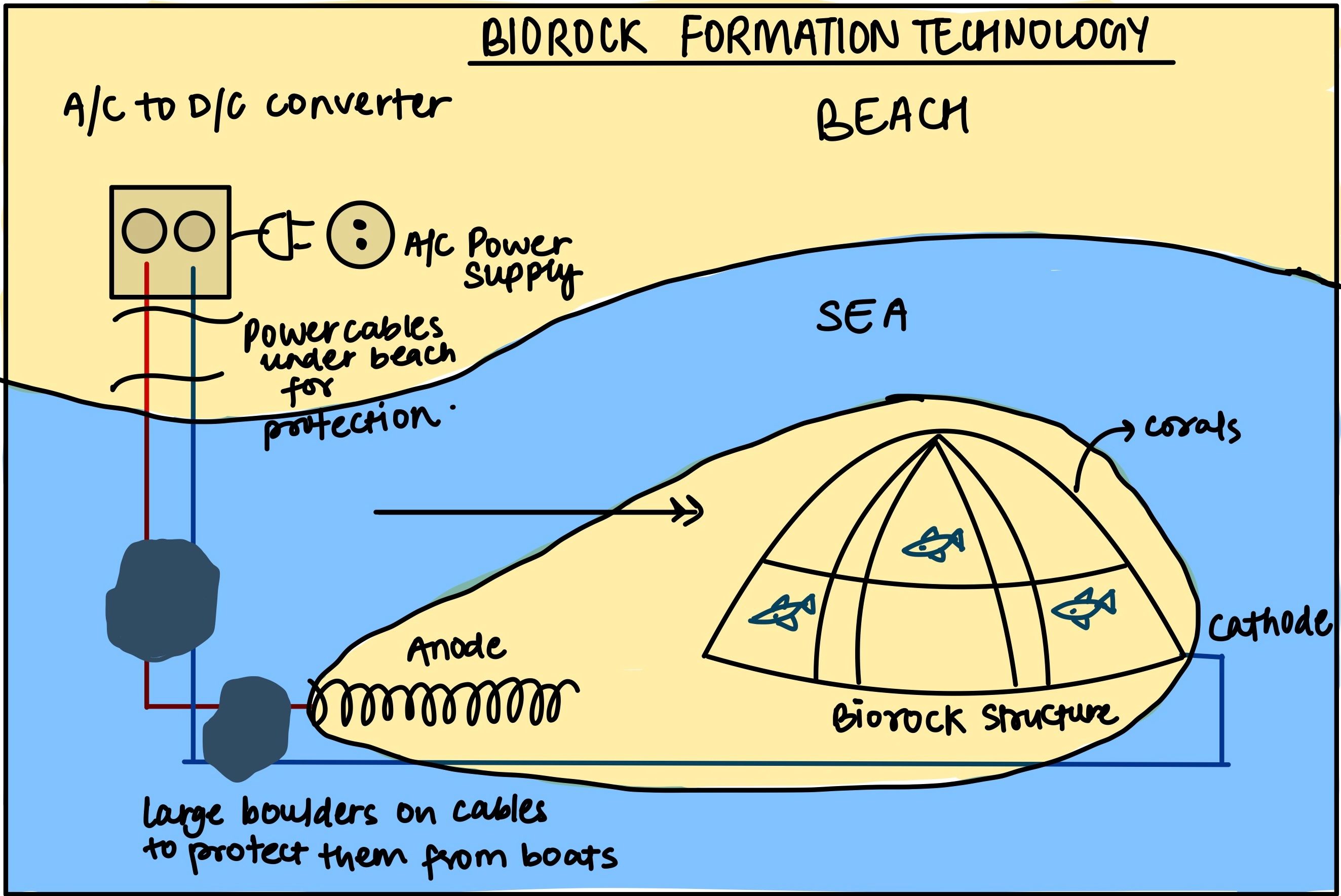
Biorock technology uses a low voltage electrical current to stimulate the growth of minerals on submerged structures. This creates a limestone-like material similar to that found in natural coral reefs.

Biorock Formation

Biorock Formation

Biorock structures can provide a stable substrate for coral polyps to attach and grow, accelerating the restoration of degraded coral reefs.

While Biorock can be used for other purposes, like creating artificial reefs for mariculture (fish farming) or promoting the growth of seacrete building materials, its application in coral reef restoration is a major area of interest.


QUESTION 16

GS

Medium

Environment & Ecology

Prelims 2022

“Climate Action Tracker” which tracks the emission reduction pledges of different countries is a:

A. Database created by coalition of research organisations

B. Wing of “International Panel of Climate Change”

C. Committee under “United Nations Framework Convention on Climate Change”

D. Agency promoted and financed by the United Nations Environment Programme and World Bank.

Explanation

The Climate Action Tracker (CAT) is an independent scientific analysis that tracks government climate action and measures it against the globally agreed Paris Agreement aim of holding warming well below 2C, and pursuing efforts to limit warming to 1.5C.

A collaboration of two organisations, Climate Analytics and NewClimate Institute, the CAT has been providing this independent analysis to policymakers since 2009. CAT quantifies and evaluates climate change mitigation targets, policies, and actions. It also aggregates country action to the global level, determining likely temperature increases during the 21st century using the MAGICC climate model. CAT further develops sectoral analysis to illustrate the required pathways for meeting the global temperature goals.


QUESTION 17

GS

Medium

Environment & Ecology

Prelims 2022

Consider the following statements:

  1. Gujarat has the largest solar park in India.
  2. Kerala has a fully solar powered International Airport.
  3. Goa has the largest floating solar photovoltaic project in India.

Which of the statements given above is/are correct?

A. 1 and 2

B. 2 only

C. 1 and 3

D. 3 only

Explanation

Statement 1 is incorrect. India's Bhadla Solar Park in Rajasthan is the largest solar power park in the world.

Statement 2 is correct. Kerala’s Cochin International Airport Ltd (CIAL) is the first airport in the world that would be running fully on solar power.

Statement 3 is incorrect. The largest floating solar photovoltaic project in India is not in Goa but in Ramagundam, Telangana. The project is developed by NTPC (National Thermal Power Corporation Limited).


QUESTION 18

GS

Easy

Environment & Ecology

Prelims 2022

Which one of the following best describes the term "greenwashing"?

A. Conveying a false impression that a company's products are eco-friendly and environmentally sound

B. Non-inclusion of ecological/ environmental costs in the Annual Financial Statements of a country

C. Ignoring the disastrous ecological consequences while undertaking infrastructure development

D. Making mandatory provisions for environmental costs in a government project/programme
Explanation

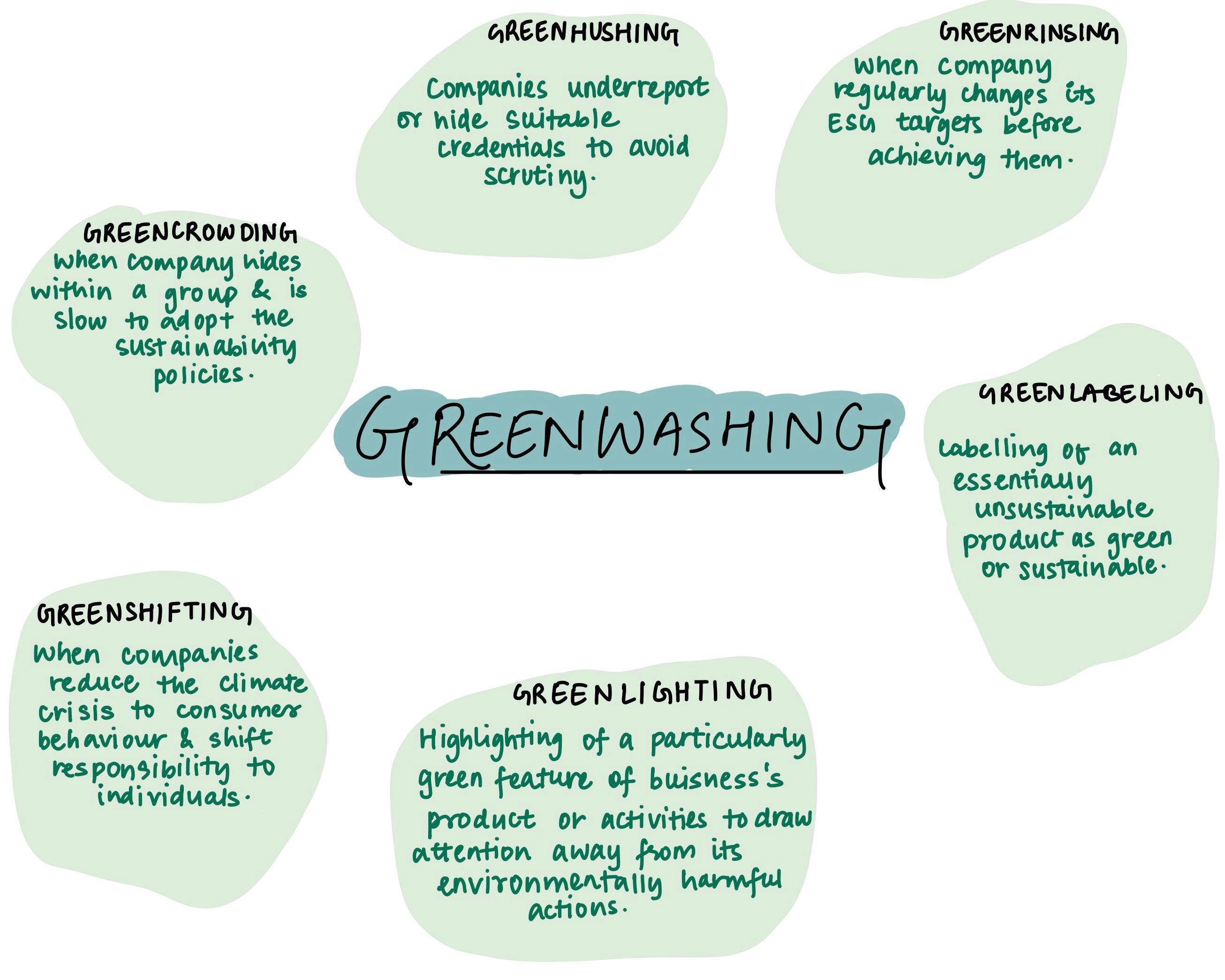
The term "greenwashing" is best described as deceptively conveying a misleading impression that a company's products or practices are environmentally friendly.

Greenwashing is a marketing strategy where companies try to portray themselves as environmentally conscious, even if their actions don't necessarily reflect that commitment. It often involves using misleading language, imagery, or selective data to create a positive environmental image.

Greenwashing

Greenwashing

The goal is to gain a competitive advantage by appealing to consumers who are increasingly concerned about environmental issues.

Share
SuperKalam
SuperKalam is your personal mentor for UPSC preparation, guiding you at every step of the exam journey.

Download the App

Get it on Google PlayDownload on the App Store
Follow us

ⓒ Snapstack Technologies Private Limited


