Analyse & practice 14 years of PYQs to crack UPSCPractice Now

UPSC Prelims 2018 Analysis

Subject wise MCQ distribution

  • Economy (20 Questions): The highest weightage in the paper, covering macroeconomic indicators, policies, and economic development themes. Analytical abilities were essential to interpret trends.
  • Environment & Ecology (15 Questions): A significant presence, likely reflecting UPSC’s increasing focus on climate change, biodiversity, and sustainable development. Maps were useful in location-based questions.
  • Indian Polity (15 Questions): A core subject, testing governance, constitutional provisions, and landmark judgments. Many questions followed an assertion-reasoning pattern.
  • Modern History (13 Questions): A relatively high emphasis on the freedom struggle, key personalities, and movements.
  • Science & Technology (12 Questions): Covered advancements in AI, biotechnology, and space technology, requiring both static and current knowledge.
  • Art & Culture (7 Questions): More weightage than in some later years, indicating an expectation for deeper knowledge of cultural heritage.
  • International Relations (7 Questions): Focused on global organizations, treaties, and India's foreign policy.
  • Medieval History (1 Question): Minimal representation, following the usual trend of fewer medieval history questions.
  • Geography (Indian Geography: 4, Physical Geography: 2, World Geography: 0): The focus was on Indian geography, with limited physical geography and no direct world geography questions.
Prelims 2018
Subject-Wise Weightage in UPSC Prelims 2018

Difficulty analysis

  • Medium Difficulty (50 Questions): The largest segment, requiring a balance of factual knowledge and application skills.
  • Hard Questions (29 Questions): A significant portion of the paper, making elimination techniques and conceptual clarity essential.
  • Easy Questions (21 Questions): Fewer than in later years, indicating a relatively tougher paper.

The 2018 Prelims had tougher questions than before, which made them hard to solve. This is reflected in the final cut-off, which was only 98 marks.

Prelims 2018
Difficulty-Level Distribution in UPSC Prelims 2021

Variations in Question framing

Multi-Statement Questions (58%):

  • The most common type, requiring elimination techniques and conceptual clarity.
  • Particularly prevalent in Polity, Economy, and Environment sections.
  • Many followed match the following and assertion-reasoning formats.

Direct Questions (42%):

  • Straightforward factual questions, especially in History and Geography.
  • Easier to score but required precise knowledge.
12.PNG
Variations of Questions in UPSC Prelims 2021

Current Affairs vs. Static Questions

  • Current Affairs-Based (44 Questions): UPSC maintained a strong current affairs focus, particularly in Economy, Science & Technology, and International Relations.
  • Static (56 Questions): A balanced approach, with a considerable portion testing foundational knowledge, often derived from NCERT books.

Key learning for Future Preparation

  • Strengthen Economy and Polity: These subjects consistently hold high weightage and require an in-depth understanding of fundamental concepts.
  • Master Multi-Statement Questions: Since a majority of questions require elimination skills, practice structured reasoning techniques.
  • Balance Static and Current Affairs: While static knowledge remains crucial, integrating dynamic current developments is essential for scoring well.
  • Prepare for Moderate to Hard Questions: The paper had a higher proportion of challenging questions, so aspirants should refine their approach to conceptual application and strategic guessing.
  • History and Culture Awareness: Despite variations in different years, Art & Culture and Modern History continue to hold importance, making them key focus areas.
The Prelims 2018 paper had a strong focus on Economy, Environment, and Polity, with a majority of multi-statement questions requiring elimination techniques. A mix of current affairs and static knowledge highlighted the need for an integrated approach. The moderate-to-hard difficulty level and a low cutoff of 98 marks reflected the paper’s complexity.

QUESTION 1

GS

Easy

International Relations

Prelims 2018

Very recently, in which of the following countries have lakhs of people either suffered from severe famine/acute malnutrition or died due to starvation caused by war/ethnic conflicts?

A. Angola and Zambia

B. Morocco and Tunisia

C. Venezuela and Colombia

D. Yemen and South Sudan

Explanation

Yemen and South Sudan faced severe humanitarian crises and famine conditions around 2017-2018 due to prolonged armed conflicts. In Yemen, the Saudi-led military intervention against Houthi rebels, coupled with air and naval blockades, severely restricted the import of food and medicine, leading to widespread starvation. In South Sudan, a civil war that began in 2013 between government and opposition forces displaced millions and disrupted agricultural production, resulting in the United Nations formally declaring a famine in parts of the country in early 2017.


QUESTION 2

GS

Hard

Environment & Ecology

Prelims 2018

"Momentum for Change: Climate Neutral Now" is an initiative launched by

A. The Intergovernmental Panel on Climate Change

B. The UNEP Secretariat

C. The UNFCCC Secretariat

D. The World Meteorological Organisation

Explanation

The United Nations Framework Convention on Climate Change (UNFCCC) Secretariat launched the Climate Neutral Now initiative in 2015 to encourage individuals, businesses, and governments to take voluntary action towards climate neutrality.

In 2016, the Secretariat introduced a new pillar under its "Momentum for Change" initiative, focusing on Climate Neutral Now as part of broader efforts to highlight and promote successful climate action worldwide.

Climate neutrality is a three-step process, which requires individuals, companies, and governments to:

  1. Measure their climate footprint (greenhouse gas emissions).
  2. Reduce emissions as much as possible through sustainable practices and efficiency improvements.
  3. Offset unavoidable emissions using UN-certified emission reductions (CERs).

This initiative aligns with global efforts to meet the Paris Agreement goals, fostering greater accountability and proactive engagement in combating climate change.


QUESTION 3

GS

Easy

Science & Technology

Prelims 2018

When the alarm of your smartphone rings in the morning, you wake up and tap it to stop the alarm which causes your geyser to be switched on automatically. The smart mirror in your bathroom shows the day's weather and also indicates the level of water in your overhead tank. After you take some groceries from your refrigerator for making breakfast, it recognises the shortage of stock in it and places an order for the supply of fresh grocery items. When you step out of your house and lock the door, all lights, fans, geysers and AC machines get switched off automatically. On your way to the office, your car warns you about traffic congestion ahead and suggests an alternative route, and if you are late for a meeting, it sends a- message to your office accordingly. In the context of emerging communication technologies, which one of the following term best applies to the above scenario?

A. Border Gateway Protocol

B. Internet of Things

C. Internet Protocol

D. Virtual Private Network
Explanation

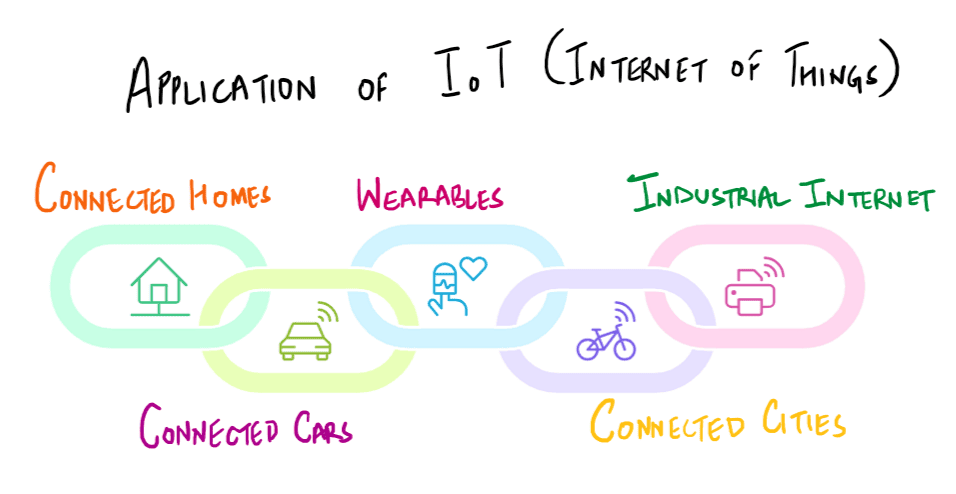
The scenario described involves various devices (smartphone, geyser, smart mirror, refrigerator, car, etc.) communicating with each other and with the user, and automatically performing tasks based on certain triggers. This is characteristic of the Internet of Things (IoT).

Internet of Things

Internet of Things

Option B is correct: Internet of Things (IoT) is a system of interrelated computing devices, mechanical and digital machines, objects, animals or people that are provided with unique identifiers (UIDs) and the ability to transfer data over a network without requiring human-to-human or human-to-computer interaction.

Option A is incorrect: Border Gateway Protocol is a protocol used to exchange routing information across the internet and is not relevant to the scenario described.

Option C is incorrect: Internet Protocol is a set of rules for sending and receiving messages at the Internet address level, but it doesn't cover the broad range of device intercommunication described in the scenario.

Option D is incorrect: A Virtual Private Network is a technology for using the internet or another intermediate network to connect computers to isolated remote computer networks that would otherwise be inaccessible, which also doesn't fit the scenario.


QUESTION 4

GS

Easy

Modern History

Prelims 2018

Which one of the following is a very significant aspect of the Champaran Satyagraha?

A. Active all-India participation of lawyers, students and women in the National Movement

B. Active involvement of Dalit and Tribal communities of India in the National Movement

C. Joining of peasant unrest to India's National Movement

D. Drastic decrease in the cultivation of plantation crops and commercial crops

Explanation

The Champaran Satyagraha (1917) was Mahatma Gandhi’s first experiment with Satyagraha in India. It was launched to address the grievances of peasants in Bihar who were forced by European planters under the 'Tinkathia system' to cultivate indigo on 3/20th of their land. The most significant aspect of this movement was the joining of peasant unrest to the Indian National Movement. This marked a fundamental shift in the struggle for independence, transitioning it from an urban, middle-class intellectual movement to a mass-based movement that included the rural peasantry. While the movement was localized, its success provided Gandhi with a national platform and demonstrated the efficacy of non-violent resistance.


QUESTION 5

GS

Hard

Environment & Ecology

Prelims 2018

Which of the following has/have shrunk immensely/dried up in the recent past due to human activities?

  1. Aral Sea
  2. Black Sea
  3. Lake Baikal

A. 1 and 3

B. 2 and 3

C. 2 only

D. 1 only
Explanation

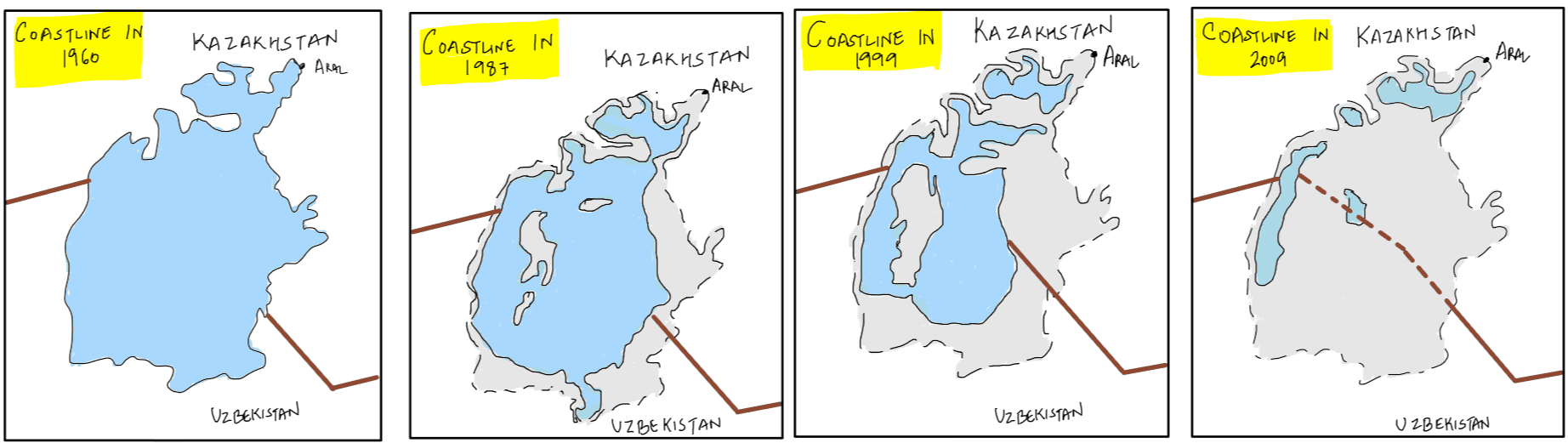
  • Aral Sea: The Aral Sea was once one of the world's largest inland lakes, but due to extensive water diversion for irrigation projects, particularly from the Amu Darya and Syr Darya rivers, it has shrunk by over 75% since the 1960s. This has led to severe environmental, economic, and social consequences, including increased salinity, loss of marine life, and desertification.
Aral Sea

Aral Sea

  • Black Sea: While the Black Sea faces environmental challenges such as pollution, biodiversity loss, and reduced oxygen levels in deep waters, it has not experienced significant drying like the Aral Sea.

  • Lake Baikal: Lake Baikal in Russia is the deepest and oldest freshwater lake in the world, containing about 20% of the world's unfrozen freshwater supply. Although it experiences natural fluctuations in water levels, it has not undergone severe drying like the Aral Sea.

Thus, the correct answer is option (d).


QUESTION 6

GS

Hard

Economy

Prelims 2018

Consider the following events:

  1. The first democratically elected communist party government formed in a State in India.
  2. India's then largest bank, 'Imperial Bank of India', was renamed 'State Bank of India'.
  3. Air India was nationalised and became the national carrier.
  4. Goa became a part of independent India.

Which of the following is the correct chronological sequence of the above events?

A. 4 - 1 - 2 - 3

B. 3 - 2 - 1 - 4

C. 4 - 2 - 1 - 3

D. 3 - 1 -2 - 4

Explanation

The correct chronological sequence is determined by the following historical events:

  1. Air India Nationalisation (1953): Air India was nationalised following the enactment of the Air Corporations Act, 1953. The Government of India acquired a majority stake in the airline from the Tata Group, establishing it as the national carrier.

  2. Renaming of Imperial Bank to SBI (1955): Based on the recommendations of the All India Rural Credit Survey Committee (Gorewala Committee), the State Bank of India Act was passed. On July 1, 1955, the Imperial Bank of India was renamed the State Bank of India (SBI).

  3. First Communist Government in a State (1957): In the 1957 Kerala Legislative Assembly elections, the Communist Party of India (CPI) won a majority. E.M.S. Namboodiripad formed the government, marking the first time a Communist party was democratically elected to power in an Indian state.

  4. Goa becoming part of India (1961): Goa was liberated from Portuguese rule on December 19, 1961, through 'Operation Vijay'. Following its liberation, Goa (along with Daman and Diu) was incorporated into India as a Union Territory by the 12th Constitutional Amendment Act, 1962. It attained full statehood much later, on May 30, 1987.

Chronological Order: 3 (1953) - 2 (1955) - 1 (1957) - 4 (1961).


QUESTION 7

GS

Medium

Indian Polity

Prelims 2018

With reference to the Parliament of India, which of the following Parliamentary Committees scrutinizes and reports to the House whether the powers to make regulations, rules, sub-rules, by-laws, etc. conferred by the Constitution or delegated by the Parliament are being properly exercised by the Executive within the scope of such delegation?

A. Committee on Government Assurances

B. Committee on Subordinate Legislation

C. Rules Committee

D. Business Advisory Committee

Explanation

The Committee on Subordinate Legislation (CSL) is specifically tasked with scrutinizing and reporting on the exercise of delegated powers by the executive branch. They ensure the government is acting within the legal boundaries set by Parliament when creating rules, regulations, etc.

Committee on Government Assurances (A) focuses on tracking the implementation of assurances, and promises made by the government in Parliament.

Rules Committee (C) deals with framing rules for the smooth functioning of the Houses of Parliament (Lok Sabha and Rajya Sabha).

Business Advisory Committee (D) allocates time for different kinds of legislative and other business of the House.

Therefore, only the Committee on Subordinate Legislation directly addresses the scrutiny of delegated powers.


QUESTION 8

GS

Medium

Economy

Prelims 2018

With reference to the provisions made under the National Food Security Act, 2013 consider the following statements:

  1. The families coming under the category of 'below poverty line (BPL)' only are eligible to receive subsidised grains.
  2. The eldest woman in a household, of age 18 years or above, shall be the head of the household for the purpose of issuance of a ration card.
  3. Pregnant women and lactating mothers are entitled to a take-home ration' of 1600 calories per day during pregnancy and for six months thereafter.

Which of the statements given above is/are correct?

A. 1 and 2

B. 2 only

C. 1 and 3

D. 3 only

Explanation

Statement 1 is incorrect: In 2013, NFSA was enacted to provide food security to 67% of the population in the form of highly subsidized food grains at Rs. 2 and 3 per Kg for wheat and rice respectively. Beneficiaries are identified using Socio-economic Caste Census (SECC) methodology so even non-BPL will also benefit.

Statement 2 is correct: Under the NFSA, to issue ration cards the eldest woman of a household aged 18 years or above would be considered as head. Hence, this statement is correct.

Statement 3 is incorrect: Pregnant women and lactating mothers are entitled to a nutritious take home ration of 600 Calories and a maternity benefit of at least Rs 6,000 for six months, says the official act.


QUESTION 9

GS

Medium

Economy

Prelims 2018

Consider the following items:

  1. Cereal grains hulled
  2. Chicken eggs cooked
  3. Fish processed and canned
  4. Newspapers containing advertising material

Which of the above items is/are exempted under GST (Goods and Services Tax)?

A. 1 only

B. 2 and 3 only

C. 1, 2, 3 and 4

D. 1, 2 and 4 only

Explanation

Statement 1 is Correct: Cereal grains that are hulled (meaning the outer husk is removed, such as shelled or rolled grains) are exempted from GST under HSN code 1104, provided they are not sold in branded unit containers. This exemption ensures that basic food staples remain affordable.

Statement 2 is Correct: According to GST Council notifications (HSN 0407), birds' eggs in shell, whether fresh, preserved, or cooked, are specifically exempted from GST. This classification keeps basic protein sources outside the tax net.

Statement 3 is Incorrect: While fresh, chilled, or frozen fish is exempt from GST, fish that has been processed and canned (HSN 1604) is considered a value-added product. Such processed items are subject to GST (typically at a rate of 5%).

Statement 4 is Correct: Newspapers, journals, and periodicals (HSN 4902) are exempt from GST. The law explicitly states that this exemption applies whether or not they contain advertising material, ensuring the free and affordable flow of information.


QUESTION 10

GS

Easy

Economy

Prelims 2018

In spite of being a high saving economy, capital formation may not result in a significant increase in output due to -

A. weak administrative machinery

B. illiteracy

C. high population density

D. high capital-output ratio

Explanation

Capital Formation: This refers to the addition to the existing stock of physical and human capital in an economy.

High Savings: High savings provide the necessary funds for investment. However, savings alone do not guarantee growth; the efficiency with which those savings are converted into output is crucial.

Capital-Output Ratio (COR): This ratio indicates the amount of capital required to produce one unit of output.

  • A low ratio means capital is efficient.
  • A high ratio means capital is inefficient (more capital is needed for the same amount of output).

Why (D) is correct: Even if an economy saves and invests heavily (capital formation), if the Capital-Output Ratio is high, the resulting increase in output (GDP) will be low. This often happens due to technological backwardness, poor infrastructure, or inefficient management of resources.


QUESTION 11

GS

Medium

Science & Technology

Prelims 2018

"3D printing" has applications in which of the following?

  1. Preparation of confectionery items
  2. Manufacture of bionic ears
  3. Automotive industry
  4. Reconstructive surgeries
  5. Data processing technologies

Select the correct answer using the code given below:

A. 1, 3 and 4 only

B. 2, 3 and 5 only

C. 1 and 4 only

D. 1, 2, 3, 4 and 5

Explanation

3D printing, also known as additive manufacturing, is a process of making three dimensional solid objects from a digital file. It is used in a wide range of industries and has various applications.

It can be used to create intricate and customized shapes in confectionery items like chocolates, candies, and other desserts.

It has been used to create customized bionic ears for people with hearing impairments.

It is used in the automotive industry for rapid prototyping, manufacturing of customized parts, and even some production of vehicle components.

It is used in reconstructive surgeries to create patient-specific implants, prosthetics, and surgical guides.

It can be used to create specialized components and parts for data processing technologies, such as computer hardware.

Therefore, all the five statements are correct.


QUESTION 12

GS

Hard

Indian Polity

Prelims 2018

Consider the following statements :

  1. As per the Right to Education (RTE) Act, to be eligible for appointment as a teacher in a State, a person would be required to possess the minimum qualifications laid down by the concerned State Council of Teacher Education.
  2. As per the RTE Act, for teaching primary classes, a candidate is required to pass a Teacher Eligibility Test conducted in accordance with the National Council of Teacher Education guidelines.
  3. In India, more than 90% of teacher education institutions are directly under the State Governments.

Which of the statements given above is/are correct?

A. 1 and 2

B. 2 only

C. 1 and 3

D. 3 only

Explanation

Statement 1 is incorrect: As per the RTE Act, the minimum qualification for teachers is set by the National Council for Teacher Education (NCTE), not the state council.

Statement 2 is correct: The RTE Act mandates that candidates must pass the Teacher Eligibility Test (TET) to qualify for teaching primary classes. The NCTE sets the guidelines for conducting this test.

Statement 3 is incorrect: According to the All India Survey on Higher Education (AISHE) 2019-20, approximately 67% of teacher education institutions in India are privately managed, while only around 33% are government-run.

Hence, the correct answer is option (b) 2 only.


QUESTION 13

GS

Easy

Modern History

Prelims 2018

Which of the following led to the introduction of English Education in India?

  1. Charter Act of 1813
  2. General Committee of Public Instruction, 1823
  3. Orientalist and Anglicist Controversy

Select the correct answer using the code given below

A. 1, 2 and 3

B. 2 only

C. 1 and 3 only

D. 1 and 2

Explanation

Statement 1 is Correct: The Charter Act of 1813 was the first official measure by the British Parliament to sanction an annual sum of one lakh rupees for the promotion of education and modern sciences in India. Statement 2 is Correct: The General Committee of Public Instruction was established in 1823 to implement the educational grant of 1813 and to guide the educational policy of the East India Company. Statement 3 is Correct: The controversy between Orientalists (who favored traditional Indian learning) and Anglicists (who favored Western education in English) led to the adoption of English as the medium of instruction via Lord Macaulay’s Minute of 1835.


QUESTION 14

GS

Hard

Art & Culture

Prelims 2018

With reference to cultural history of India, consider the following statements :

  1. Most of the Tyagaraja Kritis are devotional songs in praise of Lord Krishna.
  2. Tyagaraja created several new ragas.
  3. Annamacharya and Tyagaraja are contemporaries.
  4. Annamacharya kirtanas are devotional songs in praise of Lord Venkateshwara.

Which of the statements given above are correct?

A. 1 and 3 only

B. 2 and 4 only

C. 1, 2 and 3

D. 2, 3 and 4

Explanation

Incorrect (1) Most of Thyagaraja's kritis (compositions) are devotional songs in praise of Lord Rama, not Krishna.

Correct (2) Tyagaraja is credited with creating several new ragas (melodic scales) in Carnatic music.

Incorrect (3) Annamacharya and Tyagaraja were not contemporaries. Annamacharya lived in the 15th century, while Tyagaraja lived in the 18th-19th century.

Correct (4) Annamacharya's kirtanas (devotional songs) are indeed known for praising Lord Venkateshwara, a form of Vishnu.


QUESTION 15

GS

Hard

Science & Technology

Prelims 2018

Consider the following phenomena :

  1. Light is affected by gravity.
  2. The Universe is constantly expanding.
  3. Matter warps its surrounding space-time.

Which of the above is/are the prediction/predictions of Albert Einstein's General Theory of Relativity, often discussed in media?

A. 1 and 2 only

B. 3 only

C. 1, 2 and 3

D. 1 and 2

Explanation

Statement 1 is correct: According to Einstein's General Theory of Relativity, gravity can bend light. This phenomenon is known as gravitational lensing.

Statement 2 is correct: The General Theory of Relativity led to the prediction of an expanding universe, which has been confirmed by observational evidence.

Statement 3 is correct: According to the General Theory of Relativity, the presence of matter and energy warps the fabric of space and time around it, which is the underlying cause of the gravitational force.

So, all three statements are correct.


QUESTION 16

GS

Medium

Social Issues & Schemes

Prelims 2018

With reference to Pradhan Mantri Kaushal Vikas Yojana, consider the following statements

  1. It is the flagship scheme of the Ministry of Labour and Employment.
  2. It, among other things, will also impart training in soft skills, entrepreneurship, financial and digital literacy.
  3. It aims to align the competencies of the unregulated workforce of the country to the National Skill Qualification Framework.

Which of the statements given above is/are correct?

A. 1 and 3 only

B. 2 only

C. 2 and 3 only

D. 1, 2 and 3

Explanation

Statement 1 is Incorrect. The Ministry of Skill Development and Entrepreneurship (MSDE) is responsible for PMKVY, not the Ministry of Labour and Employment.

Statement 2 is Correct. PMKVY goes beyond technical skills training and incorporates soft skills, entrepreneurship, financial literacy, and digital literacy to make participants more employable.

Statement 3 is Correct. A core objective of PMKVY is to bridge the gap between the skills of the unregulated workforce and industry requirements by aligning them with the National Skill Qualification Framework (NSQF). This standardization helps ensure a minimum level of competency and improves employment opportunities.


QUESTION 17

GS

Hard

Economy

Prelims 2018

Consider the following statements: Human capital formation as a concept is better explained in terms of a process, which enables

  1. individuals of a country to accumulate more capital.
  2. increasing the knowledge, skill levels and capacities of the people of the country.
  3. accumulation of tangible wealth.
  4. accumulation of intangible wealth.

Which of the statements given above is/are correct?

A. 1 and 2

B. 2 and 4 only

C. 2 only

D. 1, 3 and 4

Explanation

Statement 1 is Incorrect: The term 'capital' in this context usually refers to physical or financial capital (like machinery or money), whereas human capital formation specifically focuses on the qualitative development of human beings. Statement 2 is Correct: Human capital formation is defined as the process of acquiring and increasing the number of persons who have the skills, education, and experience essential for the economic development of a country. Statement 3 is Incorrect: Tangible wealth refers to physical assets such as land, buildings, and gold. Human capital is an intangible asset and does not include the accumulation of physical goods. Statement 4 is Correct: Human capital is considered a form of intangible wealth because it represents the stock of knowledge, skills, and health embodied in the population, which lacks physical substance but has significant economic value.


QUESTION 18

GS

Medium

Environment & Ecology

Prelims 2018

In which one of the following States is Pakhui Wildlife Sanctuary located?

A. Arunachal Pradesh

B. Manipur

C. Meghalaya

D. Nagaland
Explanation

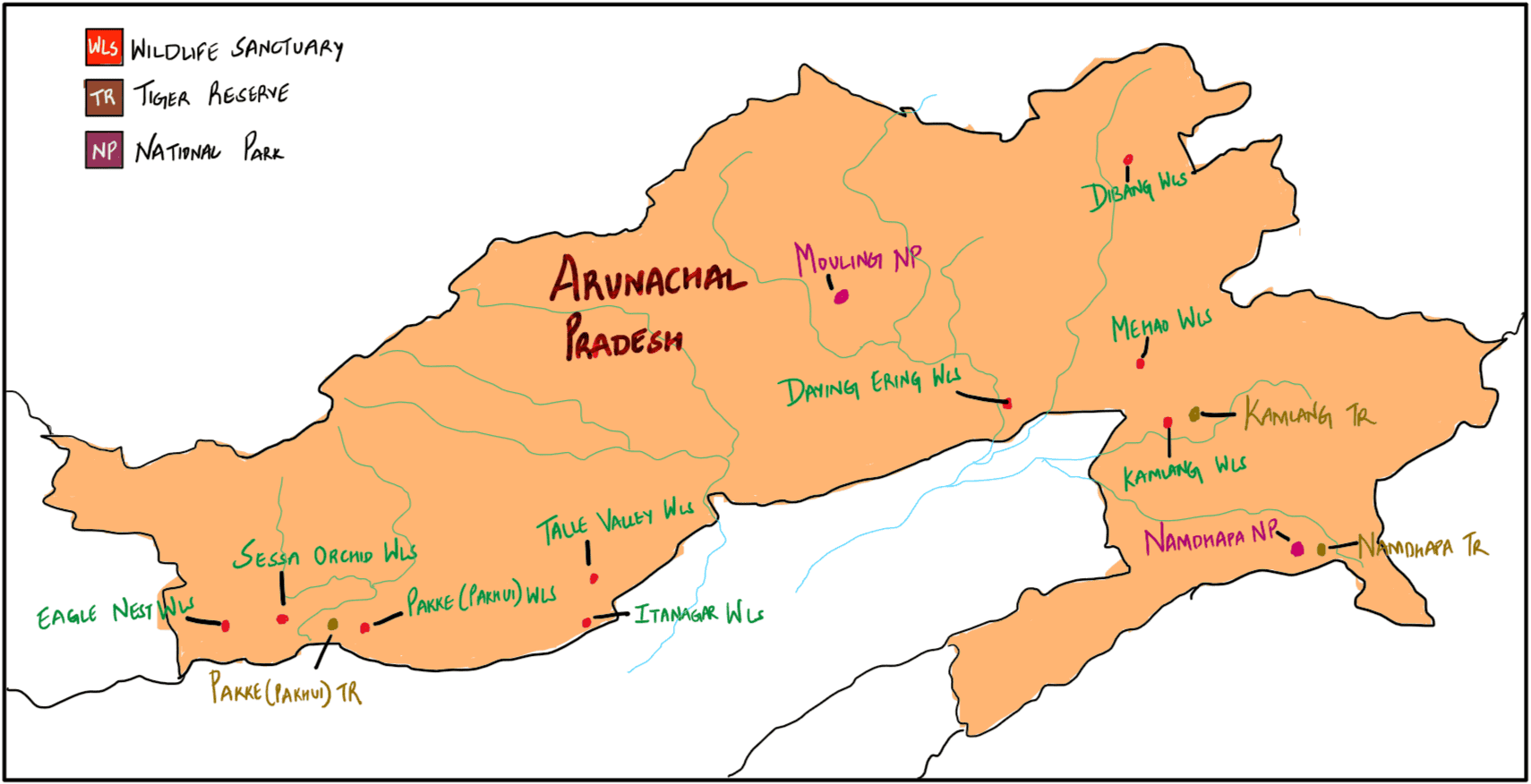
The Pakhui Wildlife Sanctuary, located in Arunachal Pradesh, is part of the Kameng Elephant Reserve and is contiguous with the Pakke Tiger Reserve. It is known for its rich biodiversity and dense forests, making it a critical habitat for various wildlife species. The Bhareli (Pakke) and Bamadi rivers flow through the sanctuary, supporting its diverse ecosystem. Several indigenous tribes, including the Nyishi and Apatani, reside in the region, coexisting with the forest and its resources.

Wildlife Santuaries in Arunachal pradesh

Wildlife Santuaries in Arunachal pradesh


QUESTION 19

GS

Hard

Modern History

Prelims 2018

After the Santhal Uprising subsided, what was/were the measure/measures taken by the colonial government?

  1. The territories called `Santhal Paraganas' were created.
  2. It became illegal for a Santhal to transfer land to a non-Santhal.

Select the correct answer using the code given below:

A. 1 only

B. 2 only

C. Both 1 and 2

D. Neither 1 nor 2

Explanation

  • Santhals were the agricultural people settled in Rajmahal Hills of Jharkhand.
  • They are native to the Indian states of predominantly Jharkhand, West Bengal and Odisha.

Creation of Santhal Paraganas: A separate administrative unit called the Santhal Paraganas was established in 1855. This aimed to isolate the Santhal community from the rest of the population and potentially prevent further uprisings.

Restriction on Land Transfer: The Santhal Parganas Tenancy Act was passed in 1876. This act made it illegal for a Santhal to sell or transfer land to a non-Santhal. This aimed to protect the Santhal community's economic interests and prevent further exploitation by outsiders called 'Dikus'.


QUESTION 20

GS

Medium

Science & Technology

Prelims 2018

Consider the following:

  1. Birds
  2. Dust blowing
  3. Rain
  4. Wind blowing

Which of the above spread plant diseases?

A. 1 and 3 only

B. 3 and 4 only

C. 1, 2 and 4 only

D. 1, 2, 3 and 4

Explanation

All of the listed factors - birds, dust blowing, rain, and wind blowing - can contribute to the spread of plant diseases

Statement 1 is correct: Birds can act as vectors, carrying and spreading plant pathogens from one location to another through their feathers, feet, or droppings.

Statement 2 is correct: Dust and soil particles blown by the wind can carry and spread plant diseases, especially fungal spores and bacterial cells.

Statement 3 is correct: Rain can splash and disperse plant pathogens, such as fungi and bacteria, from the soil or infected plant parts to uninfected plants.

Statement 4 is correct: Wind can transport and spread airborne plant pathogens, such as fungal spores and bacterial cells, over long distances.


QUESTION 21

GS

Medium

Indian Polity

Prelims 2018

With reference to the election of the President of India, consider the following statements:

  1. The value of the vote of each MLA varies from State to State.
  2. The value of the vote of MPs of the Lok Sabha is more than the value of the vote of MPs of the Rajya Sabha.

Which of the following statements given above is/are Correct?

A. 1 and 2

B. 2 only

C. 1 only

D. Neither 1 nor 2

Explanation

Statement 1 is correct: The value of the vote of each MLA varies from State to State. The value of an MLA's vote is based on the population of their state relative to the number of MLAs in the state assembly. States with larger populations have a higher value per MLA vote.

Statement 2 is incorrect: Both MPs (Lok Sabha and Rajya Sabha) have the same value for their vote in the presidential election.

Hence, the correct answer is option (c) 1 only.


QUESTION 22

GS

Medium

Social Issues & Schemes

Prelims 2018

Which of the following is/are the aim/aims of "Digital India" Plan of the Government of India?

  1. Formation of India's own Internet companies like China did.
  2. Establish a policy framework to encourage overseas multinational corporations that collect Big Data to build their large data centres within our national geographical boundaries.
  3. Connect many of our villages to the Internet and bring Wi-Fi to many of our school, public places and major tourist centres

Select the correct answer using the code given below

A. 1 and 2 only

B. 3 only

C. 2 and 3 only

D. 1, 2 and 3

Explanation

  • Statement 1 is not correct: The formation of India’s own internet companies, similar to China’s approach, is not an aim of the Digital India programme. The initiative focuses on creating digital infrastructure, providing digital services, and promoting digital literacy — not establishing government-backed internet firms.

  • Statement 2 is not correct: The Digital India plan does not include any policy framework to attract foreign multinational corporations to build data centres in India. While data localisation and data centre policies have emerged later under different frameworks, they are not part of the original Digital India objectives.

  • Statement 3 is correct: One of the key aims of Digital India is to connect villages through broadband and to provide Wi-Fi access in schools, public places, and tourist centres. This is part of its core pillars like Broadband Highways, Public Internet Access Programme, and Early Harvest Programmes.


QUESTION 23

GS

Medium

Economy

Prelims 2018

Which one of the following links all the ATMs in India?

A. Indian banks' Association

B. National Securities Depository Limited

C. National Payments Corporation of India

D. Reserve Bank of India

Explanation

The National Payments Corporation of India (NPCI)

The NPCI operates the National Financial Switch (NFS), which is the largest network connecting ATMs across various banks in India. This network facilitates inter-bank transactions and allows users to withdraw cash from ATMs even if they don't belong to the bank that owns the ATM.


QUESTION 24

GS

Medium

Economy

Prelims 2018

Consider the following:

  1. Areca nut
  2. Barley
  3. Coffee
  4. Finger millet
  5. Groundnut
  6. Sesamum
  7. Turmeric

The Cabinet Committee on Economic Affairs has announced the Minimum Support Price for which of the above?

A. 1, 2, 3 and 7 only

B. 2, 4, 5 and 6 only

C. 1, 3, 4, 5 and 6 only

D. 1, 2, 3, 4, 5, 6 and 7

Explanation

The Cabinet Committee on Economic Affairs (CCEA) announces the Minimum Support Price (MSP) for 22 mandated crops and the Fair and Remunerative Price (FRP) for Sugarcane.

Statement 1 is Incorrect: Areca nut is a plantation crop and is not included in the list of 22 mandated crops for which MSP is announced.

Statement 2 is Correct: Barley is one of the seven cereals (Paddy, Wheat, Maize, Sorghum, Pearl millet, Barley, and Finger millet) for which MSP is announced.

Statement 3 is Incorrect: Coffee is a plantation/beverage crop and does not fall under the MSP regime.

Statement 4 is Correct: Finger millet (also known as Ragi) is a cereal crop included in the mandated list for MSP.

Statement 5 is Correct: Groundnut is one of the seven oilseeds (Groundnut, Rapeseed-Mustard, Soyabean, Sesamum, Sunflower, Safflower, and Nigerseed) covered under MSP.

Statement 6 is Correct: Sesamum is an oilseed crop for which the government officially announces MSP.

Statement 7 is Incorrect: Turmeric is a spice and is not among the 22 mandated crops for which MSP is announced by the CCEA.


QUESTION 25

GS

Medium

International Relations

Prelims 2018

Consider the following pairs:

Regions sometimes mentioned in newsCountry
1. CataloniaSpain
2. CrimeaHungary
3. MindanaoPhilippines
4. OromiaNigeria

Which of the pairs given above are correctly matched?

A. 1, 2 and 3

B. 3 and 4 only

C. 1 and 3 only

D. 2 and 4 only

Explanation

The correctly matched pairs are:

  1. Catalonia — Spain: Catalonia is an autonomous community in northeastern Spain. It is frequently in the news due to its distinct cultural identity and the regional independence movement.
  2. Mindanao — Philippines: Mindanao is the second-largest island in the Philippines. It has been in the news primarily due to the Bangsamoro peace process and internal security matters.

Incorrectly matched pairs:

  • Crimea: This is a peninsula located on the northern coast of the Black Sea. While internationally recognized as part of Ukraine, it was annexed by Russia in 2014. It has no geographical connection to Hungary.
  • Oromia: This is the largest regional state in Ethiopia, not Nigeria. It is the homeland of the Oromo people, the largest ethnic group in Ethiopia.

QUESTION 26

GS

Easy

Environment & Ecology

Prelims 2018

The term "sixth mass extinction/sixth extinction" is often mentioned in the news in the context of the discussion of

A. Widespread monoculture practices in agriculture and large-scale commercial farming with indiscriminate use of chemicals in many parts of the world that may result in the loss of good native ecosystems.

B. Fears of a possible collision of a meteorite with the Earth in the near future in the manner it happened 65 million years ago that caused the mass extinction of many species including those of dinosaurs.

C. Large scale cultivation of genetically modified crops in many parts of the world and promoting their cultivation in other parts of the world which may cause the disappearance of good native crop plants and the loss of food biodiversity.

D. Mankind's over-exploitation/misuse of natural resources, fragmentation/loss of natural habitats, destruction of ecosystems, pollution and global climate change.

Explanation

The term "sixth mass extinction" is used in the context of discussions about the current rapid decline in biodiversity and the potential for it to be as significant as the five major extinction events in Earth's history.

Mass extinction events: Throughout Earth's history, there have been five major extinction events where a large percentage of species (estimated at 75% or more) disappeared in a geologically short period. Examples include the Cretaceous-Paleogene extinction event that wiped out non-avian dinosaurs.

Sixth mass extinction: Scientists are concerned that human activities like habitat destruction, climate change, pollution, and overexploitation of resources are causing a mass extinction event that could be as severe as the previous ones.

Thus, the correct answer is 'D'.


QUESTION 27

GS

Hard

Social Issues & Schemes

Prelims 2018

As per the NSSO 70th Round “Situation Assessment Survey of Agricultural Households”, consider the following statements

  1. Rajasthan has the highest percentage share of agricultural households among its rural households.
  2. Out of the total agricultural households in the country, a little over 60 per cent belong to OBCs.
  3. In Kerala, a little over 60 per cent of agricultural households reported to have received maximum income from sources other than agricultural activities.

A. 2 and 3 only

B. 2 only

C. 1, 2 and 3

D. 1 and 3 only

Explanation

Statement 1 is correct: In the NSSO 70th Round survey, Rajasthan had the highest percentage of rural agricultural households at 78.4%, followed by Uttar Pradesh at 74.8% and Madhya Pradesh at 70.8%.

Statement 2 is incorrect: Among agricultural households, 45% were from Other Backward Classes (OBC), 16% from Scheduled Castes (SC), and 13% from Scheduled Tribes (ST).

Statement 3 is correct: In most major states, agricultural activities were the primary income source, except in Kerala, where 61% earned more from non-agricultural sources.


QUESTION 28

GS

Hard

International Relations

Prelims 2018

In the Indian context, what is the implication of ratifying the 'Additional Protocol' with the 'International Atomic Energy Agency (IAEA)'?

A. The civilian nuclear reactors come under IAEA safeguards.

B. The military nuclear installations come under the inspection of IAEA.

C. The country will have the privilege to buy uranium from the Nuclear Suppliers Group NSG.

D. The country automatically becomes a member of the NSG.

Explanation

The 'Additional Protocol' is a legal document that grants the International Atomic Energy Agency (IAEA) expanded rights of access to information and locations in a state to ensure that nuclear materials are used for peaceful purposes.

  • Option A is correct: By ratifying the Additional Protocol, India committed to placing its civilian nuclear facilities under IAEA safeguards. This allows the IAEA to verify that nuclear material in these specific facilities is not diverted for military use.
  • Option B is incorrect: India maintains a separation between its civilian and military nuclear programs. The Additional Protocol applies only to civilian facilities; military installations remain outside the scope of IAEA inspections.
  • Options C and D are incorrect: While the ratification of the Additional Protocol was a significant step in India's integration into the global nuclear order (following the Indo-US nuclear deal), it does not automatically grant membership to the Nuclear Suppliers Group (NSG) or provide an automatic privilege to buy uranium. Membership in the NSG requires a separate consensus-based admission process.

India signed the Additional Protocol in 2009, and it officially entered into force on July 25, 2014.


QUESTION 29

GS

Easy

Modern History

Prelims 2018

In the federation established by the Government of India Act of 1935, residuary power was given to the

A. Federal Legislature

B. Governor General

C. Provincial Legislature

D. Provincial Governors

Explanation

Under the Government of India Act of 1935, the legislative powers were divided into three lists: the Federal List (for the center), the Provincial List (for the provinces), and the Concurrent List (for both).

Residuary Powers: The subjects that were not included in any of these three lists were known as residuary powers. According to the Act, these residuary powers were vested in the Governor-General of India. He had the authority to decide whether the Federal or the Provincial Legislature would exercise power over such subjects.

Note: In the modern Constitution of India, residuary powers are vested in the Union Parliament (Article 248), which is a departure from the 1935 Act.


QUESTION 30

GS

Medium

Physical Geography

Prelims 2018

Consider the following statements:

  1. The Earth's magnetic field has reversed every few hundred thousand years.
  2. When the Earth was created more than 4000 million years ago, there was 54% oxygen and no carbon dioxide.
  3. When living organisms originated, they modified the early atmosphere of the Earth.

Which of the statements given above is/are correct?

A. 1 only

B. 2 and 3 only

C. 1 and 3 only

D. 1, 2 and 3

Explanation

Statement 1 is correct. The Earth's magnetic field does reverse polarity every few hundred thousand years, on average.

Statement 2 is incorrect. The early Earth's atmosphere did not have significant oxygen and likely had a lot of carbon dioxide and other greenhouse gases.

Statement 3 is correct. The rise of photosynthetic organisms like cyanobacteria significantly increased the amount of oxygen in the atmosphere over time.

Therefore, the correct answer is (c) 1 and 3 only.


QUESTION 31

GS

Medium

Science & Technology

Prelims 2018

The identity platform `Aadhaar' provides open "Application Programming Interfaces (APIs)". What does it imply?

  1. It can be integrated into any electronic device.
  2. Online authentication using iris is possible.

Which of the statements given above is/are correct?

A. 1 only

B. 2 only

C. Both 1 and 2

D. Neither 1 nor 2

Explanation

The availability of open APIs for Aadhaar means that the Aadhaar system can be easily integrated into various electronic devices, such as smartphones, laptops, point-of-sale terminals, etc. This allows these devices to leverage the Aadhaar platform for authentication and other services.

The Aadhaar APIs provide the capability to perform online authentication using biometric modalities like fingerprint and iris scans. This allows for secure identity verification and authentication through electronic devices and applications.

Therefore, both statements 1 and 2 are correct.


QUESTION 32

GS

Medium

Modern History

Prelims 2018

With reference to educational institutes during colonial rule in India, consider the following pairs :

InstitutionFounder
1. Sanskrit College at BenarasWilliam Jones
2. Calcutta MadrasaWarren Hastings
3. Fort William CollegeArthur Wellesley

Which of the pairs given above is/are correct ?

A. 1 and 2

B. 2 only

C. 1 and 3

D. 3 only

Explanation

Pair 1 is not correct. Sanskrit College at Benaras: This college was established by Jonathan Duncan in 1791, not William Jones.

Pair 2 is correct. Calcutta Madrasa: Warren Hastings established the Calcutta Madrasa in 1781 for the study of Islamic subjects like Arabic and Persian.

Pair 3 is not correct. Fort William College: This college was founded by Lord Wellesley in 1800, primarily to train British civil servants in Indian languages and customs.


QUESTION 33

GS

Medium

Art & Culture

Prelims 2018

The well-known painting "Bani Thani" belongs to the

A. Bundi school

B. Jaipur school

C. Kangra school

D. Kishangarh school
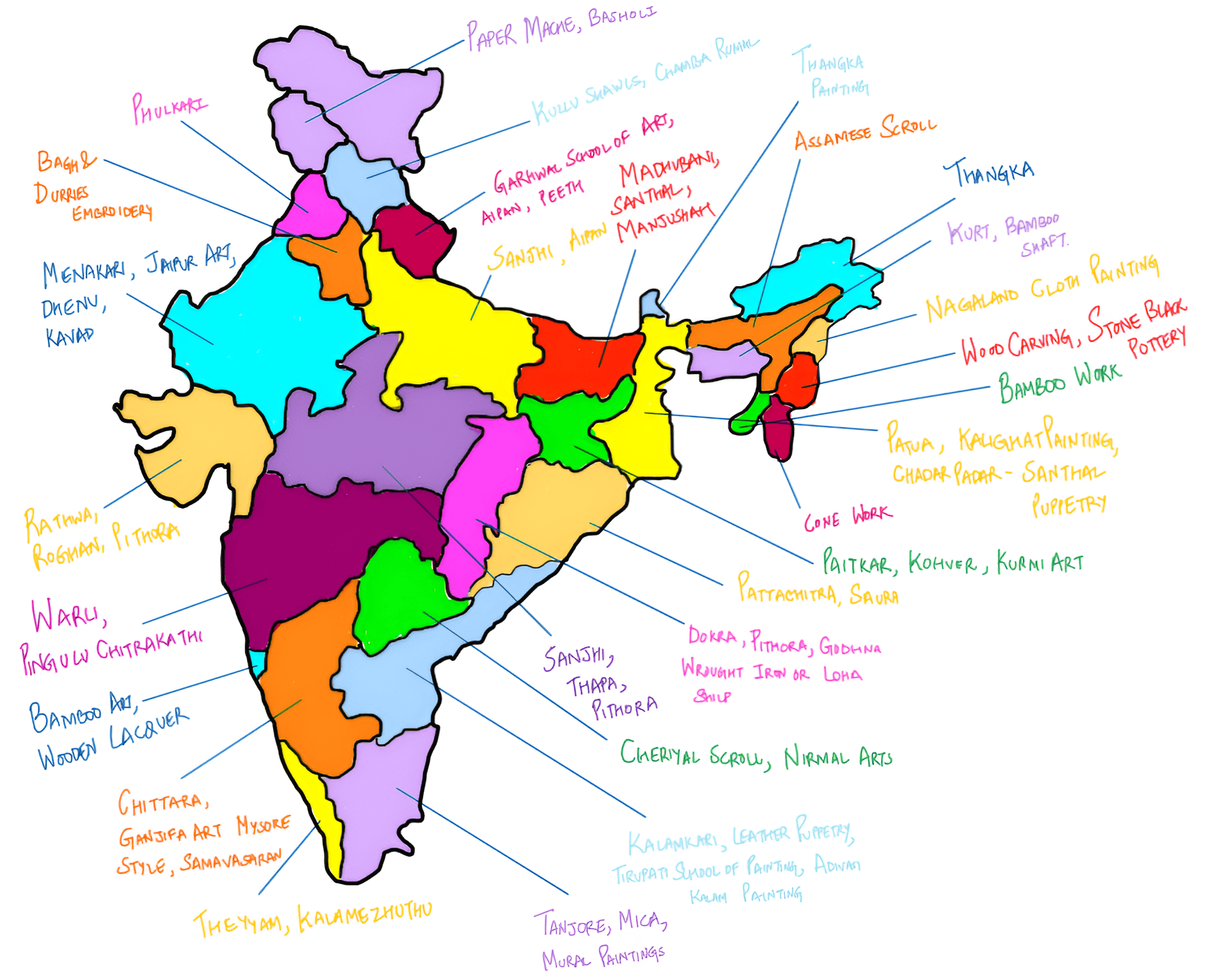
Explanation

"Bani Thani" is a famous painting associated with the Kishangarh school of painting, which flourished in the princely state of Kishangarh in Rajasthan during the 18th century. This painting is particularly renowned for its elegance and depiction of Indian beauty. Some famous paintings from the other three schools:

Bundi School

  • Ragamala Series – A set of paintings depicting various Indian musical modes (ragas).
  • Chaugan Players – A painting showing women playing Polo, reflecting royal leisure.

Jaipur School

  • Gita Govinda Series – Paintings depicting the love story of Radha and Krishna.
  • Ganesh Stuti – A painting of Lord Ganesha, often seen in Jaipur miniatures.

Kangra School

  • Gita Govinda Paintings – Like Jaipur, Kangra also depicted Radha-Krishna love stories, but with soft, delicate features.
  • Nayika Bheda – A series showing different moods of a heroine (nayika) in love.
Art in States

Art in States


QUESTION 34

GS

Hard

Environment & Ecology

Prelims 2018

With reference to solar power production in India, consider the following statements:

  1. India is the third largest in the world in the manufacture of silicon wafers used in photovoltaic units.
  2. The solar power tariffs are determined by the Solar Energy Corporation of India.

Which of the statements given above is/are correct?

A. 1 only

B. 2 only

C. Both 1 and 2

D. Neither 1 nor 2

Explanation

Statement 1 is incorrect: India does not feature among the top three global manufacturers of silicon wafers used in photovoltaic (PV) units or solar cells. The top three manufacturers of silicon wafers for PV applications are China, Taiwan, and South Korea.

Statement 2 is incorrect: The Solar Energy Corporation of India (SECI) is a government-owned company that facilitates the implementation of solar energy projects in the country, but it does not determine the solar power tariffs. The solar power tariffs in India are determined through a competitive bidding process conducted by various agencies.

Hence, the correct answer is option (d) Neither 1 nor 2.


QUESTION 35

GS

Easy

Economy

Prelims 2018

Consider the following statements:

  1. Capital Adequacy Ratio (CAR) is the amount that banks have to maintain in the form of their own funds to offset any loss that banks incur if the account-holders fail to repay dues.
  2. CAR is decided by each individual bank.

Which of the statements given above is/are correct?

A. 1 only

B. 2 only

C. Both 1 and 2

D. Neither 1 nor 2

Explanation

Statement 1 is correct. Capital Adequacy Ratio (CAR): This is a crucial regulatory tool used by central banks to ensure banks have sufficient capital reserves to absorb potential financial losses. It acts as a buffer to protect depositors' funds in case of loan defaults or other financial risks.

Statement 2 is Incorrect. CAR is not decided by individual banks. The CAR is mandated and regulated by the central bank of a country, in India's case, the Reserve Bank of India (RBI). The RBI sets a minimum CAR that all banks operating in the country must adhere to. This ensures a level playing field and safeguards the financial system's stability.


QUESTION 36

GS

Medium

Art & Culture

Prelims 2018

With reference to Indian history, who among the following is a future Buddha, yet to come to save the world?

A. Avalokiteshvara

B. Lokesvara

C. Maitreya

D. Padmapani

Explanation

The future Buddha, yet to come to save the world according to Buddhist tradition, is referred to as Maitreya. Avalokiteshvara (Lokesvara/Padmapani) are all forms of the compassionate bodhisattva but are not future Buddhas.


QUESTION 37

GS

Medium

Indian Geography

Prelims 2018

Among the following cities, which one lies on a longitude closest to that of Delhi?

A. Bengaluru

B. Hyderabad

C. Nagpur

D. Pune
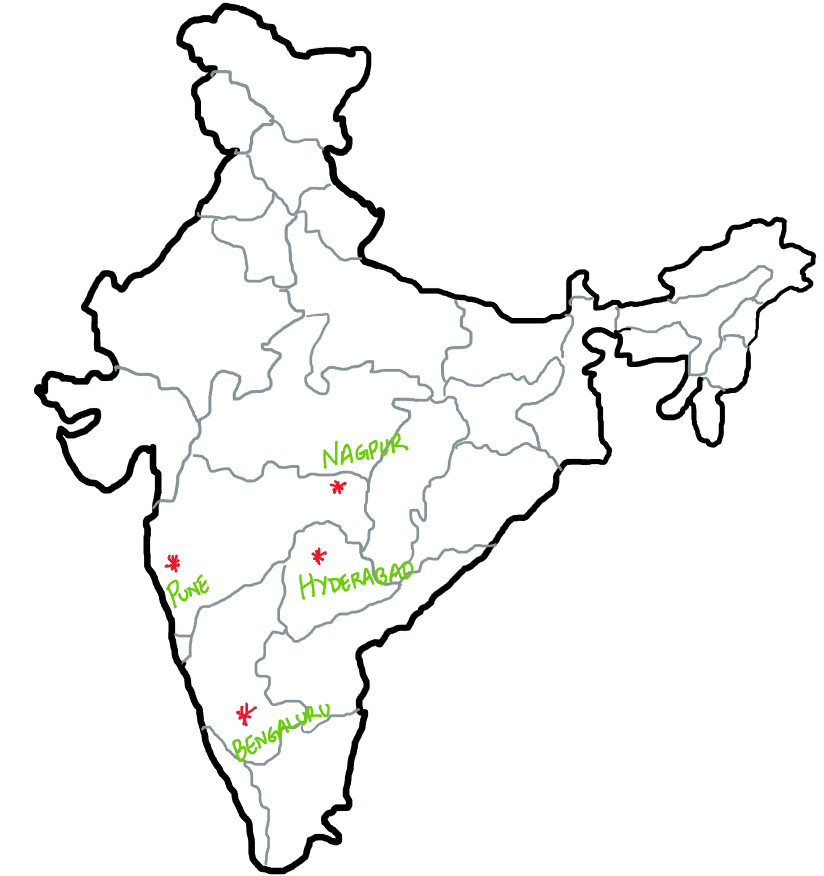
Explanation

Delhi and Bengaluru are located almost on the same longitude.

  • Longitude of Delhi- 77.1025 E
  • Longitude of Bengaluru- 77.5946 E
  • Longitude of Hyderabad- 78.4867 E
  • Longitude of Nagpur- 79.0882 E
  • Llongitude of Pune- 73.8567 E
Cities on Map

Cities on Map


QUESTION 38

GS

Medium

Indian Polity

Prelims 2018

Consider the following statements :

  1. Aadhaar card can be used as a proof of citizenship or domicile.
  2. Once issued, the Aadhaar number cannot be deactivated or omitted by the Issuing Authority.

Which of the statements given above is/are correct?

A. 1 only

B. 2 Only

C. 1 and 2

D. None of the above

Explanation

Statement 1 is incorrect: The Aadhaar Act explicitly states that Aadhaar is meant only for identity and residence verification. It does not grant, confirm, or serve as proof of citizenship or domicile status.

Statement 2 is incorrect: While deactivation is temporary, the Unique Identification Authority of India (UIDAI) can deactivate an Aadhaar number under certain conditions. In specific cases, Aadhaar numbers can even be permanently omitted from the database.

Hence, the correct answer is option (d).


QUESTION 39

GS

Medium

International Relations

Prelims 2018

Consider the following pairs:

TownSometime mentioned in news Country
1. AleppoSyria
2. KirkukYemen
3. MosulPalestine
4. Mazar-i-SharifAfghanistan

Which of the pairs given above are correctly matched?

A. 1 and 2

B. 1 and 4

C. 2 and 3

D. 3 and 4

Explanation

Aleppo is a city in Syria , serving as the capital of the Aleppo Governorate, the most populous Syrian governorate.

Kirkuk is a city in Iraq , serving as the capital of the Kirkuk Governorate, located 238 kilometres north of Baghdad.

Mosul is a major city in northern Iraq situated on the west bank of the Tigris, opposite the ancient Assyrian city of Nineveh on the east bank.

Mazar-e Sharif, the city is in Afghanistan , 35 miles south of the border with Uzbekistan. Hence, B is the correct option.


QUESTION 40

GS

Medium

Modern History

Prelims 2018

Which one of the following statements does not apply to the system of Subsidiary Alliance introduced by Lord Wellesley?

A. To maintain a large standing army at other's expense

B. To secure a fixed income for the Company

C. To keep India safe from Napoleonic danger

D. To establish British paramountcy over the Indian States

Explanation

The Subsidiary Alliance was a strategic military-political system introduced by Lord Wellesley (1798–1805) to expand British influence in India.

Option A applies: A key feature was that the allied Indian state had to maintain a permanent British force within its territory and pay a subsidy for its maintenance, allowing the British to maintain a large standing army at the expense of the Indian ruler. Option C applies: The system was designed to counter the 'Napoleonic danger' by requiring Indian rulers to expel all non-British Europeans (especially the French) from their service and territory. Option D applies: By controlling the external relations and defense of the states, and placing a British Resident in the court, the Company effectively established British paramountcy (supreme authority) over the Indian states. Option B does not apply: Securing a 'fixed income' for the Company was the primary objective of land revenue systems, such as the Permanent Settlement introduced by Lord Cornwallis in 1793, rather than the Subsidiary Alliance which focused on military and diplomatic control.


QUESTION 41

GS

Medium

Economy

Prelims 2018

Consider the following statements:

  1. The quantity of imported edible oils is more than the domestic production of edible oils in the last five years.
  2. The Government does not impose any customs duty on all the imported edible oils as a special case.

Which of the two statements given above is/are correct?

A. 1 only

B. 2 only

C. Both 1 and 2

D. Neither 1 nor 2

Explanation

Statement 1 is correct: India is the world's largest importer of edible oils. For the last several years, the domestic production of edible oils has been significantly lower than the quantity imported. Domestic production typically accounts for only about 35-40% of the total consumption, while imports fulfill the remaining 60-65% of the demand.

Statement 2 is incorrect: The Government of India does impose customs duties on imported edible oils. These duties (such as Basic Customs Duty and Agriculture Infrastructure and Development Cess) are adjusted periodically to balance the interests of domestic consumers and local oilseed farmers. The claim that the government does not impose 'any' customs duty on 'all' imported edible oils is factually incorrect.


QUESTION 42

GS

Easy

Indian Polity

Prelims 2018

Right to Privacy is protected as an intrinsic part of Right to Life and Personal Liberty. Which of the following in the Constitution of India correctly and appropriately imply the above statement?

A. Article 14 and the provisions under the 42nd Amendment to the Constitution

B. Article 17 and the Directive Principles of State Policy in Part IV

C. Article 21 and the freedoms guaranteed in Part III

D. Article 24 and the provisions under the 44th Amendment to the Constitution

Explanation

Right to Privacy and Article 21: Article 21 of the Indian Constitution guarantees the right to life and personal liberty. In the landmark 2017 judgment of K.S. Puttaswamy (Retd.) vs. Union of India, the Supreme Court of India unanimously held that the right to privacy is an intrinsic part of Article 21. This ruling reinforced privacy as a fundamental right, ensuring protection against unwarranted state and private intrusions.

Part III of the Constitution covers Fundamental Rights, which include:

  • Article 19: Right to freedom of speech and expression, freedom of movement, and other essential liberties.
  • Article 21: Right to life and personal liberty, which now includes privacy after the Puttaswamy judgment.

Article 14: Ensures equality before the law, but does not explicitly deal with privacy.

Article 17: Abolishes untouchability. Directive Principles of State Policy (DPSPs) are non-enforceable guidelines, not fundamental rights.

Article 24: Prohibits child labor but has no relation to privacy.

Thus, the right to privacy is most closely linked to Article 21 and the freedoms guaranteed in Part III of the Indian Constitution. Hence the correct answer is option (c).


QUESTION 43

GS

Easy

International Relations

Prelims 2018

The term "two-state solution" is sometimes mentioned in the news in the context of the affairs of -

A. China

B. Israel

C. Iraq

D. Yemen
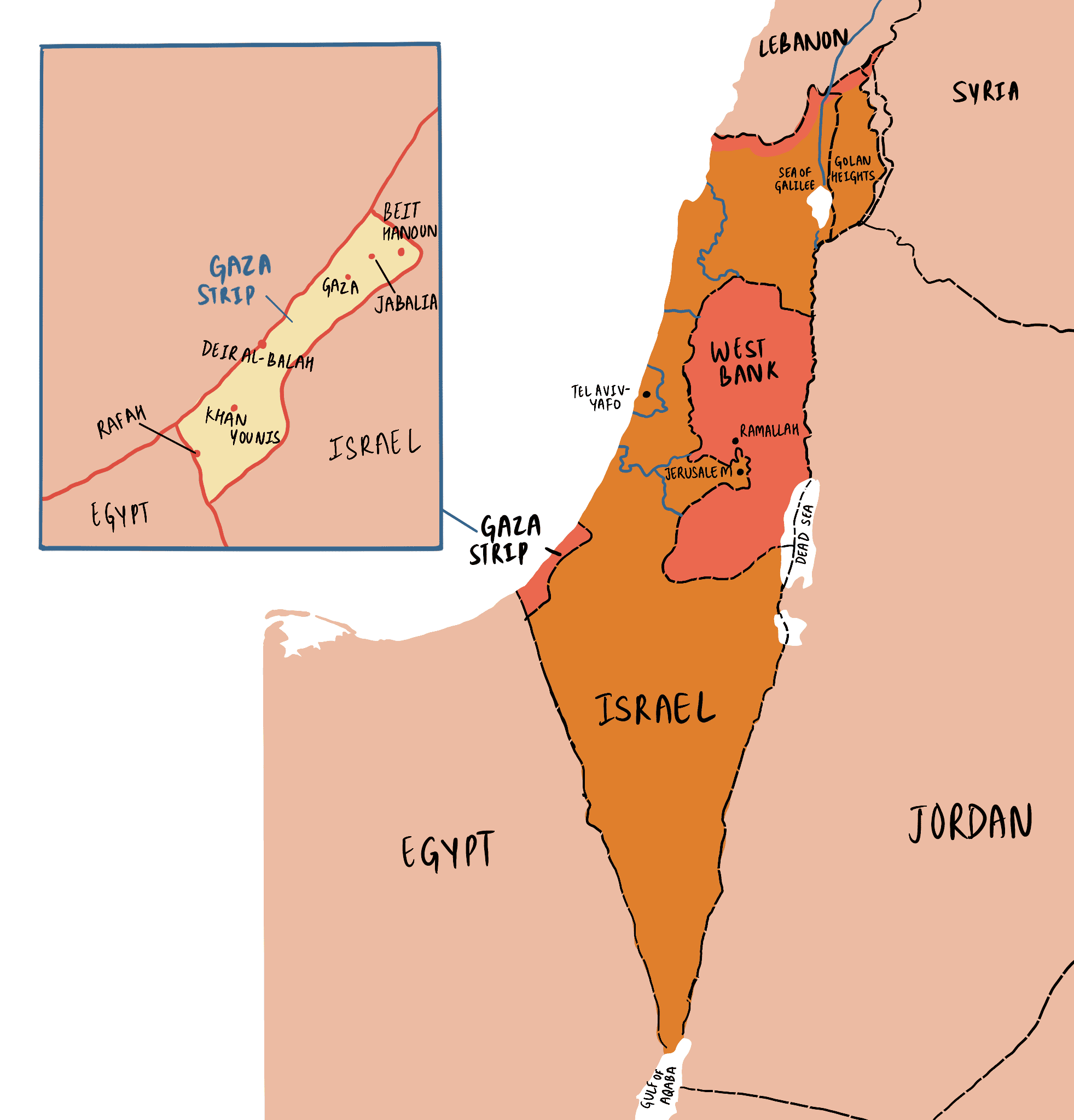
Explanation

The Two-State Solution is used in the context of the Israel-Palestine issue.

It envisages an independent State of Palestine alongside the State of Israel west of the Jordan River.

Two State Solution

Two State Solution


QUESTION 44

GS

Medium

Economy

Prelims 2018

With reference to digital payments, consider the following statements:

  1. BHIM app allows the user to transfer money to anyone with a UPI-enabled bank account.
  2. While a chip-pin debit card has four factors of authentication, BHIM app has only two factors of authentication.

Which of the statements given above is/are correct?

A. 1 only

B. 2 only

C. Both 1 and 2

D. Neither 1 nor 2

Explanation

Statement 1 is correct: Bharat Interface for Money (BHIM) is a payment app that lets you make simple, easy, and quick transactions using Unified Payments Interface (UPI). You can make direct bank payments to anyone on UPI using their UPI ID or scanning their QR with the BHIM app. You can also request money through the app from a UPI ID.

Statement 2 is not correct: From a consumer point of view, three levels of authentication are required in this app.

  1. The device ID and mobile number,
  2. The bank account which you are linking to this app, and
  3. The UPI Pin which is needed to complete the transaction.

There are three factors of authentication versus a normal net banking app or a chip-in debit card which will only have two factors of authentication.


QUESTION 45

GS

Easy

Science & Technology

Prelims 2018

Consider the following pairs :

Terms sometimes seen in newsContext /Topic
1. Belle II experimentArtificial Intelligence
2. Blockchain technologyDigital/Cryptocurrency
3. CRISPR — Cas9Particle Physics

Which of the pairs given above is/are correctly matched ?

A. 1 and 3 only

B. 2 only

C. 2 and 3 only

D. 1, 2 and 3
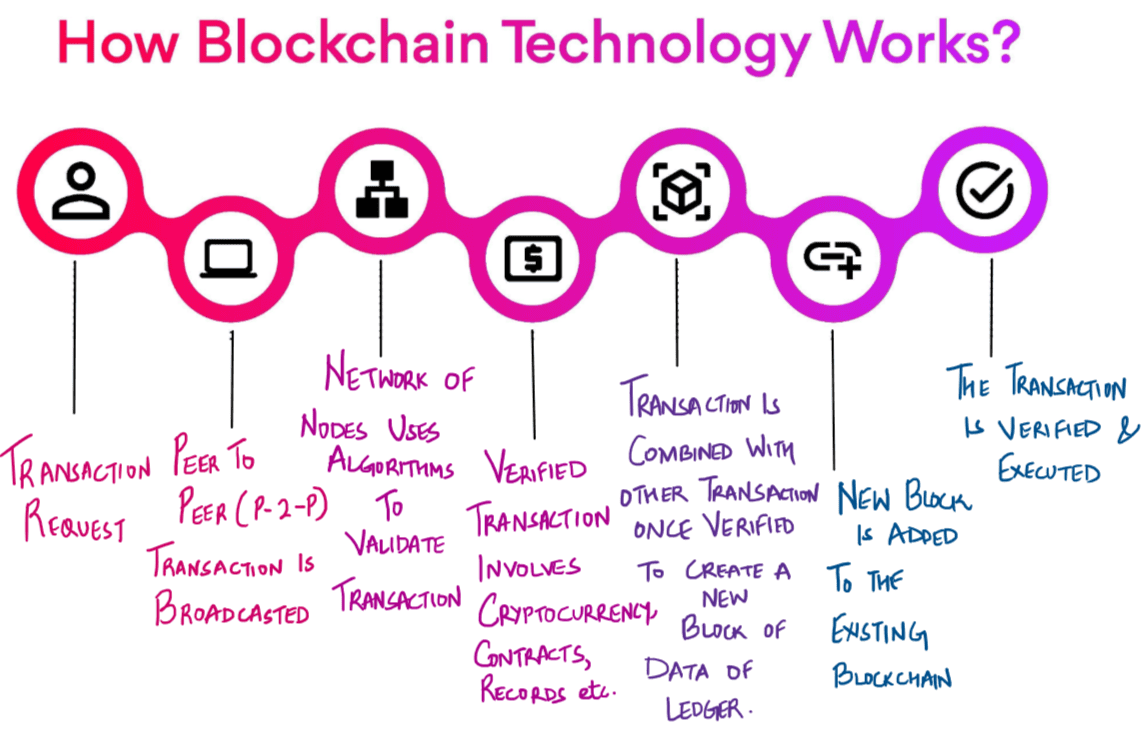
Explanation

Pair 1 is incorrect: The Belle II experiment is a particle physics experiment designed to study the properties of B mesons. It is not related to artificial intelligence.

Pair 2 s correct: Blockchain technology is the underlying technology behind cryptocurrencies like Bitcoin. It is a distributed ledger technology that ensures secure and transparent transactions.

Blockchain Technology

Blockchain Technology

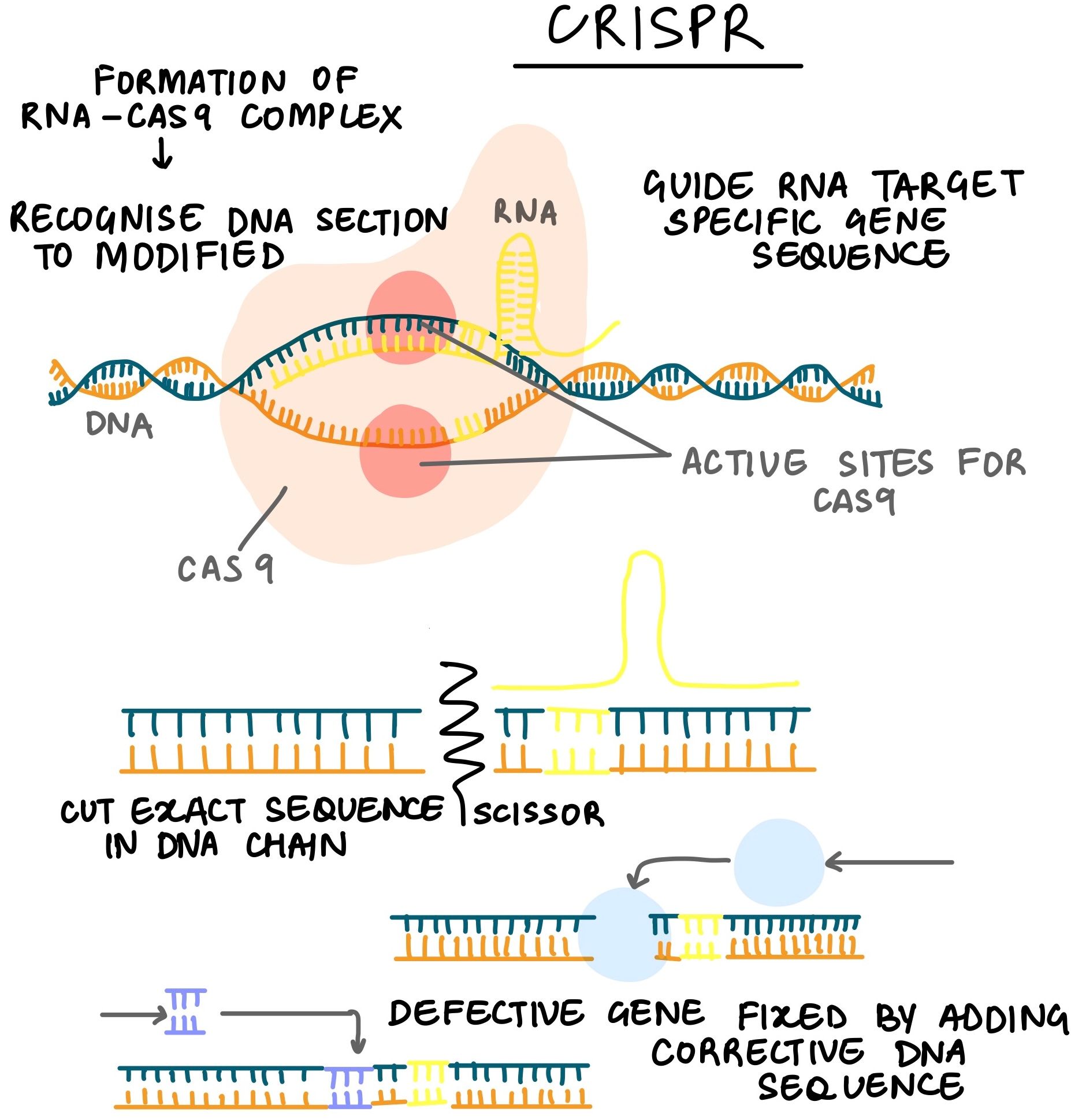
Pair 3 is incorrect: CRISPR-Cas9 is a gene-editing technology used in the field of molecular biology to edit genes. It is not related to particle physics.

CRISPR

CRISPR

Therefore, only pair 2 is correctly matched.


QUESTION 46

GS

Hard

Modern History

Prelims 2018

Who among the following were the founders of the "Hind Mazdoor Sabha" established in 1948?

A. B. Krishna Pillai, E.M.S. Namboodiripad and K.C. George

B. Jayaprakash Narayan, Deen Day al Upadhyay and M.N. Roy

C. C.P. Ramaswamy Iyer, K. Kamaraj and Veeresalingam Pantulu

D. Ashok Mehta, T.S. Ramanujam and G.G. Mehta

Explanation

The Hind Mazdoor Sabha (HMS) wasn't founded by a single person, but by a group of socialists, Forward Bloc followers, and independent unionists in 1948.

Here's a list of some key figures involved

  • Basawon Singh (Sinha)
  • Ashok Mehta
  • R.S. Ruikar
  • Maniben Kara
  • Shibnath Banerjee
  • R.A. Khedgikar
  • T.S. Ramanujam
  • V.S. Mathur
  • G.G. Mehta

It's important to note that R.S. Ruikar was elected as the first President and Ashok Mehta became the General Secretary of the HMS.


QUESTION 47

GS

Hard

Economy

Prelims 2018

Consider the following statements

  1. The Fiscal Responsibility and Budget Management (FRBM) Review Committee Report has recommended a debt to GDP ratio of 60% for the general (combined) government by 2023, comprising 40% for the Central Government and 20% for the State Governments.
  2. The Central Government has domestic liabilities of 21% of GDP as compared to 49% of GDP of the State Governments.
  3. As per the Constitution of India, it is mandatory for a State to take the Central Government’s consent for raising any loan if the former owes any outstanding liabilities to the latter.

Which of the statements given above is/are correct?

A. 1 only

B. 2 and 3 only

C. 1 and 3 only

D. 1, 2 and 3

Explanation

Statement 1 is correct. The Fiscal Responsibility and Budget Management (FRBM) Review Committee Report indeed recommended a debt-to-GDP ratio of 60% for the general (combined) government by 2023, with 40% for the Central Government and 20% for the State Governments. This recommendation aimed to ensure fiscal discipline and sustainability.

Statement 2 is not correct. The Central Government has domestic liabilities of 46.1% of GDP (2016-17) and as a percentage of GDP, States liabilities increased to 23.2 per cent at end-March 2016.

Statement 3 is correct. The Constitution of India empowers State Governments to borrow only from domestic sources (Article 293(1)). Further, as long as a State has outstanding borrowings from the Central Government, it is required to obtain the Central Government's prior approval before incurring debt (Article 293 (3)).


QUESTION 48

GS

Easy

Science & Technology

Prelims 2018

The terms ‘Wanna Cry, Petya and Eternal Blue' sometimes mentioned in the news recently are related to

A. Exo-planets

B. Crypto-currency

C. Cyberattacks

D. Minisatellites

Explanation

The terms 'WannaCry, Petya and EternalBlue' are all related to cyber attacks.

  • 'WannaCry' is a ransomware that locks users' devices and prevents them from accessing data and software until a certain ransom is paid to its creator.

  • 'Petya' is another type of ransomware that spreads rapidly through networks that use Microsoft Windows.

  • The Petya and WannaCry cyber-attacks in May and June 2017 are two of the biggest in history and impacted the finances of companies throughout the globe.

  • 'EternalBlue' is a cyber exploit developed by the U.S. National Security Agency (NSA). It was used in the 2017 WannaCry ransomware attack and exploits a vulnerability in the Microsoft implementation of the Server Message Block (SMB) Protocol.


QUESTION 49

GS

Medium

Environment & Ecology

Prelims 2018

How is the National Green Tribunal (NGT) different from the Central Pollution Control Board (CPCB)?

  1. The NGT has been established by an Act whereas the CPCB has been created by executive order of the Government.
  2. The NGT provides environmental justice and helps reduce the burden of litigation in the higher courts whereas the CPCB promotes cleanliness of streams and wells, and aims to improve the quality of air in the country.

Which of the statements given above is/are correct

A. 1 only

B. 2 only

C. 1 and 2

D. None of the above

Explanation

Statement 1 is incorrect: The National Green Tribunal (NGT) was established under the National Green Tribunal Act, 2010, passed by Parliament, making it a statutory body. Similarly, the Central Pollution Control Board (CPCB) was constituted under the Water (Prevention and Control of Pollution) Act, 1974 and is also a statutory body. It plays a key role in environmental regulation in India.

Statement 2 is correct: The NGT’s primary role is to ensure the expeditious disposal of environmental cases related to forest conservation, natural resource protection, and pollution control, thereby reducing the burden on higher courts.

The CPCB, functioning under the Ministry of Environment, Forest and Climate Change (MoEFCC), is responsible for monitoring water and air quality, implementing pollution control measures, and enforcing environmental laws to promote a cleaner environment.

Thus, while both bodies deal with environmental protection, the NGT focuses on adjudication, whereas the CPCB handles regulatory and enforcement functions. Therefore, the correct answer is option (b) 2 only.


QUESTION 50

GS

Easy

Economy

Prelims 2018

India enacted the Geographical Indications of Goods (Registration and Protection) Act, 1999 in order to comply with the obligations to

A. ILO

B. IMF

C. UNCTAD

D. WTO

Explanation

The World Trade Organization (WTO) has an agreement called the Agreement on Trade-Related Aspects of Intellectual Property Rights (TRIPS).

TRIPS requires member countries to protect Geographical Indications (GIs). GIs identify a product as originating from a specific geographical location where its qualities or reputation are essentially due to that origin.

India enacted the Geographical Indications of Goods (Registration and Protection) Act, 1999 to comply with its obligations under the TRIPS agreement of the WTO.


QUESTION 51

GS

Medium

Indian Polity

Prelims 2018

If the President of India exercises his power as provided under Article 356 of the Constitution in respect of a particular State, then -

A. the Assembly of the State is automatically dissolved.

B. the powers of the Legislature of that State shall be exercisable by or under the authority of the Parliament.

C. Article 19 is suspended in that State.

D. the President can make laws relating to that State.

Explanation

Option A is incorrect: When President's Rule is imposed, the State Assembly is not automatically dissolved. It can either be kept in suspended animation or dissolved later through a separate proclamation.

Option B is correct: Under President’s Rule, the legislative powers of the state legislature are transferred to Parliament, which can make laws for the state during this period. This is in line with Article 356, which allows the President to assume state functions when the constitutional machinery breaks down.

Option C is incorrect: Article 19, which guarantees fundamental rights such as freedom of speech, movement, and profession, is not automatically suspended under President’s Rule. Fundamental rights are only suspended during a national emergency under Article 352, not under Article 356.

Option D is incorrect: The President does not directly make laws for the state under Article 356. Instead, Parliament exercises legislative powers on behalf of the state during President’s Rule.


QUESTION 52

GS

Medium

Indian Geography

Prelims 2018

Consider the following statements:

  1. The Barren Island volcano is an active volcano located in the Indian territory.
  2. Barren Island lies about 140 km east of Great Nicobar.
  3. The last time the Barren Island volcano erupted was in 1991 and it has remained inactive since then.

Which of the statements given above is/are correct?

A. 1 and 3 only

B. 2 and 3

C. 3 only

D. 1 only

Explanation

Statement 1 is Correct: Barren Island is the only confirmed active volcano in India and is located in the Andaman Sea, part of the Indian Union Territory of Andaman and Nicobar Islands.

Statement 2 is Incorrect: Barren Island is located approximately 135–140 km East of Port Blair, not Great Nicobar. Geographically, Barren Island (approx. 12.2° N) is located significantly North of Great Nicobar (approx. 7° N), which is the southernmost island of the archipelago.

Statement 3 is Incorrect: After the 1991 eruption, which occurred after nearly 150 years of dormancy, the volcano has erupted several times, including in 1994-95, 2005-07, and as recently as 2017. It has not remained inactive since 1991.


QUESTION 53

GS

Medium

International Relations

Prelims 2018

Consider the following countries :

  1. Australia
  2. Canada
  3. China
  4. India
  5. Japan
  6. USA

Which of the above are among the 'free-trade partners' of ASEAN?

A. 1, 2, 4 and 5

B. 3, 4, 5 and 6

C. 1, 3, 4 and 5

D. 2, 3, 4 and 6

Explanation

ASEAN has established Free Trade Agreements (FTAs) with six specific 'Dialogue Partners': China, Japan, South Korea, India, Australia, and New Zealand.

Statement 1 is Correct: Australia is a free-trade partner of ASEAN through the ASEAN-Australia-New Zealand Free Trade Area (AANZFTA).

Statement 2 is Incorrect: Canada is a Dialogue Partner of ASEAN but does not have a formal Free Trade Agreement with the bloc.

Statement 3 is Correct: China is a free-trade partner of ASEAN through the ASEAN-China Free Trade Area (ACFTA).

Statement 4 is Correct: India is a free-trade partner of ASEAN through the ASEAN-India Free Trade Area (AIFTA).

Statement 5 is Correct: Japan is a free-trade partner of ASEAN through the ASEAN-Japan Comprehensive Economic Partnership (AJCEP).

Statement 6 is Incorrect: The USA has been a Dialogue Partner of ASEAN since 1977, but it does not have a Free Trade Agreement with the ASEAN bloc.


QUESTION 54

GS

Easy

Indian Polity

Prelims 2018

Consider the following statements :

  1. The Parliament of India can place a particular law in the Ninth Schedule of the Constitution of India.
  2. The validity of a law placed in the Ninth Schedule cannot be examined by any court and no judgement can be made on it.

Which of the statements given above is/are correct?

A. 1 only

B. 2 only

C. Both 1 and 2

D. Neither 1 nor 2

Explanation

Statement 1 is correct: The Ninth Schedule was introduced through the First Constitutional Amendment (1951) to protect certain laws from judicial review, even if they violated Fundamental Rights (Part III of the Constitution).

Statement 2 is incorrect: The protection under the Ninth Schedule is not absolute. As per the Kesavananda Bharati case (1973) and reaffirmed in the I.R. Coelho case (2007), laws placed in the Ninth Schedule after April 24, 1973, can still be challenged if they violate the "Basic Structure" of the Constitution.

Thus, while the Ninth Schedule provides a degree of protection, the Supreme Court retains the power to review laws that undermine the Constitution’s core principles.

Hence, the correct answer is option (a) 1 only.


QUESTION 55

GS

Medium

International Relations

Prelims 2018

What is/are the consequence/consequences of a country becoming a member of the 'Nuclear Suppliers Group'?

  1. It will have access to the latest and most efficient nuclear technologies.
  2. It automatically becomes a member of "The Treaty on the Non-Proliferation of Nuclear Weapons (NPT)".

Which of the statements given above is/are correct?

A. 1 only

B. 2 only

C. Both 1 and 2

D. Neither 1 nor 2

Explanation

Statement 1 (access to latest nuclear technology) is correct. This is a consequence of NSG membership. NSG members can trade nuclear materials, equipment, and technology for peaceful purposes. This access can be crucial for a country's nuclear energy program or medical isotope production.

Statement 2 (automatic NPT membership) is incorrect. Becoming an NSG member doesn't automatically qualify a country for NPT membership. NPT is a separate treaty focusing on nuclear non-proliferation, and membership has different requirements.

The correct answer is 1 only.


QUESTION 56

GS

Medium

Art & Culture

Prelims 2018

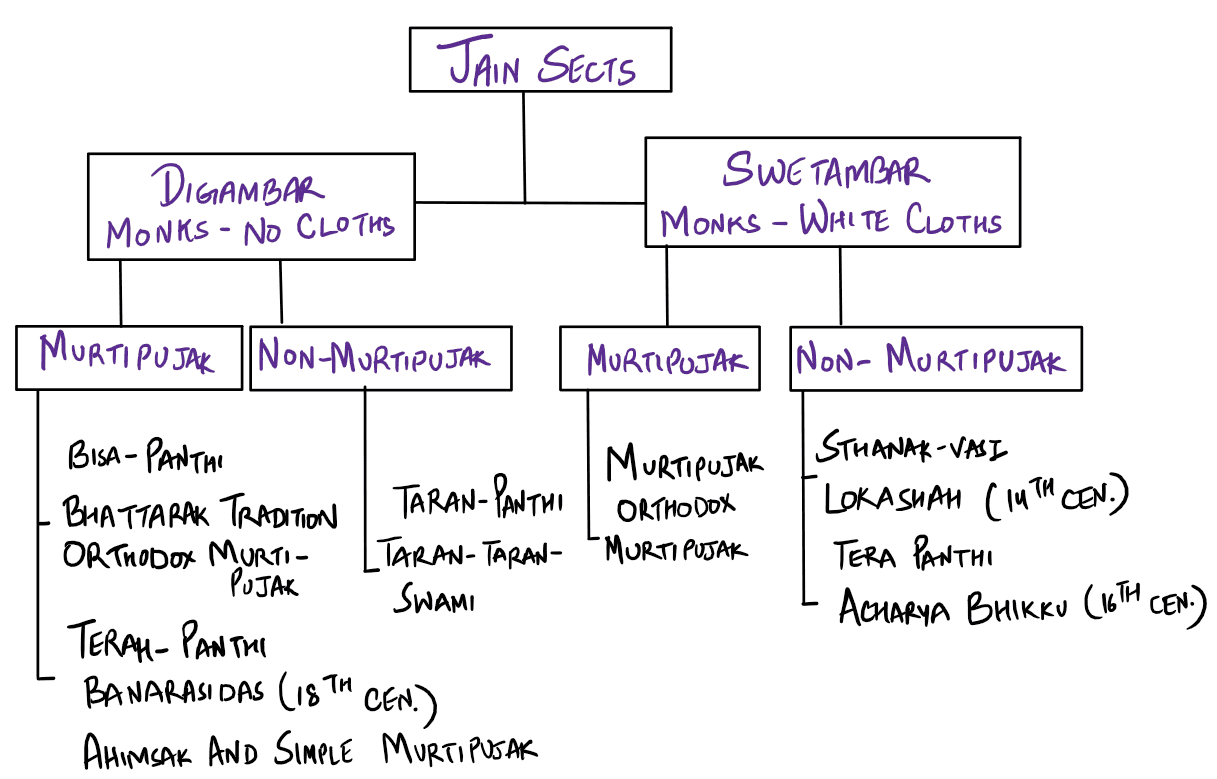
With reference to the religious practices in India, the "Sthanakvasi" sect belongs to -

A. Buddhism

B. Jainism

C. Vaishnavism

D. Shaivism

Explanation

The Sthanakvasi sect is a subsect of Jainism. It is known for its emphasis on ascetic practices and the abandonment of idol worship.

Members of the Sthanakvasi sect believe in the concept of Sthanak or a place for meditation, hence the name "Sthanakvasi," which translates to "those who dwell in a place for meditation."

Jain Sects

Jain Sects


QUESTION 57

GS

Hard

Indian Polity

Prelims 2018

Consider the following statements :

  1. In the first Lok Sabha, the single largest party in the opposition was the Swatantra Party.
  2. In the Lok Sabha, a "Leader of the Opposition" was recognised for the first time in 1969.
  3. In the Lok Sabha, if a party does not have a minimum of 75 members, its leader cannot be recognised as the Leader of the Opposition.

Which of the statements given above is/are correct?

A. 1 and 3 only

B. 2 only

C. 2 and 3 only

D. 1, 2 and 3
Explanation

Statement 1 is incorrect. In the first Lok Sabha, the single largest party in the opposition was not the Swatantra Party but the Communist Party of India.

Statement 2 is correct. In the Lok Sabha, a "Leader of the Opposition" was indeed recognized for the first time in 1969.

Statement 3 is incorrect. In the Lok Sabha, if a party does not have a minimum of 75 members, its leader cannot be recognized as the Leader of the Opposition. The requirement is not 75 members but 10% of the total strength of the house, which is 55 members. So, only statement 2 is correct.


QUESTION 58

GS

Medium

Science & Technology

Prelims 2018

With reference to the Indian Regional Navigation Satellite System (IRNSS), consider the following statements :

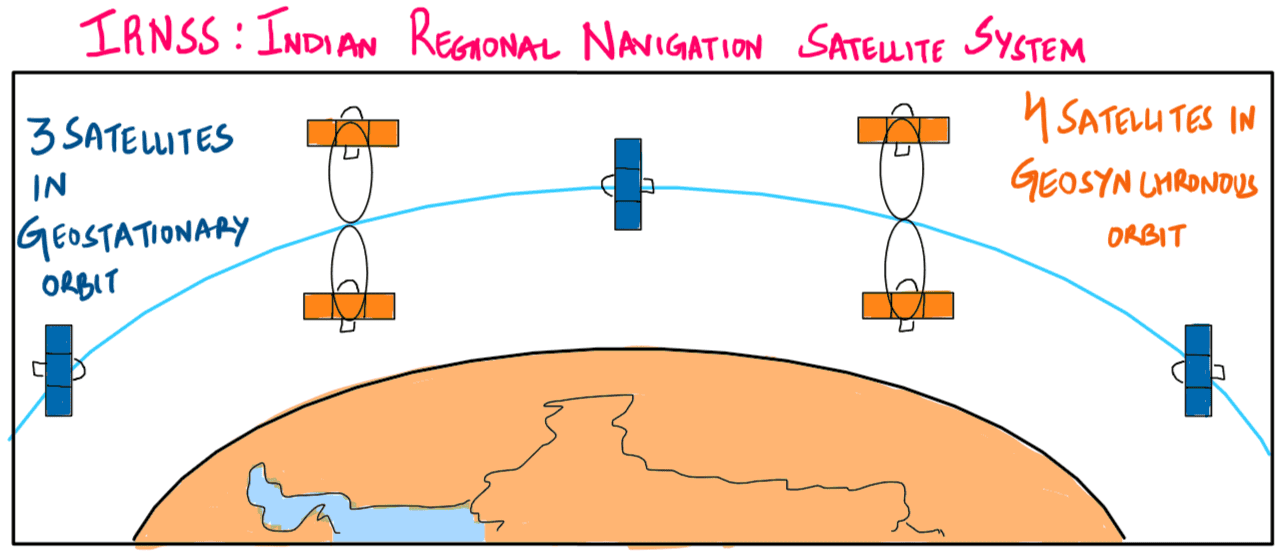
  1. IRNSS has three satellites in geostationary and four satellites in geosynchronous orbits.
  2. IRNSS covers entire India and about 5500 sq. km beyond its borders.
  3. India will have its own satellite navigation system with full global coverage by the middle of 2019.

Which of the statements given above is/are correct?

A. 1 only

B. 1 and 2 only

C. 2 and 3 only

D. None
Explanation

IRNSS is an independent regional navigation satellite system being developed by India.

Statement 1 is correct: The Indian Regional Navigation Satellite System (IRNSS) indeed has three satellites in geostationary orbits and four satellites in geosynchronous orbits.

IRNSS

IRNSS

Statement 2 is incorrect: It is designed to provide accurate position information service to users in India as well as the region extending up to 1500 km from its boundary, which is its primary service area. An Extended Service Area lies between primary service area and area enclosed by the rectangle from Latitude 30 deg South to 50 deg North, Longitude 30 deg East to 130 deg East.

Statement 3 is incorrect: While India has been working on enhancing the coverage of its navigation system, as of the given timeframe (2019), it does not have full global coverage. The system is primarily regional, although there are plans for augmentation and expansion.


QUESTION 59

GS

Hard

Economy

Prelims 2018

If a commodity is provided free to the public by the Government, then

A. the opportunity cost is zero.

B. the opportunity cost is ignored.

C. the opportunity cost is transferred from the consumers of the product to the Government.

D. the opportunity cost is transferred from the consumers of the product to the tax-paying public.

Explanation

Opportunity cost: It refers to the potential benefit an individual or entity gives up when choosing one option over another. In simpler terms, it's what you miss out on by making a specific choice.

Free commodity by the government: When the government provides a good or service for free, it doesn't eliminate the opportunity cost. The resources used to provide that free good could have been used for something else.

Taxpayers bear the burden: The resources for "free" public goods come from somewhere, usually taxpayer money. So, the opportunity cost isn't eliminated, it's simply shifted. Taxpayers give up the potential use of those resources in exchange for a free good or service.

In essence, while the individual consumer might not directly pay for the good, the cost is still there and borne by the tax-paying public.


QUESTION 60

GS

Hard

Indian Polity

Prelims 2018

Which one of the following reflects the most appropriate relationship between law and liberty?

A. if there are more laws, there is less liberty.

B. If there are no laws, there is no liberty.

C. If there is liberty, laws have to be made by the people.

D. If laws are changed too often, liberty is in danger.

Explanation

The most appropriate statement is: If there are no laws, there is no liberty.

Laws provide the foundation for liberty. Without laws, there would be no structured protection of individual rights, leading to a state of anarchy where the strong dominate the weak.

Liberty is meaningful only when protected by law. Laws define acceptable behavior, prevent exploitation, and ensure that one person's freedom does not infringe upon another's.


QUESTION 61

GS

Easy

Environment & Ecology

Prelims 2018

Why is a plant called Prosopis juliflora often mentioned in the news?

A. Its extract is widely used in cosmetics.

B. It tends to reduce the biodiversity in the area in which it grows.

C. Its extract is used in the synthesis of pesticides.

D. None of the above

Explanation

  • Prosopis juliflora, commonly known as mesquite or thorn mimosa, frequently appears in discussions about invasive species due to its significant impact on ecosystems and biodiversity.

  • Originally native to Central and South America, Prosopis juliflora was introduced to various parts of Africa, Asia, and Australia for purposes like afforestation, erosion control, and fuelwood supply.

  • However, due to its rapid growth rate, tolerance for harsh conditions, and prolific seed production, it can become invasive.

  • It can outcompete native plants, disrupt ecological balances, and form dense thickets that hinder other vegetation growth.

  • In states like Tamil Nadu, Prosopis juliflora has been labelled an invasive species causing ecological damage. Efforts are underway to remove it from certain areas to restore native ecosystems.


QUESTION 62

GS

Hard

Modern History

Prelims 2018

In 1920, which of the following changed its name to “Swarajya Sabha”?

A. All India Home Rule League

B. Hindu Mahasabha

C. South Indian Liberal Federation

D. The Servants of India Society

Explanation

In 1920, the All India Home Rule League changed its name to Swarajya Sabha. This marked a significant shift towards the goal of achieving Swaraj (self-rule).

Hindu Mahasabha: Founded by Madan Mohan Malaviya and others, it focused on issues related to Hindu identity and rights.

South Indian Liberal Federation: Also known as the Justice Party, it was founded to represent the interests of non-Brahmins in Tamil Nadu.

The Servants of India Society: Founded by Gopal Krishna Gokhale, it focused on social reform, education, and service to the nation.


QUESTION 63

GS

Easy

Economy

Prelims 2018

Which one of the following statements correctly describes the meaning of legal tender money?

A. The money which is tendered in courts of law to defray the fee of legal cases

B. The money which a creditor is under compulsion to accept in settlement of his claims

C. The bank money in the form of cheques, drafts, bills of exchange, etc.

D. The metallic money in circulation in a country

Explanation

Legal tender is any form of payment recognized by law that a creditor is legally obligated to accept for the settlement of a debt or financial obligation. In India, currency notes issued by the RBI and coins issued by the Government of India constitute legal tender.

Why Option B is correct: The defining characteristic of legal tender is the legal compulsion on the creditor. If a debtor offers legal tender to settle a claim, the creditor cannot refuse it and subsequently sue for non-payment of the debt.

Why Option C is incorrect: Bank money such as cheques, drafts, and bills of exchange are considered 'fiduciary money.' Their acceptance depends on the trust between the parties involved; a creditor is not legally compelled to accept a cheque and can insist on payment in cash (legal tender).

Why Option D is incorrect: While metallic coins are indeed legal tender (under the Coinage Act, 2011), legal tender also includes paper currency notes. Therefore, defining it solely as metallic money is incomplete.


QUESTION 64

GS

Hard

Modern History

Prelims 2018

He wrote biographies of Mazzini, Garibaldi, Shivaji and Shrikrishna; stayed in America for some time, and was also elected to the Central Assembly. He was

A. Aurobindo Ghosh

B. Bipin Chandra Pal

C. Lala Lajpat Rai

D. Motilal Nehru

Explanation

Lala Lajpat Rai was a prolific nationalist leader and writer who authored biographies of Giuseppe Mazzini, Giuseppe Garibaldi, Shivaji, and Shrikrishna to inspire the Indian youth with ideals of patriotism and self-sacrifice. He stayed in the United States from 1914 to 1920, during which time he founded the Indian Home Rule League of America in New York (1917) and wrote 'Young India'. Following his return to India, he was elected to the Central Legislative Assembly in 1923 as a member of the Swaraj Party. It is a common historical distinction that while Lala Lajpat Rai was a prominent member of the Assembly, Vithalbhai Patel was the first Indian to be elected as its President (Speaker) in 1925.


QUESTION 65

GS

Medium

Indian Polity

Prelims 2018

Consider the following statements:

  1. The Speaker of the Legislative Assembly shall vacate his/her office if he/she ceases to be a member of the Assembly.
  2. Whenever the Legislative Assembly is dissolved, the Speaker shall vacate his/her immediately.

Which of the statements given above is/are correct?

A. 1 only

B. 2only

C. Both 1 and 2

D. Neither 1 nor 2

Explanation

Statement 1 is correct: The Speaker of the Legislative Assembly shall vacate their office if they cease to be a member of the Assembly. This is explicitly provided under Article 179 of the Indian Constitution.

Statement 2 is incorrect: It is incorrect to say that the Speaker vacates office immediately upon the dissolution of the Legislative Assembly.

When the Assembly is dissolved, the Speaker does not vacate office immediately. Instead, the Speaker continues in office until the newly elected Assembly convenes for the first time and elects a new Speaker. This ensures continuity in the legislative process and prevents a vacuum in constitutional functions. So, only the first statement is correct.


QUESTION 66

GS

Easy

Science & Technology

Prelims 2018

In which of the following areas can GPS technology be used?

  1. Mobile phone operations
  2. Banking operations
  3. Controlling the power grids

Select the correct answer using the code given below:

A. 1 only

B. 2 and 3 only

C. 1 and 3 only

D. 1, 2 and 3

Explanation

GPS, or Global Positioning System, is a satellite-based navigation system that provides geolocation and time information to a GPS receiver anywhere on or near the Earth. It has a wide range of applications.

Statement 1 is correct. GPS is used in mobile phones for various purposes such as location tracking, navigation, and location-based services.

Statement 2 is correct. GPS is used in banking operations for ATM location services and for time-stamping transactions, which is crucial for maintaining accurate records.

Statement 3 is correct. GPS is used for time-stamping power system measurements, which is vital for grid stability and synchronization. Therefore, GPS technology can be used in all the three areas mentioned.


QUESTION 67

GS

Easy

Indian Polity

Prelims 2018

Consider the following statements:

  1. No criminal proceedings shall be instituted against the Governor of a State in any court during his term of office.
  2. The emoluments and allowances of the Governor of a State shall not be diminished during his term of office.

Which of the statements given above is/are correct?

A. 1 only

B. 2 only

C. Both 1 and 2

D. Neither 1 nor 2

Explanation

Statement 1 is correct: Under Article 361 of the Indian Constitution, a Governor enjoys immunity from criminal proceedings while in office. No court can initiate proceedings against a Governor during their tenure for acts done in the exercise of their official duties. This provision ensures that the Governor can perform their constitutional responsibilities without fear of legal harassment. However, civil proceedings can be initiated with a two-month prior notice..

Statement 2 is correct: As per Article 158, the salary and allowances of a Governor are determined by law and cannot be reduced during their tenure. This provision guarantees the Governor's financial independence, preventing any undue influence on their functioning.

Hence, the correct answer is option (c) Both 1 and 2.


QUESTION 68

GS

Easy

Modern History

Prelims 2018

Economically, one of the results of the British rule in India in the 19th century was the -

A. increase in the export of Indian handicrafts

B. growth in the number of Indian owned factories

C. commercialization of Indian agriculture

D. rapid increase in the urban population

Explanation

The main aim of the colonisation of India by the Britishers was the economic exploitation of India. The commercialisation of Agriculture was an outcome of colonial exploitation. Various cash crops such as Indigo, Tea, and Cotton were forced on Indian farmers to meet the needs for raw materials for the Industrial Revolution in England.

On the other hand, the Handicraft of India was ruined thus exports decreased. Ruralisation of India led to a decrease in factories in the 19th century.


QUESTION 69

GS

Medium

Indian Polity

Prelims 2018

"Rule of Law Index" is released by which of the following?

A. Amnesty International

B. International Court of Justice

C. The Office of UN Commissioner for Human Rights

D. World Justice Project

Explanation

The Rule of Law Index is published annually by the World Justice Project (WJP), an independent, multidisciplinary organization. It measures how the rule of law is experienced and perceived in countries worldwide based on eight primary factors: Constraints on Government Powers, Absence of Corruption, Open Government, Fundamental Rights, Order and Security, Regulatory Enforcement, Civil Justice, and Criminal Justice. The index relies on data from household and expert surveys to provide a comprehensive picture of the rule of law in practice.


QUESTION 70

GS

Medium

Science & Technology

Prelims 2018

With reference to India’s satellite launch vehicles, consider the following statements:

  1. PSLVs launch the satellites useful for Earth resources monitoring whereas GSLVs are designed mainly to launch communication satellites.
  2. Satellites launched by PSLV appear to remain permanently fixed in the same position in the sky, as viewed from a particular location on Earth.
  3. GSLV Mk III is a four-stage launch vehicle with the first and third stages using solid rocket motors, and the second and fourth stages using liquid rocket engines.

Which of the statements given above is/are correct?

A. 1 only

B. 2 and 3

C. 1 and 2

D. 3 only
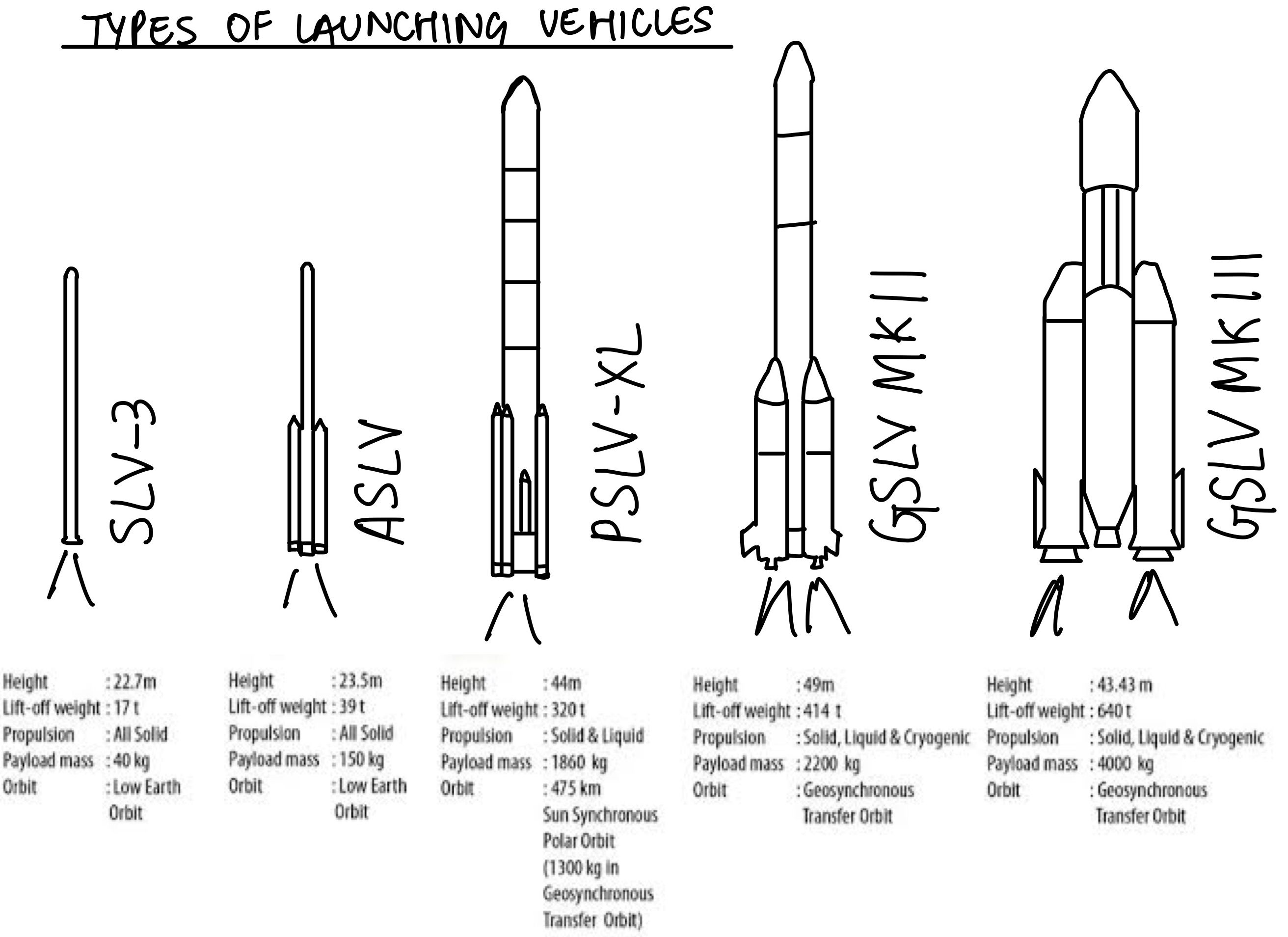
Explanation

Statement 1 is correct. PSLV (Polar Satellite Launch Vehicle) is primarily used to launch Earth observation/monitoring satellites, while GSLV (Geosynchronous Satellite Launch Vehicle) is designed to launch communication satellites into geosynchronous transfer orbits.

Statement 2 is incorrect. Satellites launched by PSLV are typically placed in polar or sun-synchronous orbits, which are not geosynchronous. These satellites appear to move across the sky as viewed from a particular location on Earth.

Statement 3 is incorrect. The GSLV Mk III is a three-stage launch vehicle, not a four-stage one. The first stage uses solid rocket motors, the second stage uses liquid rocket engines, and the third stage uses a cryogenic rocket engine.

Launching Vehicles

Launching Vehicles


QUESTION 71

GS

Medium

Modern History

Prelims 2018

The staple commodities of export by the English East India Company from Bengal in the middle of the 18th century were -

A. Raw cotton, oil-seeds and opium

B. Sugar, salt, zinc and lead

C. Copper, silver, gold, spices and tea

D. Cotton, silk, saltpetre and opium

Explanation

In the middle of the 18th century (c. 1750s), Bengal was the most prosperous province of the Mughal Empire and the primary base for the English East India Company's trade. The staple commodities exported from Bengal were:

  • Cotton and Silk: Bengal was world-renowned for its high-quality textiles, including fine muslins and silk fabrics, which were the most sought-after Indian exports in European and Asian markets.
  • Saltpetre: This was a strategic commodity used as a key ingredient in the manufacture of gunpowder. Bengal was the primary source of saltpetre for European powers during the frequent wars of the 18th century.
  • Opium: Bengal was a major producer of opium, which the East India Company exported primarily to China and Southeast Asia. While the Company's formal monopoly was established in 1773, it was already a staple export item by the mid-18th century.

Note on other options: During this period, India was a 'sink' for precious metals; therefore, copper, silver, and gold (Option C) were typically imported into India as bullion to pay for Indian goods, rather than being exported.


QUESTION 72

GS

Medium

Environment & Ecology

Prelims 2018

With reference to agricultural soils, consider the following statements :

  1. The high content of organic matter in soil drastically reduces its water holding capacity.
  2. Soil does not play any role in the sulphur cycle.
  3. Irrigation over a period of time can contribute to the salinization of some agricultural lands.

Which of the statements given above is/are correct?

A. 1 and 2 only

B. 3 only

C. 1 and 3 only

D. 1, 2 and 3

Explanation

Statement 1 is incorrect: High organic matter content in soil actually increases its water-holding capacity. Organic matter helps to bind soil particles together, creating pore spaces that can hold water. It acts like a sponge, absorbing and retaining moisture effectively.

Statement 2 is incorrect: Soil plays a crucial role in the sulphur cycle. Soil contains various forms of sulfur compounds, including sulfates, which are essential nutrients for plant growth. Microorganisms in the soil participate in the transformation of sulfur compounds through processes like mineralization and immobilization.

Statement 3 is correct: Excessive or improper irrigation practices can lead to the salinization of agricultural lands. When irrigation water contains high levels of dissolved salts, and there is inadequate drainage, these salts can accumulate in the soil over time, leading to soil salinization. This can adversely affect crop growth and productivity.

Therefore, among the given statements, only statement 3 is correct.


QUESTION 73

GS

Hard

Modern History

Prelims 2018

Which among the following events happened earliest?

A. Swami Dayanand established Arya Samaj.

B. Dinabandhu Mitra wrote Neeldarpan.

C. Bankim Chandra Chattopadhyay wrote Anandmath.

D. Satyendranath Tagore became the first Indian to succeed in the Indian Civil Services Examination.

Explanation

The chronological order of the events is as follows:

  1. Dinabandhu Mitra wrote Neeldarpan (1858-59): This play, which depicted the oppression of indigo farmers by British planters, was published in 1858-59.
  2. Satyendranath Tagore cleared the ICS (1863): He became the first Indian to succeed in the Indian Civil Service (ICS) examination in 1863. The examination was conducted by the Civil Service Commissioners in London.
  3. Swami Dayanand established Arya Samaj (1875): This Vedic reform movement was founded by Swami Dayanand Saraswati in Bombay in 1875.
  4. Bankim Chandra Chattopadhyay wrote Anandmath (1882): This famous Bengali novel, set against the backdrop of the Sannyasi Rebellion and containing the song 'Vande Mataram', was published in 1882.

Therefore, the writing of Neeldarpan is the earliest event among the choices provided.


QUESTION 74

GS

Medium

Economy

Prelims 2018

With reference to the governance of public sector banking in India, consider the following statements

  1. Capital infusion into public sector banks by the Government of India has steadily increased in the last decade.
  2. To put the public sector banks in order, the merger of associate banks with the parent State Bank of India has been affected.

Which of the statements given above is/are correct?

A. 1 only

B. 1 and 2

C. 2 only

D. Neither 1 nor 2

Explanation

Statement 1 is incorrect. The govt has been infusing large amounts in seven public sector banks through recapitalisation bonds but this has not been steady as statement 1 says.

Statement 2 is correct. To put the public sector banks in order, the merger of associate banks with the parent State Bank of India has been affected. For example, the merger of SBI associate banks will result in the creation of a stronger merger entity.

Hence, option C is the correct answer.


QUESTION 75

GS

Hard

Environment & Ecology

Prelims 2018

With reference to the 'Global Alliance for Climate-Smart Agriculture (GACSA)', which of the following statements is/are correct.

  1. GACSA is an outcome of the Climate Summit held in Paris in 2015.
  2. Membership of GACSA does not create any binding obligations.
  3. India was instrumental in the creation of GACSA.

Select the correct answer using the code given

A. 1 and 3 only

B. 2 only

C. 2 and 3 only

D. 1, 2 and 3

Explanation

Statement 1 is incorrect. GACSA was launched in 2014 at the UN Climate Summit in New York, not at the Paris Climate Summit in 2015.

Statement 2 is correct. GACSA is a voluntary partnership, and membership does not create any legally binding obligations for its members.

Statement 3 is incorrect. GACSA was launched by the Netherlands and several other countries, but India was not among the founding members or instrumental in its creation.


QUESTION 76

GS

Hard

Indian Polity

Prelims 2018

Which of the following are regarded as the main features of the "Rule of Law"?

  1. Limitation of powers
  2. Equality before law
  3. People's responsibility to the Government
  4. Liberty and civil rights

Select the correct answer using the code given below :

A. 1 and 3 only

B. 2 and 4 only

C. 1, 2 and 4 only

D. 1, 2, 3 and 4

Explanation

The Rule of Law is a fundamental principle of governance that ensures all individuals, institutions, and the State itself are subject to and accountable under laws that are publicly known, equally enforced, and independently adjudicated. Let’s analyze each option in this context:

Limitation of powers: The Rule of Law restricts arbitrary use of power by ensuring that no person or authority, including the government, is above the law. This maintains a system of checks and balances.

Equality before law: A core principle of the Rule of Law is "equality before the law" (Article 14 of the Indian Constitution), ensuring that all individuals, irrespective of rank or status, are treated equally.

People's responsibility to the Government: The Rule of Law primarily focuses on the government's accountability to the people, ensuring that it functions within the legal framework. It does not impose an obligation on citizens to be accountable to the government in the same way.

Liberty and civil rights: The Rule of Law safeguards fundamental rights, protecting individual freedoms, justice, and civil liberties from arbitrary actions of the state.

Hence, the correct answer is option (C) 1, 2, and 4 only.


QUESTION 77

GS

Medium

Environment & Ecology

Prelims 2018

Which of the following is/are the possible consequence/s of heavy sand mining in riverbeds?

  1. Decreased salinity in the river
  2. Pollution of groundwater
  3. Lowering of the water-table

Select the correct answer using the code given below :

A. 1 only

B. 2 and 3 only

C. 1 and 3 only

D. 1, 2 and 3

Explanation

Statement 1 is Incorrect: Sand mining does not decrease salinity. In coastal and estuarine regions, excessive sand mining can lead to saltwater intrusion from the sea into the river system, which actually increases the salinity of the river water.

Statement 2 is Correct: River sand acts as a natural filter for water percolating through the riverbed. Removing this sand layer reduces the filtration capacity, allowing pollutants, heavy metals, and contaminants to seep more easily into the underlying groundwater aquifers.

Statement 3 is Correct: Heavy sand mining causes riverbed incision (deepening of the river channel). As the riverbed drops, the surrounding groundwater drains into the deepened channel to maintain hydrological equilibrium, leading to a significant lowering of the water table in the adjacent areas.


QUESTION 78

GS

Medium

Indian Polity

Prelims 2018

Regarding Money Bill, which of the following statements is not correct?

A. A bill shall be deemed to be a Money Bill if it contains only provisions relating to imposition, abolition, remission, alteration or regulation of any tax.

B. A Money Bill has provisions for the custody of the Consolidated Fund of India or the Contingency Fund of India.

C. A Money Bill is concerned with the appropriation of money out of the Contingency Fund of India.

D. A Money Bill deals with the regulation of borrowing of money or the giving of any guarantee by the Government of India.

Explanation

Option A is correct. A Bill shall be deemed a Money Bill if it contains only provisions related to the imposition, abolition, remission, alteration, or regulation of any tax. This statement is correct as per Article 110(1)(a) of the Indian Constitution, which defines the scope of a Money Bill.

Option B is correct. A Money Bill includes provisions regarding the custody of the Consolidated Fund of India or the Contingency Fund of India. This statement is correct. As per Article 110(1)(c) of the Constitution, a Money Bill may contain provisions related to the custody, withdrawal, and audit of funds from these financial accounts.

Option C is incorrect. A Money Bill is concerned with the appropriation of money out of the Contingency Fund of India. This statement is not correct. The Contingency Fund of India is under the disposal of the President of India to meet unforeseen expenditures, and its withdrawal is not governed by a Money Bill. Instead, Article 267(1) of the Constitution provides for its use, and the withdrawal of money from this fund is later regularized through an Appropriation Bill.

Option D is correct. A Money Bill deals with the regulation of borrowing of money or giving of any guarantee by the Government of India. This statement is correct. As per Article 110(1)(d), provisions regarding government borrowing, the issuance of guarantees, and financial obligations of the Government of India fall within the scope of a Money Bill.

Thus, statements (a), (b), and (d) are correct, while statement (c) is incorrect.


QUESTION 79

GS

Hard

Art & Culture

Prelims 2018

Consider the following pairs:

CraftHeritage of
1. Puthukkuli shawlsTamil Nadu
2. Sujni embroideryMaharashtra
3. Uppada Jamdani sarisKarnataka

Which of the pairs given above is/are correct?

A. 1 only

B. 1 and 2

C. 3 only

D. 2 and 3
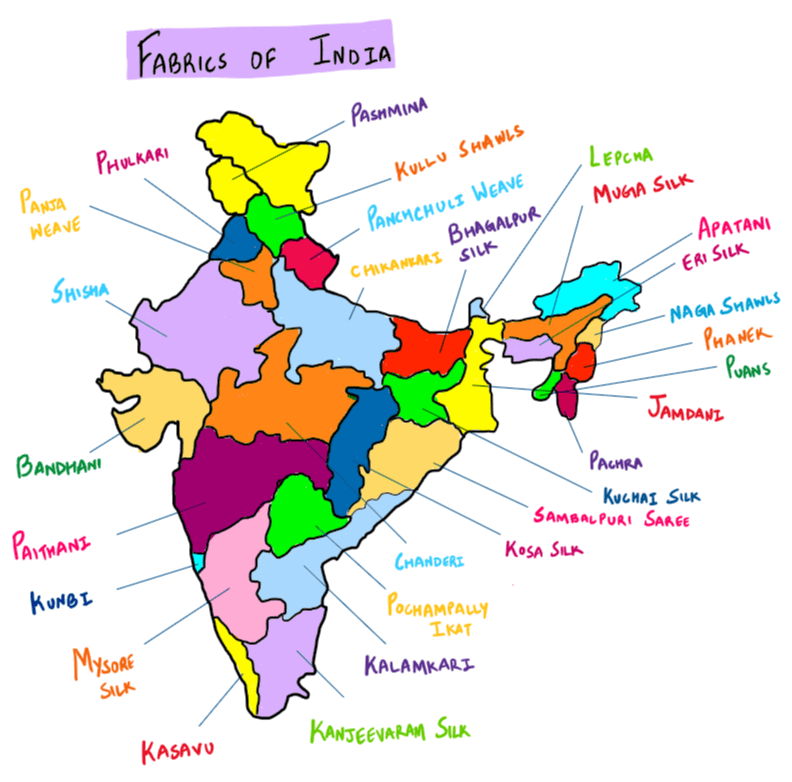
Explanation

Puthukkuli shawls: These embroidered textiles are a traditional craft of the Toda people in the Nilgiri Hills of Tamil Nadu.

Sujni embroidery: This embroidery style originates from the Bhusura village in Bihar, not Maharashtra.

Uppada Jamdani saris: Uppada Jamdani saris are known for their diaphanous silk and are native to Uppada in Andhra Pradesh, not Karnataka.

Fabric of India

Fabric of India


QUESTION 80

GS

Hard

Art & Culture

Prelims 2018

With reference to the cultural history of India, consider the following statements :

  1. White marble was used in making Buland Darwaza and Khankah at Fatehpur Sikri.
  2. Red sandstone and marble were used in making Bara Imambara and Rumi Darwaza at Lucknow.

Which of the statements given above is/are correct?

A. None

B. 2 only

C. Both 1 and 2

D. 1 Only

Explanation

Statement 1 (Incorrect): Buland Darwaza and Khankah at Fatehpur Sikri were primarily constructed using red sandstone, not white marble. While the structures might incorporate some decorative elements with white marble inlay, red sandstone is the dominant material.

Statement 2 (Incorrect): Bara Imambara in Lucknow is primarily constructed using brick with stucco plaster, not red sandstone and marble. Rumi Darwaza, on the other hand, is built mainly with bricks and lime plaster.


QUESTION 81

GS

Hard

Economy

Prelims 2018

With reference to India's decision to levy an equalization tax of 6% on online advertisement services offered by non-resident entities, which of the following statements is/are correct?

  1. It is introduced as a part of the Income Tax Act.
  2. Non-resident entities that offer advertisement services in India can claim a tax credit in their home country under the "Double Taxation Avoidance Agreements".

Select the correct answer using the code given below:

A. None

B. 2 only

C. Both 1 and 2

D. 1 only

Explanation

The equalization levy on online advertisement services offered by non-resident entities is introduced as a separate tax under the Finance Act, not as a part of the Income Tax Act.

Non-resident entities cannot claim a tax credit in their home country under the "Double Taxation Avoidance Agreements" because the equalization levy is not an income tax. It is a separate tax levied on specified services provided by non-residents to residents.

Hence, option A is the correct answer.

Note: The Indian government has abolished the 6% Equalization Levy on online advertisements, with effective from April 1, 2025.


QUESTION 82

GS

Medium

Science & Technology

Prelims 2018

What is "Terminal High Altitude Area Defense (THAAD)", sometimes seen in the news?

A. An Israeli radar system

B. India's indigenous anti-missile programme

C. An American anti-missile system

D. A defence collaboration between Japan and South Korea

Explanation

  • THAAD is a missile defense system developed by the United States to intercept and destroy short, medium, and intermediate-range ballistic missiles during their terminal phase of flight.

  • It is designed to defend against threats both within and outside the Earth's atmosphere, providing protection against potential missile attacks.

  • THAAD has been deployed by the United States military and has also been sold to allied countries such as South Korea and Saudi Arabia.


QUESTION 83

GS

Medium

Modern History

Prelims 2018

Regarding Wood's Dispatch, which of the following statements are true ?

  1. Grants-in-Aid system was introduced.
  2. Establishment of universities was recommended.
  3. English as a medium of instruction at all levels of education was recommended.

Select the correct answer using the code given below :

A. 1 and 2 only

B. 2 and 3 only

C. 1 and 3 only

D. 1, 2 and 3

Explanation

Statement 1 is correct: Wood's Dispatch advocated for a Grant-in-aid system to support private schools alongside government schools. This aimed to expand educational opportunities even with limited government resources.

Statement 2 is correct: The Dispatch recommended establishing universities in major cities like Bombay, Calcutta, and Madras. These universities would follow the model of the University of London.

Statement 3 is incorrect: While Wood's Dispatch acknowledged the importance of vernacular languages in primary education, it did not recommend English as the medium of instruction at all levels.

The Dispatch proposed a tiered system

  • Primary schools - Vernacular languages
  • Secondary schools - Both English and vernacular languages
  • Colleges - Primarily English

So, statements 1 and 2 are true, while statement 3 is not entirely accurate.


QUESTION 84

GS

Hard

Indian Polity

Prelims 2018

Consider the following statements

  1. The Food Safety and Standards Act, 2006 replaced the Prevention of Food Adulteration Act, 1954.
  2. The Food Safety and Standards Authority of India (FSSAI) is under the charge of Director General of Health Services in the Union Ministry of Health and Family Welfare.

Which of the statements given above is/are correct?

A. 1 only

B. 2 only

C. Both 1 and 2

D. Neither 1 nor 2

Explanation

Statement 1 is Correct: The Food Safety and Standards Act, of 2006 did supersede the Prevention of Food Adulteration Act, of 1954. It established a more comprehensive framework for ensuring food safety and regulating the food industry in India.

Statement 2 is Incorrect: The Food Safety and Standards Authority of India (FSSAI) is an autonomous body, not under the direct control of the Director General of Health Services. While the Ministry of Health and Family Welfare oversees FSSAI, it functions independently with its own governing board and chairperson.

Therefore, the correct answer is option (a) 1 only.


QUESTION 85

GS

Medium

Environment & Ecology

Prelims 2018

The Partnership for Action on Green Economy (PAGE), a UN mechanism to assist countries transition towards greener and more inclusive economies, emerged at

A. The Earth Summit on Sustainable Development 2002, Johannesburg

B. The United Nations Conference on Sustainable Development 2012, Rio de Janeiro

C. The United Nations Framework Convention on Climate Change 2015, Paris

D. The World Sustainable Development Summit 2016, New Delhi

Explanation

The Partnership for Action on Green Economy (PAGE) was established in response to the United Nations Conference on Sustainable Development (UNCSD) 2012, also known as Rio+20, held in Rio de Janeiro, Brazil.

The Rio+20 conference aimed to reaffirm global commitment to sustainable development and highlight the importance of transitioning to green economies i.e. economic systems that promote environmental sustainability, social inclusion, and economic growth.

PAGE was launched as a collaborative initiative to support countries in developing policies and strategies for sustainable and inclusive economic growth.


QUESTION 86

GS

Hard

Economy

Prelims 2018

With reference to organic farming in India, consider the following statements:

  1. The National Programme for Organic Production (NPOP) is operated under the guidelines and directions of the Union Ministry of Rural Development.
  2. The Agricultural and Processed Food Products Export Development Authority (APEDA) functions as the Secretariat for the implementation of NPOP.
  3. Sikkim has become India's first fully organic State.

Which of the statements given above is/are correct?

A. 1 and 2 only

B. 2 and 3 only

C. 3 only

D. 1, 2 and 3

Explanation

Statement 1 is incorrect: The National Programme for Organic Production (NPOP) is operated under the guidelines and directions of the Ministry of Commerce and Industry, not the Ministry of Rural Development or the Ministry of Agriculture. It provides the framework for the accreditation of certification bodies and standards for organic production.

Statement 2 is correct: The Agricultural and Processed Food Products Export Development Authority (APEDA) functions as the Secretariat for the implementation of NPOP. APEDA is a statutory body under the Ministry of Commerce and Industry responsible for the export promotion of agricultural products.

Statement 3 is correct: In 2016, Sikkim became India's first fully organic state, having successfully converted all its cultivable land to organic farming practices.

Therefore, the correct answer is 2 and 3 only.


QUESTION 87

GS

Easy

Environment & Ecology

Prelims 2018

Which of the following leaf modifications occur(s) in the desert areas to inhibit water loss?

  1. Hard and waxy leaves
  2. Tiny leaves
  3. Thorns instead of leaves

Select the correct answer using the code given below:

A. 2 and 3 only

B. 2 only

C. 3 only

D. 1, 2 and 3
Explanation

Plants in arid environments have evolved adaptive features to minimize water loss through transpiration:

Plant Modifications

Plant Modifications

  • Hard and waxy leaves have a thick cuticle and fewer stomata, reducing water loss by limiting evaporation.
  • Tiny leaves have a smaller surface area, which decreases the area exposed to transpiration.
  • Thorns, though primarily modified branches for protection, can also replace leaves in some desert plants (e.g., cacti), further reducing transpiration by limiting leaf surface area.

Therefore, the correct answer is option (d) 1, 2 and 3.


QUESTION 88

GS

Easy

Social Issues & Schemes

Prelims 2018

International Labour Organization's Conventions 138 and 182 are related to -

A. Child labour

B. Adaptation of agricultural practices to global climate change

C. Regulation of food prices and food security

D. Gender parity at the workplace

Explanation

The International Labour Organization's Conventions 138 and 182 are both related to child labour.

Convention No. 138 is the Minimum Age Convention. It requires member countries to set a minimum age for employment and work towards the elimination of child labour.

Convention No. 182 deals with the Worst Forms of Child Labour. It calls for the prohibition and elimination of the most severe forms of child labour, such as slavery, forced labour, and trafficking.

These conventions are considered fundamental by the ILO, meaning all member states must respect, promote, and work towards their aims regardless of ratification.


QUESTION 89

GS

Medium

Physical Geography

Prelims 2018

Consider the following statements -

  1. Most of the world's coral reefs are in tropical waters.
  2. More than one-third of the world's coral reefs are located in the territories of Australia, Indonesia and the Philippines.
  3. Coral reefs host far more number of animal phyla than those hosted by tropical rainforests.

Which of the statements given above is/are correct?

A. 1 and 2 only

B. 3 only

C. 1 and 3 only

D. 1, 2 and 3

Explanation

Statement 1 is Correct: Coral reefs primarily thrive in warm, shallow, clear tropical waters between 30°N and 30°S latitudes, where sea surface temperatures typically remain between 20°C and 30°C.

Statement 2 is Correct: These three countries account for over 40% of the world's coral reef area, with Indonesia holding approximately 18%, Australia 17%, and the Philippines 9%.

Statement 3 is Correct: While rainforests have a higher number of species, coral reefs have greater phyletic diversity, hosting 32 of the 34 recognized animal phyla compared to only about 9 phyla found in tropical rainforests.


QUESTION 90

GS

Medium

Science & Technology

Prelims 2018

With reference to the Genetically Modified mustard (GM mustard) developed in India, consider the following statements :

  1. GM mustard has the genes of a soil bacterium that gives the plant the property of pest-resistance to a wide variety of pests.
  2. GM mustard has the genes that allow the plant cross-pollination and hybridization.
  3. GM mustard has been developed jointly by the IARI and Punjab Agricultural University.

Which of the statements given above is/are correct?

A. 1 and 3 only

B. 2 only

C. 2 and 3 only

D. 1, 2 and 3
Explanation

Dhara Mustard Hybrid-11, otherwise known as DMH - 11, is a genetically modified hybrid variety of the mustard species Brassica juncea.

Statement 1 is incorrect. The GM mustard developed in India does not have the property of pest-resistance. It has been genetically modified for hybridization and increased yield, not for pest-resistance.

Statement 2 is correct. The GM mustard has been developed with genes that allow it to cross-pollinate, leading to hybridization and increased yield.

Statement 3 is incorrect. The GM mustard was developed by scientists at Delhi University’s Centre for Genetic Manipulation of Crop Plants (CGMCP), not by the IARI and Punjab Agricultural University.

So, only statement 2 is correct.

Genetic Engineering

Genetic Engineering


QUESTION 91

GS

Hard

Art & Culture

Prelims 2018

Consider the following pairs :

TraditionState
1. Chapchar Kut festivalMizoram
2. Khongjom Parba balladManipur
3. Thang-Ta danceSikkim

Which of the pairs given above is/are correct ?

A. 1 only

B. 1 and 2

C. 3 only

D. 2 and 3

Explanation

Pair 1 is correct: Chapchar Kut is a harvest festival celebrated in Mizoram.

Pair 2 is correct: Khongjom Parba is a ballad commemorating the Battle of Khongjom, which took place in Manipur.

Pair 3 is incorrect: Thang-Ta is a martial art form that originated in Manipur, not Sikkim.

So, only options 1 and 2 are correct.


QUESTION 92

GS

Hard

Medieval History

Prelims 2018

Which one of the following foreign travellers elaborately discussed about diamonds and diamond mines of India?

A. Francois Bernier

B. Jean-Baptiste Tavernier

C. Jean de Thevenot

D. Abbe Barthelemy Carre
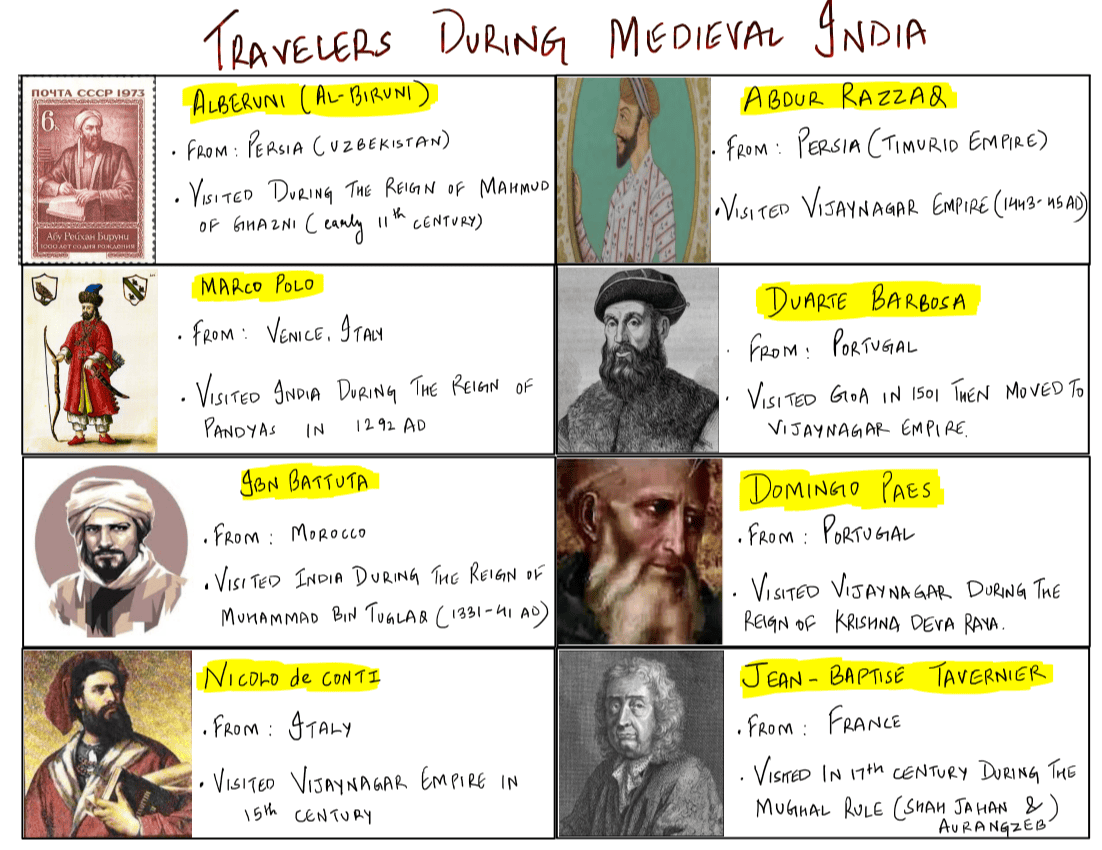
Explanation

Jean-Baptiste Tavernier, a French traveller and gem merchant, extensively documented his travels to India in the 17th century. He wrote about various aspects of Indian society, culture, and economy, including detailed descriptions of diamond mines and the diamond trade in India. Tavernier's writings provided valuable insights into the diamond industry of India during his time.

Francois Bernier (1625–1688): A French physician and traveler who visited India during the reign of Mughal Emperor Aurangzeb

Jean de Thévenot (1633–1667): A French traveler who visited India in the 17th century.

Abbe Barthelemy Carre (17th Century): A French traveler and envoy who visited India in the late 17th century.

Foreign Travelers in Medieval India

Foreign Travelers in Medieval India


QUESTION 93

GS

Medium

Environment & Ecology

Prelims 2018

Consider the following statements:

  1. The definition of "Critical Wildlife Habitat" is incorporated in the Forest Rights Act, 2006.
  2. For the first time in India, Baigas have been given Habitat Rights.
  3. Union Ministry of Environment, Forest and Climate Change officially decides and declares Habitat Rights for Primitive and Vulnerable Tribal Groups in any part of India.

Which of the statements given above is/are correct ?

A. 1 and 2 only

B. 2 and 3 only

C. 3 only

D. 1, 2 and 3
Explanation

Statement 1 is correct: The Scheduled Tribes and Other Traditional Forest Dwellers (Recognition of Forest Rights) Act, 2006, commonly known as the Forest Rights Act (FRA), 2006, introduces the concept of Critical Wildlife Habitat (CWH). These are areas within National Parks and Wildlife Sanctuaries that must be kept inviolate to ensure wildlife protection. CWHs can only be declared based on scientific evidence and after completing the due process of rehabilitation and resettlement of affected communities.

Critical wildlife habitat

Critical wildlife habitat

Statement 2 is correct: In 2015, the Baiga tribal community in Madhya Pradesh became the first to be granted Habitat Rights under the Forest Rights Act, 2006. This recognition allowed them to continue living within the Kanha Tiger Reserve while accessing forest resources for their bonafide livelihood needs.

Statement 3 is incorrect: According to the Forest Rights Act, 2006, it is the respective State governments that have the authority to declare and vest Habitat Rights for Primitive Tribal Groups and pre-agricultural communities over critical wildlife habitats, after obtaining consent from the tribal communities and establishing measures for their resettlement and rehabilitation.

Hence, correct answer is option (a) 1 and 2 only.


QUESTION 94

GS

Medium

Economy

Prelims 2018

Increase in absolute and per capita real GNP do not connote a higher level of economic development, if -

A. industrial output fails to keep pace with agricultural output.

B. agricultural output fails to keep pace with industrial output.

C. poverty and unemployment increase.

D. imports grow faster than exports.

Explanation

Economic Growth vs. Economic Development: An increase in absolute and per capita real GNP signifies economic growth, which means the overall production of goods and services in a country is expanding.

Economic development is a broader concept that goes beyond just increasing production. It encompasses factors like

  1. Improved living standards for citizens
  2. Reduction in poverty and unemployment
  3. Increased literacy and education levels
  4. Improved healthcare and infrastructure

If poverty and unemployment are increasing even with economic growth (GNP increase), it suggests the benefits of growth are not being shared widely. This indicates a lack of true economic development.


QUESTION 95

GS

Medium

Environment & Ecology

Prelims 2018

Which of the following statements best describes "carbon fertilization"?

A. Increased plant growth due to increased concentration of carbon dioxide in the atmosphere

B. Increased temperature of Earth due to increased concentration of carbon dioxide in the atmosphere

C. Increased acidity of oceans as a result of increased concentration of carbon dioxide in the atmosphere

D. Adaptation of all living beings on Earth to the climate change brought about by the increased concentration of carbon dioxide in the atmosphere

Explanation

  • Carbon fertilization is the increased rate of photosynthesis in plants due to the higher concentration of carbon dioxide in the atmosphere.

  • During Photosynthesis plants absorb carbon dioxide (CO₂) from the atmosphere, along with water and sunlight, to produce sugars (glucose) that provide energy for growth. This process releases oxygen (O₂) as a byproduct.

  • The concentration of CO₂ in the atmosphere is currently at its highest level in millions of years, primarily due to human activities such as fossil fuel combustion and deforestation.

  • Many plants respond to higher CO₂ levels with an increased rate of photosynthesis, enabling them to produce more sugars, which can lead to faster growth and higher biomass production.


QUESTION 96

GS

Medium

Economy

Prelims 2018

Consider the following statements:

  1. The Reserve Bank of India manages and services Government of India Securities but not any State Government Securities.
  2. Treasury bills are issued by the Government of India and there are no treasury bills issued by the State Governments.
  3. Treasury bills are issued at a discount from the par value.

Which of the statements given above is/are correct?

A. 1 and 2 only

B. 3 Only

C. 2 and 3 only

D. 1, 2 and 3

Explanation

Statement 1 is incorrect: The Reserve Bank of India (RBI) manages and services both Central (Government of India) and State Government securities. RBI acts as a debt manager for both levels of government under agreements with the states.

Statement 2 is correct: Treasury Bills (T-bills) are issued only by the Government of India, not by the State Governments. States instead issue State Development Loans (SDLs) for their borrowing needs.

Statement 3 is correct: Treasury Bills are zero-coupon instruments — they are issued at a discount to the par (face) value and redeemed at par on maturity. The difference represents the interest earned.


QUESTION 97

GS

Hard

Indian Geography

Prelims 2018

Consider the following statements:

  1. In India, State Governments do not have the power to auction non-coal mines.
  2. Andhra Pradesh and Jharkhand do not have gold mines.
  3. Rajasthan has iron ore mines.

Which of the statements given above is/are correct?

A. 1 and 2

B. 2 only

C. 3 only

D. 1 and 3
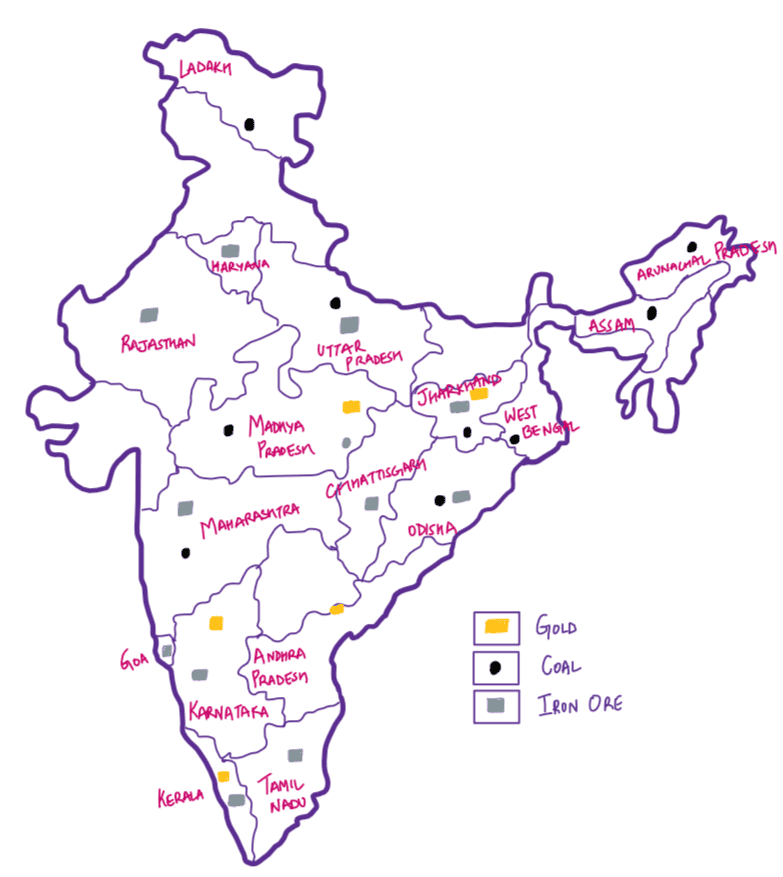
Explanation

The correct statement is 3 only.

Statement 1 is incorrect. Under the Mines and Minerals (Development and Regulation) Amendment Act of 2015, state governments conduct auctions for non-coal mine licenses.

Statement 2 is incorrect. Both Andhra Pradesh and Jharkhand have gold deposits and ongoing mining activities.

Statement 3 is correct. Rajasthan is known for its rich iron ore deposits and mining.

Minerals in India

Minerals in India


QUESTION 98

GS

Medium

Economy

Prelims 2018

Which one of the following best describes the term "Merchant Discount Rate" sometimes seen in the news?

A. The incentive is given by a bank to a merchant for accepting payments through debit cards pertaining to that bank.

B. The amount paid back by banks to their customers when they use debit cards for financial transactions for purchasing goods or services.

C. The charge to a merchant by a bank for accepting payments from his customers through the bank's debit cards.

D. The incentive given by the Government, to merchants for promoting digital payments by their customers through Point of Sale PoS machines and debit cards.
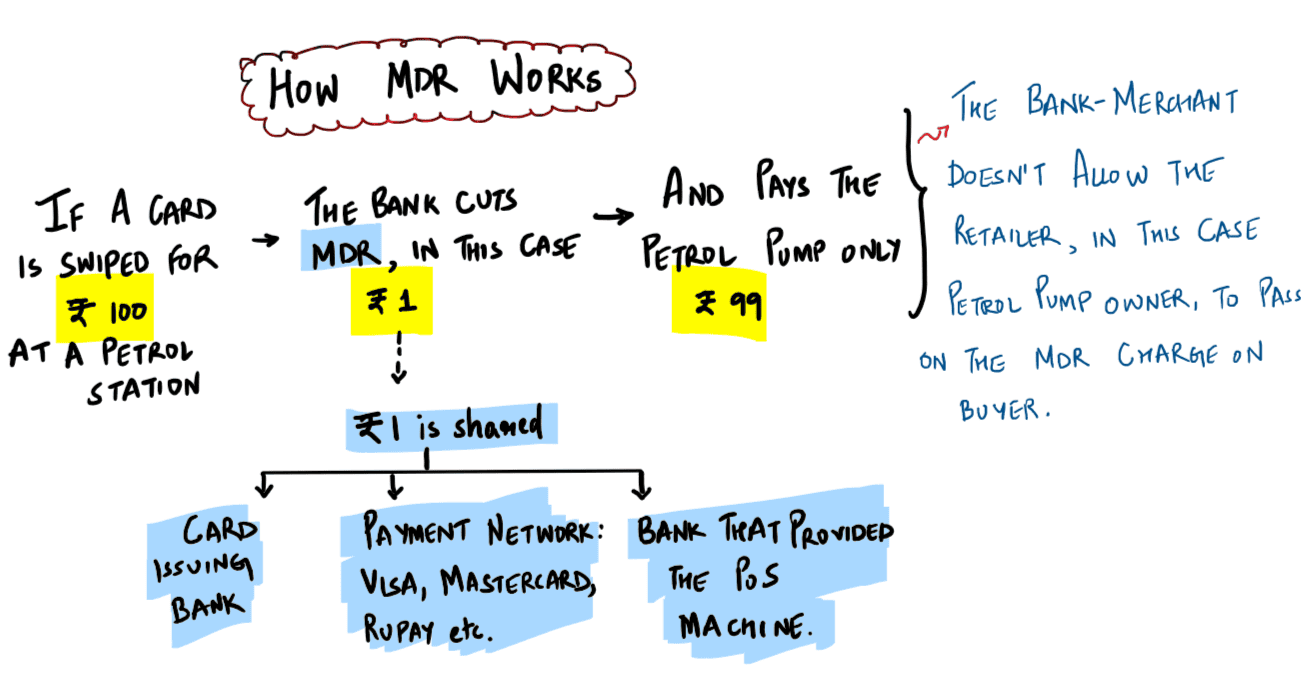
Explanation

The Merchant Discount Rate (MDR) is a fee levied on merchants by payment processors for accepting debit and credit card transactions. It's typically a percentage of the transaction value. So, when a customer uses a debit card at a store, the store pays a fee to the bank that processes the transaction. Hence, option C is the correct answer.

Merchant Rate Discount Process

Merchant Rate Discount Process


QUESTION 99

GS

Medium

Environment & Ecology

Prelims 2018

With reference to the circumstances in Indian agriculture, the concept of "Conservation Agriculture" assumes significance. Which of the following fall under the Conservation Agriculture?

  1. Avoiding monoculture practices
  2. Adopting minimum tillage
  3. Avoiding the cultivation of plantation crops
  4. Using crop residues to cover the soil surface
  5. Adopting spatial and temporal crop sequencing/crop rotations

Select the correct answer using the code given below:

A. 1, 3 and 4

B. 2, 3, 4 and 5

C. 1, 2, 3 and 5

D. 2, 4 and 5
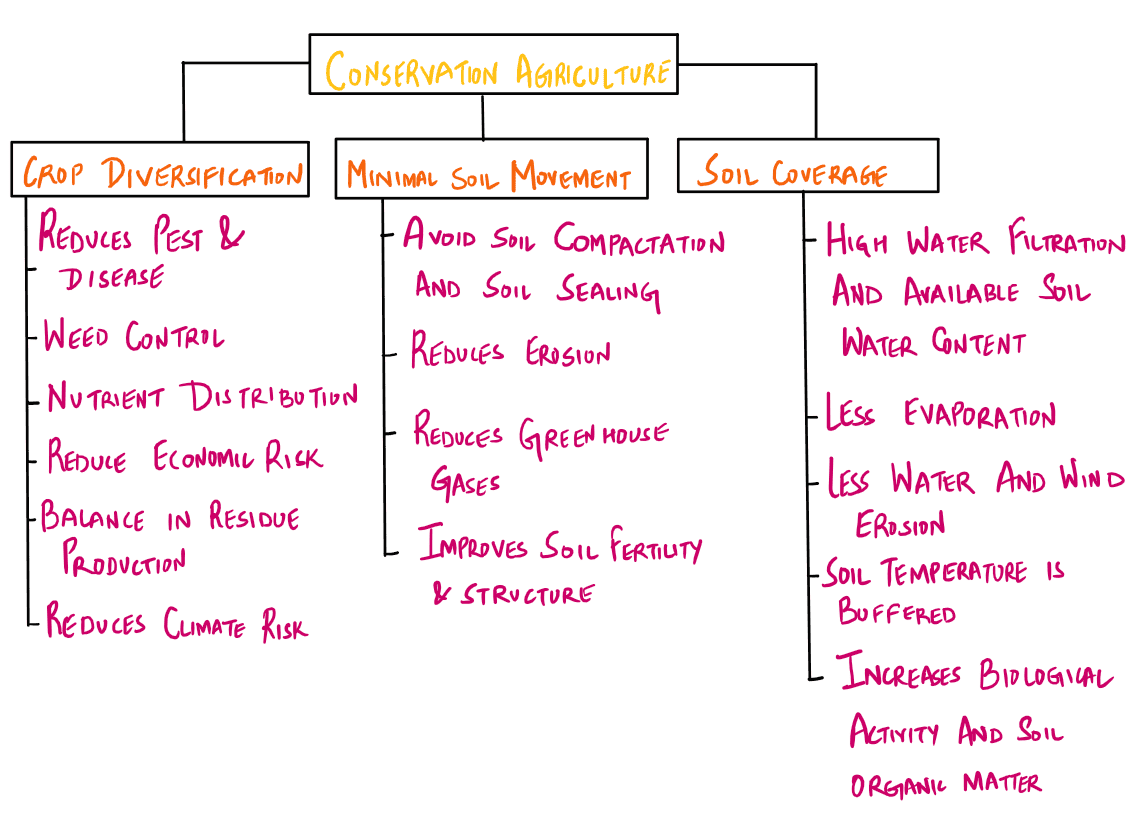
Explanation

Conservation Agriculture is a set of practices aimed at minimizing soil disturbance, maintaining permanent soil cover, and adopting crop rotations or intercropping.

Conservation Agriculture

Conservation Agriculture

Avoiding monoculture practices: This does not directly fall under Conservation Agriculture. Monoculture refers to the cultivation of a single crop over a wide area.

Adopting minimum tillage: Minimum or no tillage is one of the key principles of Conservation Agriculture, as it reduces soil disturbance.

Avoiding the cultivation of plantation crops: This is not a part of Conservation Agriculture. Plantation crops like tea, coffee, or rubber can be cultivated using conservation agriculture practices.

Using crop residues to cover the soil surface: Maintaining soil cover with crop residues or mulches is a crucial component of Conservation Agriculture.

Adopting spatial and temporal crop sequencing/crop rotations: Crop rotations and intercropping are recommended practices under Conservation Agriculture to improve soil fertility and reduce pest and disease incidence.

Therefore, the correct options that fall under Conservation Agriculture are 2, 4, and 5.


QUESTION 100

GS

Medium

Indian Geography

Prelims 2018

Which one of the following is an artificial lake?

A. Kodaikanal Tamil Nadu

B. Kolleru Andhra Pradesh

C. Nainital Uttarakhand

D. Renuka Himachal Pradesh
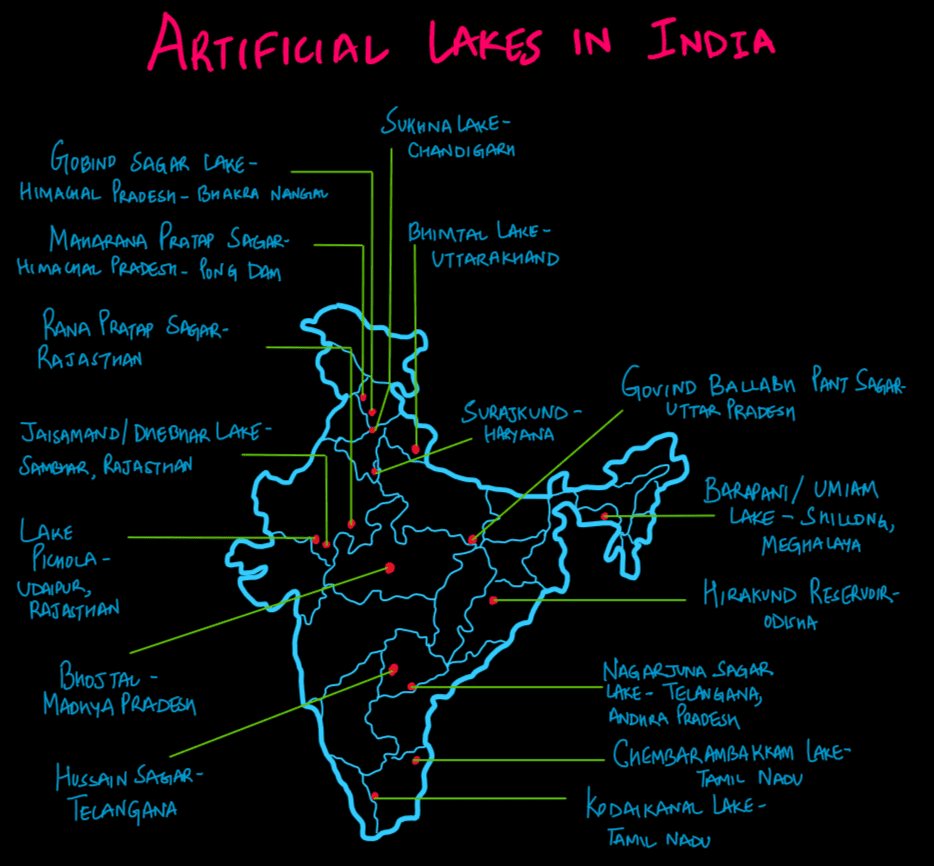
Explanation

Kodaikanal Lake, also known as Kodai Lake is a manmade lake located in the Kodaikanal city in Dindigul district in Tamil Nadu, India.

Sir Vere Henry Levinge, the then Collector of Madurai, was instrumental in creating the lake in 1863, amidst the Kodaikanal town which was developed by the British and early missionaries from the USA.

Artificial Lakes in India

Artificial Lakes in India

Share
SuperKalam
SuperKalam is your personal mentor for UPSC preparation, guiding you at every step of the exam journey.

Download the App

Get it on Google PlayDownload on the App Store
Follow us

ⓒ Snapstack Technologies Private Limited