The states of Jammu and Kashmir, Himachal Pradesh and Uttarakhand are reaching the limits of ecological carrying capacity due to tourism. Critically evaluate.
The states of Jammu and Kashmir, Himachal Pradesh and Uttarakhand are reaching the limits of ecological carrying capacity due to tourism. Critically evaluate.
Recent studies indicate that Himalayan states are experiencing unprecedented tourist influx, with Uttarakhand receiving 4.5 crore visitors in 2023, raising critical concerns about ecological sustainability.
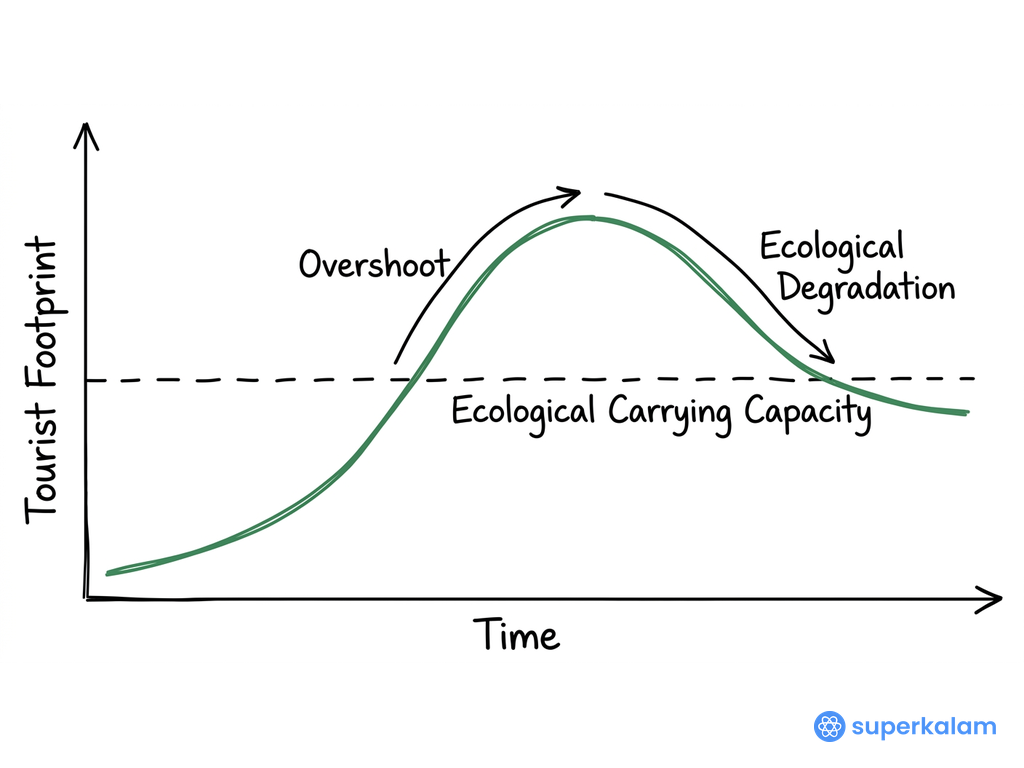
Tourist Footprint Over Time Line Graph
Evidence of Ecological Stress
Environmental Degradation:
- Water Crisis: Shimla faced severe water shortage in 2018 and 2023, with tourist consumption exceeding local supply capacity
- Waste Overload: Rohtang Pass generates 500 tonnes of waste daily during peak season, overwhelming disposal systems
- Air Quality: Manali and Mussoorie report deteriorating AQI levels due to increased vehicular traffic
- Glacial Impact: Gangotri and Yamunotri glaciers show accelerated retreat due to increased footfall and infrastructure development
- Forest Loss: 18% decline in forest cover in popular tourist circuits over the past decade
Infrastructure Burden:
- Carrying Capacity Exceeded: Kedarnath receives 6 lakh pilgrims annually against recommended capacity of 4 lakh
- Unregulated Construction: Over 2,000 illegal structures in Uttarakhand's eco-sensitive zones
- Traffic Congestion: Manali-Leh highway experiences 15-hour traffic jams during peak tourist season
- Power Crisis: Frequent power cuts in tourist areas due to 300% increased demand during seasons
- Sewage Problems: Untreated sewage from hotels polluting rivers like Beas and Alaknanda
Economic vs Environmental Trade-offs
- Employment Generation: Tourism sector employs 40 lakh people directly and indirectly in these states
- Revenue Contribution: Tourism contributes ₹45,000 crore annually to combined state revenues
- Infrastructure Development: Improved connectivity through All Weather Roads and Ropeway Projects
- Cultural Preservation: Revenue supports maintenance of heritage sites like Hemis Monastery and Jagannath Temple
- Livelihood Support: 3 lakh families dependent on tourism-related activities
Sustainable Solutions Framework
| Challenge | Solution | Implementation Example |
|---|---|---|
| Visitor Management | Carrying Capacity Limits | Valley of Flowers: Daily 300 visitor cap |
| Waste Management | Zero Waste Tourism | Spiti Valley: Complete plastic ban |
| Infrastructure | Green Building Norms | Sikkim: Mandatory eco-friendly construction |
| Transport | Electric Vehicle Promotion | Ladakh: E-vehicle mandatory zones |
| Accommodation | Homestay Promotion | Uttarakhand: 2,000+ registered homestays |
Government Initiatives and Challenges
- Himalayan Char Dham Devasthanam Management Act 2019: Regulating pilgrimage tourism
- National Mission on Sustaining Himalayan Ecosystem: ₹2,000 crore allocation for conservation
- Eco-Tourism Policy 2022: Promoting responsible tourism practices
- Digital Yatra Project: Managing visitor flow through technology
- High Altitude Pseudo Taiga Conservation: Protecting fragile mountain ecosystems
The Himalayan states face a critical juncture where unchecked tourism growth threatens their ecological foundation. Implementation of Sustainable Development Goal 8.9 focused on sustainable tourism, combined with strict enforcement of Environmental Impact Assessments, can ensure these pristine regions remain viable for future generations.
Answer Length
Model answers may exceed the word limit for better clarity and depth. Use them as a guide, but always frame your final answer within the exam’s prescribed limit.
Evaluate this PYQ now
Write your answer & evaluate in just 60 seconds




500+ students evaluated
Model Answers from
- 2015Indian Geography12.5 MarksView Answer
How far do you agree that the behaviour of the Indian monsoon has been changing due to humanising landscape? Discuss.
- 2015Indian Geography12.5 MarksView Answer
India is well endowed with fresh water resources. Critically examine why it still suffers from water scarcity.
- 2015Indian Geography12.5 MarksView Answer
Mumbai, Delhi and Kolkata are the three Megacities of the country but the air pollution is a much more serious problem in Delhi as compared to the other two. Why is this so?
Model Answers by Subject


Crack UPSC with your
Personal AI Mentor
An AI-powered ecosystem to learn, practice, and evaluate with discipline



