Reserve Bank of India (RBI) Powers & Functions – UPSC
Reserve Bank of India (RBI), India’s central bank, regulates monetary policy and banking. Get complete UPSC notes on RBI background, powers, functions, composition, governor's powers & more.
Feb, 2026
•6 min read
The Reserve Bank of India (RBI) is India’s central bank and a core topic in UPSC preparation. For UPSC GS Paper II (Polity & Governance) and GS Paper III (Indian Economy), understanding RBI powers & functions is essential for tackling questions on monetary policy, inflation, banking, and financial stability.
Let's study this topic in detail!
About Reserve Bank of India (RBI)
The Reserve Bank of India (RBI) is India’s central banking authority responsible for regulating the monetary and financial system of the country. The RBI operates as a statutory body under the Reserve Bank of India Act, 1934. It formulates and implements monetary policy, supervises banks and financial institutions, manages currency issuance, and safeguards financial stability. Headquartered in Mumbai, the RBI plays a central role in:
- Controlling inflation and managing liquidity
- Regulating and supervising the banking system
- Managing foreign exchange reserves
- Acting as banker to the government
History & Background of RBI (1935–Present)
The history of the Reserve Bank of India reflects India’s transition from colonial rule to a modern, regulated financial system. Let's understand how!
1. Pre-Independence Phase (1926–1947)
In 1926, the Royal Commission on Indian Currency and Finance (Hilton Young Commission) recommended the establishment of a central bank for India.
- Based on this recommendation, the Reserve Bank of India Act, 1934 was enacted.
- The RBI formally began operations on 1 April 1935.
- Initially, its headquarters was in Kolkata before shifting to Mumbai in 1937.
- India became the first British colony to establish its own central bank.
The RBI also functioned as:
- Central Bank of Burma (Myanmar) until April 1947
- Central Bank of Pakistan until June 1948
2. Nationalisation & Post-Independence Phase (1949 Onwards)
Originally, the RBI was a privately owned institution. However, under the Reserve Bank (Transfer to Public Ownership) Act, 1948, it was nationalised on 1 January 1949. This marked a major shift:
- The RBI became fully government-owned
- It aligned monetary policy with India’s planned economic development
- It strengthened regulatory control over the banking sector
- The first Governor of RBI was Sir Osborne Smith, and the first Indian Governor was C. D. Deshmukh.
3. Reform Era & Modern Evolution (1990s–Present)
With economic liberalisation in 1991, the RBI adapted to a changing global financial environment. Key shifts included:
- Strengthening the monetary policy framework
- Banking sector reforms and prudential regulation
- Greater focus on inflation targeting
- Enhanced financial supervision
Today, the RBI operates as a modern central bank balancing growth, inflation control, financial stability, and currency management.
Reserve Bank of India Nationalisation (1949)
The nationalisation of the Reserve Bank of India marked a turning point in India’s financial governance. It signified the transfer of ownership from private shareholders to the Government of India.
When the RBI was established in 1935 under the Reserve Bank of India Act, 1934, it functioned as a privately owned institution. Its shares were held by individuals and private entities.
However, after Independence, the government sought greater control over the financial system to align banking and monetary policy with national development goals.
Legal Basis of Nationalisation
The shift occurred through the enactment of the Reserve Bank of India (Transfer to Public Ownership) Act, 1948.
- The Act enabled the Government of India to acquire all RBI shares
- Nationalisation came into effect on 1 January 1949
- The RBI became a fully state-owned central bank
Must cover: 16th Finance Commission Recommendations PDF 2026-2031 | UPSC
Composition & Structure of Reserve Bank of India (RBI)
As per the Reserve Bank of India Act, 1934, the RBI functions under the supervision of a Central Board of Directors supported by Local Boards.
1. Central Board of Directors
The RBI’s affairs are governed by a 21-member Central Board of Directors, appointed by the Government of India for a four-year term. The Board includes:
Official Directors
- Governor of RBI (Chairperson of the Board)
- Up to 4 Deputy Governors
Non-Official Directors
- 10 Directors nominated from various fields such as finance, economics, industry, and cooperation
- 4 Directors representing the Local Boards (one from each region)
- 2 Government Officials nominated by the Central Government
Functions of the Central Board
- Supervises RBI’s overall functioning
- Frames policies related to monetary and banking regulation
- Exercises general superintendence and direction of RBI affairs
2. Local Boards of RBI
To ensure regional representation, the RBI has four Local Boards, each representing a specific geographical area:
- Western Area
- Eastern Area
- Northern Area
- Southern Area
Key Features of Local Boards
- Members: 5 members in each Local Board
- Appointment: Appointed by the Central Government
- Term: 4 years
Functions of Local Boards
- Advise the Central Board on regional banking and economic matters
- Represent regional interests within the RBI framework
Also read: Money Laundering UPSC Notes: Meaning, Process, Laws, and Measures
Role of the Governor of the Reserve Bank of India
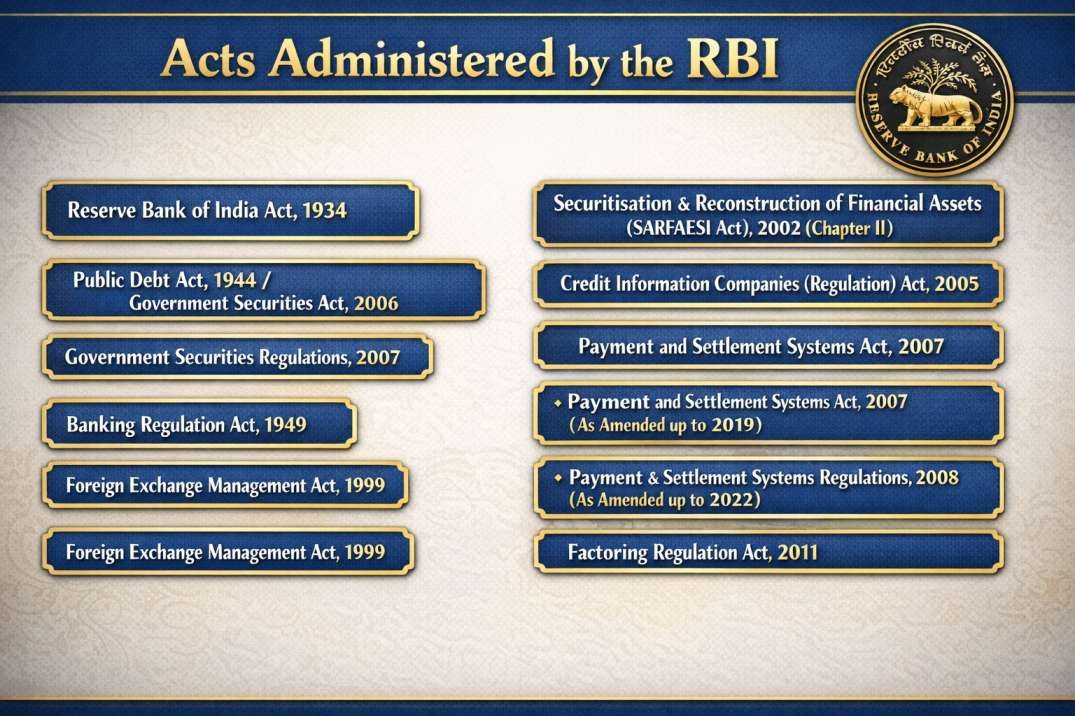
The Governor of the RBI is the chief executive authority of India’s central bank and plays a decisive role in shaping the country’s monetary and financial policy framework. The position derives its powers from the Reserve Bank of India Act, 1934 and related banking laws.
Appointment & Tenure
- Appointed by the Government of India
- Holds office for a specified term (as decided by the government)
- Serves as the Chairperson of the Central Board of Directors
Key Roles & Responsibilities
1. Head of Monetary Policy
- Chairs the Monetary Policy Committee (MPC)
- Guides decisions on repo rate, inflation targeting, and liquidity management
- Plays a central role in controlling inflation and ensuring price stability
2. Executive Head of RBI
- Oversees the day-to-day functioning of the RBI
- Supervises Deputy Governors and internal departments
- Ensures implementation of policy decisions
3. Banking Regulator & Supervisor
- Regulates commercial banks, NBFCs, and financial institutions
- Ensures financial stability and systemic risk management
- Can impose penalties and corrective measures on banks
4. Currency & Financial Stability Authority
- Oversees currency issuance and management
- Safeguards the integrity of the financial system
- Acts during financial crises to maintain liquidity and confidence
5. Banker to Government
- Advises the Central and State Governments on financial matters
- Manages public debt
- Coordinates the fiscal–monetary policy interface
6. National & International Representation
Represents India at global forums such as:
- International Monetary Fund
- World Bank
- Bank for International Settlements
Current RBI GovernorAs of 2026, the current Governor of the Reserve Bank of India is Sanjay Malhotra, who assumed office on 11 December 2024. A 1990-batch IAS officer of the Rajasthan cadre, he brings more than three decades of experience in finance, taxation, IT and public policy, and holds degrees from IIT Kanpur and Princeton University. |
Also read: Inflation: Definition, Types, Causes, & Measures (UPSC Notes)
Autonomy of the Reserve Bank of India
The autonomy of the RBI is central to its credibility and effectiveness as India’s monetary authority. While the RBI functions under the overall oversight of the Ministry of Finance, it is expected to operate independently. It matters because:
- Central bank autonomy ensures:
- Objective and data-driven monetary policy decisions
- Protection from short-term political pressures
- Credibility in inflation targeting
- Stability in financial markets
Legal Framework & Limits of Autonomy
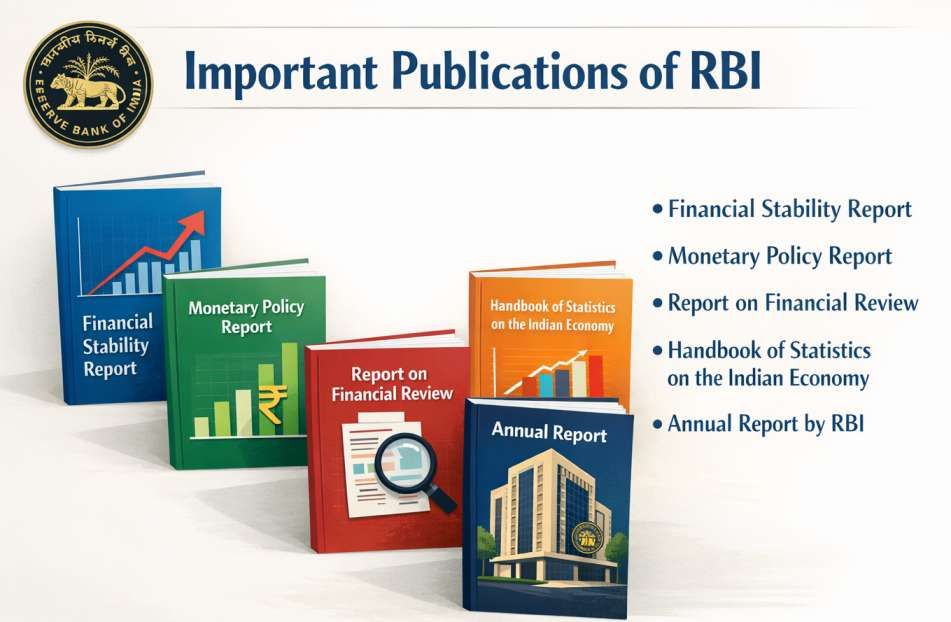
The RBI derives its authority from the Reserve Bank of India Act, 1934. However, its autonomy is not absolute.
Section 7(1) of the RBI Act
Section 7(1) empowers the Union Government to issue directions to the RBI in the public interest, after consultation with the RBI Governor. This provision highlights:
- Parliamentary sovereignty over the central bank
- The balance between independence and accountability
- Although rarely invoked, its existence has triggered debates on the extent of the RBI’s independence.
Must cover: Monetary Policy in India: Complete Notes for UPSC Indian Economy
UPSC Prelims PYQs on Reserve Bank of India
QUESTION 1
Consider the following statements:
I. The Reserve Bank of India mandates all the listed companies in India to submit a Business Responsibility and Sustainability Report (BRSR). II. In India, a company submitting a BRSR makes disclosures in the report that are largely non-financial in nature.
Which of the statements given above is/are correct?
UPSC Mains Practice Question on RBI
“The effectiveness of monetary policy depends not only on instruments but also on institutional autonomy.” In this context, critically examine the powers and functions of the Reserve Bank of India (RBI). How does the issue of autonomy influence its role in maintaining inflation control and financial stability in India? (250 Words 15 marks)
Evaluate your Answer NowConclusion
The Reserve Bank of India UPSC topic is crucial for mastering India’s monetary system, banking regulation, and financial governance. A clear understanding of RBI powers, RBI functions, structure, autonomy, and evolution strengthens both Prelims accuracy and Mains analytical answers.
Start your UPSC Preparation 2027 with SuperKalam
SuperKalam is your personal mentor for UPSC preparation, guiding you at every step of the exam journey. Practice, revise, and evaluate– all in one place.
Download Now