Analyse & practice 14 years of PYQs to crack UPSCPractice Now

UPSC Prelims 2020 Analysis

Subject-Wise MCQ Distribution

The UPSC Prelims 2020 maintained its dynamic nature, demanding strong analytical abilities across subjects.

  • Environment & Ecology: 19 questions, emphasizing its crucial role in both the Civil Services Examination (CSE) and Indian Forest Service (Ifos) prelims.
  • Economy: Emerged as the dominant subject with 21 questions, underscoring its foundational significance.
  • Indian Polity: 15 questions, reinforcing its position as one of the most essential areas for aspirants.
  • History: A well-distributed section with 3 questions from Ancient History, 2 from Medieval History, 9 from Modern History, and 5 from Art & Culture.
  • Geography: 6 questions on Indian Geography, 1 on Physical Geography, and 1 on World Geography. Some questions required maps-based knowledge.
  • Science & Technology: 13 questions, highlighting its increasing significance in the exam.
  • International Relations: 3 questions, marking a decline from previous years but still requiring awareness of global affairs and India's foreign policy.
  • Social Issues & Schemes: 2 questions, demonstrating the need for understanding government programs and their societal impact.
Prelims 2020
Subject-Wise Weightage in UPSC Prelims 2020

Difficulty Analysis

  • Easy: 30 questions, requiring fundamental knowledge.
  • Medium: 43 questions, designed to test deeper understanding and application.
  • Hard: 27 questions, focusing on conceptual depth and critical thinking.
Prelims 2020
Difficulty-Level Distribution in UPSC Prelims 2020

Variations in Question Framing

  • Multi-Statement Based: 63 questions, testing analytical abilities through comparisons and logical deductions.
  • Direct Questions: 37 questions, yielding approximately 74 marks.
  • Assertion & Reasoning: Notably, no assertion and reason-based questions were asked this year.
  • Match the Following: Several match the following type questions were present, assessing conceptual clarity across subjects.
Prelims 2020
Variations of Questions in UPSC Prelims 2020

Static vs Current Affairs Distribution

  • Static Questions: 75% of the paper, reflecting the importance of mastering NCERT fundamentals.
  • Current Affairs: 25 questions, many of which blended static concepts with contemporary relevance. Economics and Science & Technology, in particular, were influenced by recent developments, making it difficult to separate static from dynamic content.

Key Learnings for Future Preparation

The UPSC Prelims 2020 presented several challenges due to its unique question patterns and focus areas:

  • The exam was challenging and unconventional, requiring strong analytical abilities.

  • Heavy focus on Science & Technology, Environment, and Agriculture.

  • Topics like eco-friendly farming, biochar, and MSP were particularly tricky.

  • While current affairs played a role, most questions were static and application-driven, demanding a strong conceptual foundation.

  • Underrepresented areas included:

    • Key government schemes

    • COVID-19-related policies

    • International organizations

  • The unpredictability of the exam reaffirmed the need for:

    • Well-rounded preparation

    • NCERT-based conceptual clarity

    • Interdisciplinary approach was crucial, integrating multiple subjects effectively.

The Prelims 2020 paper was analytical and required strong conceptual clarity. Economy, Environment, and Polity were key focus areas. Multi-statement questions dominated, emphasizing elimination techniques. While static concepts formed the core, current affairs played a supporting role. The exam demanded an interdisciplinary approach and applied knowledge.

QUESTION 1

GS

Medium

Science & Technology

Prelims 2020

“The experiment will employ a trio of spacecraft flying in formation in the shape of an equilateral triangle that has sides one million kilometres long, with lasers shining between the craft”. The experiment in question refers to

A. Voyager

B. New Horizons

C. LISA Pathfinder

D. Evolved LISA

Explanation

The description mentions three spacecraft in an equilateral triangle formation with million-kilometre sides using lasers for measurement. This matches the design of the Evolved Laser Interferometer Space Antenna (eLISA) mission. eLISA is a proposed space observatory aiming to detect gravitational waves using precisely positioned spacecraft.

Voyager-2 and New Horizons are single spacecraft on exploration missions, not designed for gravitational wave detection.

LISA Pathfinder was a precursor mission to test technologies for eLISA, not the full mission itself.

Therefore, based on the details provided, the experiment refers to the Evolved LISA mission.


QUESTION 2

GS

Medium

Science & Technology

Prelims 2020

Consider the following activities:

  1. Spraying pesticides on a crop field
  2. Inspecting the craters of active volcanoes
  3. Collecting breath samples from spouting whales for DNA analysis

At the present level of technology, which of the above activities can be successfully carried out by using drones?

A. 1 and 2 only

B. 2 and 3 only

C. 1 and 3 only

D. 1,2 and 3

Explanation

Statement 1 is Correct: Drones (Unmanned Aerial Vehicles) are widely used in precision agriculture for the targeted spraying of pesticides and liquid fertilizers, which helps in reducing chemical waste and minimizing human exposure to toxins. Statement 2 is Correct: Drones equipped with thermal cameras and gas sensors are used to inspect the craters of active volcanoes, allowing scientists to gather data from hazardous environments that are inaccessible or too dangerous for humans. Statement 3 is Correct: Researchers use specialized drones (such as the 'SnotBot') to fly through the blow (breath) of spouting whales to collect biological samples containing DNA, hormones, and microbiomes for non-invasive health monitoring.


QUESTION 3

GS

Easy

Science & Technology

Prelims 2020

In India, the term “Public Key Infrastructure” is used in the context of

A. Digital security infrastructure

B. Food security infrastructure

C. Health care and education infrastructure

D. Telecommunication and transportation infrastructure

Explanation

In India, the term "Public Key Infrastructure" (PKI) is used in the context of digital security infrastructure.

PKI is a system that facilitates secure electronic communication and transactions by using digital certificates, certificate authorities, and other related components. It plays a vital role in ensuring the authenticity, confidentiality, and integrity of data exchanged online.


QUESTION 4

GS

Medium

Science & Technology

Prelims 2020

With reference to Visible Light Communication (VLC) technology, which of the following statements are correct?

  1. VLC uses electromagnetic spectrum wavelengths 375 to 780 nm.
  2. VLC is known as long-range optical wireless communication.
  3. VLC can transmit large amounts of data faster than Bluetooth
  4. VLC has no electromagnetic interference.

Select the correct answer using the code given below:

A. 1, 2 and 3 only

B. 1, 2 and 4 only

C. 1, 3 and 4 only

D. 2, 3 and 4 only

Explanation

Statement 1 is correct. Visible Light Communication (VLC) utilizes the electromagnetic spectrum within the visible light range, which is roughly between 375 nm (violet) and 780 nm (red).

Statement 2 is incorrect. VLC is not considered long-range communication compared to other optical wireless technologies like fibre optics. Its range is typically limited to shorter distances due to factors like signal power and signal degradation.

Statement 3 is correct. VLC has the potential to transmit large amounts of data at high speeds, often faster than Bluetooth technology, especially in scenarios where high data transfer rates are required.

Statement 4 is also correct. VLC does not use radio frequencies (RF) like traditional wireless communication technologies, and therefore, it does not suffer from electromagnetic interference (EMI) that can affect RF-based systems.


QUESTION 5

GS

Easy

Science & Technology

Prelims 2020

With the present state of development, Artificial Intelligence can effectively do which of the following?

  1. Bring down electricity consumption in industrial units.
  2. Create meaningful short stories and songs.
  3. Disease diagnosis.
  4. Text-to-Speech Conversion.
  5. Wireless transmission of electrical energy.

Select the correct answer using the code given below:

A. 1, 2, 3 and 5 only

B. 1, 3 and 4 only

C. 2, 4 and 5 only

D. 1, 2, 3, 4 and 5

Explanation

Statement 1 is Correct: AI-driven automation and smart sensors optimize energy use in industrial units by predicting demand, monitoring equipment health, and adjusting operations in real-time to reduce waste.

Statement 2 is Incorrect: At the time of the 2020 UPSC examination, creating truly meaningful short stories and songs — possessing coherent narrative structure, genuine emotional depth, and creative intent — was considered beyond the effective reach of AI. The ability to produce such content meaningfully and autonomously, rather than through pattern recombination, had not been demonstrated at a level considered reliable or effective.

Statement 3 is Correct: AI is highly effective in medical diagnostics, particularly in analyzing medical imagery such as X-rays and MRIs to detect diseases like cancer, pneumonia, and diabetic retinopathy with high precision.

Statement 4 is Correct: Text-to-Speech conversion is a mature and well-established application of AI that utilizes natural language processing and neural networks to synthesize human-like speech from written text.

Statement 5 is Incorrect: Wireless transmission of electrical energy is a physical engineering process based on electromagnetic induction or microwaves. This is a function of physics and hardware, and not a task performed by Artificial Intelligence.


QUESTION 6

GS

Medium

Science & Technology

Prelims 2020

With reference to “Blockchain Technology”, consider the following statements:

  1. It is a public ledger that everyone can inspect, but which no single user controls.
  2. The structure and design of blockchain is such that all the data in it are about cryptocurrency only.
  3. Applications that depend on basic features of blockchain can be developed without anybody’s permission.

Which of the statements given above is/are correct?

A. 1 only

B. 1 and 2 only

C. 2 only

D. 1 and 3 only

Explanation

Statement 1 is correct. Blockchain technology operates as a decentralized and transparent ledger that records transactions across a network of computers. The ledger is publicly accessible, allowing anyone to inspect the transactions recorded on it. Additionally, no single user or entity has control over the entire blockchain network, as it is distributed among multiple nodes.

Statement 2 is incorrect. While blockchain technology is best known for its association with cryptocurrencies like Bitcoin, the blockchain itself is capable of recording various types of data beyond just financial transactions. Blockchain can be used to record and verify any type of digital information, such as contracts, identity documents, supply chain data, and more.

Statement 3 is correct. Blockchain technology enables the development of decentralized applications (DApps) that can operate without the need for central authority or permission. Developers can create applications that utilize the basic features of blockchain, such as transparency, immutability, and decentralization, without requiring approval from a central entity.


QUESTION 7

GS

Medium

Science & Technology

Prelims 2020

What is the importance of using Pneumococcal Conjugate Vaccines in India?

  1. These vaccines are effective against pneumonia as well as meningitis and sepsis.
  2. Dependence on antibiotics that are not effective against drug-resistant bacteria can be reduced.
  3. These vaccines have no side effects and cause no allergic reactions.

Select the correct answer using the code given below:

A. 1 only

B. 1 and 2 only

C. 3 only

D. 1, 2 and 3

Explanation

Statement 1 is correct. Pneumococcal Conjugate Vaccines (PCVs) are effective in preventing several serious diseases caused by Streptococcus pneumoniae bacteria. This includes pneumonia, meningitis (inflammation of the meninges surrounding the brain and spinal cord), and sepsis (a life-threatening blood infection).

Statement 2 is also correct. The growing prevalence of antibiotic-resistant strains of Streptococcus pneumoniae is a major concern. PCV vaccination helps reduce dependence on antibiotics, particularly for these resistant strains. This lowers the risk of antibiotic overuse and emergence of further resistance.

Statement 3 is incorrect. While most people experience no serious side effects with PCV vaccines, there can be mild reactions like redness, swelling, or soreness at the injection site. Serious allergic reactions are rare.


QUESTION 8

GS

Medium

Science & Technology

Prelims 2020

Steel slag can be the material for which of the following?

  1. Construction of base road
  2. Improvement of agricultural soil
  3. Production of cement

Select the correct answer using the code given below:

A. 1 and 2 only

B. 2 and 3 only

C. 1 and 3 only

D. 1, 2 and 3 only
Explanation

Steel slag can be used for several purposes, and all of the options listed are valid applications.

Statement 1 is correct. Steel slag is a common and cost-effective material for use in road base construction due to its high durability, strength, and drainage properties.

Statement 2 is correct. Crushed steel slag can be used as an amendment for agricultural soil. It can improve drainage, provide some essential nutrients, and even help suppress weeds.

Statement 3 is correct. Steel slag can be partially substituted for some raw materials in cement production, reducing the need for quarrying and lowering the environmental impact of cement manufacturing.

Therefore, the correct answer is 1, 2, and 3.


QUESTION 9

GS

Medium

Science & Technology

Prelims 2020

Consider the following statements:

  1. Genetic changes can be introduced in the cells that produce eggs or sperms of a prospective parent.
  2. A person’s genome can be edited before birth at the early embryonic stage.
  3. Human induced pluripotent stem cells can be injected into the embryo of a pig.

Which of the statements given above is/are correct?

A. 1 only

B. 2 and 3 only

C. 2 only

D. 1, 2 and 3

Explanation

Statement 1 is correct: Germline gene editing involves making genetic changes in the cells that produce eggs or sperms (germ cells). These changes are heritable and can be passed on to future generations. Techniques like CRISPR-Cas9 have made this scientifically possible.

Statement 2 is correct: Genome editing can be performed on early-stage embryos (zygotes or blastocysts) before they are implanted in the uterus. This allows for the correction of genetic mutations that cause hereditary diseases at the earliest stages of development.

Statement 3 is correct: Human induced pluripotent stem cells (hiPSCs) are adult cells reprogrammed to an embryonic-like state. Research has successfully demonstrated the injection of these human cells into pig embryos to create 'chimeras'. This technology is used to study organ development and explores the potential of growing human organs for transplantation in the future.

Therefore, all three statements are correct.


QUESTION 10

GS

Medium

Science & Technology

Prelims 2020

In the context of recent advances in human reproductive technology, “Pronuclear Transfer” is used for:

A. fertilization of egg in vitro by the donor sperm

B. genetic modification of sperm producing cells

C. development of stem cells into functional embryos

D. prevention of mitochondrial diseases in offspring

Explanation

Pronuclear transfer, in the context of human reproductive technology, is used for preventing mitochondrial diseases in offspring.

Here's why

  • Mitochondria: These are cellular organelles with their own DNA (mitochondrial DNA or mtDNA) separate from nuclear DNA. Mutations in mtDNA can cause various inherited mitochondrial diseases that can affect organs like muscles, nerves, and the brain.
  • Pronuclear Transfer Technique: This technique involves the fertilization of an egg with sperm. Then, the pronuclei (nuclei before fusion) from both sperm and egg are removed. These pronuclei are then injected into a donor egg that has had its own pronuclei removed, but has healthy mtDNA.

QUESTION 11

GS

Medium

Science & Technology

Prelims 2020

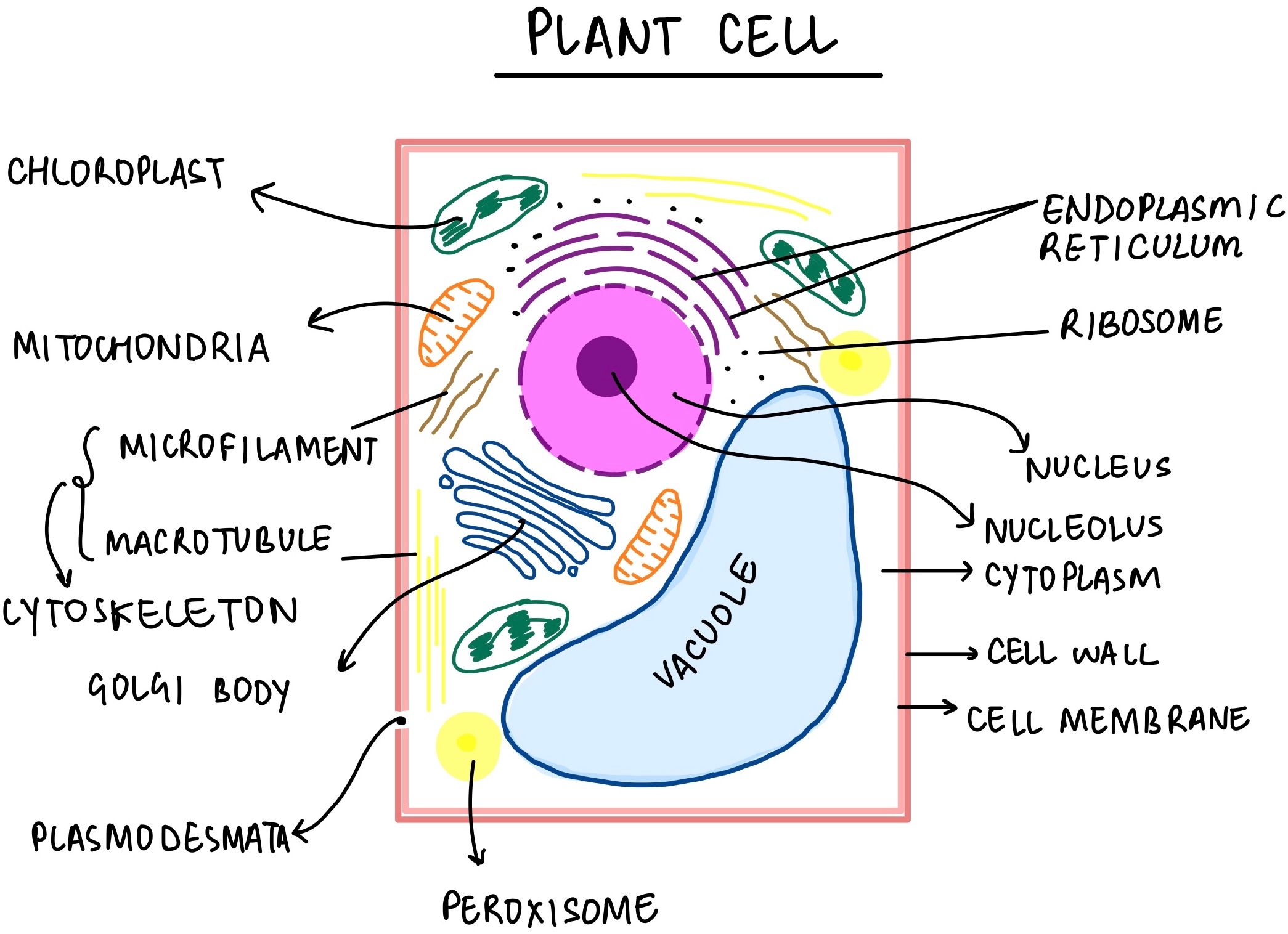
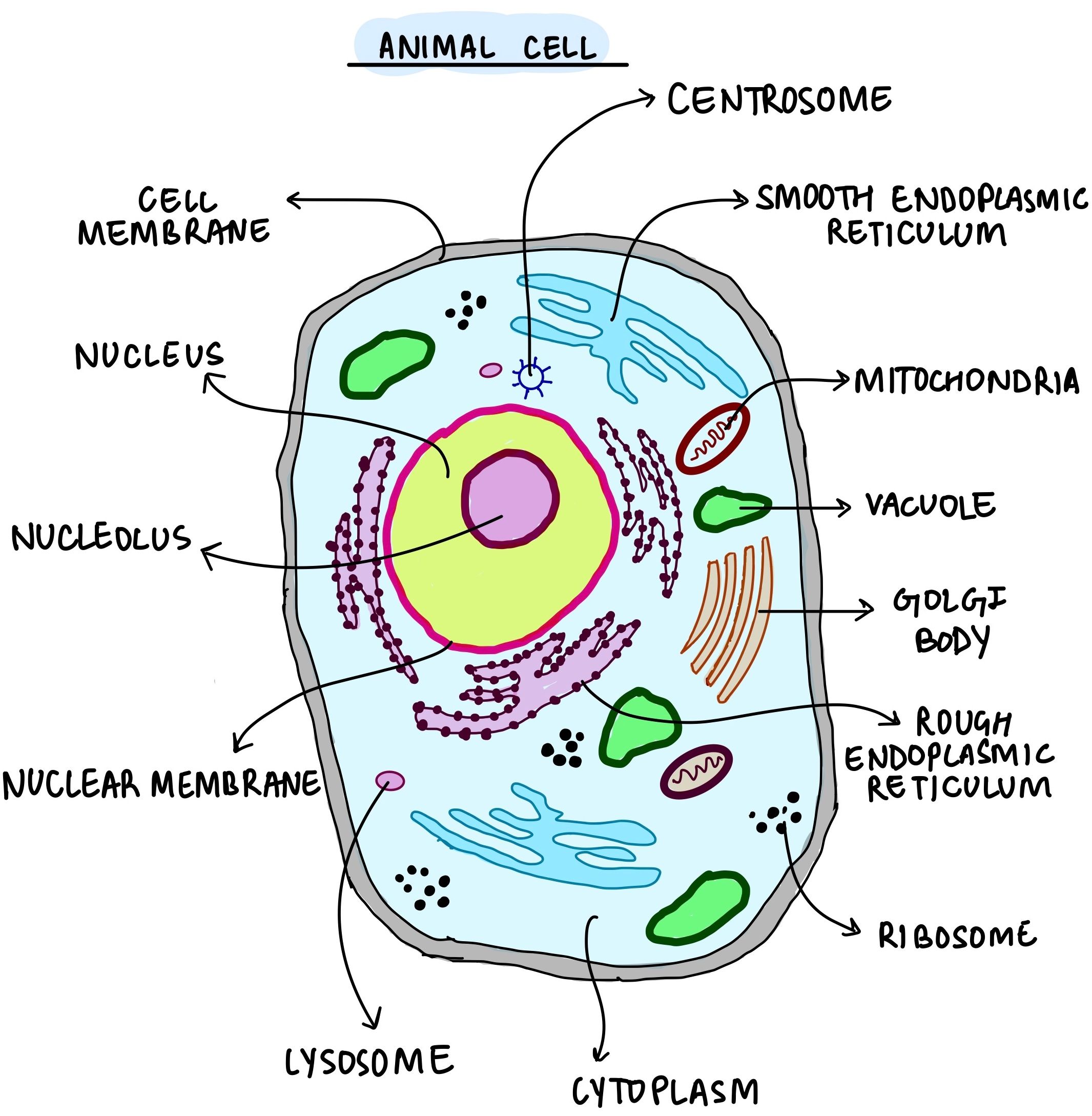
Which of the following statements are correct regarding the general difference between plant and animal cells?

  1. Plant cells have cellulose cell walls whilst animal cells do not.
  2. Plant cells do not have plasma membrane unlike animal cells which do.
  3. Mature plant cell has one large vacuole whilst animal cell has many small vacuoles.

Select the correct answer using the code given below:

A. 1 and 2 only

B. 2 and 3 only

C. 1 and 3 only

D. 1, 2 and 3
Explanation

Plant Cell

Plant Cell

Animal Cell

Animal Cell

Statement 1 is correct. Plant cells have rigid cell walls made of cellulose, a complex carbohydrate, which animal cells lack. Animal cells rely on a plasma membrane for structure and protection.

Statement 2 is incorrect. Both plant and animal cells have a plasma membrane, a phospholipid bilayer that controls what enters and leaves the cell. It's a fundamental component for all cells.

Statement 3 is correct. Mature plant cells typically have a single, large central vacuole that stores water, nutrients, and waste products. Animal cells can have vacuoles, but they are usually smaller and more numerous.


QUESTION 12

GS

Easy

Science & Technology

Prelims 2020

In India, why are some nuclear reactors kept under “IAEA Safeguards” while others are not?

A. Some use uranium and others use thorium

B. Some use imported uranium and others use domestic supplies

C. Some are operated by foreign enterprises and others are operated by domestic enterprises

D. Some are State-owned and others are privately-owned

Explanation

In India, nuclear reactors are categorized into civilian and strategic (military) facilities as part of the 2005 Indo-US Civil Nuclear Deal. Reactors that rely on imported uranium are mandatory participants in the International Atomic Energy Agency (IAEA) safeguards to ensure the fuel is used strictly for peaceful, civilian purposes. In contrast, reactors using domestic uranium supplies are kept outside these safeguards to allow India the flexibility to use them for its strategic nuclear weapons program.


QUESTION 13

GS

Medium

Science & Technology

Prelims 2020

With reference to carbon nanotubes, consider the following statements:

  1. They can be used as carriers of drugs and antigens in the human body.
  2. They can be made into artificial blood capillaries for an injured part of the human body.
  3. They can be used in biochemical sensors.
  4. Carbon nanotubes are biodegradable.

Which of the statements given above are correct?

A. 1 and 2 only

B. 2, 3 and 4 only

C. 1, 3 and 4 only

D. 1, 2, 3 and 4

Explanation

Statement 1 is Correct: Carbon nanotubes (CNTs) can be functionalized with various bioactive molecules, such as drugs and antigens. This allows them to act as efficient delivery systems that can cross biological membranes to reach specific target sites in the body.

Statement 2 is Incorrect: While carbon nanotubes have been explored as scaffolds in tissue engineering, their use as artificial blood capillaries remains largely experimental and has not been established as a validated application. Blood capillaries require precise biological compatibility, flexibility, and permeability that CNTs alone cannot replicate. Hence, the claim that they can be made into functional artificial blood capillaries for injured parts of the human body is not sufficiently supported, and UPSC's official answer key treats this statement as incorrect.

Statement 3 is Correct: Due to their high surface-to-volume ratio and unique electrical properties, carbon nanotubes are ideal components for biochemical sensors used to detect biological molecules like glucose, proteins, or DNA with high sensitivity.

Statement 4 is Correct: Research has demonstrated that carbon nanotubes can be broken down by oxidative enzymes such as myeloperoxidase (MPO) found in human neutrophils, establishing their biodegradability under certain conditions.

⚠️ Caveat: Statement 4 remains a subject of ongoing scientific debate. While certain studies confirm enzymatic biodegradation of CNTs, this is not universally accepted, as biodegradability is highly dependent on the type, length, surface functionalization, and structural properties of the nanotube. In many real-world conditions, CNTs are considered persistent and non-biodegradable. The UPSC answer key treats Statement 4 as correct, but candidates should be aware of this nuance.

Share
SuperKalam
SuperKalam is your personal mentor for UPSC preparation, guiding you at every step of the exam journey.

Download the App

Get it on Google PlayDownload on the App Store
Follow us

ⓒ Snapstack Technologies Private Limited

