Linguistic reorganization of Indian States was driven by popular pressure from below. Comment.
Linguistic reorganization of Indian States was driven by popular pressure from below. Comment.
Post-1947 India faced a dilemma between national unity and regional identities. While the leadership initially prioritized security and stability, intense popular pressure from below forced the government to abandon its resistance and implement the linguistic reorganization of states.
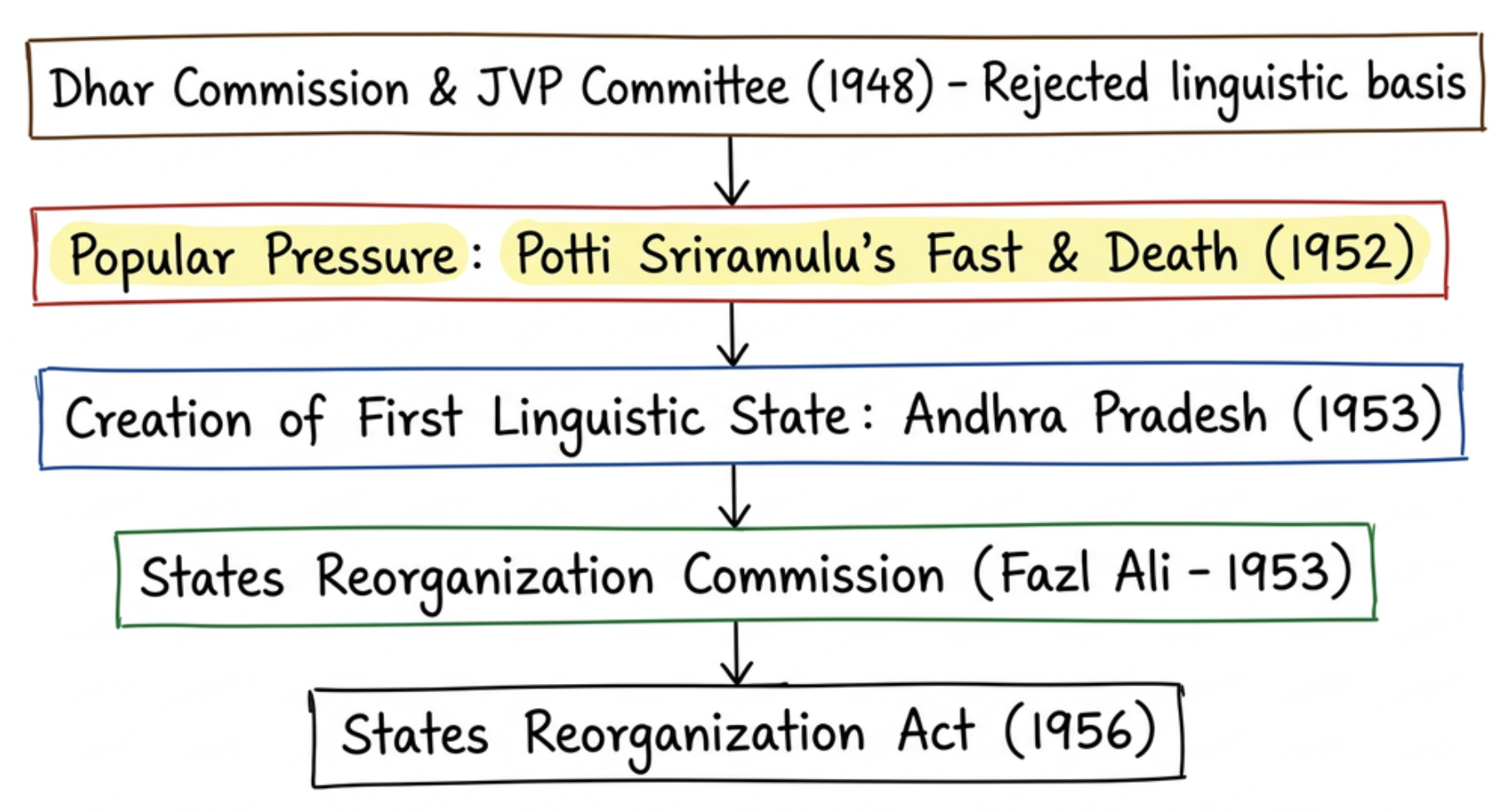
Evolution of Linguistic Reorganisation of States in India
Evidence of Popular Pressure from Below
-
Nagpur Session Legacy: The INC (1920) promised linguistic provinces, fueling long-standing grassroots expectations post-independence.
-
Dhar Commission Resistance: The 1948 report's rejection of linguistic states sparked immediate public outcry in South India.
-
JVP Committee Rejection: Popular resentment grew when Nehru, Patel, and Sitaramayya postponed linguistic demands citing national security.
-
Andhra Mahasabha Agitation: Decades-long mobilization by Telugu speakers peaked with Potti Sriramulu’s 56-day hunger strike in 1952.
- Eg: Sriramulu’s death led to widespread riots, forcing the creation of Andhra State (1953).
-
Samyukta Maharashtra Movement: Mass mobilization by the Samyukta Maharashtra Samiti demanded a unified Marathi-speaking state including Bombay.
-
Mahagujarat Movement: Student-led protests under Indulal Yagnik challenged the Bilingual Bombay State proposal.
-
Akali Dal Mobilization: The Punjabi Subha movement used religious and linguistic symbols to demand a separate state for Punjabi speakers.
- Eg: Master Tara Singh led mass arrests to pressure the Union government.
-
Anti-Hindi Agitations: Fears of linguistic imperialism in Tamil Nadu led to the DMK-led protests, ensuring the retention of English.
-
Hill State Demands: Tribal groups in Assam organized under the All Party Hill Leaders Conference for cultural autonomy.
- Eg: This eventually led to the creation of Meghalaya and Mizoram.
Institutional and Policy Outcomes
-
States Reorganisation Commission (1953): Formed by Nehru specifically to channelize and address escalating regional unrest.
-
States Reorganisation Act (1956): Legislated the creation of 14 states and 6 UTs based on SRC recommendations.
-
Bifurcation of Bombay (1960): Direct result of the violent 105 martyrs movement, creating Maharashtra and Gujarat.
-
Shah Commission (1966): Established to bifurcate Punjab and Haryana following decade-long below-up pressure.
-
Official Languages Act (1963): Amended to address regional anxieties regarding the status of mother tongues.
-
Article 3 Implementation: Frequent use of Constitutional powers to alter boundaries, reflecting India's evolving federalism.
Linguistic reorganization ultimately strengthened national integration by aligning administrative boundaries with cultural realities. This democratic concession fulfilled the vision of Unity in Diversity and remains a cornerstone of Indian cooperative federalism.
Answer Length
Model answers may exceed the word limit for better clarity and depth. Use them as a guide, but always frame your final answer within the exam’s prescribed limit.
Evaluate this PYQ now
Write your answer & evaluate in just 60 seconds




500+ students evaluated
Model Answers by Subject


Crack UPSC with your
Personal AI Mentor
An AI-powered ecosystem to learn, practice, and evaluate with discipline



