What is regional disparity? How does it differ from diversity? How serious is the issue of regional disparity in India?
What is regional disparity? How does it differ from diversity? How serious is the issue of regional disparity in India?
Subject: Indian Society
An EAC-PM paper (October 2024) notes Delhi’s per capita income is 250.8% of the national average while Bihar remains below 50%, starkly highlighting India's geographical economic divide.
What is Regional Disparity?
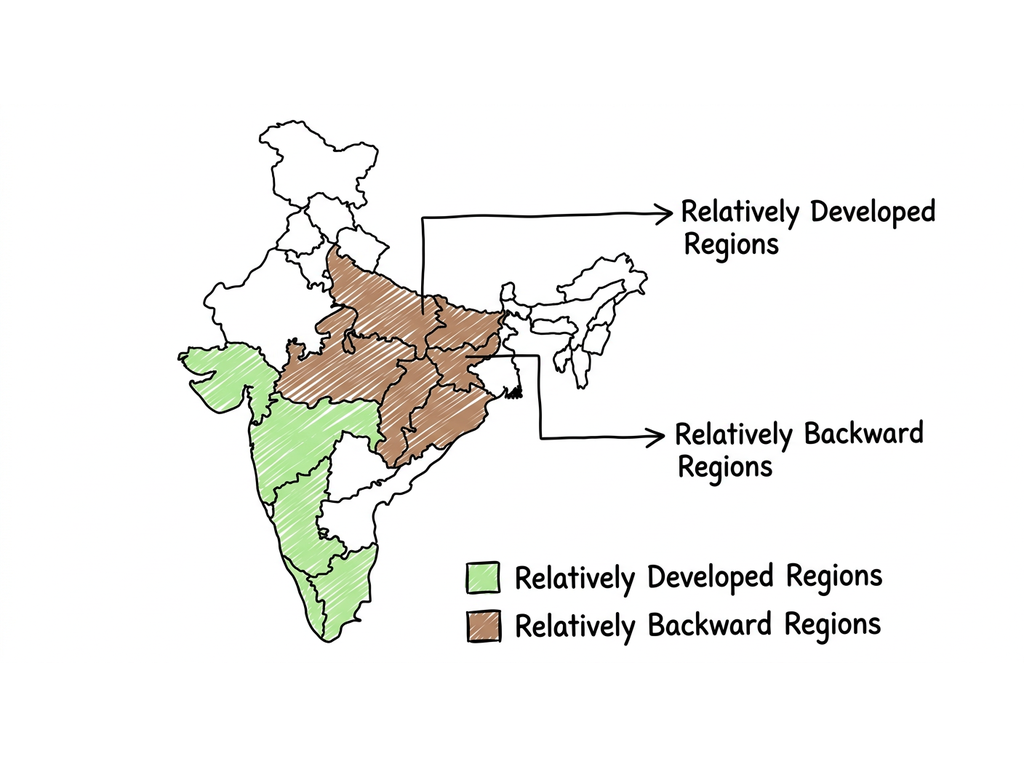
India's Development: Regional Disparities
- It is the unequal spatial distribution of economic resources, industrialization, and infrastructure across different geographies.
- It manifests in vastly unequal human development outcomes, heavily impacting literacy and health indicators between advanced and lagging states.
- It triggers distress economic migration, pushing surplus labor from underdeveloped rural heartlands to overcrowded urban megacities for survival.
How Regional Disparity Differs from Diversity
- Core Nature: Diversity is a qualitative, socio-cultural asset (like India's 19,500+ mother tongues), whereas disparity is a quantitative economic liability.
- Social Impact: Diversity enriches the national fabric through cultural exchange, whereas disparity breeds political resentment and sub-nationalist demands for separate statehood.
- Constitutional View: The Constitution actively protects diversity (Articles 29 and 30) while explicitly mandating the state to eliminate disparity (Article 38).
Seriousness of Regional Disparity in India
- GDP Concentration: The EAC-PM (2024) reveals just five Southern states now contribute over 30% of India’s GDP.
- Poverty Divergence: NITI Aayog’s National MPI 2023 shows Bihar’s multidimensional poverty stands at 33.76%, while Kerala is virtually poverty-free at 0.55%.
- Export Monopoly: The Economic Survey (2023-24) highlights that over 80% of India’s total exports originate from just 10 states.
- Federal Fiscal Friction: Widening economic gaps triggered 2024 political protests, with high-performing Southern states alleging disproportionately low central tax devolution.
- Delimitation Anxieties: Developed states fear losing Lok Sabha representation post-2026 due to successful population control compared to highly populated, underdeveloped states.
- Legal Resource Conflicts: The State of Kerala vs Union of India (2024) case highlights debt-stressed states fighting Central borrowing limits to fund regional welfare.
- Infrastructure Deficits: The RBI State Finances Report (2023-24) warns that indebted states lack the capital expenditure capacity needed for critical development.
- Sectoral Stagnation: Historically agrarian states like Punjab face economic stagnation compared to rapidly industrializing neighbors like Haryana.
- Intra-state Gaps: Severe backwardness within states necessitated the Aspirational Blocks Programme (2023) to uplift 500 specific lagging regions nationwide.
Bridging this divide requires the 16th Finance Commission to balance equity for lagging states with incentives for growth engines. Achieving UN SDG 1.2 demands targeted investments like PM-DevINE to ensure equitable geographical prosperity.
Answer Length
Model answers may exceed the word limit for better clarity and depth. Use them as a guide, but always frame your final answer within the exam’s prescribed limit.
Evaluate this PYQ now
Write your answer & evaluate in just 60 seconds




500+ students evaluated
Model Answers from
- 2024Indian Society15 MarksView Answer
Critically analyze the proposition that there is a high correlation between India's cultural diversities and socio-economic marginalities.
- 2024Indian Society15 MarksView Answer
Globalization has increased the urban migration by skilled, young, unmarried women from various classes. How has this trend impacted upon their personal freedom and relationship with family?
- 2024Indian Society15 MarksView Answer
Despite comprehensive policies for equity and social justice, underprivileged sections are not yet getting the full benefits of the affirmative actions envisaged by the constitutions. Comment
- 2024Indian Society10 MarksView Answer
In dealing with socio-economic issues of development, what kind of collaboration between government, NGOs and private sector would be most productive?
- 2024Indian Society10 MarksView Answer
Intercaste marriages between castes which have socio-economic parity have increased, to some extent, but this is less true of interreligious marriages. Discuss.
- 2024Indian Society10 MarksView Answer
Distinguish between gender equality, gender equity and women's empowerment. Why is it important to take gender concerns into account in programme design and implementation?
Model Answers by Subject


Crack UPSC with your
Personal AI Mentor
An AI-powered ecosystem to learn, practice, and evaluate with discipline



