What do you understand by ‘moral integrity’ and ‘professional efficiency’ in the context of corporate governance in India? Illustrate with suitable examples.
What do you understand by ‘moral integrity’ and ‘professional efficiency’ in the context of corporate governance in India? Illustrate with suitable examples.
Corporate governance, as defined by the Cadbury Committee (1992), is “the system by which companies are directed and controlled.”
In the Indian context, sound corporate governance rests on the twin pillars of moral integrity and professional efficiency
Moral Integrity in Corporate Governance
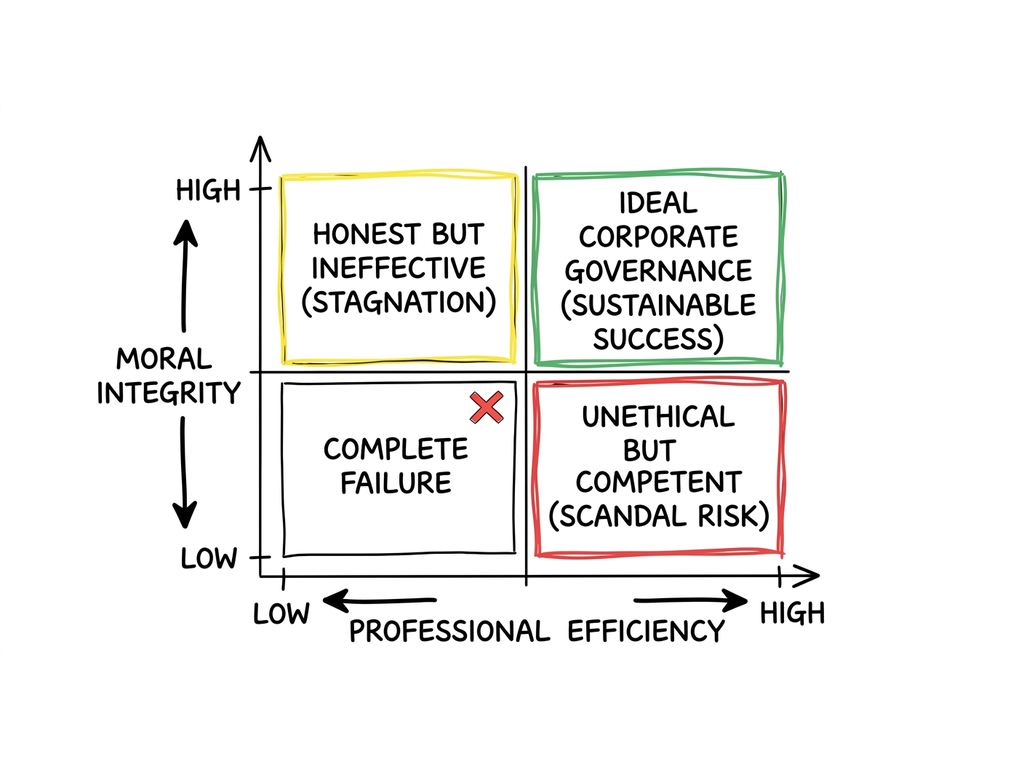
Moral integrity and professional efficiency matrix
Upholding ethical conduct, as emphasized by Aristotle's virtue ethics, builds trust and fosters a positive corporate culture. This is vital for long-term sustainability and stakeholder confidence.
-
Honesty and Transparency: Open communication and truthful practices are fundamental to ethical corporate governance.
- Example: Infosys's founder, N.R. Narayana Murthy, championed transparent financial reporting, setting a benchmark for Indian IT companies.
-
Fairness and Equity: Just treatment of all stakeholders, including employees, customers, and investors, is crucial.
- Example: The SEBI's (Securities and Exchange Board of India) regulations on insider trading aim to ensure fair market practices.
-
Accountability: Taking responsibility for decisions and actions promotes ethical behavior.
- Example: The Satyam scandal, where Chairman Ramalinga Raju admitted to accounting fraud, highlights the importance of accountability, albeit negatively.
Professional Efficiency in Corporate Governance
Effective and skilled execution of duties, as highlighted by Peter Drucker's management by objectives, is essential for achieving corporate goals and maximizing stakeholder value.
-
Competence and Expertise: Possessing the necessary skills and knowledge ensures effective decision-making.
- Example: The recruitment of independent directors with diverse expertise strengthens board oversight.
-
Diligence and Timeliness: Prompt and efficient execution of tasks is crucial for organizational success.
- Example: Tata Consultancy Services' (TCS) agile project management practices demonstrate efficient resource allocation and timely delivery.
-
Innovation and Adaptability: Embracing change and fostering innovation are essential for long-term competitiveness.
- Example: Biocon's investment in research and development has led to breakthroughs in biopharmaceuticals.
Ethical conduct and efficient operations are mutually reinforcing. By prioritizing both, Indian companies can ensure sustainable growth, build public trust, and contribute positively to the nation's economic development.
Answer Length
Model answers may exceed the word limit for better clarity and depth. Use them as a guide, but always frame your final answer within the exam’s prescribed limit.
Evaluate this PYQ now
Write your answer & evaluate in just 60 seconds




500+ students evaluated
Model Answers from
- 2023Ethics: Theory10 MarksView Answer
Explain the term social capital. How does it enhance good governance? (Answer in 150 words)
- 2023Ethics: Theory10 MarksView Answer
What were the major teachings of Guru Nanak? Explain their relevance in the contemporary world.
- 2023Ethics: Theory10 MarksView Answer
Probity is essential for an effective system of governance and socio-economic development.’ Discuss.
- 2023Ethics: Theory10 MarksView Answer
Is conscience a more reliable guide when compared to laws, rules, and regulations in the context of ethical decision-making? Discuss.
- 2023Ethics: Theory10 MarksView Answer
Differentiate ‘moral intuition’ from ‘moral reasoning with suitable examples.
- 2023Ethics: Theory10 MarksView Answer
“What really matters for success, character, happiness and lifelong achievements is a definite set of emotional skills – your EQ – not just purely cognitive abilities that are measured by conventional IQ tests.” Do you agree with this view? Give reasons in support of your answer.
Model Answers by Subject


Crack UPSC with your
Personal AI Mentor
An AI-powered ecosystem to learn, practice, and evaluate with discipline



