Discuss the causes of depletion of mangroves and explain their importance in maintaining coastal ecology.
Discuss the causes of depletion of mangroves and explain their importance in maintaining coastal ecology.
Recent satellite data reveals that India has lost 40% of its mangrove cover since 1980s, highlighting an urgent ecological crisis threatening coastal stability.
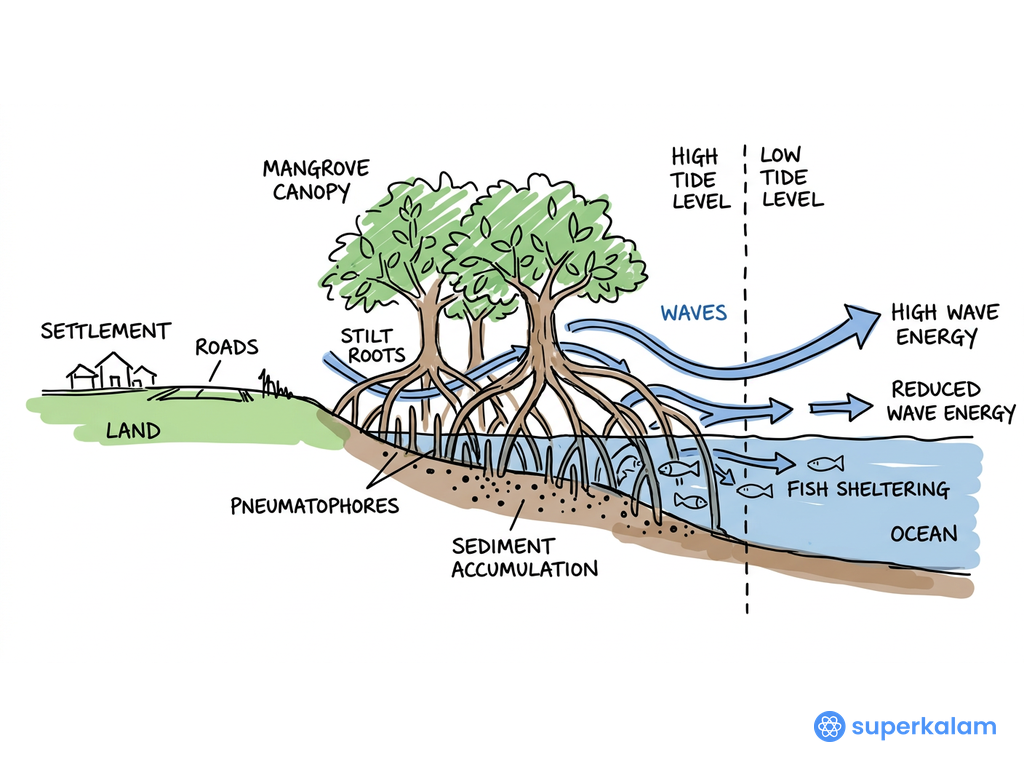
Coastal Mangrove Ecosystem Cross Section Diagram
Causes of Mangrove Depletion
Natural Factors
- Climate Change Impacts: Rising sea levels (3.3mm annually) and intensifying cyclones cause coastal erosion and habitat destruction
- Salinity Fluctuations: Altered freshwater discharge patterns disrupt optimal salinity levels (15-30 ppt) required for mangrove survival
- Coastal Erosion: Natural tidal action and wave energy, particularly in Sundarbans where 7.5 sq km eroded annually
- Extreme Weather: Frequent storms and droughts affecting regeneration capacity
- Sedimentation Changes: Altered river flow patterns disrupting natural sediment deposition
Anthropogenic Pressures
- Aquaculture Conversion: Coastal shrimp farming expanded to 1.24 million hectares, destroying mangrove nurseries
- Urban Development: Port construction and coastal infrastructure development, evident in Mumbai and Chennai coastlines
- Industrial Pollution: Untreated effluents from petrochemical and textile industries degrading water quality
- Agricultural Expansion: Rice cultivation and salt production encroaching mangrove areas
- Overexploitation: Excessive harvesting for timber, fuelwood, and construction materials
Importance in Coastal Ecology
Biodiversity Conservation
- Species Habitat: Home to 2,100 plant species and critical breeding grounds for marine life
- Migratory Routes: Essential stopover points for over 200 bird species including flamingos and pelicans
- Endemic Species: Supports unique fauna like Royal Bengal Tiger in Sundarbans and saltwater crocodile
- Marine Nurseries: 80% of global fish catch depends on mangrove ecosystems for reproduction
- Food Web Support: Base of complex coastal food chains supporting both terrestrial and marine organisms
Coastal Protection Services
- Storm Buffering: Reduces wave energy by 70-90%, protecting against cyclones and tsunamis
- Erosion Control: Root systems stabilize shorelines, preventing coastal land loss
- Flood Mitigation: Acts as natural sponges absorbing excess water during high tides
- Sediment Trapping: Filters sediments maintaining coastal water clarity and preventing siltation
- Wind Resistance: Provides natural windbreaks reducing wind speeds by 75%
Climate Regulation
- Carbon Sequestration: Stores 4 times more carbon than tropical rainforests (1,023 tons per hectare)
- Blue Carbon Ecosystem: Contributes 10% of global oceanic carbon burial despite covering only 0.1% of Earth's surface
- Temperature Moderation: Coastal cooling effects reducing local temperatures by 2-8°C
- Oxygen Production: Photosynthetic activity contributing to atmospheric oxygen levels
- Greenhouse Gas Regulation: Natural carbon sinks mitigating climate change impacts
| Ecosystem Service | Economic Value (₹/hectare/year) | Example Location |
|---|---|---|
| Coastal Protection | 8.5 lakhs | Gujarat mangroves |
| Fisheries Support | 2.1 lakhs | Kerala backwaters |
| Carbon Storage | 1.3 lakhs | Sundarbans |
| Tourism Revenue | 95,000 | Andaman mangroves |
Protecting mangrove ecosystems through Mangrove Cell initiatives and CAMPA funds allocation becomes crucial for maintaining coastal resilience and supporting 6 million coastal livelihoods dependent on these invaluable ecosystems.
Answer Length
Model answers may exceed the word limit for better clarity and depth. Use them as a guide, but always frame your final answer within the exam’s prescribed limit.
Evaluate this PYQ now
Write your answer & evaluate in just 60 seconds




500+ students evaluated
Model Answers from
- 2019Modern History15 MarksView Answer
Assess the role of British imperial power in complicating the process of transfer of power during the 1940s.
- 2019Modern History15 MarksView Answer
Many voices had strengthened and enriched the nationalist movement during the Gandhian phase. Elaborate.
- 2019Modern History10 MarksView Answer
Examine the linkages between the nineteenth century’s ‘Indian Renaissance’ and the emergence of national identity.
- 2019Modern History10 MarksView Answer
The 1857 uprising was the culmination of the recurrent, big and small local rebellions that had occurred in the preceding hundred years of British rule. Elucidate.
Model Answers by Subject


Crack UPSC with your
Personal AI Mentor
An AI-powered ecosystem to learn, practice, and evaluate with discipline



