Examine the potential of wind energy in India and explain the reasons for their limited spatial spread.
Examine the potential of wind energy in India and explain the reasons for their limited spatial spread.
India has the 4th largest installed wind power capacity in the world (~45 GW as of 2024, MNRE data). Its long coastline (~7,500 km) and high-wind inland plateaus provide significant renewable energy opportunities, aligning with India’s National Wind-Solar Hybrid Policy and Net Zero 2070 target.
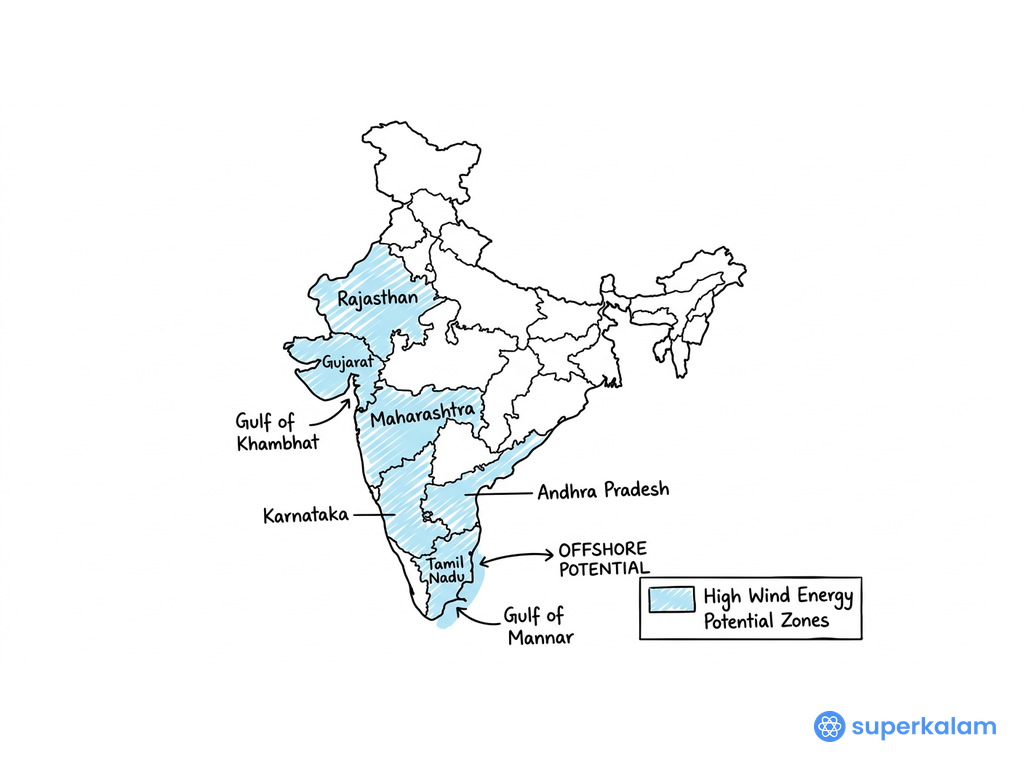
India wind energy potential outline map
Potential of Wind Energy in India
-
Geographic Potential
- Coastal states: Tamil Nadu, Gujarat, Maharashtra, Andhra Pradesh — strong and consistent winds.
- Inland high plateaus: Karnataka, Rajasthan, Madhya Pradesh with open terrain and low obstructions.
- Offshore wind: Estimated potential >70 GW (MNRE) in Gujarat and Tamil Nadu coastal waters.
-
Economic & Environmental Benefits
- Reduces dependence on fossil fuels, aiding in emission reduction.
- Creates rural employment via manufacturing and maintenance of turbines.
- Helps meet Renewable Purchase Obligations (RPOs) for states.
Reasons for Limited Spatial Spread
-
Wind Resource Concentration: High wind speeds (>6 m/s) are mainly along southern & western coasts and some inland ridges; most of north & central India have low wind potential.
-
Seasonal Variability: Strongest winds occur during southwest monsoon (May–Sept); low generation rest of the year makes it less viable in low-storage grids.
-
High Land Requirement & Competing Land Use: Large wind farms need open, non-forested land; difficult in densely populated or ecologically sensitive regions.
-
Transmission Bottlenecks: Remote high-wind areas (e.g., Kutch, coastal Karnataka) lack adequate Green Energy Corridors for evacuation to demand centres.
-
High Initial Capital Costs: Despite falling prices, offshore and high-capacity onshore installations require heavy upfront investment.
-
Environmental & Social Concerns: Bird migration routes (e.g., Kutch), noise pollution, and resistance from local communities.
India’s wind energy potential is immense but geographically uneven. Achieving the 2030 target of 140 GW wind capacity requires offshore expansion, hybrid parks with solar, better transmission, and local community integration.
Answer Length
Model answers may exceed the word limit for better clarity and depth. Use them as a guide, but always frame your final answer within the exam’s prescribed limit.
Evaluate this PYQ now
Write your answer & evaluate in just 60 seconds




500+ students evaluated
Model Answers from
- 2022Indian Geography15 MarksView Answer
Describing the distribution of rubber producing countries, indicate the major environmental issues faced by them.
- 2022Indian Geography10 MarksView Answer
Discuss the meaning of colour-coded weather warnings for cyclone prone areas given by India Meteorological Department.
Model Answers by Subject


Crack UPSC with your
Personal AI Mentor
An AI-powered ecosystem to learn, practice, and evaluate with discipline



