How will you explain the medieval Indian temple sculptures represent the social life of those days?
How will you explain the medieval Indian temple sculptures represent the social life of those days?
Medieval Indian temples were not only religious centres but also repositories of art, culture, and social history. The sculptures adorning these temples often depicted themes from daily life, economy, festivals, and customs, thereby serving as visual documents of contemporary society.
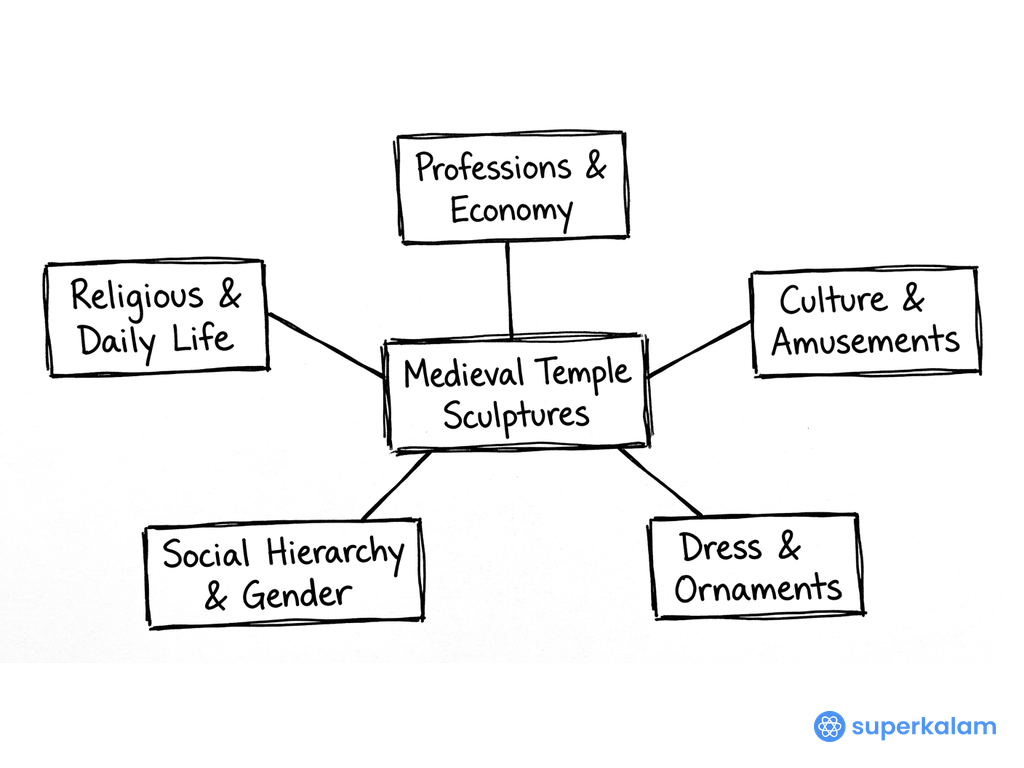
Medieval Temple Sculptures Spoke Diagram Analysis
Reflection of Social Life in Medieval Temple Sculptures
-
Depiction of Daily Occupations
- Sculptures portrayed agricultural work, weaving, pottery, hunting, and trade activities.
- Example: Konark Sun Temple carvings showing traders, sailors, and farming scenes.
-
Royalty and Courtly Life
- Kings, queens, warriors, and courtiers were depicted in royal processions and hunting expeditions.
- Example: Hoysaleswara Temple, Halebid, showing royal durbar scenes.
-
Social Hierarchy and Caste Roles
- Artisans, priests, dancers, and warriors are shown in distinct attire, indicating occupational divisions.
- Example: Chola temples in Tamil Nadu portray Brahmins performing rituals and dancers in court.
-
Religious Practices and Festivals
- Ritual processions, temple dances, and offerings to deities were sculpted in detail.
- *Example: Brihadeeswara Temple panels show musical performances during temple festivities.
-
Women’s Role in Society
- Depictions of women as dancers, musicians, devotees, and household workers.
- Example: Khajuraho temples depict women in daily grooming, playing musical instruments, and in affectionate family settings.
-
Leisure, Games, and Sports
- Hunting, wrestling, and board games were common themes.
- Example: Hampi’s Hazara Rama Temple has scenes of wrestling bouts and elephant fights.
-
Fashion, Ornaments, and Attire
- Sculptures provide details on hairstyles, jewellery, and clothing trends of the era.
- Example: Chennakesava Temple, Belur, shows intricate designs of anklets, waist belts, and headgear.
-
Economic Activities and Trade Links
- Carvings show ships, marketplaces, and foreign traders, hinting at maritime connections.
- Example: Rani ki Vav in Gujarat has scenes indicating trade prosperity.
Medieval temple sculptures were more than religious embellishments—they were stone chronicles capturing the economic, cultural, and social fabric of their time. By studying them, historians can reconstruct aspects of medieval Indian life with vivid detail.
Answer Length
Model answers may exceed the word limit for better clarity and depth. Use them as a guide, but always frame your final answer within the exam’s prescribed limit.
Evaluate this PYQ now
Write your answer & evaluate in just 60 seconds




500+ students evaluated
Model Answers by Subject


Crack UPSC with your
Personal AI Mentor
An AI-powered ecosystem to learn, practice, and evaluate with discipline