Discuss the meaning of colour-coded weather warnings for cyclone prone areas given by India Meteorological Department.
Discuss the meaning of colour-coded weather warnings for cyclone prone areas given by India Meteorological Department.
The India Meteorological Department (IMD) issues colour-coded weather warnings to alert authorities and the public about upcoming severe weather events, especially in cyclone-prone coastal areas. These warnings are designed to indicate the severity of the situation and the level of preparedness required for safeguarding life and property.
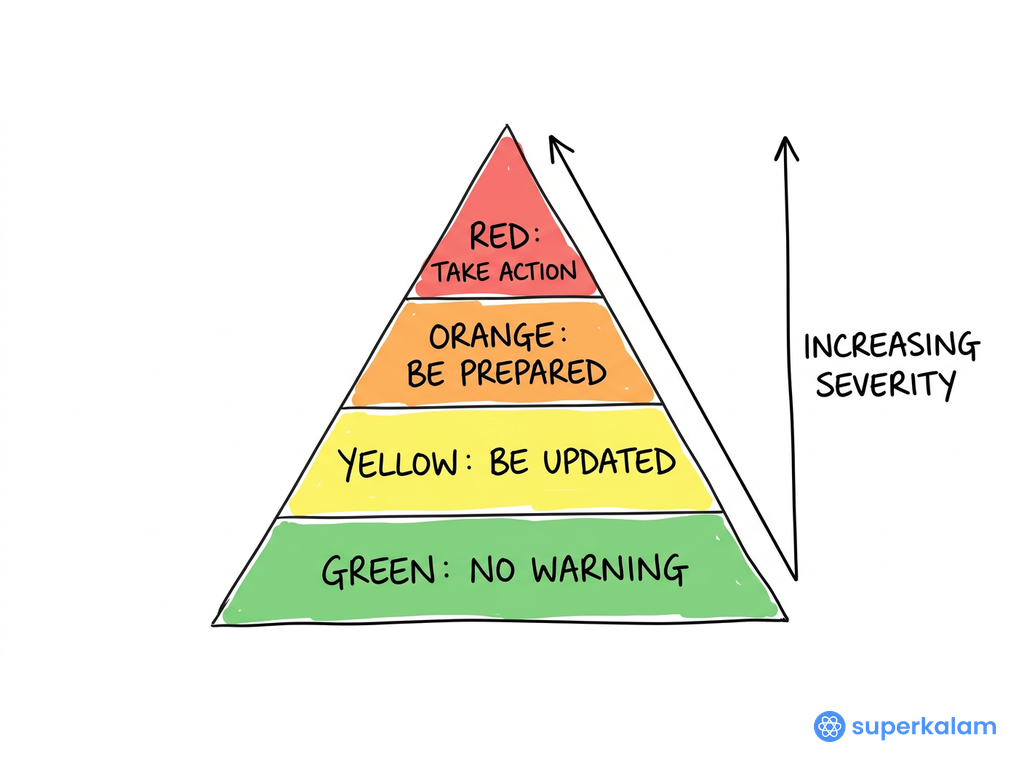
Four Tier Pyramid Weather Warning System
Meaning of IMD Colour Codes for Cyclones
| Colour Code | Meaning | Action Required |
|---|---|---|
| Green | No warning – Normal situation. | No action needed; routine monitoring. |
| Yellow | Be updated – Weather may deteriorate; potential cyclone watch issued. | Keep monitoring official updates; prepare emergency kits; authorities activate preliminary readiness. |
| Orange | Be prepared – Cyclone likely to hit; significant impact expected. | Authorities prepare evacuation plans; fishermen advised not to venture into sea; coastal residents start shifting to shelters. |
| Red | Take action – Severe cyclone imminent or ongoing; very high risk to life and property. | Immediate evacuation; disaster management teams fully mobilised; emergency response in full swing. |
Example of Application
-
Cyclone Fani (2019):
- IMD issued Orange alerts 3 days in advance for Odisha.
- Red alert was issued 24 hours before landfall, leading to evacuation of over 1.2 million people — minimising loss of life.
-
Cyclone Tauktae (2021):
- IMD issued Yellow and Orange warnings for coastal Gujarat and Maharashtra well in advance.
- Escalation to Red warning before landfall enabled relocation of over 1.5 lakh people and safeguarding of critical infrastructure.
Significance of Colour-Coded Cyclone Warnings
-
Facilitates Timely Evacuation
- Example: During Cyclone Phailin (2013), early Orange and Red alerts helped evacuate ~1 million people in Odisha and Andhra Pradesh, reducing fatalities to under 50 compared to thousands in the 1999 super cyclone.
-
Ensures Resource Mobilisation: Allows state disaster response forces (SDRF), NDRF, and armed forces to pre-position rescue boats, relief materials, and medical teams in high-risk areas.
-
Minimises Economic Losses
- Protects fisheries, agriculture, and port operations.
- Example: Pre-warning before Cyclone Yaas (2021) saved fishing vessels worth crores along the Bay of Bengal.
-
Supports Public Awareness and Behavioural Preparedness: Colour codes (Yellow, Orange, Red) are simple for communities to understand, improving compliance with evacuation orders.
-
Enables Coordination Between Agencies: IMD alerts trigger inter-agency meetings between meteorological, disaster management, health, transport, and power departments for integrated response.
-
Builds Long-term Climate Resilience: Data from warning issuance and community responses is used to improve cyclone modelling, coastal zoning, and resilient infrastructure planning.
IMD’s colour-coded cyclone warnings serve as a simple yet effective tool for risk communication, ensuring timely response and disaster mitigation. Their success during recent cyclones reflects the importance of clear, actionable, and science-based early warning systems in safeguarding vulnerable coastal populations.
Answer Length
Model answers may exceed the word limit for better clarity and depth. Use them as a guide, but always frame your final answer within the exam’s prescribed limit.
Evaluate this PYQ now
Write your answer & evaluate in just 60 seconds




500+ students evaluated
Model Answers from
- 2022Indian Geography15 MarksView Answer
Describing the distribution of rubber producing countries, indicate the major environmental issues faced by them.
- 2022Indian Geography10 MarksView Answer
Examine the potential of wind energy in India and explain the reasons for their limited spatial spread.
Model Answers by Subject


Crack UPSC with your
Personal AI Mentor
An AI-powered ecosystem to learn, practice, and evaluate with discipline



