What are the environmental implications of the reclamation of the water bodies into urban land use? Explain with examples.
What are the environmental implications of the reclamation of the water bodies into urban land use? Explain with examples.
Water body reclamation for urban development has intensified environmental degradation, with Mumbai losing 40% of its water bodies since 1970s, creating cascading ecological and climatic disruptions across Indian cities.
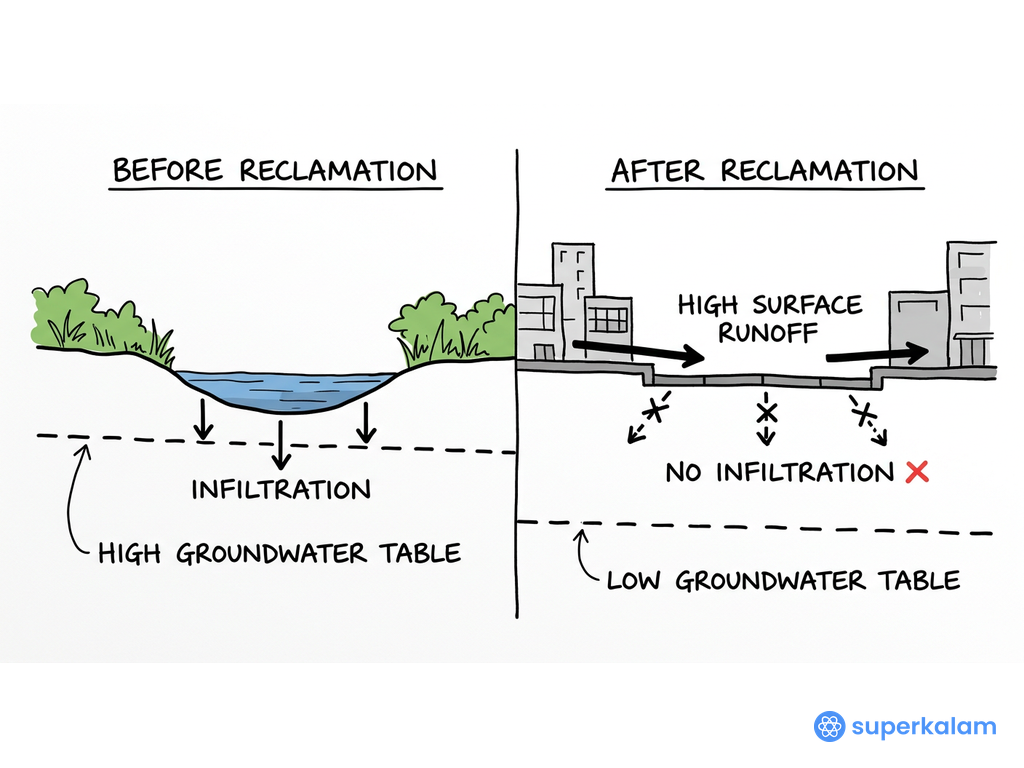
2021 Before Reclamation Cross Section Comparison
Hydrological Disruptions
- Altered Natural Drainage: Reclaimed areas lose water absorption capacity, causing 300% increase in surface runoff during monsoons
- Groundwater Depletion: Delhi's water table dropped 5-7 meters due to loss of natural recharge zones from lake reclamation
- Flood Vulnerability: Chennai's 2015 floods linked to 90% water body loss, affecting 4.5 million people with economic losses exceeding ₹15,000 crores
- Disrupted Water Cycle: Natural evaporation processes eliminated, reducing local precipitation by 10-15% in reclaimed areas
- Drainage Congestion: Bengaluru's Bellandur Lake encroachment increased flooding frequency, affecting 200+ residential areas
Ecological and Climate Impacts
| Environmental Impact | Specific Effects | Examples |
|---|---|---|
| Biodiversity Loss | Habitat destruction, species extinction | Kolkata's East Kolkata Wetlands: 40% reduction affecting 50+ bird species |
| Heat Island Effect | Temperature increase of 2-4°C | Hyderabad's Hussain Sagar reclamation areas show 3.5°C higher temperatures |
| Air Quality | Loss of natural air purification | Mumbai's reclaimed areas show 25% higher PM2.5 levels |
| Carbon Sequestration | Release of stored carbon | Wetland destruction releases 20-30 tons CO2 per hectare |
Water Quality and Management Issues
- Natural Filtration Loss: Water bodies remove 60-80% pollutants; their elimination increases contamination in remaining sources
- Stormwater Management Failure: Gurugram's waterlogging during 2023 monsoons due to 70% wetland loss in past decade
- Groundwater Contamination: Poor drainage from reclaimed areas affects aquifer quality, Pune reported 40% groundwater contamination
- Sewage Overflow: Inadequate infrastructure causes mixing with clean water sources
- Reduced Dilution Capacity: Concentrated pollution in remaining water bodies exceeds self-purification capacity
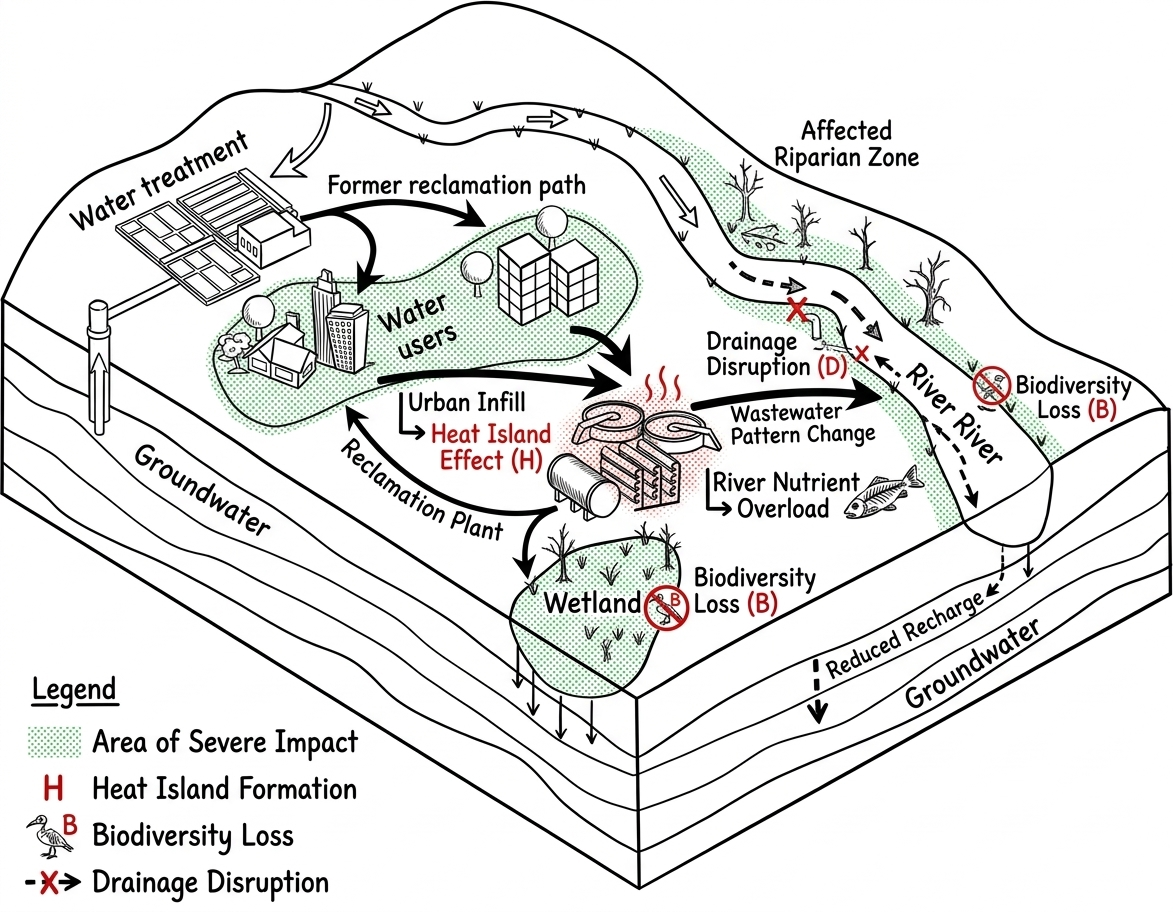
Water Body Reclamation Impact Chain - showing drainage disruption, heat island formation, and biodiversity loss
Sustainable solutions require implementing blue-green infrastructure and enforcing Wetlands Conservation Rules 2017. Singapore's ABC Waters Programme demonstrates successful integration of water bodies with urban development through innovative planning.
Answer Length
Model answers may exceed the word limit for better clarity and depth. Use them as a guide, but always frame your final answer within the exam’s prescribed limit.
Evaluate this PYQ now
Write your answer & evaluate in just 60 seconds




500+ students evaluated
Model Answers by Subject


Crack UPSC with your
Personal AI Mentor
An AI-powered ecosystem to learn, practice, and evaluate with discipline



