Indian Philosophy and tradition played a significant role in conceiving and shaping the monuments and their art in India. Discuss.
Indian Philosophy and tradition played a significant role in conceiving and shaping the monuments and their art in India. Discuss.
Indian philosophy and tradition have served as the foundational blueprint for India's monumental architecture, creating a distinctive synthesis where spiritual concepts transform into tangible artistic expressions.
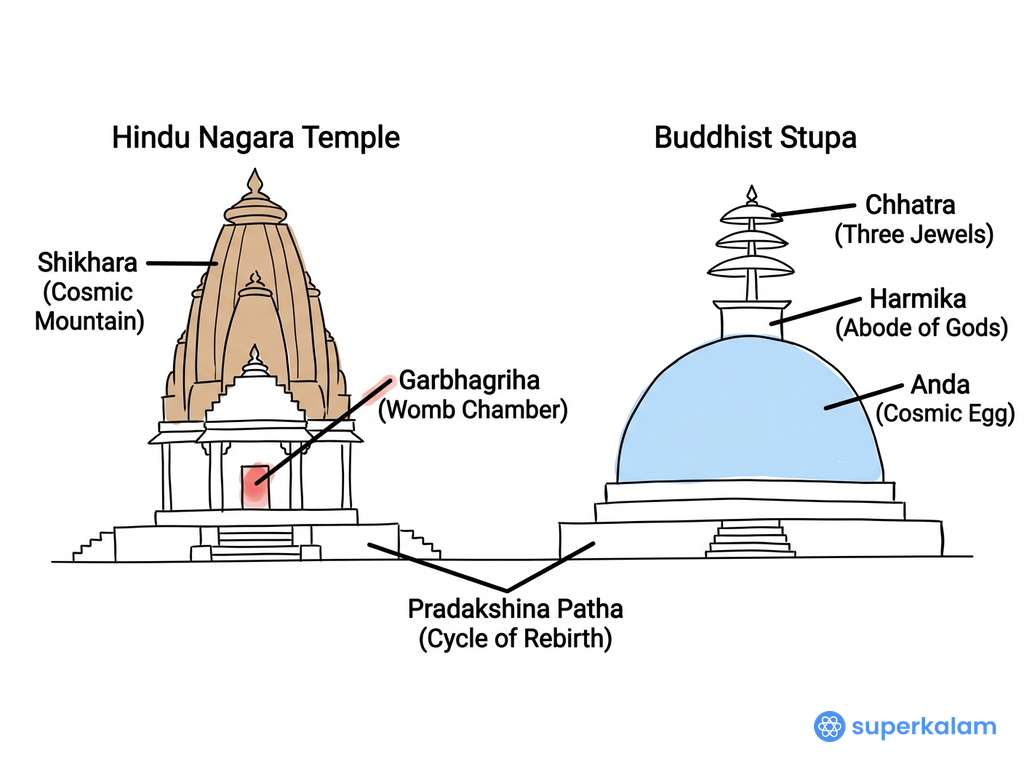
Hindu Temple and Buddhist Stupa Comparison
Philosophical Foundations in Monument Design
-
Cosmic Symbolism: Hindu temples embody the Brahmanda (cosmic universe) concept, with the sanctum representing the cosmic center and the shikhara symbolizing Mount Meru, reflecting Vedantic philosophy of ultimate reality.
-
Sacred Geometry: The Vastupurusha Mandala system governs temple layouts, integrating mathematical precision with spiritual significance as prescribed in Shilpa Shastras, seen in temples like Brihadeeswara Temple, Thanjavur.
-
Directional Alignment: Monuments follow Vastu principles with specific orientations - east-facing sanctums for solar worship, reflecting the philosophy of cosmic harmony and energy flow.
-
Symbolic Architecture: The Pancha Mahabhuta (five elements) philosophy manifests through architectural elements - water bodies (jal), fire altars (agni), and open spaces (akasha) in temple complexes.
-
Spiritual Journey: Temple architecture represents the journey from material to spiritual realm, with elaborate gopurams (entrance towers) symbolizing worldly attachments and the simple sanctum representing pure consciousness.
Artistic Expressions of Traditional Wisdom
-
Iconographic Narratives: Sculptures depict Puranic stories and philosophical concepts - Khajuraho temples showcase life's four purusharthas (dharma, artha, kama, moksha) through intricate carvings.
-
Buddhist Philosophy: Stupa architecture embodies Buddhist concepts of impermanence and enlightenment - Sanchi Stupa's dome represents the cosmic egg while the harmika symbolizes heaven.
-
Rasa Theory Integration: Monuments incorporate the Navarasa (nine emotions) from Indian aesthetics, with sculptures expressing diverse human emotions as philosophical teachings.
-
Jain Principles: Jain temples like Dilwara temples reflect ahimsa and aparigraha through minimalist interiors and non-violent construction methods using precise stone-cutting techniques.
-
Regional Synthesis: Ajanta-Ellora caves demonstrate how Mahayana Buddhism, Hinduism, and Jainism coexist, reflecting India's philosophical pluralism through rock-cut architecture.
The integration of Indian philosophical traditions with monumental art continues through initiatives like the Statue of Unity (2018) and ongoing restoration projects under PRASAD scheme, ensuring that ancient wisdom guides contemporary architectural expressions while preserving cultural continuity.
Answer Length
Model answers may exceed the word limit for better clarity and depth. Use them as a guide, but always frame your final answer within the exam’s prescribed limit.
Evaluate this PYQ now
Write your answer & evaluate in just 60 seconds




500+ students evaluated
Model Answers from
- 2020Art & Culture15 MarksView Answer
Persian literary sources of medieval India reflect the spirit of the age. Comment.
- 2020Art & Culture10 MarksView Answer
Pala period is the most significant phase in the history of Buddhism in India. Enumerate.
- 2020Art & Culture10 MarksView Answer
The rock-cut architecture represents one of the most important sources of our knowledge of early Indian art and history. Discuss.
Model Answers by Subject


Crack UPSC with your
Personal AI Mentor
An AI-powered ecosystem to learn, practice, and evaluate with discipline



