What are the consequences of the spreading of ‘Dead Zones’ on the marine ecosystem?
What are the consequences of the spreading of ‘Dead Zones’ on the marine ecosystem?
The expansion of marine 'Dead Zones' - hypoxic areas with dissolved oxygen below 2mg/L - poses severe threats to ocean ecosystems, with over 700 documented zones globally as of 2024.
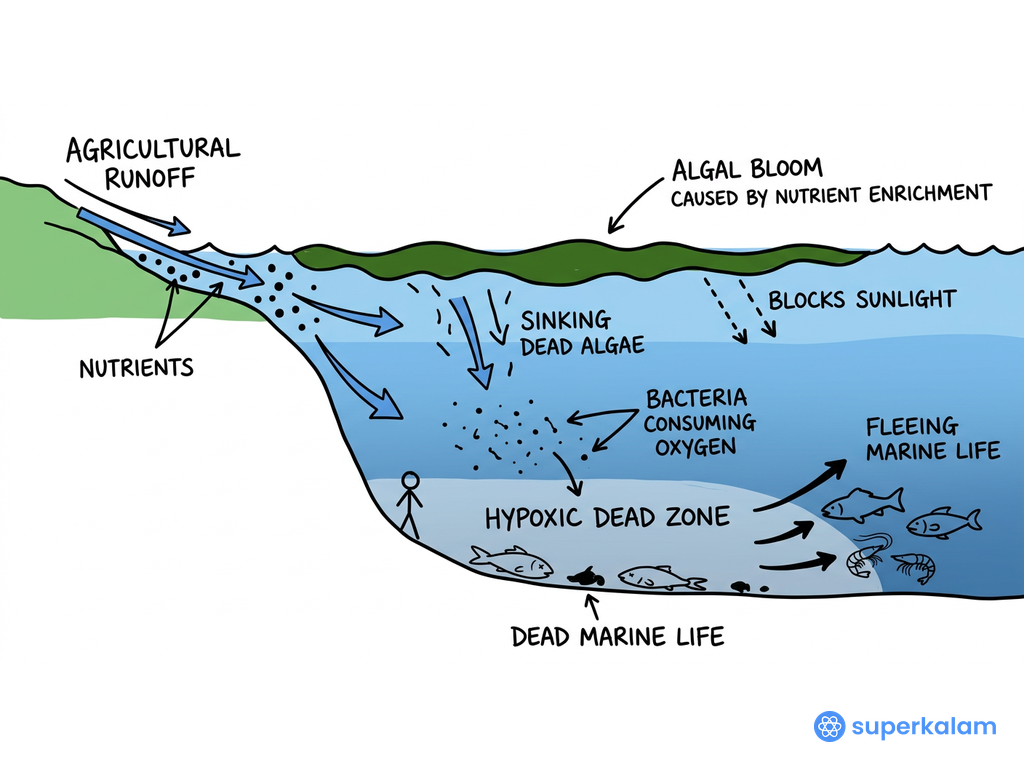
Coastal Dead Zone Formation in Marine Ecosystem
Biodiversity and Species Impact
- Mass Mortality Events: Hypoxic conditions cause widespread fish kills and shellfish deaths, as seen in the Gulf of Mexico's 8,776 square mile dead zone in 2024
- Species Migration: Mobile marine organisms flee to oxygen-rich waters, creating overcrowding in habitable zones and abandoning traditional breeding grounds
- Reproductive Disruption: Low oxygen levels impair fish reproduction, reducing spawning success rates by up to 80% in affected areas
- Genetic Adaptation: Some species develop smaller body sizes and altered metabolism to survive hypoxic conditions, affecting long-term evolutionary patterns
- Benthic Community Collapse: Bottom-dwelling organisms like crabs, worms, and mollusks experience near-complete elimination in severe dead zones
Food Web and Ecosystem Structure
- Trophic Cascade Effects: Loss of key predator species disrupts entire food chains, leading to algal blooms and further ecosystem degradation
- Habitat Compression: Vertical habitat compression forces species into shallow waters, increasing competition and predation pressure
- Nutrient Cycling Disruption: Decomposer organisms' death impairs organic matter breakdown, altering carbon and nitrogen cycles
- Primary Productivity Changes: Reduced grazing pressure leads to phytoplankton composition shifts, favoring harmful algal species
- Marine Desert Formation: Complete absence of higher-order marine life creates biological deserts spanning thousands of square kilometers
Economic and Ecological Consequences
- Fisheries Collapse: The Black Sea's dead zone eliminated 80% of commercial fish species, causing USD 2.9 billion in economic losses annually
- Tourism Impact: Beach pollution and fish die-offs reduce coastal tourism revenue, as observed along India's Konkan coast in 2024
- Carbon Sequestration Loss: Disrupted marine food webs reduce ocean's carbon storage capacity, accelerating climate change
- Recovery Timeline: Dead zones persist for decades even after nutrient reduction, with the Chesapeake Bay requiring 30+ years for partial recovery
- Ecosystem Service Loss: Reduced water filtration, coastal protection, and waste assimilation services worth billions globally
Dead zones represent critical marine degradation requiring urgent action through initiatives like Mission Blue Economy and international cooperation under SDG-14 to restore ocean health and prevent further ecosystem collapse.
Answer Length
Model answers may exceed the word limit for better clarity and depth. Use them as a guide, but always frame your final answer within the exam’s prescribed limit.
Evaluate this PYQ now
Write your answer & evaluate in just 60 seconds




500+ students evaluated
Model Answers by Subject


Crack UPSC with your
Personal AI Mentor
An AI-powered ecosystem to learn, practice, and evaluate with discipline



