Major cities of India are becoming vulnerable to flood conditions. Discuss.
Major cities of India are becoming vulnerable to flood conditions. Discuss.
Major cities across India are increasingly experiencing severe flooding, transforming from occasional inconveniences to annual disasters. This vulnerability stems from a dangerous combination of climate change impacts and poor urban planning practices.
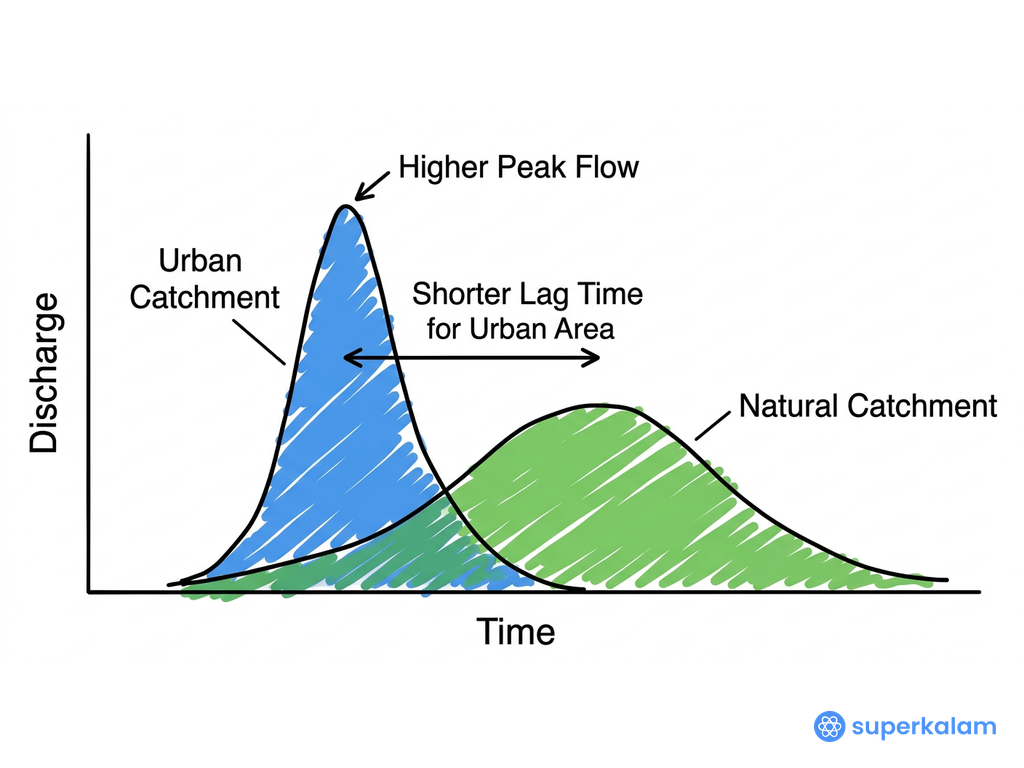
Discharge Over Time Bell Shaped Curves
Natural Causes of Urban Flooding
- Extreme Weather Events: Cities like Mumbai received 594mm rainfall in July 2005, and Chennai faced unprecedented flooding in 2015 with 490mm in 24 hours
- Monsoon Pattern Changes: Erratic and concentrated rainfall patterns due to climate change causing flash floods
- Coastal Storm Surges: Cities like Kolkata and Chennai face additional risks from cyclonic activities and sea-level rise
- Geographic Vulnerability: Many cities built on floodplains like Delhi (Yamuna) and Patna (Ganga) face natural inundation risks
- Urban Heat Islands: Increased temperatures leading to intense localized precipitation events
Human-Induced Vulnerability Factors
- Wetland Encroachment: Bengaluru lost 88% of its lakes between 1962-2007, reducing natural water absorption capacity
- Concretization: Over 70% surface coverage in cities like Mumbai and Delhi preventing groundwater recharge
- Inadequate Drainage: Most cities have colonial-era drainage systems designed for much smaller populations
- Poor Waste Management: Plastic waste blocking drains during monsoons, evident in cities like Guwahati and Srinagar
- Unplanned Construction: Buildings in natural water channels and floodplains disrupting water flow
Recent Flood Incidents and Impacts
| City | Year | Rainfall (24hrs) | Major Impacts |
|---|---|---|---|
| Mumbai | 2023 | 300mm+ | Transport paralysis, ₹1000cr losses |
| Bengaluru | 2022 | 280mm | IT hub shutdown, airport flooding |
| Hyderabad | 2020 | 200mm+ | 50+ deaths, widespread damage |
Government Initiatives and Solutions
- National Disaster Management Fund: ₹2,500 crore allocated for urban flood management (2023-24)
- Atal Mission for Rejuvenation: Urban transformation focusing on drainage infrastructure
- Smart Cities Mission: Integration of flood-resistant infrastructure in 100 cities
- Flood Forecasting Systems: Early warning systems established in major cities
- Nature-Based Solutions: Promoting urban forests, rain gardens, and permeable pavements
Urban India must urgently adopt integrated flood management combining traditional infrastructure with nature-based solutions. The 15th Finance Commission's recommendations for climate-resilient urban infrastructure provide a roadmap for sustainable flood management in Indian cities.
Answer Length
Model answers may exceed the word limit for better clarity and depth. Use them as a guide, but always frame your final answer within the exam’s prescribed limit.
Evaluate this PYQ now
Write your answer & evaluate in just 60 seconds




500+ students evaluated
Model Answers from
Model Answers by Subject


Crack UPSC with your
Personal AI Mentor
An AI-powered ecosystem to learn, practice, and evaluate with discipline



