Discuss the Tandava dance as recorded in the early Indian inscriptions.
Discuss the Tandava dance as recorded in the early Indian inscriptions.
The Tandava dance, extensively documented in early Indian inscriptions, represents one of the most significant expressions of cosmic spirituality and artistic excellence in ancient Indian civilization.
Inscriptional Evidence and Historical Documentation
- Pallava Inscriptions (7th-8th century CE): Earliest detailed references to Tandava performances in temple complexes at Kanchipuram and Mahabalipuram
- Chola Period Records (9th-13th century CE): Comprehensive documentation in Tamil inscriptions at Chidambaram, Thanjavur, and Gangaikonda Cholapuram temples
- Gupta Era References (4th-6th century CE): Sanskrit inscriptions describing Tandava as divine cosmic dance in Mathura and Varanasi regions
- Rashtrakuta Inscriptions (8th-10th century CE): Kannada records from Ellora and Elephanta caves detailing Tandava iconography
- Eastern Chalukya Documents (7th-12th century CE): Telugu inscriptions connecting Tandava with royal patronage and temple endowments
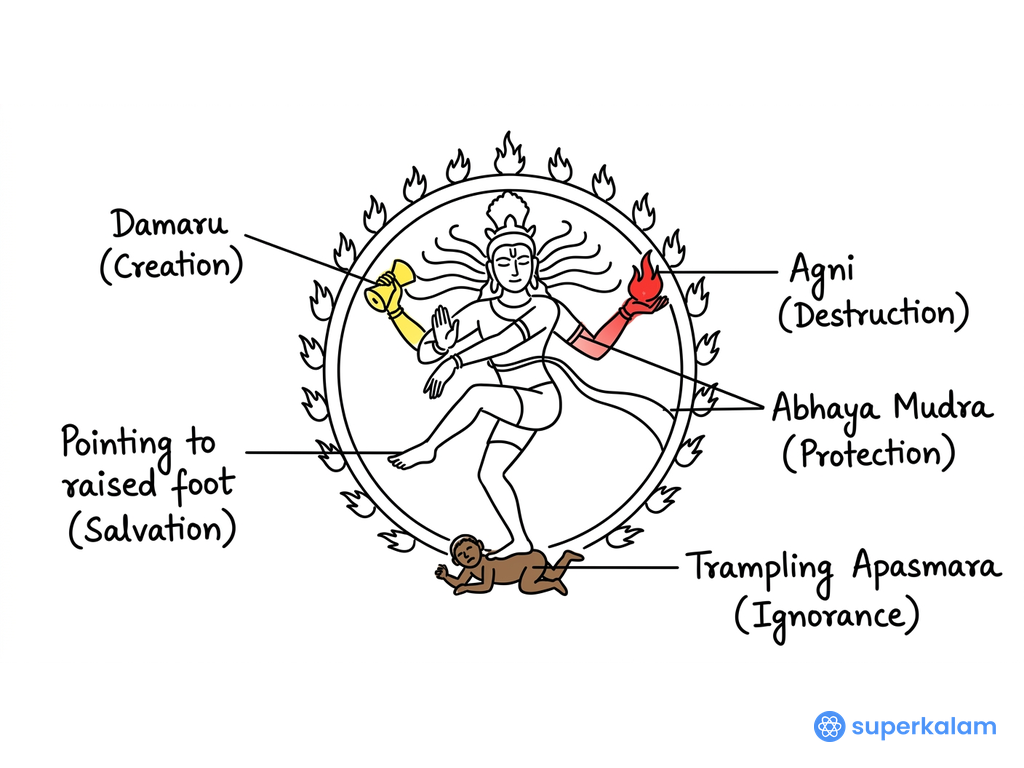
Nataraja Iconography Representing the Tandava Dance
Iconographic Descriptions in Inscriptions
| Element | Inscriptional Description | Symbolic Meaning |
|---|---|---|
| Damaru | Sacred drum in right hand | Sound of creation |
| Fire | Flames in left hand | Cosmic destruction |
| Raised Foot | Lifted leg (Urdhva Pada) | Liberation of soul |
| Pressed Demon | Apasmara beneath foot | Victory over ignorance |
| Hair Flow | Flowing locks (Jata) | Uncontrolled cosmic energy |
Ritual and Performance Context
- Temple Festivals: Inscriptions detail Tandava performances during Maha Shivaratri, Arudra Darshan, and seasonal celebrations
- Royal Patronage: Records show kings like Raja Raja Chola I and Harsha Vardhana commissioning Tandava sculptures and performances
- Devadasi Traditions: Documentation of trained temple dancers performing stylized Tandava sequences during daily worship
- Regional Variations: Different inscriptional traditions describe local interpretations - Kalika Tandava in Bengal, Rudra Tandava in Kashmir
- Architectural Integration: Stone inscriptions accompanying Nataraja sculptures in temple walls, pillars, and sanctum entrances
Theological and Philosophical Significance
- Cosmic Cycles: Inscriptions interpret Tandava as representation of Srishti (creation), Sthiti (preservation), Samhara (destruction), Tirobhava (concealment), and Anugraha (grace)
- Rhythmic Patterns: Documentation of 108 Karanas and 32 Angaharas as fundamental dance postures derived from Shiva's cosmic movements
- Philosophical Integration: Connection with Shaiva Siddhanta philosophy through inscriptional commentaries explaining dance as meditation in motion
- Universal Harmony: Descriptions of Tandava as manifestation of cosmic rhythm governing planetary movements and natural cycles
The inscriptional evidence of Tandava dance reveals its evolution from ritualistic worship to sophisticated art form, establishing it as a cornerstone of Indian classical dance traditions and temple culture that continues to inspire contemporary performing arts.
Answer Length
Model answers may exceed the word limit for better clarity and depth. Use them as a guide, but always frame your final answer within the exam’s prescribed limit.
Evaluate this PYQ now
Write your answer & evaluate in just 60 seconds




500+ students evaluated
Model Answers from
- 2013Art & Culture5 MarksView Answer
Chola architecture represents a high watermark in the evolution of temple architecture. Discuss.
- 2013Art & Culture10 MarksView Answer
Though not very useful from the point of view of a connected political history of South India, the Sangam literature portrays the social and economic conditions of its time with remarkable vividness. Comment.
Model Answers by Subject


Crack UPSC with your
Personal AI Mentor
An AI-powered ecosystem to learn, practice, and evaluate with discipline