Bhitarkanika National Park in Odisha | UPSC Notes
Bhitarkanika National Park in Odisha UPSC notes covering location, rivers, mangroves, Ramsar status, biodiversity, threats, and conservation. Important for Prelims and GS Paper III Environment.
Feb, 2026
•6 min read
Bhitarkanika National Park in Odisha is one of India’s most important mangrove ecosystems and a biodiversity hotspot. Bhitarkanika is highly relevant for questions on national parks, biodiversity conservation, climate resilience, and environmental governance in UPSC Prelims and GS Paper III (Environment & Ecology).
About Bhitarkanika National Park
Bhitarkanika National Park, located in the Kendrapara district of Odisha, is one of India’s most ecologically significant coastal ecosystems. The park is a complex network of tidal rivers, creeks, estuaries, and mudflats.
Bhitarkanika was officially designated as a National Park in 1998 under the Wildlife Protection Act, strengthening legal protection for its fragile mangrove ecosystem and wildlife.
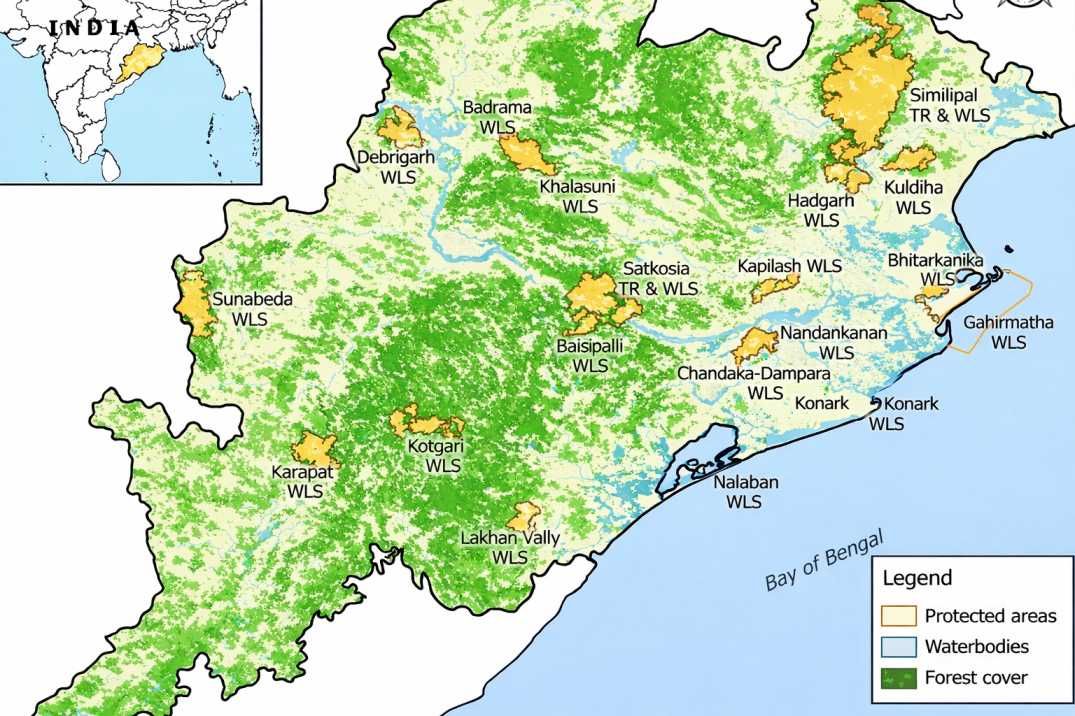
- Area: 672 sq. km
- Location: Kendrapara district, Odisha
- Rivers Feeding the Park: Brahmani, Baitarani, Dhamra, and Patasala
- Mangrove Status: The second-largest mangrove ecosystem in India
Biodiversity Significance
- Saltwater Crocodile Habitat: Bhitarkanika is internationally known as a major breeding ground of the Saltwater Crocodile (Crocodylus porosus). It has one of the highest populations of these reptiles in India.
- Gahirmatha Beach (Eastern Boundary): Hosts the world’s largest rookery of Olive Ridley Sea Turtles, famous for the mass nesting phenomenon known as Arribada.
- Bagagahana Heronry (Near Surajpore Creek): One of Asia’s largest heronries, where thousands of migratory and resident birds gather for nesting. The spectacular courtship flights and nesting colonies are a unique ecological event.
- Eight Species of Kingfishers: Bhitarkanika is one of the few places in India where eight varieties of kingfishers are found together.
- Rich Mangrove Diversity: The park supports a wide range of mangrove species such as Avicennia, Rhizophora, Sonneratia, and Bruguiera, which play a crucial role in coastal protection and carbon sequestration.
Conservation Importance of Bhitarkanika National Park
Bhitarkanika National Park is one of India’s most strategically important protected areas due to its ecological, climatic, and biodiversity value.
1. Ramsar Wetland Site:
It is recognised as a Wetland of International Importance under the Ramsar Convention, highlighting its global ecological value, especially for migratory birds and aquatic biodiversity.
2. Natural Shield Against Cyclones:
The dense mangrove forests act as a bio-shield, reducing wind velocity and absorbing storm surges during cyclones. This function is extremely significant for Odisha, a cyclone-prone state along the Bay of Bengal.
3. Prevents Coastal Erosion:
Mangrove root systems stabilise soil, reduce tidal impact, and prevent shoreline erosion, protecting inland agricultural land and human settlements.
4. Climate Change Mitigation:
Mangroves are high-capacity carbon sinks (blue carbon ecosystems). Bhitarkanika contributes to carbon sequestration, helping mitigate global warming and supporting India’s climate commitments.
5. Habitat for Endangered Species:
It conserves critical species such as the Saltwater Crocodile, Olive Ridley Sea Turtle, Indian Python, and various migratory birds.
6. Supports Livelihoods & Sustainable Ecology:
The ecosystem supports fisheries, local communities, and eco-tourism while maintaining ecological balance.
Flora and Fauna of Bhitarkanika National Park
Bhitarkanika’s unique estuarine ecosystem supports terrestrial, aquatic, and avian species.
Flora (Mangrove Diversity)
Home to one of the richest mangrove gene pools in India. It has the presence of salt-tolerant vegetation adapted to intertidal conditions. Mangroves support nutrient cycling, breeding grounds for fish, and coastal stabilisation. Major mangrove species include:
- Avicennia
- Rhizophora
- Sonneratia
- Bruguiera
- Heritiera fomes
Fauna (Wildlife Diversity)
- Saltwater Crocodile (Crocodylus porosus): Largest population in India; Bhitarkanika is globally recognised for its conservation success.
- Olive Ridley Sea Turtle: Mass nesting (Arribada) at nearby Gahirmatha Beach.
Mammals Found:
- Spotted Deer
- Wild Boar
- Fishing Cat
- Rhesus Macaque
- Smooth-coated Otter
- Reptiles:
- King Cobra
- Indian Python
- Water Monitor Lizard
Birdlife:
- Over 200 species of resident and migratory birds
- Asia’s significant heronry at Bagagahana
- Rare presence of eight species of kingfishers
Ecological Importance
- Acts as a breeding and nursery ground for marine and estuarine species
- Supports migratory birds along the Central Asian Flyway
- Maintains ecological balance between marine and freshwater ecosystems
River System of Bhitarkanika National Park
The Bhitarkanika National Park is a dynamic estuarine landscape, where freshwater from inland rivers meets saline waters of the Bay of Bengal. This interaction creates nutrient-rich conditions essential for mangrove growth, fish breeding, and wildlife survival.
Major Rivers Feeding Bhitarkanika
- Brahmani River – One of Odisha’s major rivers; it provides substantial freshwater inflow and sediment deposition.
- Baitarani River – Plays a crucial role in maintaining salinity balance and supporting estuarine biodiversity.
- Dhamra River – Formed by the confluence of Brahmani and Baitarani before draining into the Bay of Bengal.
- Patasala River – Contributes to the intricate creek system within the park.
- Key Point for UPSC: The Brahmani and Baitarani rivers merge near Bhitarkanika before flowing into the Bay of Bengal through the Dhamra River system.
Also read: Mahanadi River Inter-State Water Dispute
Threats & Challenges Facing Bhitarkanika National Park
Bhitarkanika National Park faces multiple threats that undermine its biodiversity, ecological balance, and role as a natural shield against climate risks.
1. Freshwater Scarcity and Hydrological Imbalance
- The health of Bhitarkanika’s mangrove ecosystem depends on a delicate balance of freshwater and saltwater.
- Reduced freshwater inflow due to upstream water diversions, dams, and irrigation projects has created a freshwater crisis.
- It threatens mangrove survival and could reduce biodiversity if not managed effectively.
2. Mangrove Loss and Land Conversion
- Illegal conversion of mangrove forests into prawn farms and aquaculture plots has led to habitat loss and degradation.
- This reduces natural coastal protection and exposes nearby villages to greater risk from cyclones and storm surges.
3. Climate Change Impacts
- Bhitarkanika’s mangroves are highly vulnerable to climate change, including rising sea levels, increased storm intensity, erratic rainfall, and flooding.
- These pressures can weaken the ecosystem’s resilience and affect species distribution over time.
4. Poaching and Illegal Wildlife Trade
- There are ongoing concerns about the poaching of migratory birds, deer, and wild boar, especially during festive seasons when meat demand increases.
- Forest authorities have had to ramp up night patrolling and awareness campaigns to combat this.
5. Human–Wildlife Conflict
- Incidents of wildlife such as large reptiles getting entangled in discarded fishing nets or entering human settlements.
- These situations cause injuries, stress to animals, and increased risk for locals living around the park perimeter.
6. Encroachment and Land Use Pressure
- Illegal encroachment for shops, hotels near park boundaries adds pressure to the protected area, increases human disturbance, and fragments habitat.
- Recent eviction drives have targeted such encroachments but highlight ongoing land-use challenges.
7. Disturbance to Breeding Seasons
- Tourist activity and non-regulated human presence during sensitive periods, especially the crocodile nesting season, can disrupt wildlife behaviour.
- Strict closures are enforced annually to minimise disturbance, but managing human access remains a logistical challenge.
8. Loss of Migratory Bird Habitat
- Climate shifts, habitat alteration, and higher temperatures have led to the early departure of migratory birds.
- It indicates changes in ecological cues that can affect bird populations and food webs.
UPSC Prelims PYQs on Bhitarkanika National Park
QUESTION 1
Two important rivers — one with its source in Jharkhand (and known by a different name in Odisha), and another, with its source in Odisha — merge at a place only a short distance from the coast of the Bay of Bengal before flowing into the sea. This is an important site of wildlife and biodiversity and a protected area. Which one of the following could be this?
QUESTION 2
If you want to see gharials in their natural habitat, which one of the following is the best place to visit?
UPSC Mains Practice Question on Bhitarkanika National Park
Bhitarkanika National Park, a key mangrove ecosystem in Odisha, faces multiple ecological and anthropogenic threats affecting its biodiversity and sustainability. Critically analyse the main threats to Bhitarkanika National Park, citing recent challenges, and suggest policy measures to ensure its long-term conservation. (250 words, 15 marks)
Evaluate for FreeWay Forward
A balanced, science-based, and community-driven approach is essential to secure Bhitarkanika’s ecological future and coastal resilience.
- Ensure proper river basin management to preserve the salinity balance essential for mangroves.
- Use technology and strict enforcement to prevent poaching, encroachment, and illegal aquaculture.
- Provide sustainable livelihood options to reduce local dependency on forest resources.
- Encourage scientific afforestation and integrate with blue carbon initiatives.
- Implement carrying-capacity based tourism and seasonal restrictions during breeding periods.
Start your UPSC Preparation 2026/2027 with SuperKalam
SuperKalam is your personal mentor for UPSC preparation, guiding you at every step of the exam journey. Practice, revise, and evaluate– all in one place.
Download Now