World Health Day 2026: Theme, Date & Significance - UPSC
World Health Day 2026 (7 April) theme “Together for Health” explained with significance, WHO role, One Health approach, UHC, and key UPSC facts for Prelims and Mains.
Apr, 2026
•7 min read
World Health Day is observed every year on 7 April to mark the foundation of the World Health Organisation in 1948. It is an important topic for UPSC Prelims and Mains GS Paper II (Health) as it highlights global health priorities, themes, and policy direction.
World Health Day 2026 reflects current public health challenges and guides government action. In today’s context, the day is highly relevant as countries focus on strengthening healthcare systems, ensuring universal health coverage, and improving pandemic preparedness.
World Health Day 2026 Theme
The theme for World Health Day 2026, “Together for health. Stand with science”, highlights the importance of scientific collaboration and evidence-based action in improving global health outcomes. Led by the World Health Organisation, this year’s campaign adopts a structured and action-oriented approach:
Core Focus
- Emphasises the role of science in policymaking and public health decisions.
- Encourages countries to adopt evidence-based strategies for better health outcomes.
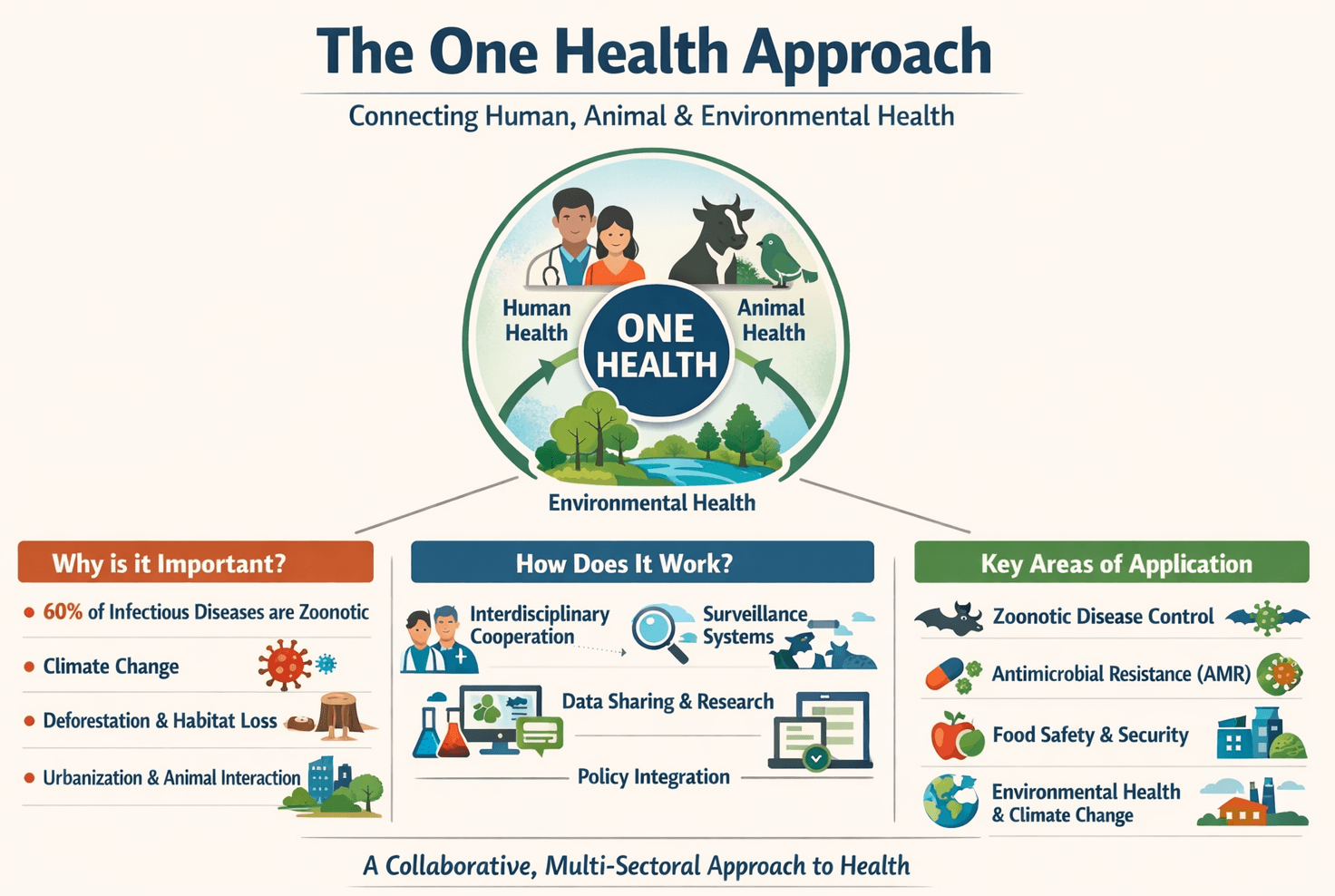
One Health Approach
- Promotes the idea that human, animal, plant, and environmental health are interconnected.
- Stresses the need for integrated and interdisciplinary solutions to tackle health risks.
Year-long Global Campaign
- Aims to celebrate scientific achievements in healthcare.
- Focuses on bridging the gap between research and real-world implementation.
- Encourages multilateral cooperation among countries and institutions.
History of World Health Day
World Health Day is rooted in the evolution of global health cooperation and institutional development. It is observed every year on 7 April, marking the establishment of the World Health Organisation, a key body in global health governance.
- The idea of creating an independent international health organisation was first proposed in 1945 by Brazil and China, reflecting the need for a coordinated global response to health challenges.
- The WHO Constitution was signed in 1946 by 61 countries, laying the foundation for an institutional framework in global health.
- It officially came into force on 7 April 1948, a date that is now commemorated as World Health Day every year.
- The first World Health Day was observed in 1949, but from 1950 onwards, it was shifted to 7 April to align with the WHO’s founding anniversary and to ensure wider participation, especially among students.
- This year, the world is celebrating the 78th anniversary of World Health Day, drawing attention to pressing public health issues worldwide.
Also see: National Organ and Tissue Transplant Organisation (NOTTO)
World Health Day 2026 Campaign
The World Health Day 2026 campaign, led by the WHO, is designed to combine global events with active public engagement to rebuild trust in science and support science-led solutions for a healthier future.
1. International One Health Summit (7 April 2026)
- Hosted by the Government of France under the French G7 Presidency
- Highlights global commitment towards integrated and collaborative health governance
- Reinforces the importance of the One Health approach in policymaking
2. Global Forum of WHO Collaborating Centres (7–9 April 2026)
- Brings together around 800 scientific institutions from 80+ countries
- Represents one of the largest scientific networks linked to a United Nations agency
- Focuses on translating scientific research into effective policy action
3. Public Participation & Outreach
Encourages individuals to:
- Engage with credible and evidence-based health information
- Share personal stories on how science improves everyday life
- Celebrate innovations and achievements in global health
4. Global Digital Campaigns
Promotes worldwide participation through hashtags:
- #StandWithScience
- #WorldHealthDay
Also read: National Cancer Awareness Day 2025
World Health Day 2026 Facts
Below are important, authentic health facts highly relevant for UPSC Prelims and Mains answers enrichment.
Global Data
Non-Communicable Diseases (NCDs)
- NCDs account for ~75% of global deaths (43 million deaths in 2021).
- The majority of premature deaths occur in low- and middle-income countries (LMICs).
Leading Cause of Death Globally
- Ischaemic heart disease is the top cause, responsible for ~13% of total global deaths.
Shift in Disease Burden
- 7 out of the top 10 causes of death globally are NCDs.
- Indicates a transition from communicable to lifestyle-related diseases.
Global Health Data System
- WHO’s Global Health Estimates (GHE) provide comprehensive data on mortality and disease burden across countries.
- Used for policy planning and SDG monitoring.
India-Specific Data
Life Expectancy at Birth
- In India, life expectancy at birth (years) has increased by 4.11 years, from 63.2 [62.6 - 63.8] years in 2000 to 67.3 [66.9 - 67.8] years in 2021.
- Reflects improvement in quality of life and healthcare access.
Burden of NCDs in India
- NCDs account for a major share of total deaths, showing a rising trend over time.
- Indicates an epidemiological transition similar to global patterns.
Mortality & Population Scale
- Around 9.5 million people die in India every year.
- This is the second largest number of annual deaths of any country in the world after China.
- Accounting for population, India's Crude Death Rate - the number of deaths for every 1,000 people - is lower than the global average.
Universal Health Coverage (UHC)
- Ayushman Bharat (AB-PMJAY): Flagship scheme aimed at achieving Universal Health Coverage (UHC) by providing cashless healthcare services.
- UHC Progress Measurement: India’s UHC progress is tracked under the WHO’s Triple Billion Targets framework (coverage, protection, healthier population).
Disease Eradication & Control Achievements
- Polio-Free Status: India reported its last polio case in 2011 and was certified polio-free in 2014 by the WHO South-East Asia Region.
- Maternal & Neonatal Tetanus Elimination (2015): India successfully eliminated this disease as a public health problem.
Largest Immunisation Programme
India runs one of the world’s largest programmes covering:
- ~26 million newborns annually
- ~34 million pregnant women
- Conducts ~13 million immunisation sessions every year
Measles-Rubella Campaign
- World’s largest vaccination campaign, targeting ~410 million children.
HPV Vaccination Drive
- Free nationwide HPV vaccination drive for 1.15 crore girls aged 14 years to prevent Cervical Cancer.
- The campaign uses a voluntary, free-of-cost, single-dose Gardasil-4 vaccine.
Focus on Health Emergencies & Pandemic Preparedness
India strengthened systems for:
- Disease surveillance and rapid response
- Detection of emerging pathogens
Must read: India's HPV Vaccination Drive: Cervical Cancer - UPSC Notes
Conclusion
“Health is the greatest gift, contentment the greatest wealth.” — Gautama Buddha
World Health Day 2026 highlights the importance of global health, scientific collaboration, and the One Health approach in today’s interconnected world. With the theme “Together for health. Stand with science”, it reinforces the need for evidence-based policymaking, strong health systems, and universal health coverage (UHC).
Must cover this recent current affairs topic here: Passive Euthanasia in India: Harish Rana Case | UPSC
Start your UPSC Preparation 2027 with SuperKalam
SuperKalam is your personal mentor for UPSC preparation, guiding you at every step of the exam journey. Practice, revise, and evaluate– all in one place.
Download the App Now