Jallianwala Bagh Massacre Rememberance Day: 13th April 1919
Jallianwala Bagh Massacre Rememberance Day 2026 (13th April 1919): learn background, causes, events and significance (UPSC Prelims & Mains). Read now!
Apr, 2026
•6 min read
On 13th April 1919, one of the darkest chapters in India’s freedom struggle unfolded at Jallianwala Bagh, when hundreds of unarmed, innocent Indians were brutally killed under the orders of General Reginald Dyer. This tragic event became a turning point in India’s nationalist movement, exposing the true nature of colonial rule.
On Jallianwala Bagh Massacre Remembrance Day, 2026, our nation marks 107 years since this horrific incident. It is a day to reflect on sacrifice, resistance, and the evolution of India’s freedom struggle.
For the UPSC examination, this day holds relevance in Modern Indian History, under the themes of colonial repression, mass movements, and the rise of national consciousness.
The Jallianwala Bagh Massacre
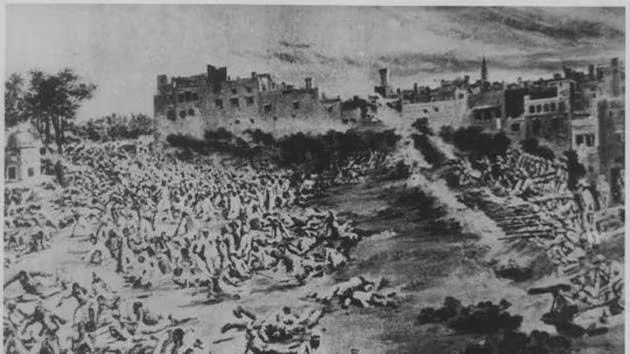
The Jallianwala Bagh Massacre, also known as the Amritsar Massacre, stands as a grim symbol of colonial brutality in India’s freedom struggle. On 13th April 1919, in Amritsar, Punjab, British troops under General Reginald Dyer opened indiscriminate fire on a peaceful gathering at Jallianwala Bagh.
The crowd, comprising unarmed civilians, had assembled to protest against the arrest of nationalist leaders and the repressive Rowlatt Act. This tragic incident not only shocked the nation but also became a decisive turning point, intensifying India’s struggle against British rule.
Background of the Jallianwala Bagh Massacre (1919)
The Jallianwala Bagh Massacre must be understood in the context of rising nationalist consciousness and harsh colonial repression in the post-World War I phase. The situation in Punjab, especially in Amritsar, had become highly volatile due to a series of political developments:
- Repressive Colonial Policy: The enactment of the Rowlatt Act (March 1919) empowered the British government to detain individuals without trial, suppress publications, and curb civil liberties, leading to nationwide outrage.
- Rise of Local Leadership: Prominent leaders such as Dr Saifuddin Kitchlew and Dr Satyapal played a crucial role in organising peaceful protests and public meetings in Punjab. They symbolised Hindu-Muslim unity and mass political awakening at the local level.
- Arrest of Leaders (10 April 1919): The British District Magistrate summoned them to his house, arrested them, and secretly deported them to Dharamsala, which caused mass anger and protests in Amritsar, leading to clashes and heightened tensions.
- Amritsar as a Nerve Centre of Protest: Being a major political, commercial, and religious hub, Amritsar witnessed continuous gatherings, strikes, and demonstrations against British repression.
- Baisakhi Gathering at Jallianwala Bagh: On 13th April 1919, the festival of Baisakhi drew thousands, including villagers unaware of prohibitory orders, to Jallianwala Bagh:
- The gathering had both festive and political dimensions.
- People assembled to celebrate Baisakhi and peacefully protest.
- Resolutions were to be discussed, demanding the release of arrested leaders and condemning the earlier police firing
- British authorities under General Reginald Dyer viewed the gathering as a defiance of authority and potential rebellion, setting the stage for a brutal response.
Also read: Shaheed Diwas 2026: March 23 | UPSC
What Happened at Jallianwala Bagh on 13th April 1919?
On 13th April 1919, the day of Baisakhi, thousands gathered at Jallianwala Bagh in Amritsar. It was meant to be a day of joy. Villagers had come after the harvest. Families sat together. Children played. Some people spoke about recent arrests and injustice. But most were unaware of any ban on gatherings. They were innocent, unarmed people. They had no idea what was about to happen.
Without any announcement, General Reginald Dyer entered the Bagh with armed troops. He did not ask the crowd to disperse. He did not fire in the air. He took a position at the narrow entrance. The only accessible exit. It was blocked. The crowd was sealed inside.
Then came the command. Fire!
Within moments, the peaceful gathering turned into a scene of unimaginable horror. Bullets rained down on helpless people, screams filled the air, and panic-stricken civilians ran desperately with no escape.
Dyer ordered his troops to aim at the densest parts of the gathering. In sheer terror, many jumped into a deep well inside the Bagh. Women, clutching their children, chose death over bullets. Bodies piled over one another, the ground soaked in blood.
The firing continued for about 10-15 minutes. It only stopped when ammunition was nearly exhausted. After the brutal killings, no medical help was provided. The wounded lay crying through the night as the British authorities had imposed a strict curfew in the area.
Dyer later admitted that his aim was not to disperse the crowd, but to “teach a lesson” and create fear among Indians. It was a deliberate act of terror, resulting:
- Around 1,650 rounds were fired at unarmed civilians.
- Nearly 50 soldiers were deployed at the entrance, blocking escape.
- Hundreds died instantly; thousands were injured without aid.
It was not just a massacre, but a cold-blooded act meant to instil fear and crush the spirit of a nation. It was a calculated act of brutality. They trapped, targeted, and terrorised innocent people.
Responses and Aftermath of the Jallianwala Bagh Massacre
The Jallianwala Bagh Massacre triggered nationwide outrage and global condemnation, exposing the moral bankruptcy of British rule. It marked a decisive shift in India’s freedom struggle, with political, legal, and social reactions emerging across different sections:
1. Nationwide Protest and Repression: The massacre, along with the Rowlatt Act, led to widespread protests across India. In response, the British imposed martial law in Punjab, curbing civil liberties and intensifying repression.
2. Indian National Congress (INC): The INC strongly condemned the massacre.
- Mahatma Gandhi, deeply shaken, renounced the Kaiser-i-Hind medal, marking a turning point in his stance towards British rule.
- The INC set up an independent inquiry committee, including leaders such as Motilal Nehru, C. R. Das, Abbas Tyabji, and others, to investigate the incident.
3. British Government Response and Inquiry: The British initially attempted to suppress information, but rising pressure forced them to act:
- The Hunter Commission was set up in October 1919.
- It criticised Reginald Dyer for excessive force, but no serious punishment was given, leading to dissatisfaction in India.
- Michael O'Dwyer supported Dyer’s actions, justifying them as necessary to control rebellion.
4. Debate in British Parliament: The massacre was condemned even in Britain. Leaders such as Winston Churchill and H. H. Asquith criticised the incident as barbaric and unjustified.
5. Legal and Judicial Aspect: Although the Hunter Commission functioned as an inquiry, it was not a full judicial trial and failed to deliver justice.
- No criminal proceedings were effectively pursued against Dyer.
- This highlighted the lack of accountability in colonial governance and the denial of justice to Indians.
6. Other Prominent Reactions:
- Rabindranath Tagore renounced his knighthood in protest, calling the act a “badge of honour in humiliation”.
- The role of Sikh religious authorities, particularly under Arur Singh, who honoured Dyer, created widespread anger and contributed to the rise of the Gurdwara Reform Movement.
Also see: Quit India Movement 1942 UPSC Notes | Modern History & Freedom Struggle
The Truth was Suppressed
General Reginald Dyer and Mr Irving grossly understated the scale of the tragedy, reporting only about 291 deaths in an attempt to downplay the brutality. In reality, the extent of killing was far greater and more horrific.
- The official British figure (later cited by the Hunter Commission) acknowledged 379 deaths and over 1,200 severe injuries, exposing inconsistencies in initial reports.
- Indian leaders and independent inquiries, such as Madan Mohan Malviya, estimated 500–1000+ deaths, with many more severely injured.
- The true toll was likely higher because several bodies were never officially counted, and many victims died later due to injuries or were taken away by families without a record.
- The massacre site was not immediately accessible for rescue or documentation, further obscuring the real numbers.
- The infamous well inside Jallianwala Bagh alone contained dozens of bodies, reflecting the desperation and scale of panic.
- British authorities imposed strict censorship and martial law in Punjab, suppressing news and limiting accurate reporting of casualties.
- No proper medical aid was provided; many injured died overnight, which were not included in the initial death counts.
The real tragedy of Jallianwala Bagh lies not only in the massacre itself, but also in how its truth was suppressed.
Shaheed Sardar Udham Singh: The Avenger of Jallianwala Bagh Massacre
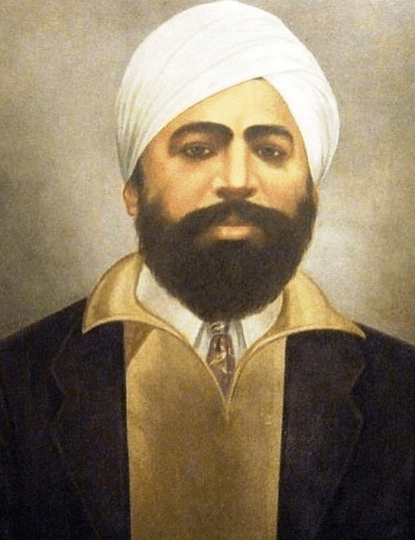
The wounds of the Jallianwala Bagh Massacre did not fade with time. For many, the pain turned into a lifelong resolve for justice. Among them was Udham Singh, who witnessed the horror of that day and carried its memory in his heart for over two decades.
He rescued injured people from Jallianwala Bagh who were gunned down without mercy. The cries, the bloodshed, and the injustice left a deep scar. He made a silent promise to avenge the massacre and bring justice where the British system had failed.
For years, he waited. He travelled across countries, lived under different identities, and patiently tracked those responsible. His target was Michael O'Dwyer, the man who had supported and justified the actions of Reginald Dyer.
- On 13th March 1940, in London, Udham Singh finally acted.
- At Caxton Hall, during a public meeting, he shot and killed O’Dwyer.
- He did not try to escape. He accepted his arrest with courage.
- During his trial, he boldly declared that he had done his duty for his country and for the innocent lives lost in Amritsar. He showed no regret.
- It was not an act of impulse. It was a message against injustice and a response to decades of silence and denial.
On 31st July 1940, the braveheart Udham Singh was executed by the British. But his sacrifice transformed him into a symbol of resistance and justice. His act reminded the world that the victims of Jallianwala Bagh were not forgotten, and that their blood demanded accountability.
Must read: Netaji Subhash Chandra Bose Jayanti (Prakram Diwas) 2026
Final Words: Remembering Sacrifice
As we observe the Jallianwala Bagh Massacre Rememberance Day 2026, we bow our heads in solemn tribute to the innocent lives lost at Jallianwala Bagh.
We remember the courage of Shaheed Sardar Udham Singh, who carried the pain of that massacre for years and turned it into a fearless act of justice. We remember countless freedom fighters who sacrificed everything so that India could breathe in freedom.
Jallianwala Bagh is a reminder of the cost of freedom. A reminder of the resilience of a nation. A reminder that injustice must never be forgotten.
For every student and aspirant, this day is not just about remembrance. It is about responsibility. To understand our past. To value our freedom. And to carry forward the ideals for which so many laid down their lives.
Their sacrifice gave us freedom. Our duty is to honour it with awareness, integrity, and commitment to the nation.
Jai Hind!
Start your UPSC Preparation 2026/2027 with SuperKalam
SuperKalam is your personal mentor for UPSC preparation, guiding you at every step of the exam journey. Practice, revise, and evaluate– all in one place.
Download Now