Shaheed Diwas 2026: March 23 | UPSC
Shaheed Diwas 2026 (Martyrs Day) is observed every year on March 23rd. Know the history, theme, significance, and key events of UPSC Prelims and Mains exams.
Mar, 2026
•6 min read
Shaheed Diwas, also known as Martyrs Day, observed every year on March 23, reminds us of the courage and sacrifice of Shaheed Bhagat Singh, Shaheed Shivaram Rajguru, and Shaheed Sukhdev Thapar. They were executed by the British government for their role in the freedom struggle. Their sacrifice at a young age continues to inspire generations and holds deep emotional and historical significance.
The day is relevant to GS Paper 1 (Modern Indian History) under the topic of the freedom struggle and nationalist movements.
Shaheed Diwas 2026 Theme
The theme for 2026 is “Mera Bharat Meri Zimmedari”.
This theme emphasises that nation-building is a shared responsibility. It calls upon young citizens to participate actively in civic life, contribute meaningfully to society, and act with awareness and accountability.
It turns tribute into action, reminding us that the best way to honour our martyrs is by building a stronger, more responsible India. Why this theme matters in the present-day context:
- It links freedom struggle values with modern civic duties
- It highlights the power of youth in nation-building
- It promotes active citizenship over passive remembrance
- It encourages responsible and informed participation in society
Must read: Netaji Subhash Chandra Bose Jayanti (Prakram Diwas) 2026
History of Shaheed Diwas
Shaheed Diwas is observed on March 23 every year to honour the sacrifice of three young revolutionaries—Shaheed Bhagat Singh, Shaheed Shivaram Rajguru, Shaheed Sukhdev Thapar. The British government executed them on March 23, 1931, in Lahore Central Jail (now in Pakistan). This day became a symbol of courage, patriotism, and resistance against colonial rule.
Background of the Incident
The roots of Shaheed Diwas go back to the death of Lala Lajpat Rai in 1928. He led a peaceful protest against the Simon Commission in Lahore. During the protest, British police officer James A. Scott ordered a lathi charge. Lala Lajpat Rai suffered serious injuries and died a few weeks later.
This incident deeply angered young revolutionaries. To avenge his death, Bhagat Singh and his associates planned to assassinate Scott. However, due to mistaken identity, they killed J. P. Saunders, a British officer, in December 1928.
Revolutionary Activities and Arrest
After the Saunders killing, Bhagat Singh went underground. In 1929, he, along with Batukeshwar Dutt, threw non-lethal bombs in the Central Legislative Assembly in Delhi. Their aim was not to kill but to “make the deaf hear” and protest against repressive British laws.
They deliberately surrendered after the incident to use the court as a platform to spread their revolutionary ideas. During the trial, Bhagat Singh gained massive public support across India.
Trial and Execution
The British government conducted the Lahore Conspiracy Case trial against Bhagat Singh, Rajguru, and Sukhdev. The court found them guilty of the murder of Saunders and sentenced them to death.
On March 23, 1931, the British authorities executed all three revolutionaries. They carried out the execution secretly, ahead of the scheduled date, to avoid public outrage.
After their execution, people across India protested against British rule. Shaheed Diwas became a day to remember the sacrifice of these heroes and to honour all martyrs who fought for India’s independence.
About Shaheed Bhagat Singh
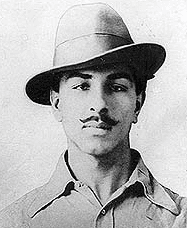
Shaheed Bhagat Singh was one of the most influential and inspiring revolutionaries of India’s freedom struggle. He was born in 1907 in Punjab (now in Pakistan) into a family deeply involved in the freedom movement. From a young age, he was influenced by nationalist ideas and events like the Jallianwala Bagh massacre. These experiences shaped his strong commitment to ending British rule.
Organisations and Leadership
- Bhagat Singh was deeply inspired by Kartar Singh Sarabha, a young revolutionary of the Ghadar Movement.
- Sarabha’s courage and sacrifice had a lasting impact on him, and Bhagat Singh even kept his photo as a source of motivation.
- Bhagat Singh was a key member of the Hindustan Socialist Republican Association (HSRA).
- He also founded the Naujawan Bharat Sabha to mobilise young Indians and promote patriotism, unity, and social awareness.
- Bhagat Singh believed that the struggle for independence was not just against British rule but also against social inequality.
- His ideology was influenced by socialist ideas, and he aimed to build a just and equal society.
Revolutionary Activities
He actively participated in revolutionary movements and became widely known after the 1929 Central Legislative Assembly incident. Along with Batukeshwar Dutt, he threw non-lethal bombs in the Assembly. Their aim was not to harm anyone but to protest against repressive laws and “make the deaf hear.” He later voluntarily surrendered to spread his message in court.
Ideology and Writings
Bhagat Singh believed in revolutionary change based on justice, equality, and freedom. He was not only a fighter but also a thinker and writer. One of his most famous works is the essay “Why I Am an Atheist”, where he explains his beliefs and rational thinking.
His powerful slogan “Inquilab Zindabad” became a rallying cry for revolution and continues to inspire generations.
Famous Quotes
- “They may kill me, but they cannot kill my ideas.”
- “Revolution is an inalienable right of mankind.”
- “The sword of revolution is sharpened on the whetting stone of ideas.”
Martyrdom and Legacy
Bhagat Singh was executed at the age of 23 on March 23, 1931, in Lahore Central Jail along with Shivaram Rajguru and Sukhdev Thapar. His sacrifice made him a symbol of courage, youth, power, and patriotism.
Even today, Bhagat Singh remains an icon for Bharat's youth and students. His life teaches the importance of courage, clarity of thought, and commitment to a larger cause.
Must read: National Flag of India [UPSC Notes]
About Shaheed Sukhdev Thapar
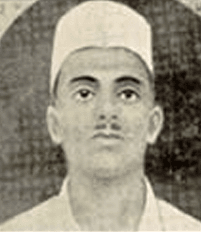
Shaheed Sukhdev Thapar was a key revolutionary leader who played a crucial role in organising movements and mobilising youth during India’s freedom struggle. He was born in 1907 in Ludhiana, Punjab.
From a young age, he showed strong patriotic feelings and actively participated in nationalist activities. The growing resistance against British rule deeply influenced him, and he chose the path of revolution early in his life.
Organisational Role
- Sukhdev was an important member of the Hindustan Socialist Republican Association (HSRA).
- He played a major role in organising revolutionary activities, especially in the Punjab region.
- He worked behind the scenes to build strong networks and ensure coordination among revolutionaries.
- He strongly believed in the power of youth.
- Sukhdev actively encouraged young people to join the freedom movement and take responsibility for the nation’s future.
- Along with his associates, he helped expand revolutionary influence among students and young citizens.
Contribution to the Freedom Movement
Sukhdev Thapar was directly involved in major revolutionary actions, including the events connected to the Lahore Conspiracy Case. This case was linked to the killing of British officer J. P. Saunders, which was carried out to avenge the death of Lala Lajpat Rai.
Martyrdom and Legacy
Sukhdev Thapar was executed on March 23, 1931, in Lahore Central Jail along with Bhagat Singh and Shivaram Rajguru. His sacrifice symbolises courage, unity, and dedication to the nation.
Even today, Sukhdev’s life teaches the importance of organisation, teamwork, and commitment in achieving a larger goal.
Also read: Quit India Movement 1942 UPSC Notes | Modern History & Freedom Struggle
About Shaheed Shivaram Rajguru
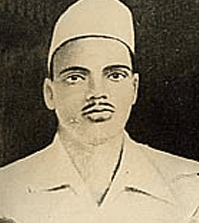
Shaheed Shivaram Rajguru was known for his exceptional bravery, sharp shooting skills, and unwavering commitment to the revolutionary movement against British rule. He was born in 1908 in Maharashtra.
From a young age, he was well-versed in Indian scriptures and developed strong nationalist ideas. The growing resistance against British rule deeply influenced him and pushed him towards revolutionary activities.
Role in Revolutionary Organisations
- Rajguru became an active member of the Hindustan Socialist Republican Association (HSRA).
- Within the organisation, he was known for his marksmanship and discipline.
- His skills made him an important part of key revolutionary operations.
- Rajguru played a crucial role in the assassination of British officer J. P. Saunders in 1928.
- This action was carried out to avenge the death of Lala Lajpat Rai, who died after a brutal lathi charge by British police during protests.
Fearless Personality
Rajguru was known for his courage and readiness to take risks for the nation. His dedication to the cause of independence and his fearless attitude earned him great respect among his peers and future generations.
Martyrdom and Legacy
Shivaram Rajguru was executed at the age of 22 on March 23, 1931, in Lahore Central Jail along with Bhagat Singh and Sukhdev Thapar.
His sacrifice symbolises bravery, youthful determination, and the spirit of resistance. Rajguru’s life continues to inspire students and aspirants to stand firm in their commitment to justice and national values.
Shaheed Diwas 2026: Observance and Key Events
Shaheed Diwas 2026 is marked across India through meaningful programmes that honour the legacy of freedom fighters of India. The focus is not just on remembrance but also on active youth participation, civic responsibility, and national awareness.
Students, youth, and citizens across the country take part in various initiatives that promote patriotism and connect historical sacrifices with present-day duties.
Key Events and Initiatives
- Nationwide Padyatra: A large-scale padyatra is organised across 763 districts to encourage mass participation. A major event takes place in Faridabad, where thousands of young participants join to show unity and respect for martyrs.
- Quiz on Unsung Heroes: Conducted from March 19 to 23, 2026, this quiz spreads awareness about lesser-known freedom fighters and strengthens historical understanding among youth.
- Reel Competition – “Ek Yuva Aisa Bhi”: This initiative encourages young people to create short digital content to honour unsung heroes and express their ideas on nation-building in a creative way.
- Shramdaan Campaign: Organised on March 22, 2026, this campaign promotes cleanliness, civic sense, and social responsibility through community participation.
- Prime Minister’s Tribute: On Shaheed Diwas, Narendra Modi paid homage to the martyrs, remembering their sacrifice and inspiring citizens to contribute towards building a stronger India.
Final Words
“They may kill me, but they cannot kill my ideas.” — Bhagat Singh
This Shaheed Diwas 2026, the true tribute lies in our actions, our awareness, and our contribution to the nation. Let this day inspire you to go beyond symbolic remembrance.
Come together, act responsibly, and play your role in building a stronger, united India.
Jai Hind!
UPSC Prelims PYQs
QUESTION 1
The Ghadr (Ghadar) was a
QUESTION 2
Consider the following freedom fighters:
- Barindra Kumar Ghosh
- Jogesh Chandra Chatterjee
- Rash Behari Bose
Who of the above was/were actively associated with the Ghadar Party?
Start your UPSC Preparation 2026/2027 with SuperKalam
SuperKalam is your personal mentor for UPSC preparation, guiding you at every step of the exam journey. Practice, revise, and evaluate– all in one place.
Download Now