How do you justify the view that the level of excellence of the Gupta numismatic art is not at all noticeable in later times?
How do you justify the view that the level of excellence of the Gupta numismatic art is not at all noticeable in later times?
The Gupta period (320-550 CE) represents the pinnacle of Indian numismatic artistry, with a level of excellence that remained unmatched in subsequent eras due to declining craftsmanship and changing political circumstances.
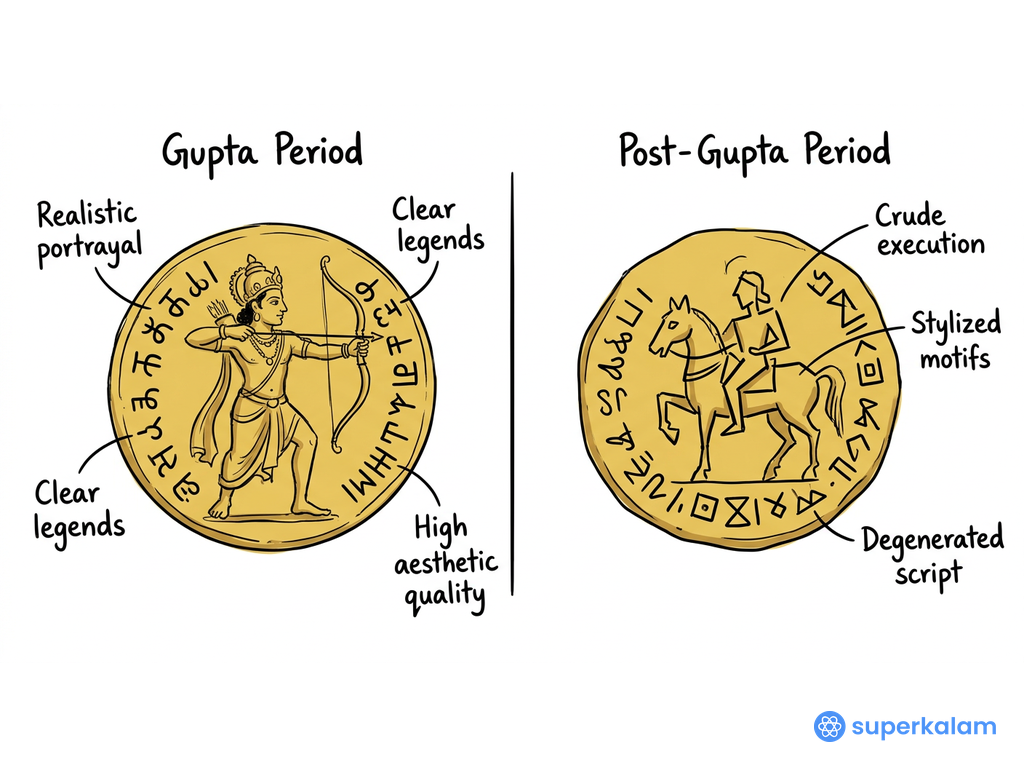
Ancient Indian coins side by side comparison
Artistic Excellence of Gupta Numismatic Art
-
Iconographic Mastery: Gupta coins featured sophisticated royal portraits with intricate details - kings shown in various poses like archer, lion-slayer, and horseman, demonstrating exceptional artistic vision.
-
Technical Superiority:
- Advanced die-cutting techniques producing sharp, well-defined images
- Superior metallurgical skills using pure gold (99% purity in some Chandragupta II dinars)
- Precise weight standards and consistent quality control
-
Cultural Integration: Perfect synthesis of Indian artistic traditions with Hellenistic influences, creating unique aesthetic expressions.
-
Symbolic Richness: Complex iconography incorporating religious symbols, royal regalia, and mythological themes with remarkable artistic finesse.
-
Variety and Innovation: Over 15 different coin types under Chandragupta II alone, each with distinct artistic elements and compositional excellence.
Decline in Later Periods
-
Political Fragmentation:
- Post-Gupta regional kingdoms lacked centralized minting standards
- Loss of imperial workshops and skilled craftsmen
- Reduced patronage for artistic excellence in coinage
-
Technical Deterioration:
- Simpler die-cutting methods and cruder manufacturing processes
- Use of inferior metals and alloys
- Decline in metallurgical expertise and quality control
-
Artistic Regression:
- Simplified iconographic elements replacing complex Gupta designs
- Loss of proportional accuracy and aesthetic refinement
- Standardized, repetitive patterns lacking creative innovation
-
Cultural Disruption: Medieval invasions and changing artistic preferences led to abandonment of classical Gupta artistic traditions.
The Archaeological Survey of India documentation clearly shows that while later periods produced functional coinage, none achieved the artistic sophistication, technical mastery, and cultural synthesis that defined Gupta numismatic excellence, making it a unique historical achievement.
Answer Length
Model answers may exceed the word limit for better clarity and depth. Use them as a guide, but always frame your final answer within the exam’s prescribed limit.
Evaluate this PYQ now
Write your answer & evaluate in just 60 seconds




500+ students evaluated
Model Answers from
- 2017Modern History15 MarksView Answer
Highlight the importance of the new objectives that got added to the vision of Indian Independence since the twenties of the last century.
- 2017Modern History15 MarksView Answer
Examine how the decline of traditional artisanal industry in colonial India crippled the rural economy.
- 2017Modern History10 MarksView Answer
Why did the ‘Moderates’ fail to carry conviction with the nation about their proclaimed ideology and political goals by the end of the nineteenth century?
- 2017Modern History10 MarksView Answer
Clarify how mid-eighteenth century India was beset with the spectre of a fragmented polity.
Model Answers by Subject


Crack UPSC with your
Personal AI Mentor
An AI-powered ecosystem to learn, practice, and evaluate with discipline



