What is agentic Artificial Intelligence (AI)? Explain its working. Describe its applications with suitable examples. Discuss the advantages, risks and challenges associated with agentic AI systems.
What is agentic Artificial Intelligence (AI)? Explain its working. Describe its applications with suitable examples. Discuss the advantages, risks and challenges associated with agentic AI systems.
Agentic Artificial Intelligence defines autonomous systems capable of goal-driven reasoning. While the IndiaAI Mission leverages these for Viksit Bharat 2047, their deployment requires alignment with the Digital Personal Data Protection Act 2023 to mitigate significant socio-technical risks.
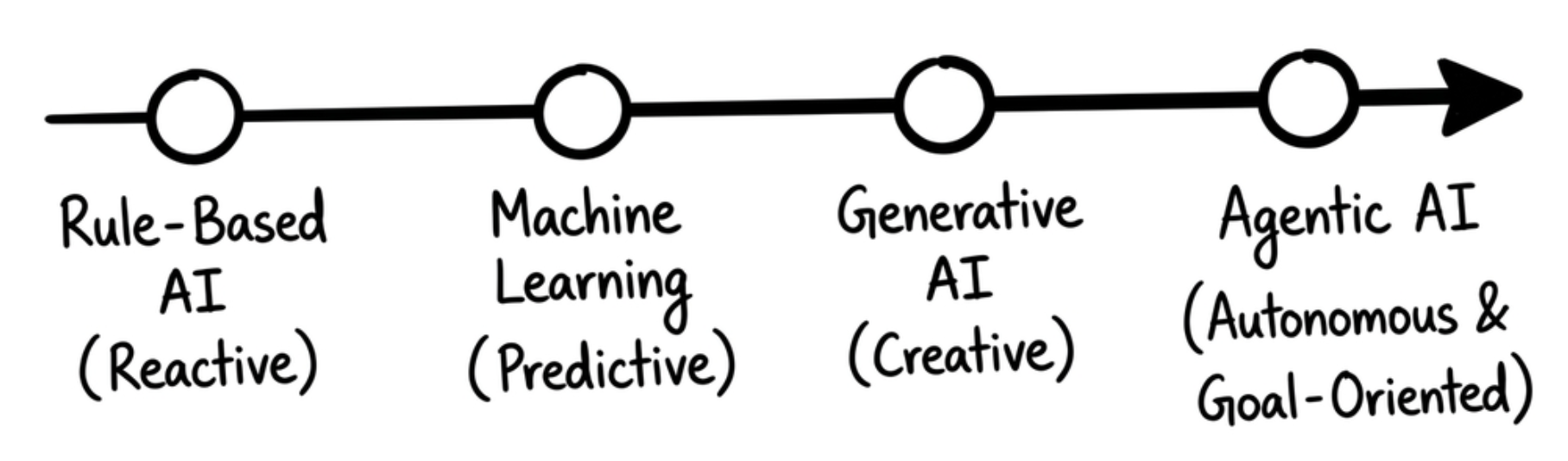
Evolution of Artificial Intelligence from Reactive to Autonomous Systems
Definition and Working Mechanism of Agentic AI
-
Autonomous Agency: iterative reasoning for complex objectives.
-
Perception and Environment Analysis: ingesting external data to understand context.
-
Planning and Decomposition: breaking high-level goals into logical sub-tasks.
-
Tool Use and Execution: interacting with APIs or databases to perform actions.
-
Feedback Loops and Self-Correction: evaluating results against goals to adjust strategy.
Applications of Agentic AI Systems
-
Precision Agriculture Advisory: localized, real-time interventions for crop management.
- Eg: KrishiMind (2026) agricultural advisory services.
-
Accelerated Drug Discovery: managing chemical simulations and clinical documentation.
- Eg: Tata Consultancy Services (TCS), TCS ADD AgentHub (August 2026).
-
Automated Software Development: performing code reviews, bug fixes, and deployments.
- Eg: Rocket and QApilot (2026) autonomous quality assurance.
-
Intelligent Financial Operations: managing accounting, fraud detection, and reconciliations.
- Eg: Setu Agents (2026) automating Indian enterprise financial operations.
-
Enhanced Healthcare Logistics: handling clinical documentation and patient scheduling.
- Eg: Elimai Health (2026) clinical workflows and documentation.
Advantages, Risks, and Challenges
-
Economic Productivity Gains: automating complex, multi-step workflows.
- Eg: SAP Value of AI Report 2025, 31 percent ROI.
-
Workforce Transformation Benefits: augmenting human capabilities for high-value tasks.
- Eg: IDC Report (June 2025), half of Indian enterprises testing agents.
-
Safety and Alignment Risks: unintended actions from misalignment with human values.
-
Regulatory and Legal Gaps: Digital Personal Data Protection Act 2023 limitations.
-
Market Displacement Concerns: labor replacement in traditional sectors.
- Eg: Institute for Competitiveness report (2025), Solow growth model disruption.
To maximize potential, India must harmonize the IndiaAI Mission with the Bletchley Declaration principles, ensuring that the Digital India Act creates a robust, secure, and human-centric ecosystem for autonomous agentic deployment.
Answer Length
Model answers may exceed the word limit for better clarity and depth. Use them as a guide, but always frame your final answer within the exam’s prescribed limit.
Evaluate this PYQ now
Write your answer & evaluate in just 60 seconds




500+ students evaluated
Model Answers from
- 2026Science & Technology15 MarksView Answer
Mention the salient features of 'Mission Drishti'. Discuss the imaging techniques used in the satellite launched on 3rd May 2026. Why is it being considered the world's first satellite of its kind?
- 2026Science & Technology10 MarksView Answer
Distinguish between a Fast Breeder Reactor (FBR) and a thermal nuclear reactor. In the context of the first indigenously developed prototype FBR at Kalpakkam, explain the term 'criticality'. What are its implications for the clean energy future of our country?
- 2026Science & Technology10 MarksView Answer
Explain by giving two examples, how biotechnology has helped Indian farmers in processing their perishable crops.
Model Answers by Subject


Crack UPSC with your
Personal AI Mentor
An AI-powered ecosystem to learn, practice, and evaluate with discipline