Owing to paucity of time, a university professor generates a Ph.D. evaluation report using Artificial Intelligence and submits it with some modifications. Discuss this from the perspective of accountability and integrity.
Owing to paucity of time, a university professor generates a Ph.D. evaluation report using Artificial Intelligence and submits it with some modifications. Discuss this from the perspective of accountability and integrity.
Ethics in academia demands Intellectual Honesty and rigorous faculty application. Immanuel Kant's Categorical Imperative suggests acting only according to maxims that one can will to become universal law.
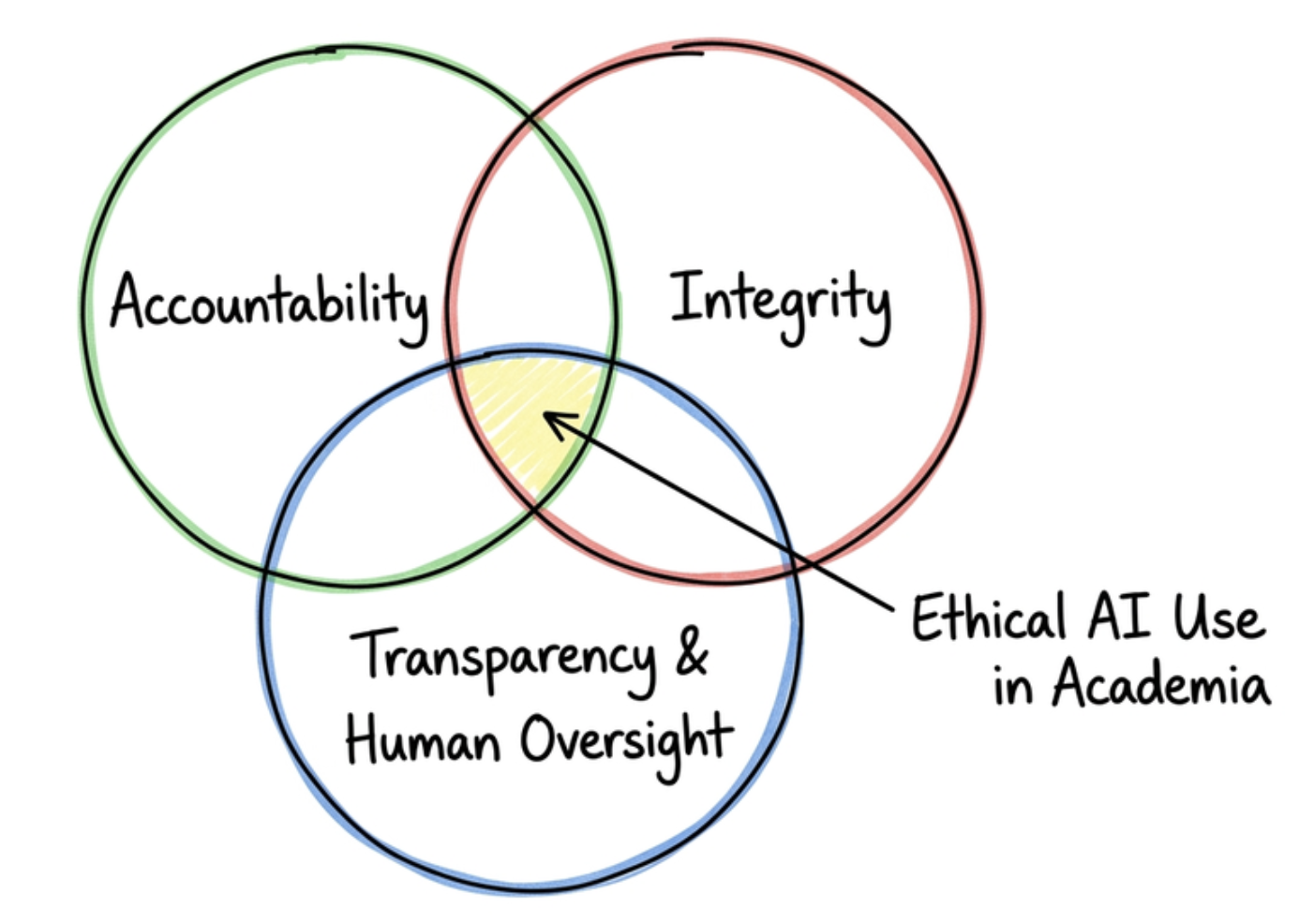
Ethical AI Use in Academia through Accountability, Integrity and Human Oversight
The Perspective of Integrity
Integrity implies steadfast adherence to moral values regardless of external pressures.
-
Intellectual Dishonesty: Outsourcing Ph.D. evaluation to AI violates the Nolan Committee principle of Integrity because the report lacks expert judgment.
-
Erosion of Professional Excellence: Aristotle's Virtue Ethics emphasizes Phronesis, yet AI evaluation bypasses professional goods, degrading academic standards.
-
Breach of Trust: Submitting AI-generated content constitutes a deceptive practice undermining the sanctity of the Ph.D. degree.
-
Plagiarism and Originality: Per UGC Guidelines 2026, unacknowledged AI content in research is plagiarism, presenting machine-logic as human expertise.
-
Conflict of Interest: Prioritizing convenience over evaluation duties shows a lack of Moral Fortitude by choosing the easy path.
The Perspective of Accountability
Accountability ensures individuals are answerable for their actions and consequences.
-
Answerability to the Scholar: Candidates deserve human-led assessment, as AI may overlook nuances, violating Natural Justice.
-
Institutional Responsibility: The India AI Governance Guidelines 2026 stress that human-in-the-loop oversight is mandatory for academic evaluations.
-
Delegation of Authority: Accountability cannot be delegated to machines, leaving the professor liable for student career implications.
-
Violation of Statutory Norms: The UGC (Promotion of Academic Integrity and Prevention of Plagiarism) Regulations require evaluators to certify review authenticity.
-
Public Accountability: Diluting evaluation standards reduces research credibility, impacting India's Global Innovation Index standing.
Comparison of Ethical Values in AI-led Evaluation
| Value | Human-Led Evaluation | AI-Generated Evaluation |
|---|---|---|
| Integrity | High: Reflects expert cognitive effort. | Low: Mimics judgment without reasoning. |
| Accountability | Individual and Professional liability. | Obscured by algorithmic Black Box. |
| Fairness | Subject to bias but context-aware. | Risk of algorithmic bias and hallucinations. |
| Transparency | Clear rationale based on rubrics. | Opaque derivation of evaluative points. |
Adhering to the National Strategy for Artificial Intelligence, professors must use technology as a supplement, ensuring Human Agency remains central to academic governance per Radhakrishnan Commission ideals.
Answer Length
Model answers may exceed the word limit for better clarity and depth. Use them as a guide, but always frame your final answer within the exam’s prescribed limit.
Evaluate this PYQ now
Write your answer & evaluate in just 60 seconds




500+ students evaluated
Model Answers from
- 2026Ethics: Theory10 MarksView Answer
Some moral philosophers argue that spending some of your resources, without significantly affecting your financial stability, to help other people who badly suffer is our moral duty and not merely a matter of charity. Justify this claim by explaining the distinction between duty and charity.
- 2026Ethics: Theory10 MarksView Answer
On the request of his Personal Assistant (PA), the District Magistrate (DM) stops the transfer of a schoolteacher who takes private tuition for his daughter diagnosed with learning disability. In this context, discuss the aspects of empathy versus compliance with rules.
- 2026Ethics: Theory10 MarksView Answer
In international relations, ethical considerations are often subjugated to the strategic interests of nation-states. Discuss this from an ethical perspective.
- 2026Ethics: Theory10 MarksView Answer
Usually schools, working in remote areas, do not fully comply with government regulations. However, if the rules are enforced strictly, it would lead to most schools closing down. How should an administrator strike a balance between enforcement of rules and educational rights of children?
- 2026Ethics: Theory10 MarksView Answer
Efficiency is doing things right, while effectiveness is doing the right thing. How do you strike a balance between the two to enhance productivity?
- 2026Ethics: Theory10 MarksView Answer
Citing the serious adverse effects of long-term medication, a doctor convinces the family of a female patient for surgery. This led the patient to reluctantly consent for the surgery, though her original choice was to opt for medication. Explain the concepts of paternalism and beneficence by analysing the doctor's action.
Model Answers by Subject


Crack UPSC with your
Personal AI Mentor
An AI-powered ecosystem to learn, practice, and evaluate with discipline



