The National Commission for Protection of Child Rights has to address the challenges faced by children in the digital era. Examine the existing policies and suggest measures the Commission can initiate to tackle the issue.
The National Commission for Protection of Child Rights has to address the challenges faced by children in the digital era. Examine the existing policies and suggest measures the Commission can initiate to tackle the issue.
The National Commission for Protection of Child Rights (NCPCR) faces unprecedented challenges as 95% of Indian children now access internet, with cyber crimes against minors rising by 400% since 2020.
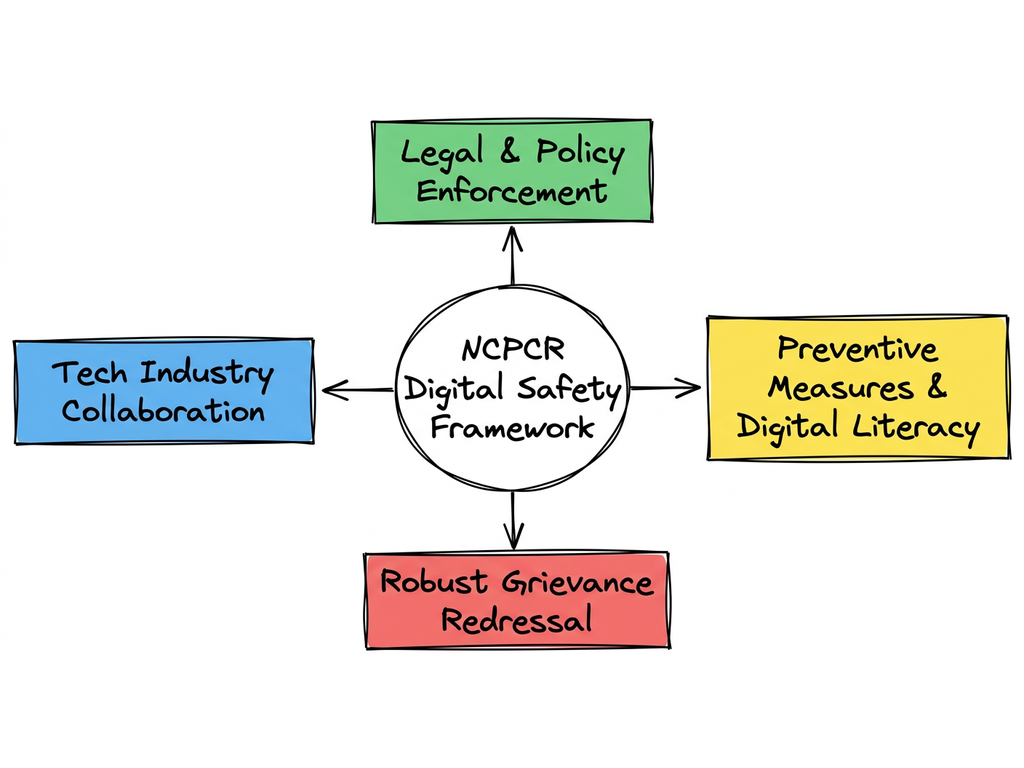
NCPCR Digital Safety Framework Core Components
Challenges Faced by Children in Digital Era
Online Safety Threats:
- Cyberbullying and harassment affecting 1 in 3 children online
- Online sexual exploitation with 2.4 million reported cases (2017-2020)
- Digital addiction leading to mental health issues among 40% urban children
- Identity theft and financial fraud targeting minors
- Exposure to inappropriate content through unfiltered platforms
Digital Divide Issues:
- Rural-urban disparity with only 15% rural children having quality internet access
- Gender gap in digital literacy, particularly in states like Bihar and Uttar Pradesh
- Economic barriers preventing 60% children from accessing digital learning tools
- Language barriers in digital content consumption
- Infrastructure inadequacy in remote areas
Existing Policies
| Policy/Act | Key Provisions | Limitations |
|---|---|---|
| POCSO Act 2012 | Online child sexual abuse coverage | Limited enforcement mechanisms |
| IT Act 2000 (Amendment 2008) | Cybercrime provisions | Inadequate child-specific protections |
| Digital Personal Data Protection Act 2023 | Children's data protection | Implementation pending |
| Juvenile Justice Act 2015 | Child welfare in digital crimes | Lacks preventive measures |
Suggested Measures for NCPCR
Policy Initiatives:
- Develop comprehensive Digital Child Safety Policy with mandatory implementation
- Establish Child Digital Rights Charter ensuring privacy and safety
- Create age-appropriate internet usage guidelines for different developmental stages
- Implement mandatory digital literacy curriculum in schools nationwide
- Launch "Surakshit Bachpan" digital safety campaign across states
Institutional Mechanisms:
- Set up 24/7 National Child Cyber Helpline (similar to CHILDLINE 1098)
- Create Child Cyber Crime Investigation Units in all states
- Establish Digital Child Protection Officers at district level
- Form Industry-NCPCR Partnership Council with tech companies
- Launch "Cyber Saathi" peer education program in schools
The Digital India initiative must prioritize child safety through NCPCR's enhanced mandate, ensuring India's 472 million children navigate the digital world securely while accessing its benefits.
Answer Length
Model answers may exceed the word limit for better clarity and depth. Use them as a guide, but always frame your final answer within the exam’s prescribed limit.
Evaluate this PYQ now
Write your answer & evaluate in just 60 seconds




500+ students evaluated
Model Answers from
- 2025Indian Polity15 MarksView Answer
What are environmental pressure groups? Discuss their role in raising awareness, influencing policies and advocating for environmental protection in India.
- 2025Indian Polity15 MarksView Answer
Examine the evolving pattern of Centre-State financial relations in the context of planned development in India. How far have the recent reforms impacted the fiscal federalism in India?
- 2025Indian Polity15 MarksView Answer
Discuss the evolution of collegium system in India. Critically examine the advantages and disadvantages of the system of appointment of the Judges of the Supreme Court of India and that of the USA.
- 2025Indian Polity15 MarksView Answer
Indian Constitution has conferred the amending power on the ordinary legislative institutions with a few procedural hurdles. In view of this statement, examine the procedural and substantive limitations on the amending power of the Parliament to change the Constitution.
- 2025Indian Polity15 MarksView Answer
"Constitutional morality is the fulcrum which acts as an essential check upon the high functionaries and citizens alike…."
In view of the above observation of the Supreme Court, explain the concept of constitutional morality and its application to ensure balance between judicial independence and judicial accountability in India. - 2025Indian Polity10 MarksView Answer
"The Attorney General of India plays a crucial role in guiding the legal framework of the Union Government and ensuring sound governance through legal counsel." Discuss his responsibilities, rights and limitations in this regard.
Model Answers by Subject


Crack UPSC with your
Personal AI Mentor
An AI-powered ecosystem to learn, practice, and evaluate with discipline