Elaborate the scope and significance of the food processing industry in India
Elaborate the scope and significance of the food processing industry in India
The Food Processing Industry (FPI) in India acts as a bridge between agriculture and industry, adding value to raw farm produce and reducing post-harvest losses. With India being the largest producer of milk, second in fruits and vegetables, and a major grain producer, the FPI holds immense potential for employment, income generation, and export growth.
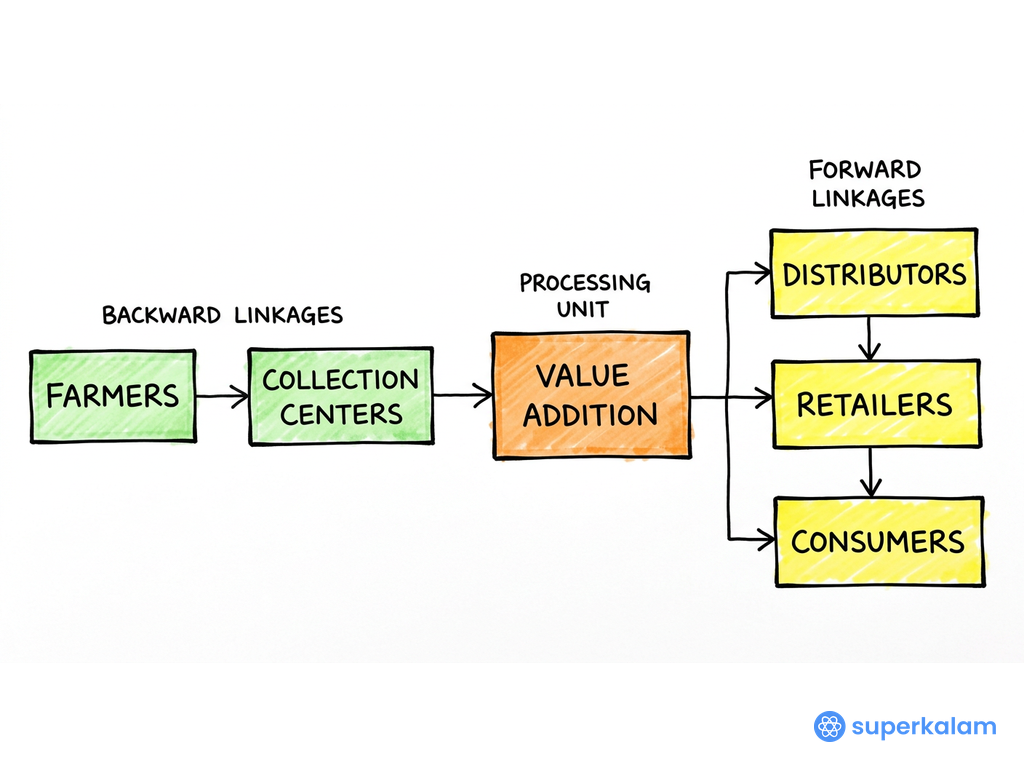
Food Processing Value Chain Flowchart Diagram
Scope of Food Processing Industry in India
-
Huge Agricultural Base
- India is the largest producer of milk (221 million tonnes, 2022-23), second-largest producer of fruits and vegetables, and has a surplus in cereals and pulses, ensuring abundant raw material.
-
Employment Potential
- FPI is highly labour-intensive. According to the Annual Survey of Industries (ASI, 2022), it employs around 1.93 million persons directly and many more indirectly in logistics, retail, and packaging.
-
Market Size & Growth
- The Indian FPI is expected to reach USD 535 billion by 2025, growing at nearly 11% CAGR, driven by rising incomes and changing lifestyles.
-
Export Opportunities
- Processed food contributes significantly to agri-exports. In 2022-23, processed food exports touched USD 23 billion, including marine products, basmati rice, and sugar.
-
Government Support
- Policies like PM Kisan Sampada Yojana, Production-Linked Incentive (PLI) Scheme, and 100% FDI under automatic route in food processing boost sectoral growth.
-
Rising Domestic Demand
- Urbanisation, a growing middle class, and rising awareness of packaged, ready-to-eat, and nutritionally fortified foods increase the demand for processed food.
Significance of Food Processing Industry
-
Reducing Post-Harvest Losses
- India faces post-harvest losses worth ₹90,000 crore annually (ICAR study). Processing helps reduce wastage and increase shelf life.
-
Doubling Farmers’ Income
- By creating value chains, contract farming, and better price realisation, FPI can directly contribute to farmers’ income growth.
-
Boosting Exports and Foreign Exchange
- Processed and branded food enhances India’s share in global agri-value chains. For example, India’s processed meat and seafood exports have expanded steadily in Southeast Asia and Europe.
-
Employment and Entrepreneurship
- Encourages rural non-farm employment, especially for women in food packaging, preservation, and MSMEs.
-
Nutrition and Food Security
- Processing enables fortification (iron, vitamin A, iodine), contributing to combating malnutrition. For instance, rice fortification under ICDS and Mid-Day Meal scheme.
-
Rural Industrialisation and Balanced Growth
- Agro-processing clusters promote inclusive development and reduce migration by creating jobs near production areas.
The food processing industry has the potential to transform India from a raw commodity supplier to a global food powerhouse. Effective infrastructure (cold chains, storage), farmer linkages, and policy support can unlock its role in ensuring economic growth, employment, farmer welfare, and global competitiveness.
Answer Length
Model answers may exceed the word limit for better clarity and depth. Use them as a guide, but always frame your final answer within the exam’s prescribed limit.
Evaluate this PYQ now
Write your answer & evaluate in just 60 seconds




500+ students evaluated
Model Answers from
- 2022Economy15 MarksView Answer
Economic growth in the recent past has been led by increase in labour activity.” Explain this statement. Suggest the growth pattern that will lead to creation of more jobs without compromising labour productivity.
- 2022Economy10 MarksView Answer
The increase in life expectancy in the country has led to newer health challenges in the community. What are those challenges and what steps need to be taken to meet them ?
- 2022Economy10 MarksView Answer
What are the major challenges of Public Distribution System (PDS) in India ? How can it be made effective and transparent ?
- 2022Economy10 MarksView Answer
Is inclusive growth possible under market economy ? State the significance of financial inclusion in achieving economic growth in India.
- 2022Economy10 MarksView Answer
Why is Public Private Partnership (PPP) required in infrastructural projects ? Examine the role of PPP model in the redevelopment of Railway Stations in India.
Model Answers by Subject


Crack UPSC with your
Personal AI Mentor
An AI-powered ecosystem to learn, practice, and evaluate with discipline