One of the tests of integrity is complete refusal to be compromised. Explain with reference to a real life example.
One of the tests of integrity is complete refusal to be compromised. Explain with reference to a real life example.
Integrity, as defined by Aristotle's virtue ethics, represents unwavering adherence to moral principles despite external pressures, forming the cornerstone of ethical governance and public service.
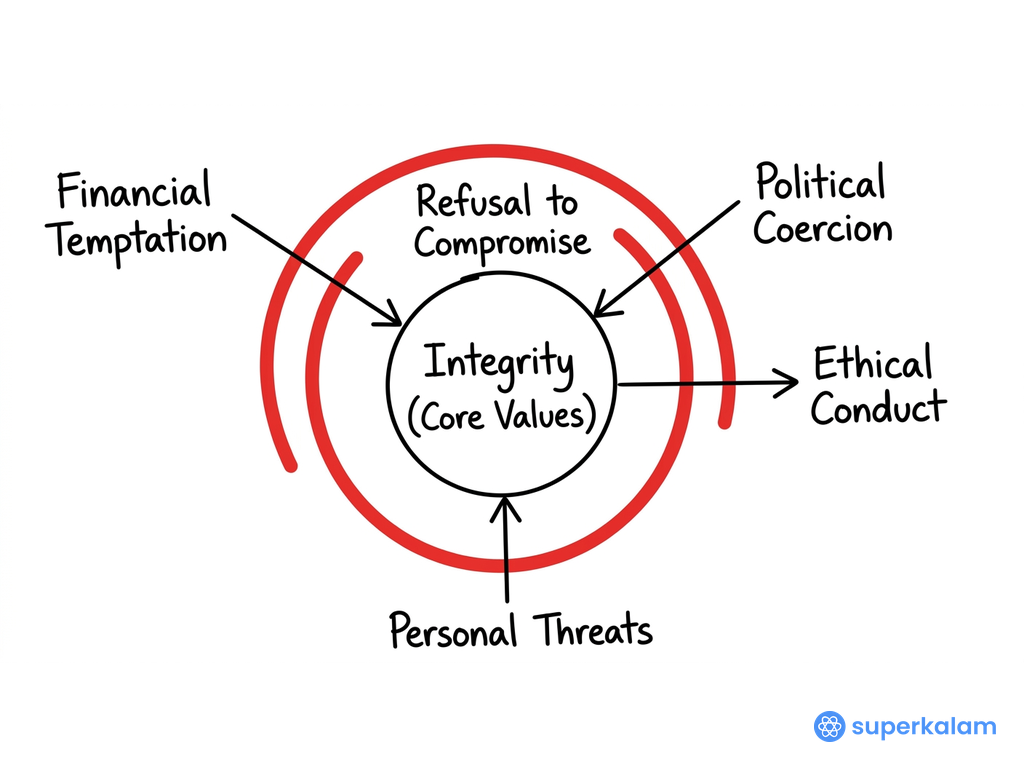
Integrity Core Values and Three Arrows
Understanding Integrity as Refusal to be Compromised
• Moral Consistency: Integrity demands maintaining ethical standards regardless of personal costs or external inducements, reflecting Kant's categorical imperative of universal moral laws.
• Institutional Trust: Public servants' refusal to compromise builds social capital and strengthens democratic institutions through consistent ethical behavior.
• Character Formation: Gandhi's concept of satyagraha emphasizes that integrity shapes character, making ethical choices habitual rather than situational.
• Professional Excellence: Uncompromised integrity ensures decisions serve public interest over personal gain, exemplifying dharmic governance principles.
• Accountability Framework: Integrity creates transparent decision-making processes, supporting RTI Act objectives and participatory democracy.
Real-Life Example: T.N. Seshan's Electoral Reforms
• Contextual Challenge: As Chief Election Commissioner (1990-1996), Seshan faced immense political pressure to maintain status quo in corrupt electoral practices.
• Principled Stand: He refused political compromises, implementing Model Code of Conduct strictly, banning wall posters, and regulating campaign expenditure despite opposition.
• Institutional Resistance: Political parties attempted to dilute his powers through multi-member Election Commission, yet he maintained ethical standards without deviation.
• Transformative Impact: His uncompromising approach revolutionized Indian elections, establishing free and fair electoral processes and enhancing democratic credibility.
• Legacy Creation: Seshan's integrity became benchmark for future election commissioners, demonstrating how individual ethical courage transforms institutional culture.
• Public Trust: His refusal to compromise earned unprecedented public respect, showing how integrity enhances administrative effectiveness and democratic legitimacy.
Seshan's example demonstrates that integrity's true test lies in maintaining ethical principles under pressure, creating lasting institutional reforms that strengthen democratic governance and inspire future public servants.
Answer Length
Model answers may exceed the word limit for better clarity and depth. Use them as a guide, but always frame your final answer within the exam’s prescribed limit.
Evaluate this PYQ now
Write your answer & evaluate in just 60 seconds




500+ students evaluated
Model Answers from
- 2017Ethics: Theory10 MarksView Answer
Without commonly shared and widely entrenched moral values and obligations, neither the law, nor democratic government, nor even the market economy will function properly. What do you understand by this statement? Explain with illustration in the contemporary times.
- 2017Ethics: Theory10 MarksView Answer
Discipline generally implies following the order and subordination. However, it may be counter-productive for the organization. Discuss.
- 2017Ethics: Theory10 MarksView Answer
Increased national wealth did not result in equitable distribution of its benefits. It has created only some “enclaves of modernity and prosperity for a small minority at the cost of the majority.” Justify.
- 2017Ethics: Theory10 MarksView Answer
The crisis of ethical values in modern times is traced to a narrow perception of the good life. Discuss.
- 2017Ethics: Theory10 MarksView Answer
Strength, peace and security are considered to be the pillars of international relations. Elucidate.
- 2017Ethics: Theory10 MarksView Answer
How will you apply emotional intelligence in administrative practices?
Model Answers by Subject


Crack UPSC with your
Personal AI Mentor
An AI-powered ecosystem to learn, practice, and evaluate with discipline



