Though the great Cholas are no more, their name is still remembered with great pride because of their highest achievements in the domain of art and architecture. Comment.
Though the great Cholas are no more, their name is still remembered with great pride because of their highest achievements in the domain of art and architecture. Comment.
Subject: Art & Culture
The installation of the historic Sengol in India's new Parliament and the 27-foot Ashtadhatu Nataraja at the 2023 G20 Summit highlight how the Chola dynasty (848–1279 CE) remains a vibrant symbol of India’s civilizational pride and architectural supremacy.
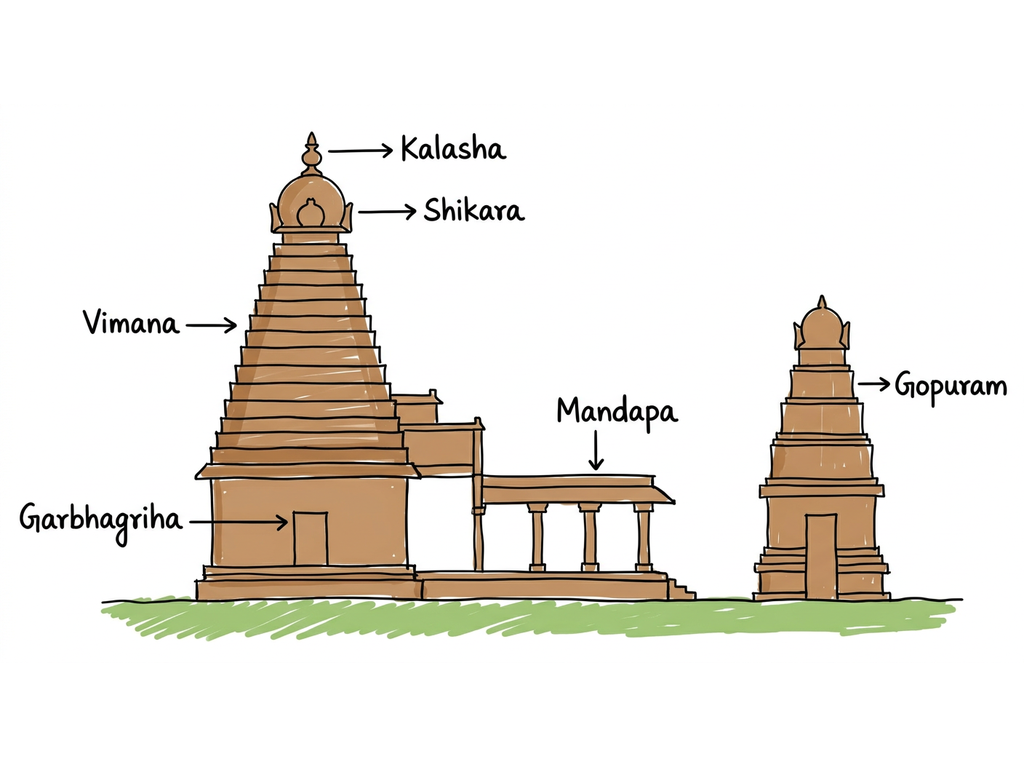
South Indian Temple Architectural
Architectural Achievements of the Cholas
- Climax of Dravidian style: The Cholas perfected temple architecture by prioritizing massive, dominating Vimanas (main towers) over gateways (Gopurams).
- Engineering brilliance: Thanjavur's Brihadeshwara Temple features a 66-metre vimana topped with an 80-ton monolithic cupola, built using mortarless interlocking stone technology.
- Micro-architecture evolution: Later structures like Darasuram's Airavatesvara Temple shifted from sheer monumental scale to extreme intricate detailing in stone chariots and musical pillars.
- Socio-economic epicenters: Temples functioned as banks, hospitals, and granaries, laying the foundation for advanced, decentralized urban planning.
- Advanced water architecture: The massive Cholagangam artificial lake near Gangaikonda Cholapuram integrated profound ecological planning with temple construction.
Masterpieces of Chola Art
- Lost-wax bronze metallurgy: Artisans mastered the cire perdue technique to create flawless, solid bronze statues with unmatched anatomical grace and proportion.
- The Nataraja motif: Depicting Shiva's cosmic dance, it became a universal symbol of creation and dissolution, recognized globally as a masterpiece of kinetic art.
- Pioneering Frescoes: Brihadeshwara’s circumambulatory passages house exquisite true frescoes, utilizing natural earth pigments to depict Puranic legends.
- Sculptural fluidity: Stone sculptures like Ardhanarishvara shifted from rigid Pallava postures to dynamic, highly emotive expressions.
- Performing arts integration: Temple walls act as stone encyclopedias, with the 108 Karanas (dance postures) of Bharatanatyam meticulously carved at Chidambaram.
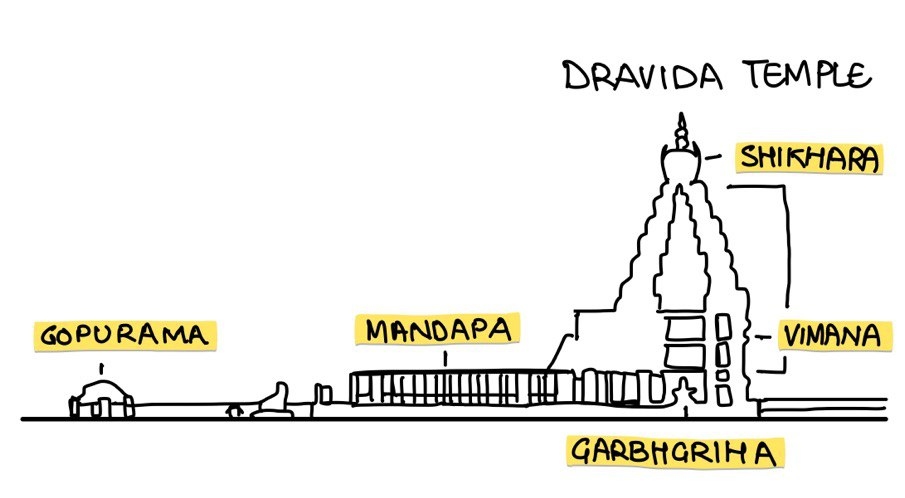
Outline of Dravidian temple architecture
The Living Legacy: Why Cholas Evoke Great Pride Today
- UNESCO 'Living Temples': The Great Living Chola Temples draw global acclaim because 1,000-year-old Agamic worship rituals remain unbroken to this day.
- Symbol of ethical governance: The Sengol, representing Semmai (righteousness) in Chola tradition, was enshrined in the Lok Sabha in 2023 to signify just administration.
- Cultural diplomacy: The 18-tonne Nataraja crafted by 34th-generation Swamimalai artisans formed the cultural centerpiece of the G20 Summit in New Delhi.
- Institutional heritage revival: The 2023 Maligaimedu excavations yielded 461 antiquities, prompting Tamil Nadu to initiate a new ₹22.10 crore Chola museum in Ariyalur.
- Global repatriation focus: The successful identification and return of stolen 12th-century Chola bronzes from the US and Australia continues to evoke a strong sense of reclaimed national identity.
The Chola legacy transcends historical ruins; it is a living civilizational pulse. As India reclaims stolen antiquities and integrates motifs like the Nataraja into modern diplomacy, this architectural and artistic heritage provides a formidable foundation for India's global cultural resurgence.
Answer Length
Model answers may exceed the word limit for better clarity and depth. Use them as a guide, but always frame your final answer within the exam’s prescribed limit.
Evaluate this PYQ now
Write your answer & evaluate in just 60 seconds




500+ students evaluated
Model Answers from
Model Answers by Subject


Crack UPSC with your
Personal AI Mentor
An AI-powered ecosystem to learn, practice, and evaluate with discipline



