Ethanol Blending in India: E20 Benefits & Challenges (UPSC)
Ethanol Blending in India explained! Learn E20 benefits, challenges, government initiatives, latest updates, and complete UPSC Prelims & Mains notes.
Jul, 2026
•8 min read
As India accelerates its transition towards cleaner and more sustainable energy, E20 ethanol blending has moved to the centre of national policy discussions. The government's push to achieve 20% ethanol blending in petrol promises lower crude oil imports, reduced carbon emissions, and higher income for farmers.
However, the rollout has also triggered an intense debate over vehicle compatibility, fuel efficiency, food-versus-fuel concerns, and the long-term impact on agriculture and consumers. As India expands the use of E20 fuel, understanding both its opportunities and challenges has become more important than ever.
For UPSC aspirants, Ethanol Blending in India is a crucial topic that connects Environment, Agriculture, Energy Security, Climate Change, and the Indian Economy. It is frequently linked with current affairs and holds relevance for both UPSC Prelims and GS Paper III (Mains). Let's study this topic in detail!
What is Ethanol?
Ethanol (C₂H₅OH) is a transparent, volatile, flammable liquid produced naturally through the fermentation of sugars and synthetically from petroleum. It is widely used as fuel, as a solvent, and in beverages.
How is Ethanol Produced?
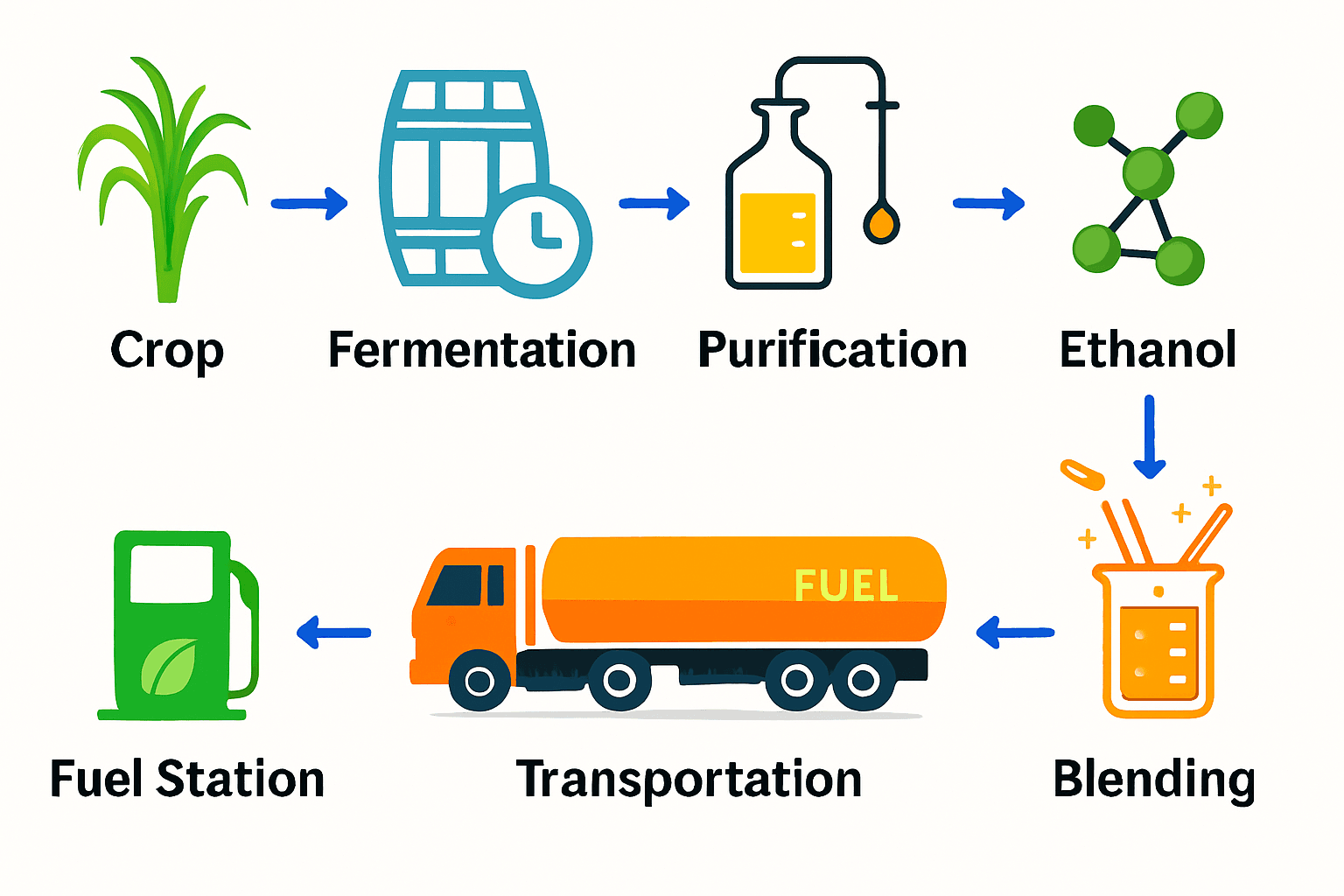
Ethanol can be produced naturally from crops or synthetically from petroleum-based sources.
1. Natural (Fermentation)
- From sugarcane, maize, wheat, or other biomass.
- Yeast ferments sugars → ethanol + CO₂.
2. Synthetic (Chemical)
- From petroleum-based ethylene using acid-catalysed hydration.
Must read: Oil Reserves in India | UPSC Notes
What is Ethanol Blending?
Ethanol blending is the process of combining ethanol with conventional petrol to create a cleaner-burning, more sustainable fuel. This renewable biofuel, produced from plant waste called biomass, enhances petrol's combustion efficiency when mixed in specific percentages.
Also read: Ethanol’s Role in India’s Green Energy Transition
How Ethanol Blending Works
Ethanol blending involves mixing ethanol, a biofuel produced from sugarcane, maize, and other biomass, with petrol to create cleaner and more efficient fuel. Before understanding the benefits and challenges of E20 fuel, it is important to know these key aspects:
How It Works
Ethanol acts as an oxygenate in petrol, enabling more complete combustion. This improves fuel efficiency and reduces harmful exhaust emissions. Ethanol-blended petrol is classified based on ethanol content:
- E5: 5% ethanol + 95% petrol
- E10: 10% ethanol + 90% petrol
- E20: 20% ethanol + 80% petrol
Ethanol has an octane number of 108.5, significantly higher than petrol's 84.4. This improves resistance to engine knocking and makes it suitable for modern high-compression engines. E20 fuel can enhance engine performance by offering smoother acceleration and better combustion. It also helps reduce carbon emissions by nearly 30% compared to conventional petrol, contributing to cleaner transportation.
Sources of Bioethanol Production in India
India has shifted from producing ethanol mainly from molasses to utilising various sources, including sugarcane juice, damaged food grains, and maize. This reduces dependence on a single crop and ensures a steady, sustainable supply.
1. Primary Feedstock Sources
- Sugarcane Molasses: The traditional and most established source, yielding 220-225 litres of ethanol per tonne with 40-45% sugar content.
- Sugarcane Juice: Higher-yielding option used during surplus periods.
- Rice and Damaged Grains: Surplus and broken rice may provide 450-480 litres of ethanol per tonne.
- Maize and Other Coarse Grains: These include jowar, bajra, and millets, yielding 380-460 litres per tonne.
2. Advanced Feedstock Development
- Second-Generation (2G) Sources: Agricultural residues like rice straw, wheat straw, corn cobs, cotton stalks, and bagasse.
- Third-Generation (3G) Feedstocks: Municipal solid waste and other industrial waste materials.
- Lignocellulosic Biomass: Including empty fruit bunches, corn stover, and cane trash.
Benefits of Ethanol Blending in India
India's Ethanol Blended Petrol (EBP) Programme offers multiple benefits beyond cleaner fuel. It strengthens energy security, supports farmers, reduces environmental pollution, and contributes to the country's long-term goal of achieving sustainable economic growth.
1. Strengthens India's Energy Security
India imports more than 85% of its crude oil requirements, making the economy vulnerable to global oil price fluctuations and geopolitical disruptions. Ethanol blending helps reduce this dependence by replacing a portion of petrol with domestically produced biofuel.
Key benefits include:
- Reduced crude oil imports, leading to greater energy self-reliance.
- Savings of over ₹1.44 lakh crore in foreign exchange over the past eleven years.
- Substitution of nearly 245 lakh metric tonnes of crude oil.
- At 20% ethanol blending (E20), India is expected to save around ₹43,000 crore annually in import bills.
2. Supports Farmers and the Rural Economy
The ethanol programme creates an additional market for agricultural produce, providing farmers with a stable source of income while reducing dependence on traditional crop markets.
Major advantages are:
- Direct payments of over ₹1.04 lakh crore to farmers since 2014–15.
- Better price realisation for crops such as sugarcane and maize.
- Productive use of surplus food grains and agricultural residues that would otherwise remain underutilised.
- Increased employment opportunities in ethanol production, transportation, storage, and allied industries.
3. Promotes Environmental Sustainability
Ethanol is a cleaner-burning fuel than conventional petrol. Its higher oxygen content improves combustion efficiency, reducing harmful emissions from vehicles.
Environmental benefits include:
- Prevention of nearly 736 lakh metric tonnes of CO₂ emissions.
- Lower emissions of carbon monoxide and other harmful pollutants improve urban air quality.
- Reduced greenhouse gas emissions, with second-generation (2G) ethanol capable of lowering lifecycle emissions by 88–108% compared to conventional gasoline.
- Supports India's commitments under the Paris Agreement and the goal of achieving Net Zero emissions by 2070.
4. Encourages Circular Economy and Waste Management
The programme promotes the efficient utilisation of agricultural waste and surplus biomass instead of allowing them to be burnt or discarded.
This helps to:
- Convert crop residues and surplus grains into renewable fuel.
- Reduce incidents of stubble burning and associated air pollution.
- Encourage the development of waste-to-wealth technologies and a circular bioeconomy.
5. Drives Industrial Growth and Sustainable Development
The expansion of ethanol blending has encouraged investments across the biofuel value chain, strengthening India's renewable energy ecosystem.
Key outcomes include:
- Growth of ethanol distilleries, biorefineries, and storage infrastructure.
- Increased private and public investment in biofuel technologies.
- Diversification of India's energy mix reduces long-term dependence on fossil fuels.
- Progress towards the objectives of the National Biofuel Policy and Sustainable Development Goals (SDGs).
Challenges of Ethanol Blending in India
While the Ethanol Blended Petrol (EBP) Programme has accelerated India's clean energy transition, scaling up to E20 blending presents several economic, environmental, and technological challenges. Addressing these concerns is essential to ensure that the programme remains sustainable without compromising food security, natural resources, or consumer interests.
1. Food vs Fuel Debate
One of the biggest concerns is the increasing use of food crops such as maize and sugarcane for ethanol production. Diverting these crops towards fuel can reduce their availability for food and livestock feed, potentially leading to higher prices.
- India became a net importer of maize in 2024, importing nearly 1 million tonnes due to domestic shortages, partly driven by rising demand from ethanol distilleries.
- The issue has reignited the global "food versus fuel" debate, especially during years of weak agricultural output.
2. High Water Consumption
Ethanol production, particularly from sugarcane, is highly water-intensive. Large-scale expansion of ethanol feedstock cultivation could increase pressure on groundwater resources, especially in water-stressed states.
- Producing one litre of ethanol may require nearly 3,000 litres of water, depending on the feedstock and production process.
- States such as Maharashtra and Karnataka, which are major sugarcane producers, already face recurring groundwater depletion and drought conditions.
3. Environmental and Agricultural Concerns
Although ethanol reduces vehicular emissions, excessive cultivation of a few commercial crops may have unintended ecological consequences.
- Expansion of monoculture farming, which can reduce biodiversity and affect soil fertility over time.
- Increased use of irrigation, fertilisers, and pesticides leads to soil degradation and environmental stress.
- Unsustainable land-use patterns if feedstock production expands without proper planning.
4. Vehicle Compatibility and Fuel Efficiency
Not all vehicles on Indian roads are designed to operate efficiently on E20 fuel. Older vehicles may experience operational issues when using higher ethanol blends.
- Ethanol absorbs moisture and can corrode rubber and metal components in engines not designed for ethanol blends.
- Fuel economy may decline by 6–7% with E20 due to ethanol's lower energy content compared to petrol.
- Vehicle owners may need engine modifications or compatible vehicles to realise the full benefits of E20.
5. Supply Chain and Feedstock Constraints
Achieving the E20 target requires a consistent supply of ethanol throughout the year. However, ethanol production remains heavily dependent on seasonal agricultural output.
- Fluctuations in sugarcane and maize production due to erratic monsoons and climate change.
- Limited availability of second-generation (2G) ethanol, which uses agricultural residues instead of food crops.
- Need for greater investment in storage, transport, and blending infrastructure.
6. Policy and Economic Challenges
Balancing energy security with food security remains a major policy challenge.
- Frequent changes in feedstock policies, such as restrictions on using sugarcane juice during periods of low sugar production, create uncertainty for ethanol producers.
- Higher production costs for advanced biofuels and inadequate 2G ethanol capacity continue to limit diversification away from food-based feedstocks.
- Long-term success depends on expanding ethanol production from agricultural waste, bamboo, and other non-food biomass rather than relying predominantly on sugarcane and maize.
Measures to Strengthen Ethanol Implementation in India
India requires comprehensive policy reforms and strategic investments to overcome its existing challenges and accelerate the implementation of ethanol blending toward higher targets.
- Ethanol production capacity expansion: Establishing additional distilleries and upgrading existing facilities for multi-feedstock operations.
- Second-generation technology commercialisation: Scaling up 2G ethanol production through the PM-JI-VAN Yojana.
- Multi-feedstock strategy: Promoting corn, cassava, damaged grains, and agricultural residues to reduce dependency on sugarcane.
- Crop diversification incentives: Encouraging farmers to shift from water-intensive crops like rice and sugarcane to sustainable alternatives like maize.
- Supply chain efficiency: Establishing National Coordinating Agencies like NAFED for the procurement and distribution of feedstock.
- Tax incentives: Continuing GST reduction from 18% to 5% on blending ethanol and differential fuel excise provisions.
- Water conservation technologies: Promoting zero liquid discharge (ZLD) systems in distilleries and water-efficient production processes.
- Engine optimisation: Supporting research for hardware modifications to improve fuel efficiency with higher ethanol blends.
National Policy on BiofuelsIndia’s 2018 National Policy on Biofuels provides a unified framework to expand biofuel use, enhance energy security, support farmer incomes, and reduce greenhouse gas emissions.
|
Conclusion
Ethanol blending in India is a significant step towards achieving energy security, cleaner mobility, and sustainable economic growth in India. Its long-term success depends on addressing challenges such as water-intensive feedstocks, food security concerns, vehicle compatibility, and supply chain constraints.
Going forward, India must prioritise second-generation (2G) ethanol, diversify feedstock sources, strengthen biofuel infrastructure, and promote sustainable agricultural practices. A balanced, science-driven approach that aligns energy goals with environmental conservation and food security will be crucial to making ethanol blending a truly sustainable pillar of India's green energy transition.
Start your UPSC Preparation 2027 with SuperKalam
SuperKalam is your personal mentor for UPSC preparation, guiding you at every step of the exam journey. Practice, revise, and evaluate– all in one place.
Download Now