UNICEF Day 2025: 79 Years of Global Commitment to Child Rights & Protection
UNICEF Day 2025: Learn its history, objectives, key reports, India-UNICEF partnership, achievements, and criticisms—highly important for UPSC Prelims and Mains GS, IR and Social Issues. Click Now!
Dec, 2025
•4 min read
Why in the News?
On December 11, 2025, the world celebrates UNICEF Day, marking the 79th anniversary of the United Nations Children's Fund. This year, UNICEF released its key report, "The State of the World's Children 2025: Ending Child Poverty – Our Shared Imperative.
Why Cover This Topic for UPSC?
- Important for Prelims & Current Affairs
- Relevant for GS Paper II (Governance & International Relations)
- Relevant for GS Paper I & GS Paper III ( social issues, human development indicators, poverty reduction, etc.)
- Relevant for Ethics Paper
- Relevant for Essay Topics (child rights, human development, global cooperation, and social justice)
About UNICEF
UNICEF stands for United Nations Children's Fund (originally known as the United Nations International Children's Emergency Fund). It is a specialised agency of the United Nations dedicated to providing humanitarian aid and developmental assistance to children and mothers in developing countries.
- Established on December 11, 1946, to provide emergency aid to children affected by World War II.
- Works in over 190 countries and territories across six continents.
- The headquarters is in New York.
- Received the Nobel Peace Prize in 1965 for its contribution to human brotherhood and peace.
- Also received the Indira Gandhi Prize (1989) and Princess of Asturias Award (2006).
Also read: International Civil Aviation Day 2025: Theme, History and Significance
Objectives of UNICEF
UNICEF Day is observed to highlight the rights, protection, and well-being of children worldwide. It raises awareness about global challenges faced by children and promotes actions to improve their lives.
- Ensure every child survives, thrives, and fulfils their potential from early childhood through adolescence.
- Protect children's rights and defend them from violence, abuse, exploitation, and discrimination.
- Provide essential services including health, nutrition, education, water, sanitation, and hygiene (WASH).
- Support maternal and newborn care, immunisation, and disease prevention programs.
- Deliver emergency relief during humanitarian crises and conflicts.
- Advocate for gender equality and empower girls and women through education and skill development.
Also read: National Pollution Control Day 2025: History, Significance, Theme & Relevance for UPSC
Why We Celebrate UNICEF Day?
UNICEF Day is celebrated every year on December 11 to commemorate the founding of UNICEF by the United Nations General Assembly.
- Marks the anniversary of UNICEF's establishment in 1946, following the devastation of World War II.
- Brings global attention to the challenges faced by vulnerable children, including poverty, malnutrition, lack of education, and protection from violence.
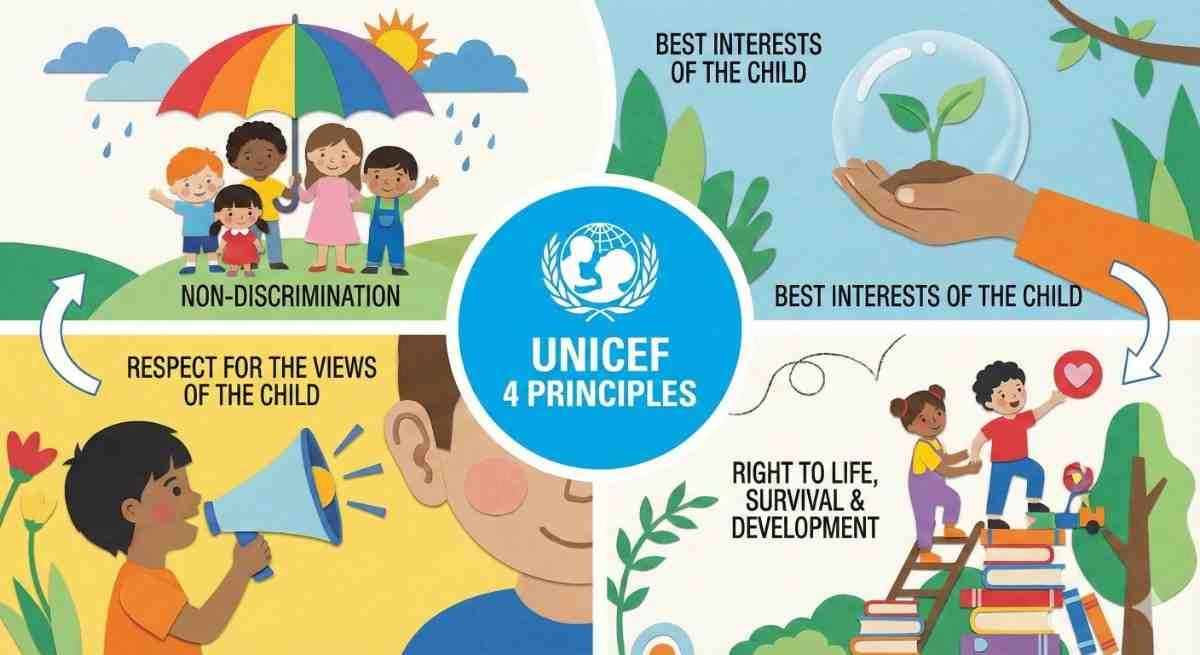
- Emphasises the importance of children's rights as enshrined in the UN Convention on the Rights of the Child.
- Inspires donations and support to expand UNICEF's life-saving programs in 190 countries.
- Amplifies children's voices and lived experiences through initiatives like "My Day, My Rights.
Also read: Constitution Day of India 2025: National Festival of Constitutional Values
History of UNICEF
UNICEF’s journey shows how global humanitarian work and child rights efforts have developed over time. Let’s learn about its history to understand how international organisations adapt to changing world needs.
- 1946 (December 11): UNICEF was created by the UN to provide emergency food and healthcare to children and mothers affected by World War II, especially in Europe and China.
- 1953: Became a permanent part of the United Nations System; renamed United Nations Children's Fund (retaining UNICEF acronym).
- 1965: Awarded Nobel Peace Prize for "fulfilling the condition of Nobel's will, the promotion of brotherhood among the nations.
- 1970s-1980s: Expansion of immunisation programs, particularly polio eradication efforts and establishment of Oral Rehydration Therapy (ORT) for childhood diarrhoea.
- 1989: Received Indira Gandhi Prize for outstanding contribution to children's welfare.
- 2006: Awarded Princess of Asturias Award.
- 2014: India was certified as polio-free after decades of UNICEF partnership.
- 2020 and Beyond: During COVID-19, UNICEF coordinated with WHO and other agencies to provide health guidance, vaccines, and emergency support while adapting to digital transformation.
Also read: National Milk Day 2025: Celebrating India’s White Revolution
Important Reports Published by UNICEF
UNICEF releases several key reports each year to highlight the status, challenges, and progress related to children’s rights, health, education, and welfare worldwide.
| Report Name | Focus Area |
|---|---|
| The State of the World’s Children (SOWC) | Flagship report: global data on children’s health, education, protection, and well-being. |
| Progress for Every Child | Tracks progress toward child-related SDGs. |
| Child Alert Reports | Highlights urgent crises affecting children in conflict or disaster zones. |
| Global Report on Children with Disabilities | Data and challenges faced by children with disabilities. |
| UNICEF Humanitarian Action for Children (HAC) | Appeals and funding needs for emergency responses. |
| Innocenti Research Reports | Research-based insights on child rights, policy, and development issues. |
Also read: Birsa Munda Jayanti 2025: 150th Birth Anniversary of Bhagwan Birsa Munda
Key Achievements of UNICEF
The efforts of UNICEF have led to real improvements in children’s lives worldwide. These achievements show its strong commitment to protecting children’s rights and improving their well-being.
- UNICEF has helped reach more than 760 million children with lifesaving vaccines since 2000, preventing more than 13 million deaths worldwide.
- UNICEF, under the Water, Sanitation & Hygiene (WASH) service, provided safe water access to 33.3 million people in 2024.
- Provided education access to 9.2 million children and adolescents in 2024.
- Helped India achieve polio-free status in 2014, one of the world's greatest public health achievements.
- India moved 248 million people out of multidimensional poverty between 2013-14 and 2022-23, according to NITI Aayog.
- Supporting girls' education to prevent early marriage (India has the largest number of child brides globally).
UPSC Prelims PYQ on UNICEF
QUESTION 1
Consider the following statements:
- 21st February is declared to be the International Mother Language Day by UNICEF.
- The demand that Bangla has to be one of the national languages was raised in the Constituent Assembly of Pakistan.
Which of the above statements is/are correct?
India and UNICEF: A Strong Partnership for Child Welfare
India's collaboration with UNICEF represents one of the most significant partnerships in implementing child development programs at scale.
- UNICEF operations in India span health, nutrition, education, child protection, water and sanitation, and social protection.
- Collaboration with the Government of India, state governments, and civil society organisations.
- Focus on reaching vulnerable children facing poverty, climate impacts, and displacement.
- Integration of Child Protection Measures and Climate Change Resilience in Education Programs.
- Partnership with the Ministry of Women and Child Development, the Ministry of Education, and NITI Aayog.
Also read: World Immunisation Day 2025: Theme, Objectives, and India’s Immunisation Programmes for UPSC
India's Key Initiatives with UNICEF Support
The Government of India, with UNICEF's technical and financial support, has implemented several transformative initiatives that improve the lives of millions of children and women.
- Polio Eradication: Conducted mass immunisation campaigns under the Global Polio Eradication Initiative (GPEI) with UNICEF support.
- Universal Immunisation Programme (UIP): Strengthened with UNICEF support to achieve high vaccine coverage, including measles, diphtheria, and other preventable diseases.
- Beti Bachao Beti Padhao (Save Daughter, Educate Daughter): Launched in 2015 with UNICEF partnership to celebrate the girl child and enable quality education.
- Kanya Shikhsa Pravesh Utsav: Landmark campaign launched by the Ministry of Women and Child Development with UNICEF partnership to enrol adolescent girls (11-14 years) back in formal education.
- Saksham Anganwadi and Poshan 2.0: Programs ensuring nutrition support, education, and protection for vulnerable children.
- Project LION: Provides care and support for children lacking parental care through family-based solutions.
- SAANS Initiative (Social Awareness and Actions to Neutralise Pneumonia Successfully): Reduces childhood morbidity and mortality from pneumonia through community awareness and treatment protocols.
- STOP Diarrhoea Campaign: Promotes use of ORS and Zinc to reduce childhood diarrheal disease mortality and morbidity.
Also read: International Day for Preventing the Exploitation of the Environment in War and Armed Conflict 2025
Criticisms of UNICEF
While UNICEF plays a major role in global child welfare, it also faces several criticisms related to its operations and effectiveness.
- Shift from survival focus: UNICEF’s move from basic needs like food and health to broader rights-based work is seen as reducing attention to life-saving services in high-mortality regions.
- No enforcement power: UNICEF cannot force countries to follow child rights laws, especially during conflicts where children still face violence and exploitation.
- Too many global initiatives: Multiple overlapping programs can confuse governments and weaken coordination and effectiveness.
- Implementation issues: Some global guidelines are hard to adapt, costly, and not suited to local needs, leading to weak on-ground results.
- Monitoring challenges: Efforts to improve tracking and results measurement have not always shown clear improvements in field outcomes.
UPSC Mains Practice Question
Examine how global inequalities, such as economic instability, digital divide, and climate vulnerability, shape the future prospects of children in developing countries.
Evaluate Your Answers NowWay Forward
To address the complex challenges facing children globally, a multifaceted approach is essential.
- Expand access to quality healthcare and nutrition for all children.
- Ensure inclusive and equitable education for every child.
- Strengthen child protection laws and enforcement mechanisms.
- Integrate climate action into child-focused development programs.
Start Your UPSC Journey Smarter with SuperKalam
Crack UPSC with AI-powered guidance, personalised feedback, PYQs, NCERT MCQs and expert-curated notes, all in one platform.
Join SuperKalam today and take your preparation to the next level!