National Pollution Control Day 2025: History, Significance, Theme & Relevance for UPSC
Learn about National Pollution Control Day 2025—its theme, significance, Bhopal Gas Tragedy, pollution types, key laws, and citizen actions. Click now!
Dec, 2025
•6 min read
Why in the News?
National Pollution Control Day is observed every year on December 2 to commemorate the victims of the 1984 Bhopal Gas Tragedy. The 2025 theme, “Sustainable Living for a Greener Future,” highlights how everyday lifestyle choices can collectively improve India’s environmental health.
Why Cover this Topic for UPSC?
- Relevant to Environment & Ecology (Prelims + GS-III).
- Covers key pollution control laws and institutions.
- Links to disaster management and industrial safety (Bhopal tragedy).
- Useful for Essay and Interview themes on sustainability.
National Pollution Control Day 2025
The theme for 2025 is “Sustainable Living for a Greener Future.” It focuses on how simple, everyday actions such as saving energy, reducing waste, and choosing eco-friendly habits can together make India cleaner and healthier.
The theme encourages people and communities to adopt responsible lifestyle choices that support long-term environmental sustainability.
Why National Pollution Control Day is Observed
National Pollution Control Day is observed to:
- Commemorate the victims of the 1984 Bhopal Gas Tragedy, one of the world’s worst industrial disasters.
- Raise awareness about the harmful impacts of pollution on health and the environment.
- Promote stronger safety standards to prevent industrial accidents.
- Encourage public participation in pollution control, environmental protection, and sustainable living.
The Bhopal Gas Tragedy 1984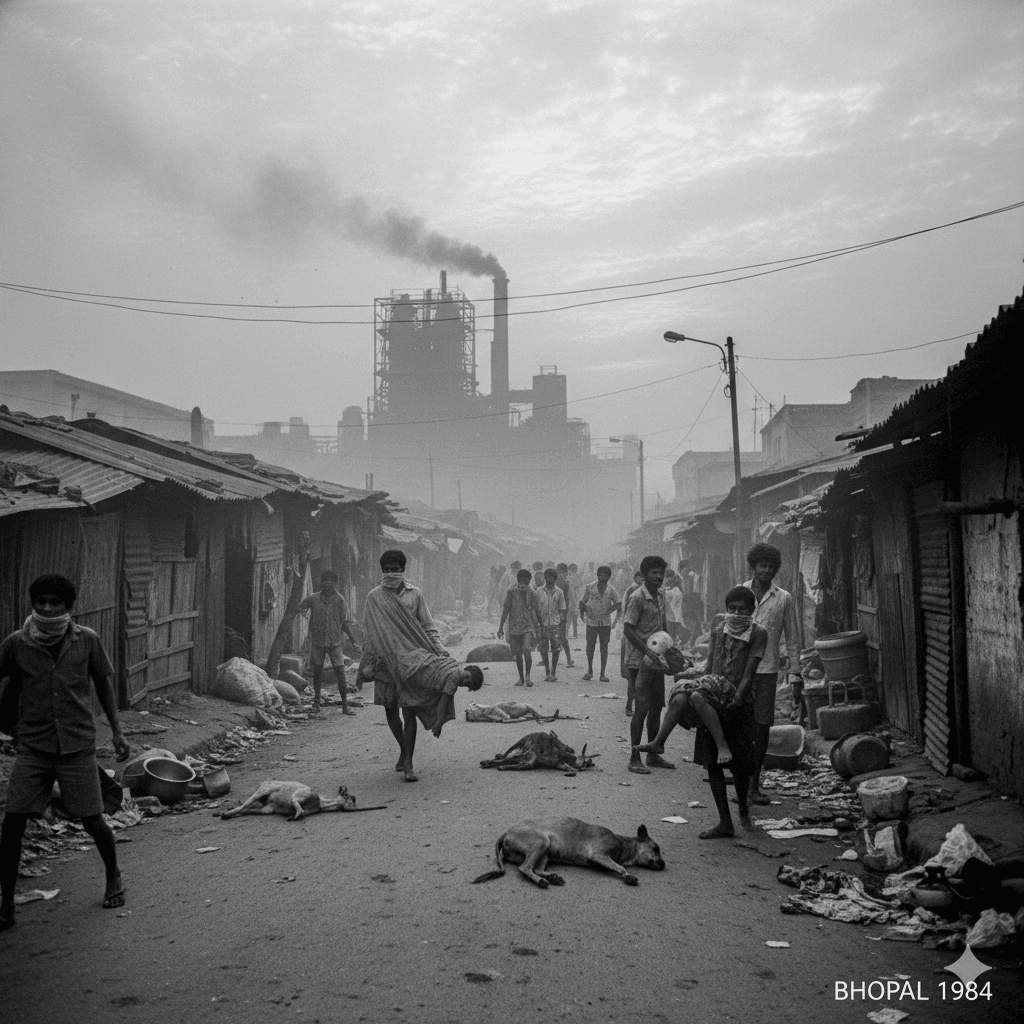 The Bhopal Gas Tragedy took place on the night of 2–3 December 1984. The tragedy is widely regarded as the world’s worst industrial disaster. A deadly leak of Methyl Isocyanate (MIC) gas from the Union Carbide pesticide plant spread across the city while people were asleep, causing immediate and long-term devastation.
The incident remains a critical reminder of the need for strict pollution control, corporate accountability, and robust disaster management systems. |
Now, let’s study the types of pollution and their key factors to understand how pollution affects our environment in different ways.
What is Pollution?
Pollution is the introduction of harmful substances such as chemicals, gases, waste, or noise into the environment, causing damage to air, water, soil, and living beings. It disrupts natural systems and negatively impacts human health and ecosystems.
According to the National Health Portal of India, nearly 7 million people die every year due to air pollution alone. This shows how pollution is a public health emergency.
Types of Pollution and Their Key Causes
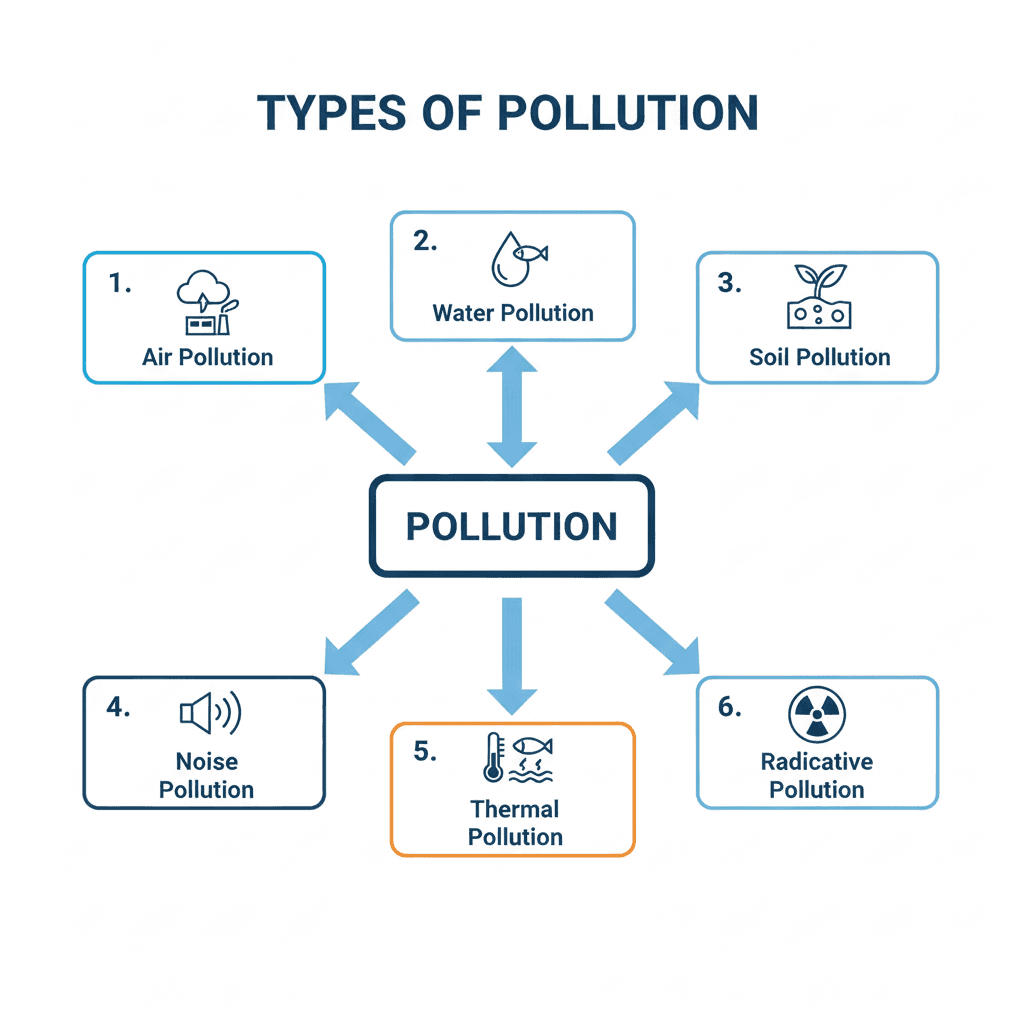
1. Air Pollution
Air pollution refers to the presence of harmful gases, particulate matter, and toxic chemicals in the atmosphere, making the air unsafe for humans and the environment.
Key Causes:
- Vehicular emissions.
- Industrial smoke from coal-based power plants and factories.
- Crop residue burning in Punjab & Haryana, worsening Delhi’s winter air quality.
- Construction and road dust from rapid urbanisation.
- Burning of fossil fuels such as coal, diesel, and biomass.
Example: “Severe” AQI in Delhi NCR due to stubble burning + weather inversion.
2. Water Pollution
Water pollution occurs when harmful substances contaminate rivers, lakes, and groundwater, making the water unfit for drinking, irrigation, and aquatic life.
Key Causes:
- Untreated sewage discharge (over 70% of India’s sewage is untreated).
- Industrial effluents from dyeing, tanneries, and chemical units.
- Agricultural runoff carries pesticides and fertilisers.
- Dumping of plastic and household waste.
Example: The Yamuna River remains heavily polluted due to untreated sewage and industrial waste.
3. Soil (Land) Pollution
Soil pollution is the degradation or contamination of land by toxic chemicals, waste, and unsustainable human activities.
Key Causes:
- Overuse of fertilisers and pesticides in agriculture.
- Dumping of industrial waste and chemicals.
- Mining operations cause erosion and contamination.
- Landfills and urban waste dumping.
Example: Plachimada (Kerala) saw severe soil and groundwater contamination due to industrial waste and over-extraction.
4. Noise Pollution
Noise pollution refers to unwanted or harmful levels of sound that disturb human health, wildlife, and daily activities.
Key Causes:
Traffic congestion and honking in metros like Delhi, Kolkata, Bengaluru.
- Construction and infrastructure activities.
- Industrial machinery.
- Loudspeakers and public events.
Example: Mumbai regularly crosses permissible noise limits, especially during festivals and rush hours.
5. Thermal Pollution
Thermal pollution occurs when the temperature of natural water bodies increases, harming aquatic life and reducing oxygen levels.
Key Causes:
- Hot water discharge from power plants and industrial units.
- Dams and reduced water flow alter natural temperatures.
Example: Thermal power stations along the Ganga basin release heated water, affecting fish breeding cycles.
6. Radioactive Pollution
Radioactive pollution is the release of radioactive substances into the environment, posing long-term health and ecological risks.
Key Causes:
- Mining of radioactive minerals.
- Leakages from nuclear power plants.
- Improper disposal of radioactive medical waste.
Example: Safety concerns around nuclear installations like Kudankulam highlight the need for strict regulation.
Must cover this current affairs topic: COP 30 2025: UNFCCC Climate Summit in Belem, Brazil
UPSC Prelims PYQ on Environmental Pollution
QUESTION 1
How is the National Green Tribunal (NGT) different from the Central Pollution Control Board (CPCB)?
- The NGT has been established by an Act whereas the CPCB has been created by executive order of the Government.
- The NGT provides environmental justice and helps reduce the burden of litigation in the higher courts whereas the CPCB promotes cleanliness of streams and wells, and aims to improve the quality of air in the country.
Which of the statements given above is/are correct
Environmental Laws and Regulations in India
India has built a comprehensive environmental protection framework over the years. These laws help control pollution, protect natural resources, and ensure accountability from industries. Here’s an overview of the key laws you should know for UPSC:
1. Environment (Protection) Act, 1986
- It was enacted after the Bhopal Gas Tragedy.
- It acts as an umbrella law for all environmental regulations in India.
- It gives the government powers to set environmental standards, regulate emissions, and take action against industries that violate norms.
2. Air (Prevention and Control of Pollution) Act, 1981
- This act aims to prevent and control air pollution across India.
- It allows the government to monitor air quality, fix emission limits, and penalise polluting units.
3. Water (Prevention and Control of Pollution) Act, 1974
- Protects rivers, lakes, and groundwater from pollution.
- The act led to the creation of Pollution Control Boards (CPCB/SPCBs).
- It regulates the discharge of industrial and domestic waste into water bodies.
4. Public Liability Insurance Act, 1991
- This act ensures immediate compensation to victims affected by accidents involving hazardous substances.
- Makes it mandatory for industries to maintain insurance policies for such emergencies.
5. Hazardous Waste Management Rules, 2016
- Regulate the handling, storage, transportation, and disposal of hazardous waste.
- Promote safer industrial practices and reduce environmental damage.
6. National Green Tribunal (NGT), 2010
- A specialised body that deals exclusively with environmental cases.
- The tribunal provides fast-track decisions on issues like pollution, forest protection, and environmental clearance.
Central Pollution Control Board (CPCB)
The CPCB, set up in 1974, is India’s top authority for pollution monitoring and control. It works under the Water Act and coordinates with State Pollution Control Boards to implement environmental laws. Key functions include:
- It monitors air, water, and soil quality across India.
- It advises the government on pollution control policies and regulations.
- Implements major programmes like the National Clean Air Programme (NCAP).
- Guides industries on safe waste management and hazard prevention.
This regulatory framework forms a major part of UPSC Environment & Ecology, helping aspirants understand how India tackles pollution and protects its environment.
Also read: Paris Agreement 2015 on Climate Change | UPSC Environment & Ecology Notes
UPSC Prelims PYQ on Environmental Laws
QUESTION 1
How is the National Green Tribunal (NGT) different from the Central Pollution Control Board (CPCB)?
- The NGT has been established by an Act whereas the CPCB has been created by executive order of the Government.
- The NGT provides environmental justice and helps reduce the burden of litigation in the higher courts whereas the CPCB promotes cleanliness of streams and wells, and aims to improve the quality of air in the country.
Which of the statements given above is/are correct
How We as Citizens Can Combat Pollution
"The greatest threat to our planet is the belief that someone else will save it." - Robert Swan
It starts with each of us. Small, everyday actions, when practised collectively, can bring meaningful change in curbing pollution. Simple steps citizens can take:
- Use public transport, carpool, or cycle to cut down on vehicular pollution.
- Avoid burning waste and follow proper waste segregation at home.
- Reduce single-use plastics by switching to reusable bags, bottles, and containers.
- Save energy by switching off appliances when not in use and choosing energy-efficient options.
- Plant trees and support local green initiatives.
- Opt for eco-friendly products and sustainable lifestyle choices.
- Compost kitchen waste to reduce landfill pressure.
- Report pollution violations through civic apps or helplines.
- Spread awareness within your community, school, or workplace.
- Conserve water by preventing leaks and avoiding unnecessary wastage.
This National Pollution Control Day, let’s pledge to uphold the essence of the 2025 theme—“Sustainable Living for a Greener Future”, and commit to making mindful choices that protect our environment.
Change begins with us, and every step counts.
Crack UPSC with your Personal AI Mentor
Join SuperKalam - Your Personal AI Mentor that teaches, instantly evaluates Handwritten Answers & builds Daily Discipline
Download the SuperKalam App Now