Ken-Betwa River Interlinking Project | Why Tribals are Protesting (UPSC)
Why is the Ken-Betwa Project making headlines? Understand the tribal protests in M.P, project benefits, environmental concerns and the way ahead. Read now!
Jul, 2026
•7 min read
Why in the News?
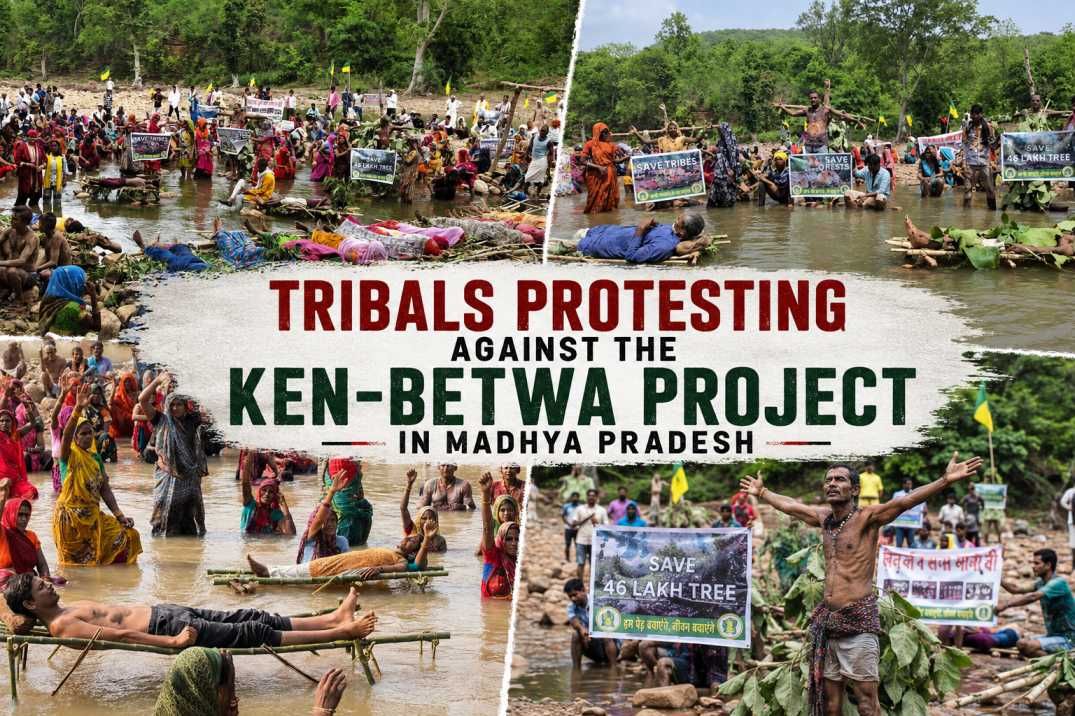
The Ken-Betwa River Interlinking Project is back in the news after tribal communities in Madhya Pradesh intensified their protests over displacement, rehabilitation, and environmental concerns.
In July 2026, affected families staged Jal Satyagraha, Chita Andolan (Pyre Protest), and hunger strikes, demanding fair compensation, protection of forest rights, and greater transparency in the project's implementation. The protests gained national attention after police cleared the protest site, bringing the debate over development versus tribal rights back into focus.
About the Ken-Betwa River Interlinking Project
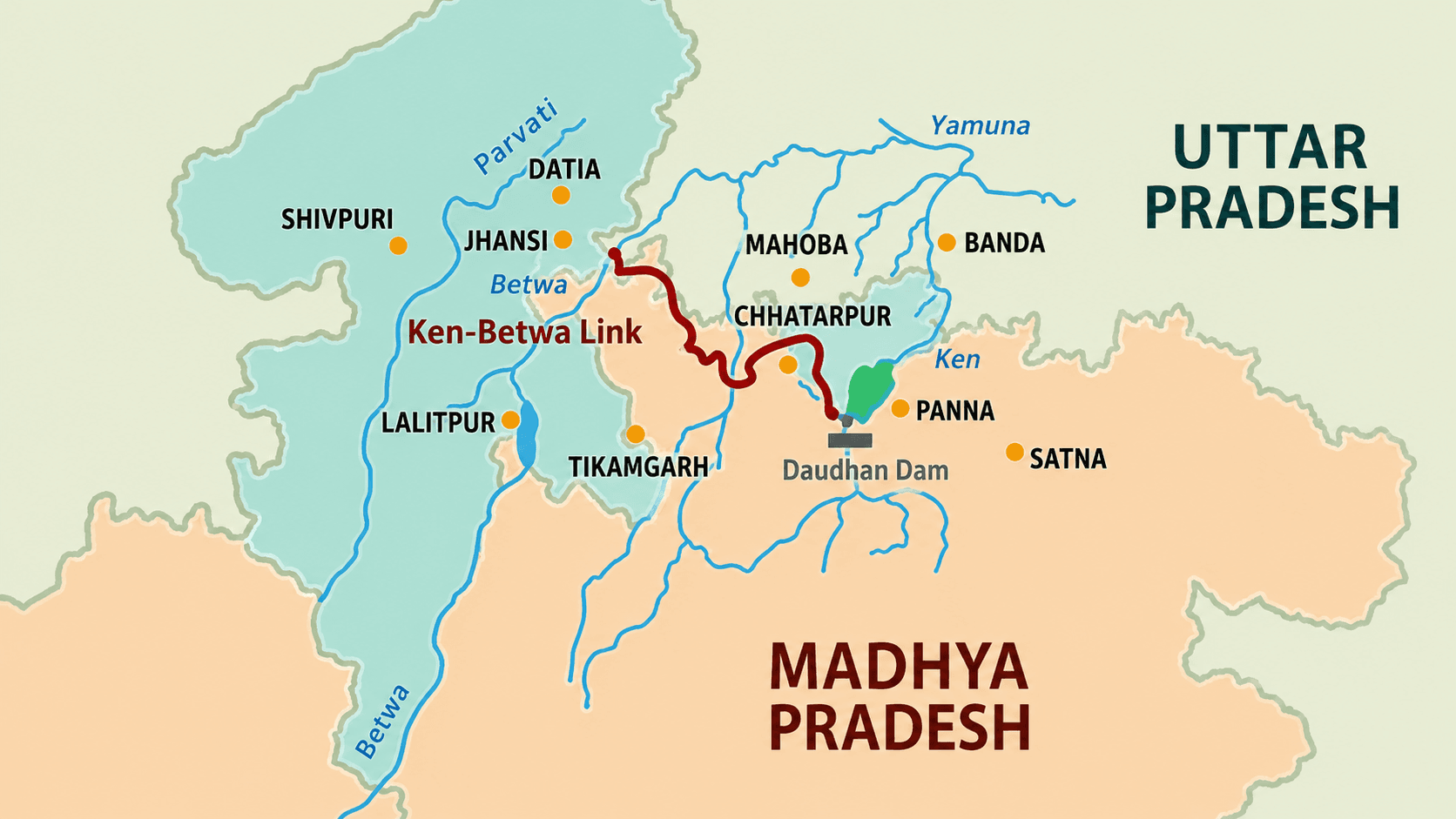
The Ken-Betwa River Interlinking Project (KBLP) is India's first river interlinking project under the National Perspective Plan. It aims to transfer surplus water from the Ken River to the Betwa River to address water scarcity in the Bundelkhand region of Madhya Pradesh and Uttar Pradesh. The project is expected to improve irrigation, provide drinking water, and generate hydropower while supporting the region's socio-economic development.
Key Facts About the Project
- The project is being executed by the National Water Development Agency (NWDA) under the Ministry of Jal Shakti through the Ken-Betwa Link Project Authority (KBLPA).
- The project covers Madhya Pradesh and Uttar Pradesh, with most of the project infrastructure located in Madhya Pradesh.
- It connects the Ken River, a tributary of the Yamuna, with the Betwa River, another major Yamuna tributary.
- The project is estimated to cost over ₹44,000 crore (with revisions based on implementation and inflation).
Main Components of the Project
- Construction of the Daudhan Dam on the Ken River.
- A 221-km Ken-Betwa Link Canal to transfer water.
- Low-Level Tunnel, High-Level Tunnel, barrages, and powerhouses for water regulation and electricity generation.
Project Phases
- Phase I: Construction of the Daudhan Dam, link canal, tunnels, and hydropower facilities.
- Phase II: Development of the Lower Orr Dam, Kotha Barrage, and Bina Complex to further expand irrigation coverage.
Objectives of the Project
The Ken-Betwa River Interlinking Project aims to improve water availability in the drought-prone Bundelkhand region while supporting agriculture, livelihoods, and regional development. Its key objectives include:
- Address Water Scarcity in Bundelkhand: The primary objective is to transfer surplus water from the Ken River to the water-deficient Betwa River to reduce recurring water shortages in parts of Madhya Pradesh and Uttar Pradesh.
- Expand Irrigation Facilities: The project seeks to increase irrigation coverage across drought-prone districts, enabling farmers to cultivate more land, improve crop yields, and reduce dependence on erratic monsoon rainfall.
- Provide Drinking Water: Another key goal is to ensure a reliable supply of safe drinking water to millions of people living in urban and rural areas of the Bundelkhand region.
- Generate Clean Energy: The project includes the development of hydropower and solar power infrastructure to support renewable energy generation and strengthen the region's power supply.
- Boost Agricultural and Economic Development: By improving water availability, the project aims to enhance agricultural productivity, increase farmers' incomes, create employment opportunities, and promote overall socio-economic development.
- Improve Water Resource Management: The project aims to optimise the use of available river water through inter-basin transfer, ensuring more balanced and efficient utilisation of water resources.
- Strengthen Climate and Drought Resilience: The project seeks to reduce the impact of recurring droughts in Bundelkhand by ensuring a more dependable water supply for agriculture, domestic use, and other essential needs.
Also see: List of Major Dams of India for UPSC: Oldest, Longest & Highest Dams in India
Expected Benefits of the Ken-Betwa Project
The Ken-Betwa River Interlinking Project is expected to deliver significant economic, social, and environmental benefits to the drought-prone Bundelkhand region.
- Expanded Irrigation Coverage: The project will provide irrigation to approximately 10.6 lakh hectares of agricultural land, improving crop productivity and reducing dependence on monsoon rainfall.
- Improved Drinking Water Supply: It is expected to ensure a reliable supply of drinking water to nearly 62 lakh people across several districts of Madhya Pradesh and Uttar Pradesh.
- Clean Energy Generation: The project will generate around 103 MW of hydropower and 27 MW of solar power, contributing to renewable energy production and regional energy security.
- Drought Mitigation: By improving water availability, the project aims to reduce the impact of recurring droughts in the Bundelkhand region, strengthening water security for agriculture, households, and industries.
- Regional Economic Development: Better water infrastructure is expected to boost agricultural income, create employment opportunities, and support the overall socio-economic development of the region.
- Enhanced Water Resource Management: The inter-basin transfer of water will promote more efficient utilisation of available water resources and help address regional water imbalances.
Also read: Particularly Vulnerable Tribal Groups (PVTGs) - UPSC Notes
Why Are Tribals Protesting Against the Project?
In July 2026, affected families staged Jal Satyagraha, hunger strikes, and Chita Andolan (Pyre Protest), demanding protection of their land, forest rights, fair rehabilitation, and greater transparency in the project's implementation.
1. Displacement of Tribal Communities
The construction of the Daudhan Dam will submerge several villages, displacing thousands of families, including a large number of Scheduled Tribes. Many fear losing their ancestral homes and traditional way of life.
2. Loss of Forest-Based Livelihoods
Tribal communities depend on forests for farming, fishing, grazing, and collecting minor forest produce. The submergence of forest land threatens both their livelihoods and the rights recognised under the Forest Rights Act, 2006.
3. Rehabilitation and Compensation Concerns
Protesters claim that compensation is inadequate and that rehabilitation plans do not fully address their long-term needs. They are demanding fair compensation, land-for-land rehabilitation, and proper resettlement before displacement.
4. Environmental Impact
A major concern is the submergence of parts of the Panna Tiger Reserve, which could lead to forest loss, habitat fragmentation, and adverse impacts on biodiversity.
5. Violation of Tribal Rights
Many tribal groups allege that Gram Sabhas were not meaningfully consulted and that the provisions of the Forest Rights Act, 2006 and the PESA Act, 1996, have not been adequately implemented.
Also read: Important Tribes in India [UPSC Notes]
Way Forward
"Development that destroys the environment is not development; it is destruction." — Sunderlal Bahuguna
The Ken-Betwa River Interlinking Project must strike a balance between development, environmental conservation, and tribal rights. A sustainable and inclusive approach is essential for its long-term success.
- Provide fair compensation, land-for-land rehabilitation, and timely resettlement before displacement.
- Strictly implement the Forest Rights Act, 2006 and PESA Act, 1996, ensuring meaningful participation of Gram Sabhas in decision-making.
- Minimise forest loss through scientific planning, afforestation, wildlife conservation, and continuous ecological monitoring.
- Build trust through regular public consultations, independent social and environmental audits, and transparent implementation.
- Complement river interlinking with watershed development, rainwater harvesting, groundwater recharge, and efficient irrigation practices.
A truly successful river-linking project will be the one that delivers water security while safeguarding forests, wildlife, and the rights and dignity of indigenous communities.
Start your UPSC Preparation 2027 with SuperKalam
SuperKalam is your personal mentor for UPSC preparation, guiding you at every step of the exam journey. Practice, revise, and evaluate– all in one place.
Download Now