Vijayanagara architecture exemplifies the amalgamation of past traditions with contemporary practices. Elucidate with examples.
Vijayanagara architecture exemplifies the amalgamation of past traditions with contemporary practices. Elucidate with examples.
The Vijayanagara Empire (1336-1646 AD) represented the final flowering of South Indian classical architecture. It is characterized by a unique "Synthesis of Styles" that integrated the legacies of the Cholas, Pandyas, and Hoysalas with contemporary Indo-Islamic influences, culminating in the UNESCO World Heritage site of Hampi.
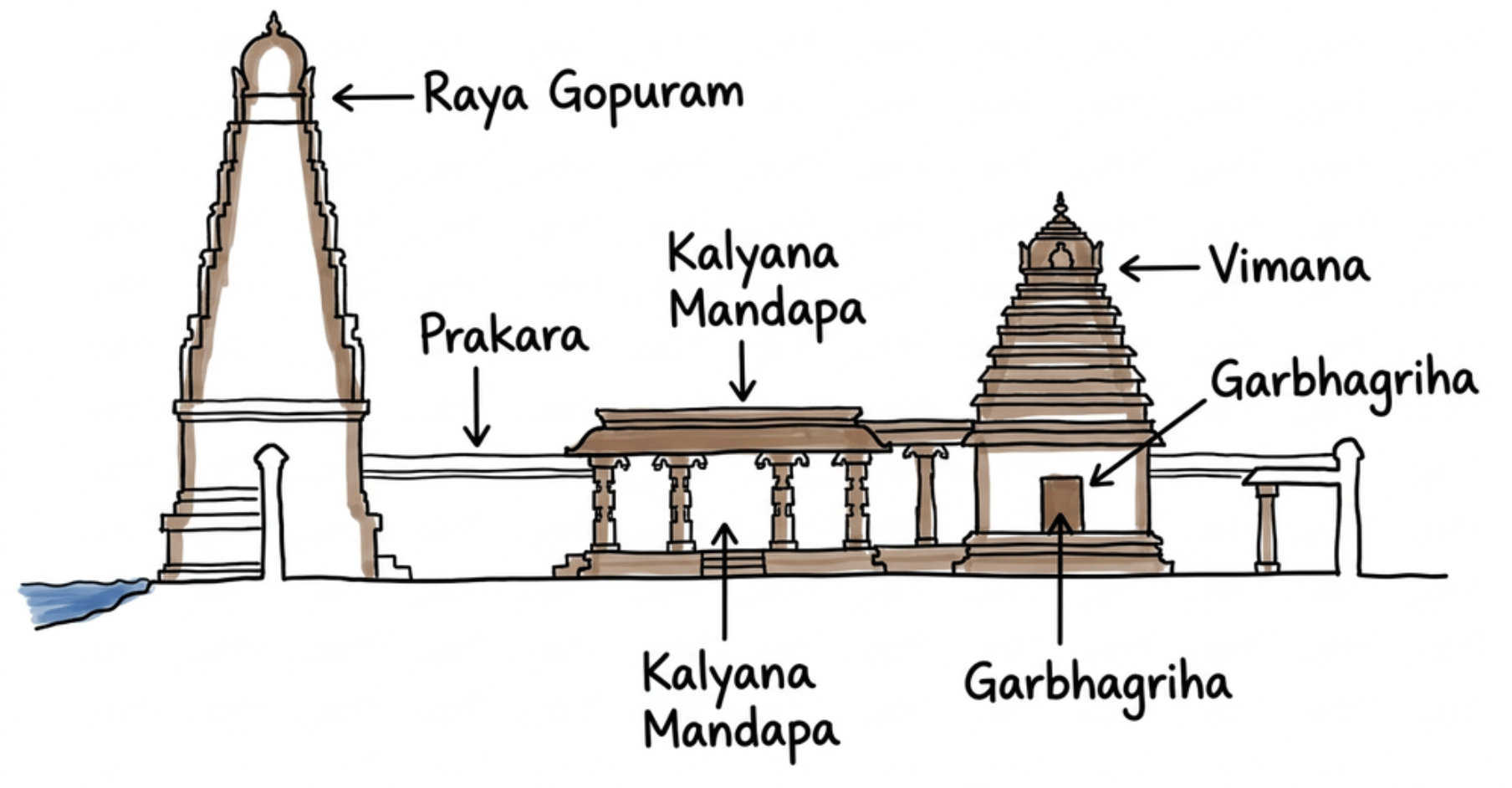
Architectural Features of a Vijayanagara Temple Complex
Integration of Past Traditions
-
Raya Gopurams: evolution of Pandya-style gateways into massive, multi-storeyed structures.
- Eg: The towering gopuram of the Virupaksha Temple.
-
Kalyana Mandapas: elaborate marriage halls for deities, continuing the Chola tradition of ceremonial spaces.
- Eg: The ornate 100-pillared hall in the Vitthala Temple.
-
Monolithic Sculptures: massive rock-cut traditions reminiscent of the Pallavas.
- Eg: The 6.7-meter-high Ugra Narasimha monolith.
-
Yali Pillars: horse-themed pillars (leogryphs) evolving from late-Chola and Pandya motifs.
- Eg: Charging horses with riders in the Achyutaraya Temple.
-
Stepped Vimanas: adopting the Kadamba-Chalukya style of tiered pyramid roofs.
- Eg: The secondary shrines within the Hampi complex.
-
Intricate Bas-reliefs: detailed carvings on granite, mirroring the Hoysala precision in soapstone.
- Eg: Depictions of the Mahanavami Dibba processions.
-
Enclosure Walls: continuing the Dravidian tradition of concentric Prakaras.
-
Amman Shrines: dedicated shrines for female consorts, a practice stabilized during the late-Pandya era.
Adoption of Contemporary Practices
-
Indo-Saracenic Arches: use of foliated and pointed arches in secular buildings.
- Eg: The recessed arches of the Lotus Mahal.
-
Domes and Vaults: integration of Islamic architectural elements like ribbed domes.
- Eg: The ten massive domes of the Elephant Stables.
-
Lime Mortar: transition from dry-masonry to the contemporary use of strong bonding agents.
-
Military Fortification: sophisticated defensive planning featuring seven concentric lines of walls.
- Eg: Massive cyclopean masonry without mortar for outer walls.
-
Secular Plazas: creation of non-religious public spaces for administrative functions.
- Eg: The King’s Audience Hall.
-
Watchtowers: blending traditional stone masonry with Islamic-style balconies.
-
Advanced Hydraulics: contemporary water management using stone aqueducts and stepped tanks.
- Eg: The geometric Queen’s Bath and the Stepped Tank (Pushkarani).
This architectural synthesis created a "Cosmopolitan Style" that transcended religious boundaries. Preserving this heritage through the ASI’s Hampi Master Plan is vital for upholding India’s cultural diversity under SDG 11.4.
Answer Length
Model answers may exceed the word limit for better clarity and depth. Use them as a guide, but always frame your final answer within the exam’s prescribed limit.
Evaluate this PYQ now
Write your answer & evaluate in just 60 seconds




500+ students evaluated
Model Answers by Subject


Crack UPSC with your
Personal AI Mentor
An AI-powered ecosystem to learn, practice, and evaluate with discipline