Analyse the complexity and intensity of terrorism, its causes, linkages and obnoxious nexus. Also suggest measures required to be taken to eradicate the menace of terrorism.
Analyse the complexity and intensity of terrorism, its causes, linkages and obnoxious nexus. Also suggest measures required to be taken to eradicate the menace of terrorism.
Terrorism has evolved into a multifaceted global threat with unprecedented complexity. Modern terror networks demonstrate sophisticated operational capabilities, leveraging technology and cross-border linkages to maximize destructive impact.
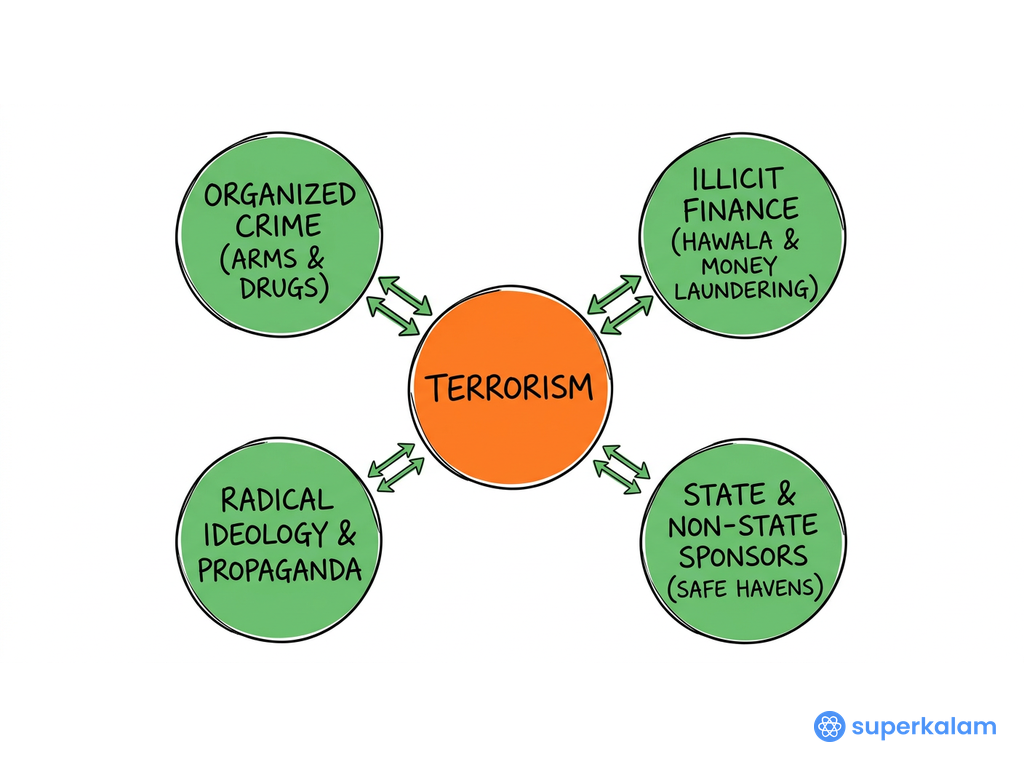
Terrorism network and connected surrounding elements
Complexity and Intensity of Modern Terrorism
- Hybrid Warfare: Terror groups now combine conventional attacks with cyber terrorism and information warfare, as seen in recent attacks on critical infrastructure
- Technological Sophistication: Use of drones, encrypted communications, and social media platforms for coordination and propaganda dissemination
- Network Structure: Decentralized cell-based operations make detection difficult, with groups like ISIS-K operating across multiple countries
- Financial Complexity: Terror financing through cryptocurrency, hawala networks, and legitimate business fronts creates detection challenges
- Psychological Impact: Modern terrorism aims for maximum media coverage and psychological terror rather than just physical destruction
Root Causes and Enabling Factors
| Category | Specific Causes | Examples |
|---|---|---|
| Ideological | Religious extremism, Political grievances | ISIS ideology, Kashmir separatism |
| Socio-Economic | Poverty, Unemployment, Marginalization | Youth radicalization in conflict zones |
| Geopolitical | State sponsorship, Regional conflicts | Pakistan's support to terror groups |
| Technological | Digital radicalization, Online recruitment | Social media propaganda by terror groups |
Obnoxious Terror Nexus
- State-Terror Linkage: Countries like Pakistan continue providing safe havens and funding to groups like Lashkar-e-Taiba and Jaish-e-Mohammed
- Crime-Terror Interface: Terror groups engage in drug trafficking, human trafficking, and arms smuggling for revenue generation
- Proxy Warfare: Use of terror groups as strategic tools by nations to destabilize rivals without direct confrontation
- International Networks: Al-Qaeda-ISIS rivalry creating competitive radicalization and increased terror activities
- Cyber-Crime Integration: Terror groups collaborating with cybercriminals for ransomware attacks and data theft
Counter-Terrorism Measures
- Intelligence Strengthening: Enhanced multi-agency coordination through institutions like Multi-Agency Centre (MAC) and National Investigation Agency (NIA)
- Technological Solutions: Implementation of National Cyber Security Strategy 2025 with ₹1,900 crore allocation for cybersecurity infrastructure
- International Cooperation: Active participation in FATF, Shanghai Cooperation Organization, and bilateral intelligence sharing agreements
- Deradicalization Programs: Community-based interventions and online counter-narrative campaigns to prevent radicalization
- Financial Intelligence: Strengthening Financial Intelligence Unit (FIU) and implementing Prevention of Money Laundering Act more effectively
Combating terrorism requires sustained multi-dimensional approach combining robust security measures with addressing root causes. India's comprehensive strategy through initiatives like National Counter Terrorism Centre and international partnerships demonstrates commitment to eliminating this global menace.
Answer Length
Model answers may exceed the word limit for better clarity and depth. Use them as a guide, but always frame your final answer within the exam’s prescribed limit.
Evaluate this PYQ now
Write your answer & evaluate in just 60 seconds




500+ students evaluated
Model Answers from
- 2021Internal Security15 MarksView Answer
Analyse the multidimensıonal challenges posed by external state and non-state actors, to the internal security of India. Also discuss measures required to be taken to combat these threats.
- 2021Internal Security10 MarksView Answer
Keeping in view India’s internal security, analyse the impact of cross-border cyber attacks. Also discuss defensive measures against these sophisticated attacks.
- 2021Internal Security10 MarksView Answer
Discuss how emerging technologies and globalisation contribute to money laundering. Elaborate measures to tackle the problem of money laundering both at national and international levels.
- 2021Internal Security10 MarksView Answer
How is the S-400 air defence system technically superior to any other system presently available in the world?
Model Answers by Subject


Crack UPSC with your
Personal AI Mentor
An AI-powered ecosystem to learn, practice, and evaluate with discipline



