Analyse internal security threats and transborder crimes along Myanmar, Bangladesh and Pakistan borders including Line of Control (LoC). Also discuss the role played by various security forces in this regard.
Analyse internal security threats and transborder crimes along Myanmar, Bangladesh and Pakistan borders including Line of Control (LoC). Also discuss the role played by various security forces in this regard.
India's border security architecture faces multifaceted challenges requiring coordinated responses from specialized security forces and enhanced technological integration.
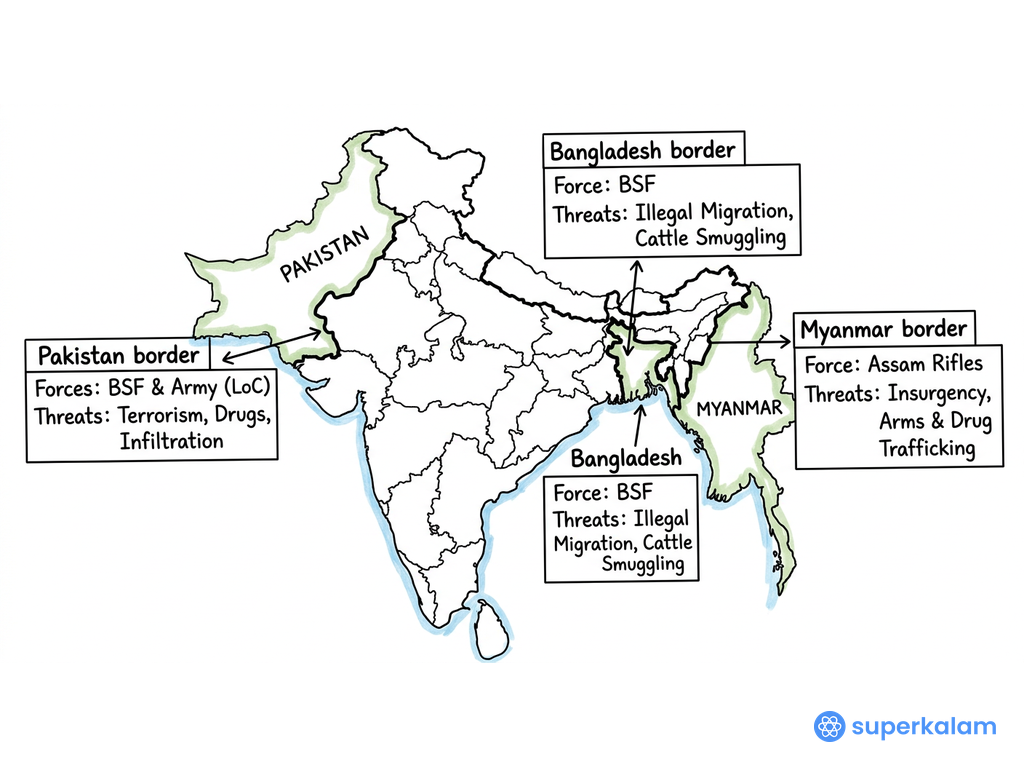
India Border Map with Pakistan Bangladesh
Security Threats Along Myanmar Border
- North-eastern insurgent groups like NSCN-K and ULFA operate from Myanmar territory
- Golden Triangle drug trafficking routes through Manipur and Mizoram
- Arms smuggling facilitated by porous 1,643 km border
- Rohingya refugee crisis creating demographic security concerns
- Methamphetamine trafficking from Myanmar's drug cartels
Security Challenges Along Bangladesh Border
- Human trafficking networks exploiting 4,096 km porous border
- Cattle smuggling worth ₹500 crores annually affecting local economy
- Fake Indian Currency Notes (FICN) circulation from Bangladesh
- Cross-border terrorism links with Jamaat-ul-Mujahideen Bangladesh (JMB)
- Illegal migration and demographic infiltration in Assam and West Bengal
Pakistan Border and LoC Threats
- Infiltration attempts by Pakistan-based terror groups like Lashkar-e-Taiba
- Ceasefire violations along 740 km LoC in Jammu & Kashmir
- Narco-terrorism nexus funding terror activities through drug trade
- Drone warfare for weapons and explosive smuggling since 2019
- Tunnel warfare for infiltration detected by ground penetrating radars
| Border | Primary Threats | Key Security Challenges |
|---|---|---|
| Myanmar | Drug trafficking, Insurgency | Porous border, Safe havens |
| Bangladesh | FICN, Human trafficking | Demographic changes, Criminal networks |
| Pakistan/LoC | Terrorism, Infiltration | Ceasefire violations, Proxy war |
Role of Security Forces
-
Border Security Force (BSF)
- Implements Comprehensive Integrated Border Management System (CIBMS)
- Smart fencing with sensors along Pakistan and Bangladesh borders
- Joint border management with Border Guard Bangladesh (BGB)
- Multi-tier security architecture with forward, main, and rear positions
-
Assam Rifles and Army
- Counter-insurgency operations in North-East under Armed Forces Special Powers Act
- Operation Sunrise joint operations with Myanmar against insurgents
- Coordinated patrolling along LoC with anti-infiltration obstacles
-
Intelligence and Specialized Agencies
- Multi Agency Centre (MAC) for real-time intelligence sharing
- Narcotics Control Bureau targeting drug trafficking networks
- National Investigation Agency investigating cross-border terror cases
- Directorate General of GST Intelligence combating smuggling
Strengthening border security requires enhanced technological surveillance, improved intelligence coordination through National Intelligence Grid, and diplomatic engagement with neighboring countries for comprehensive border management solutions.
Answer Length
Model answers may exceed the word limit for better clarity and depth. Use them as a guide, but always frame your final answer within the exam’s prescribed limit.
Evaluate this PYQ now
Write your answer & evaluate in just 60 seconds




500+ students evaluated
Model Answers from
- 2020Internal Security15 MarksView Answer
What are the determinants of left-wing extremism in the Eastern part of India? What strategy should the Government of India, civil administration and security forces adopt to counter the threat in the affected areas?
- 2020Internal Security10 MarksView Answer
For effective border area management, discuss the steps required to be taken to deny local support to militants and also suggest ways to manage favourable perception among locals.
- 2020Internal Security10 MarksView Answer
Discuss different types of cybercrimes and measures required to be taken to fight the menace.
Model Answers by Subject


Crack UPSC with your
Personal AI Mentor
An AI-powered ecosystem to learn, practice, and evaluate with discipline