How can biotechnology help to improve the living standards of farmers?
How can biotechnology help to improve the living standards of farmers?
Biotechnology offers transformative solutions to enhance farmers' living standards through scientific interventions and sustainable agricultural practices. Recent developments show significant potential for improving both productivity and profitability.
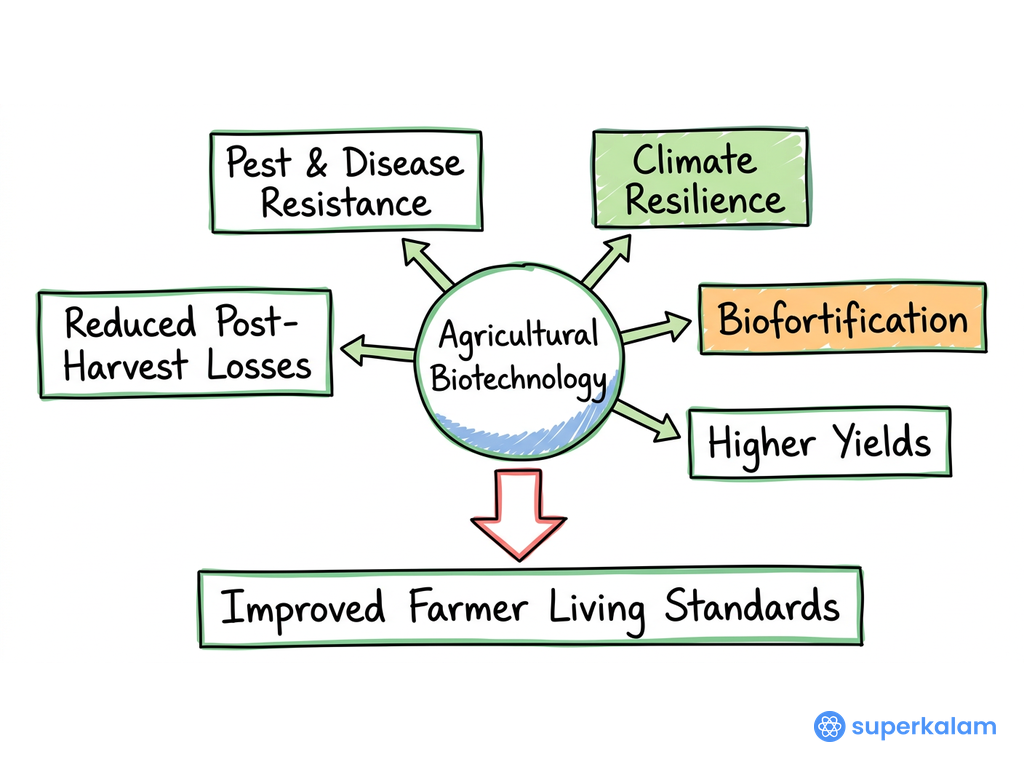
Agricultural Biotechnology Hub and Spoke Diagram
Crop Improvement Through Genetic Engineering
- Development of Bt cotton has increased yields by 50% and profits by 24% among smallholder farmers (2002-2020)
- Golden Rice fortified with Vitamin A addresses nutritional deficiencies
- Herbicide-tolerant crops reduce labor costs and increase efficiency
- Drought-resistant varieties help farmers cope with climate change
- GM mustard trials show 25-30% higher yields compared to conventional varieties
Biological Input Systems
| Input Type | Benefits | Cost Reduction |
|---|---|---|
| Biofertilizers | Nitrogen fixation, phosphorus solubilization | 20-30% less than chemical fertilizers |
| Biopesticides | Targeted pest control, eco-friendly | 15-25% reduction in pesticide costs |
| Biocontrol agents | Natural pest management | 40% reduction in chemical sprays |
Precision Agriculture Technologies
-
Soil Health Management
- Microbial consortiums improve soil fertility and structure
- Biochar applications enhance water retention capacity
- Enzyme-based solutions accelerate nutrient availability
- pH correction through biological agents
- Carbon sequestration improves long-term soil health
-
Smart Farming Integration
- Biosensors for real-time crop monitoring
- Drone-based applications for targeted interventions
- AI-powered disease prediction systems
- Automated irrigation based on soil moisture sensors
- Weather-based advisory services
Government Support Mechanisms
-
Biotech-KISAN Program
- Scientist-farmer partnerships addressing regional challenges
- Focus on women farmer empowerment and skill development
- Market linkage facilitation for bio-products
- Quality seed production programs
- Water management and sustainable practices
-
Policy Framework
- National Biotechnology Development Strategy 2021-2025 promotes agricultural biotechnology
- Seed production subsidies for certified varieties
- Regulatory streamlining for faster product approvals
Economic Impact and Market Growth
- Average $10,000 per hectare income increase through biotechnology adoption
- Agri-biologicals market projected to reach $44.70 billion by 2032
- Export opportunities in organic and bio-certified products
- Value addition through biotechnology-based processing
- Reduced input costs leading to higher profit margins
Biotechnology integration through programs like Biotech-KISAN and adherence to UN SDG 2 (Zero Hunger) framework creates sustainable pathways for improved farmer livelihoods. The National Mission for Sustainable Agriculture further supports biotechnology adoption for transforming rural economic landscapes.
Answer Length
Model answers may exceed the word limit for better clarity and depth. Use them as a guide, but always frame your final answer within the exam’s prescribed limit.
Evaluate this PYQ now
Write your answer & evaluate in just 60 seconds




500+ students evaluated
Model Answers by Subject


Crack UPSC with your
Personal AI Mentor
An AI-powered ecosystem to learn, practice, and evaluate with discipline



