Can overuse and free availability of antibiotics without Doctor’s prescription, be contributors to the emergence of drug-resistant diseases in India? What are the available mechanisms for monitoring and control? Critically discuss the various issues involved.
Can overuse and free availability of antibiotics without Doctor’s prescription, be contributors to the emergence of drug-resistant diseases in India? What are the available mechanisms for monitoring and control? Critically discuss the various issues involved.
The unregulated use and easy availability of antibiotics in India has emerged as a critical public health concern, contributing significantly to antimicrobial resistance (AMR). According to recent data, India witnessed approximately 267,000 deaths directly attributable to AMR in 2021, highlighting the severity of this crisis.
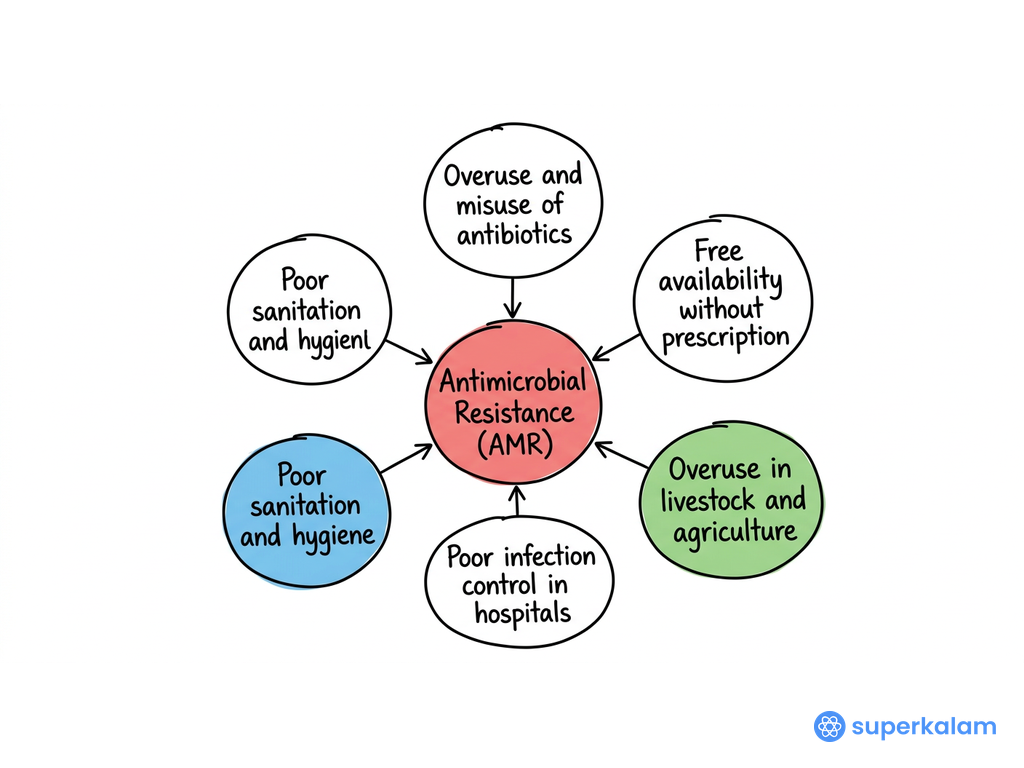
Antimicrobial Resistance AMR Radial Flowchart Diagram
Overuse and Free Availability as Contributors
- Over-the-Counter Sales: Despite Schedule H classification under Drugs and Cosmetics Act, antibiotics remain easily accessible without prescriptions in pharmacies across India
- Self-Medication Culture: Patients often self-prescribe based on previous experiences or pharmacy recommendations, leading to inappropriate antibiotic selection
- Incomplete Treatment Cycles: Economic constraints and symptom relief cause patients to discontinue treatment prematurely, creating selective pressure for resistant bacteria
- Agricultural Misuse: Indiscriminate use in livestock and poultry farming contributes to environmental contamination and resistance development
- Counterfeit Medications: Substandard antibiotics with inadequate active ingredients fail to eliminate infections completely, promoting resistance
Available Monitoring and Control Mechanisms
- Regulatory Framework:
- Schedule H1 implementation (2013) for stricter control of certain antibiotics
- Drug Controller General of India (DCGI) oversight of antibiotic manufacturing and distribution
- State Drug Control Administrations responsible for local enforcement
| Mechanism | Purpose | Implementation Status |
|---|---|---|
| Schedule H1 | Stricter antibiotic control | Partially effective |
| AMR Surveillance | Monitor resistance patterns | Expanding coverage |
| ASP Programs | Hospital stewardship | Limited to tertiary centers |
- Surveillance Systems:
- National Action Plan on AMR (2017-2021) establishing surveillance networks
- Antimicrobial Stewardship Programs (ASPs) in healthcare facilities
- Indian Council of Medical Research (ICMR) resistance monitoring studies
Critical Issues Involved
-
Implementation Challenges:
- Weak enforcement allowing continued over-the-counter sales despite regulations
- Limited manpower for monitoring thousands of pharmaceutical outlets nationwide
- Inadequate penalty structures deterring violations
-
Healthcare System Gaps:
- Insufficient diagnostic facilities forcing empirical antibiotic use
- Over 75% of infections showing resistance to multiple antibiotic combinations
- Limited access to qualified healthcare in rural areas promoting self-medication
-
Economic Considerations:
- Cost-effective generic antibiotics encouraging overuse
- Healthcare affordability issues driving inappropriate usage patterns
India's AMR crisis requires comprehensive reform through stricter regulatory enforcement, enhanced surveillance systems, and public awareness initiatives. The One Health approach integrating human, animal, and environmental health sectors represents the most promising strategy for sustainable antimicrobial resistance control.
Answer Length
Model answers may exceed the word limit for better clarity and depth. Use them as a guide, but always frame your final answer within the exam’s prescribed limit.
Evaluate this PYQ now
Write your answer & evaluate in just 60 seconds




500+ students evaluated
Model Answers from
Model Answers by Subject


Crack UPSC with your
Personal AI Mentor
An AI-powered ecosystem to learn, practice, and evaluate with discipline



