Cyber warfare is considered by some defense analysts to be a larger threat than even Al Qaeda or terrorism. What do you understand by Cyberwarfare? Outline the cyber threats that India is vulnerable to and highlight the state of the country’s preparedness to deal with them.
Cyber warfare is considered by some defense analysts to be a larger threat than even Al Qaeda or terrorism. What do you understand by Cyberwarfare? Outline the cyber threats that India is vulnerable to and highlight the state of the country’s preparedness to deal with them.
Cyberwarfare has emerged as a dominant security threat, with defense analysts ranking it above traditional terrorism due to its potential to cripple entire nations through digital attacks on critical infrastructure and economic systems.
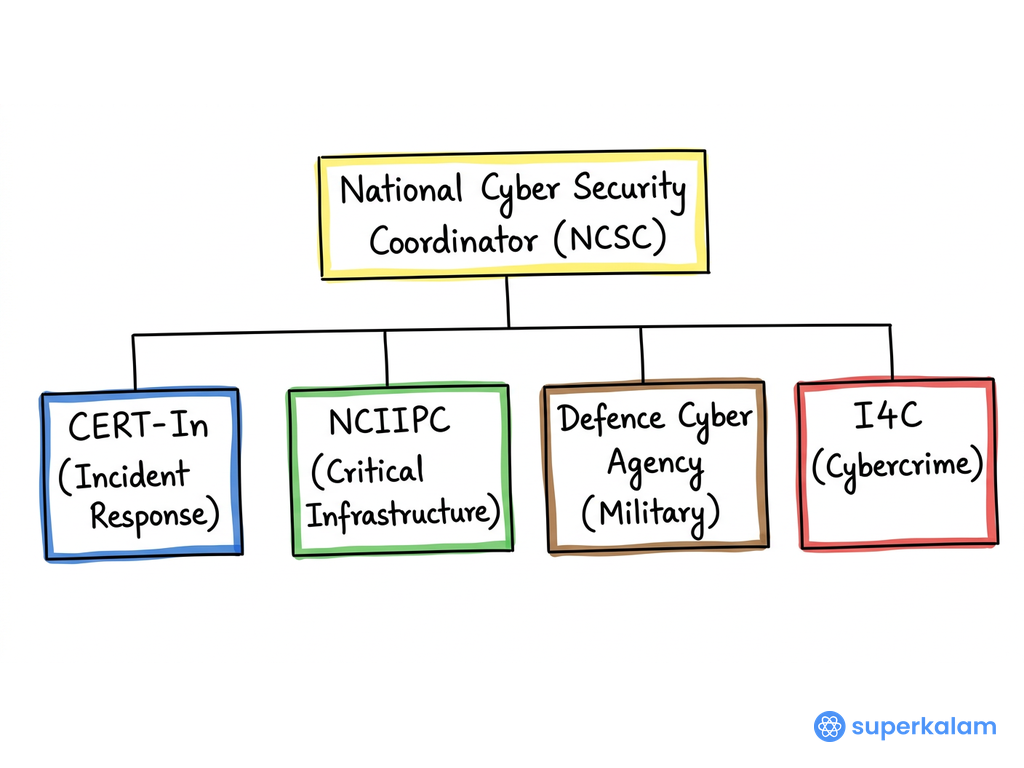
India's Cyber Security Architecture Flowchart
Understanding Cyberwarfare
- Definition: State-sponsored or non-state actors using digital tools to damage, disrupt, or gain unauthorized access to computer systems, networks, and information infrastructure of another nation
- Key Components:
- Advanced Persistent Threats (APTs) - long-term covert cyber operations
- Distributed Denial of Service (DDoS) attacks overwhelming target systems
- Malware and ransomware designed to compromise critical infrastructure
- Strategic Impact: Unlike conventional warfare, cyber attacks can be launched remotely with plausible deniability
- Asymmetric Nature: Small groups can inflict disproportionate damage on powerful nations
Cyber Threats India Faces
Critical Infrastructure Vulnerabilities
- Power Grid Attacks: 2020 Mumbai power outage allegedly linked to Chinese malware targeting electricity distribution
- Transportation Networks: Railway reservation systems and air traffic control facing persistent threats
- Banking Sector: ₹1,200 crore annual losses due to cyber attacks on financial institutions
- Telecommunications: 5G infrastructure creating new attack vectors for foreign adversaries
State-Sponsored Threats
- China's Cyber Operations: PLA Unit 61398 targeting Indian military and government networks
- Pakistan-Based Groups: Cross-border digital infiltration complementing physical terrorism
- APT Groups: Sophisticated campaigns like "Operation Hangover" targeting defense establishments
- Data Espionage: Intellectual property theft affecting India's technological competitiveness
India's Cybersecurity Preparedness
Institutional Framework
- National Cyber Security Coordinator: Established under NSC Secretariat for policy coordination
- CERT-In: Computer Emergency Response Team handling 1.4 million cyber incidents (2023-24)
- Defence Cyber Agency: Created in 2019 to handle military cyber threats
- National Critical Information Infrastructure Protection Centre: Safeguarding critical assets
Policy and Investment
- National Cyber Security Strategy 2020: Comprehensive framework for cyber resilience
- Budget Allocation: ₹1,900 crore (2025-26) for cybersecurity infrastructure development
- Cyber Surakshit Bharat Initiative: Public-private partnership model for capacity building
- Personal Data Protection Act 2023: Legal framework for data security
Challenges and Gaps
- Skills Shortage: Need for 3 million cybersecurity professionals by 2025
- Coordination Issues: Limited inter-agency cooperation and information sharing
- Legacy Systems: Outdated infrastructure in government departments vulnerable to attacks
India must accelerate its cyber capabilities through enhanced international cooperation and technological innovation while building a comprehensive cyber ecosystem. The establishment of National Cyber Command and strengthening Digital India security architecture remain critical priorities.
Answer Length
Model answers may exceed the word limit for better clarity and depth. Use them as a guide, but always frame your final answer within the exam’s prescribed limit.
Evaluate this PYQ now
Write your answer & evaluate in just 60 seconds




500+ students evaluated
Model Answers from
- 2013Internal Security10 MarksView Answer
How far are India’s internal security challenges linked with border management, particularly given the long porous borders with most countries of South Asia and Myanmar?
- 2013Internal Security10 MarksView Answer
Article 244 of the Indian Constitution relates to the Administration of Scheduled areas and tribal areas. Analyze the impact of non-implementation of the provisions of the fifth schedule on the growth of Left Wing Extremism.
- 2013Internal Security10 MarksView Answer
Money laundering poses a serious threat to a country’s economic sovereignty. What is its significance for India and what steps are required to be taken to control this menace?
Model Answers by Subject


Crack UPSC with your
Personal AI Mentor
An AI-powered ecosystem to learn, practice, and evaluate with discipline



