What were the factors responsible for the successful implementation of land reforms in some parts of the country? Elaborate.
What were the factors responsible for the successful implementation of land reforms in some parts of the country? Elaborate.
Subject: Economy
Land reforms in India have shown varied success across different states, with states like Kerala and West Bengal emerging as exemplars of effective implementation while others lagged behind. The success was driven by a combination of political will, administrative efficiency, and social mobilization.
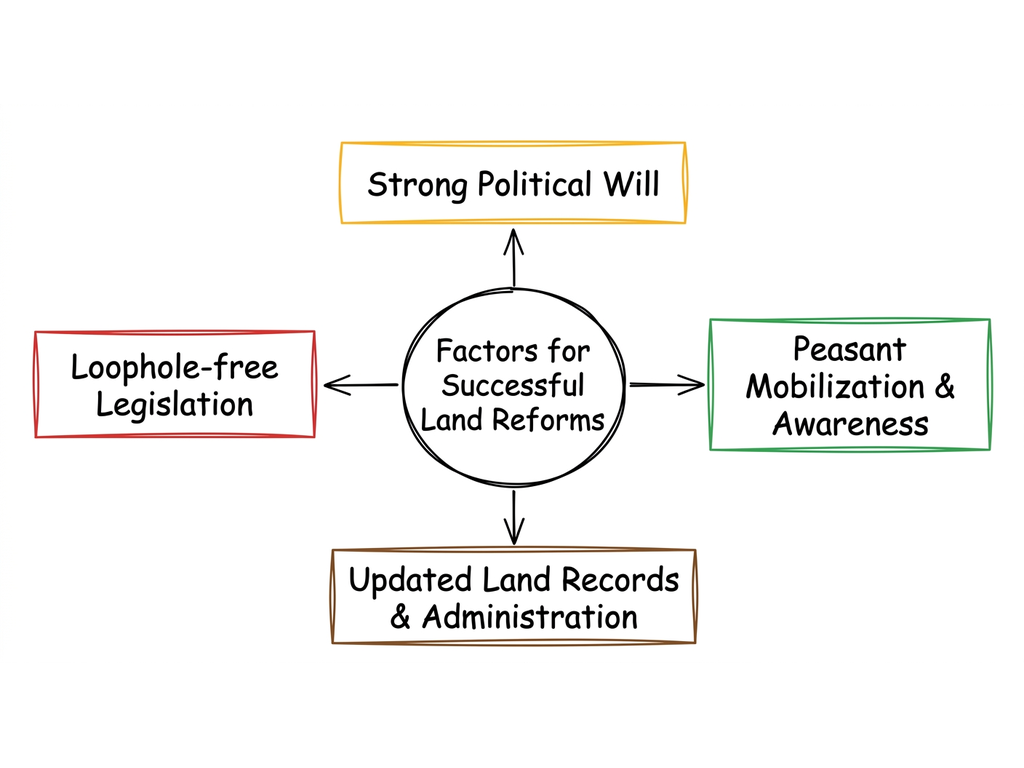
Factors for Successful Land Reforms
Key Factors Behind Successful Implementation
Political Commitment and Administrative Will
- Strong Political Leadership: States like Kerala demonstrated unwavering political commitment through initiatives like the Kerala Land Reforms Act, 1963.
- Bureaucratic Efficiency: Effective coordination between revenue departments and local administration ensured proper implementation of reforms.
- Clear Policy Framework: Well-defined legislative measures like the Zamindari Abolition Act of 1950 provided a strong foundation for reforms.
Social and Economic Factors
- Active Social Movements: Presence of strong peasant movements and social awareness campaigns facilitated implementation.
- Land Literacy: Better awareness about land rights and reforms among beneficiaries led to active participation.
- Economic Support Systems: Provision of institutional credit and technical assistance to new landowners enabled sustainable land use.
Technological Integration and Modernization
- Digital Infrastructure: Implementation of Unique Land Parcel Identification Numbers (ULPIN) and digital land records enhanced transparency.
- GIS Mapping: Modern surveying techniques and cadastral mapping improved accuracy in land demarcation.
- IT-based Systems: Digital property record administration reduced disputes and improved efficiency.
Monitoring and Implementation Mechanisms
- Regular Progress Review: Continuous monitoring of implementation through dedicated committees.
- Dispute Resolution: Efficient grievance redressal mechanisms and special land tribunals.
- Local Body Involvement: Active participation of Panchayati Raj institutions in implementation.
Recent reforms like the 2024-25 Union Budget proposals for comprehensive land reforms, including the Bhu-Aadhaar system and digitization of cadastral maps, build upon these successful factors while incorporating modern technological solutions for better implementation and transparency in land administration.
Answer Length
Model answers may exceed the word limit for better clarity and depth. Use them as a guide, but always frame your final answer within the exam’s prescribed limit.
Evaluate this PYQ now
Write your answer & evaluate in just 60 seconds




500+ students evaluated
Model Answers from
- 2024Economy15 MarksView Answer
Elucidate the importance of buffer stocks for stabilizing agricultural prices in India. What are the challenges associated with the storage of buffer stocks? Discuss.
- 2024Economy15 MarksView Answer
What are the major challenges faced by the Indian irrigation system in recent times? State the measures taken by the government for efficient irrigation management.
- 2024Economy15 MarksView Answer
What is the need for expanding the regional air connectivity in India? In this context, discuss the government’s UDAN Scheme and its achievements.
- 2024Economy15 MarksView Answer
Discuss the merits and demerits of the four ‘Labour Codes’ in the context of labour market reforms in India. What has been the progress so far in these regards?
- 2024Economy10 MarksView Answer
Explain the role of millets for ensuring health and nutritional security in India.
- 2024Economy10 MarksView Answer
What are the causes of persistent high food inflation in India? Comment on the effectiveness of the monetary policy of the RBI to control this type of inflation.
Model Answers by Subject


Crack UPSC with your
Personal AI Mentor
An AI-powered ecosystem to learn, practice, and evaluate with discipline