Explain the role of millets for ensuring health and nutritional security in India.
Explain the role of millets for ensuring health and nutritional security in India.
Subject: Economy
The Economic Survey (2023-24) advocates transitioning from basic food security to nutritional security. Rebranded as "Shree Anna", millets, comprising over 42.7% of global production, are central to this paradigm shift.
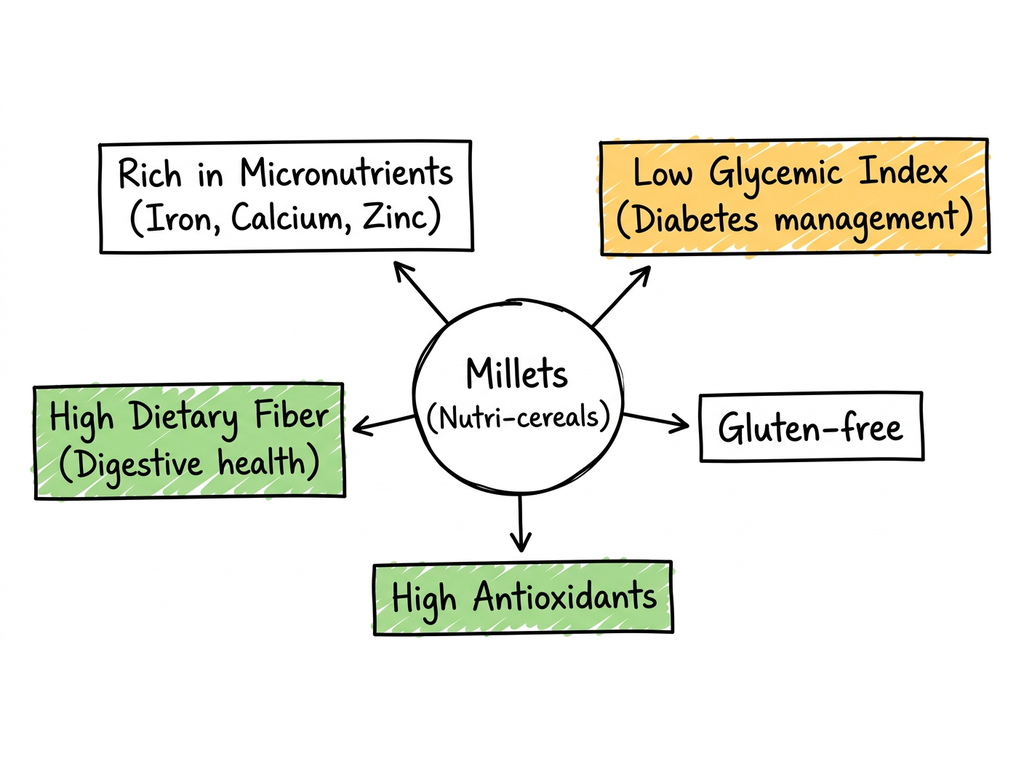
Millets: Nutritional Benefits
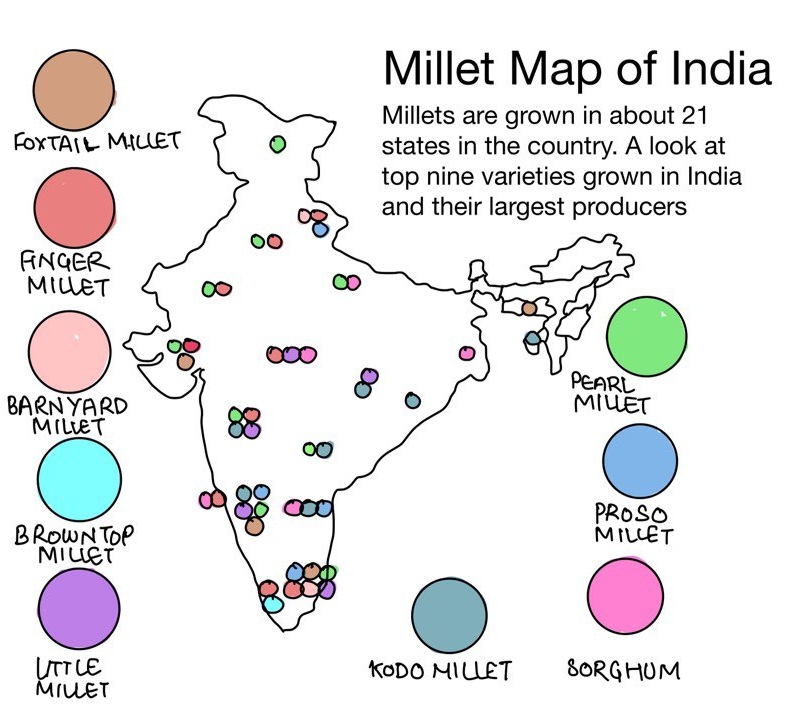
Millet Map of India
Health and Nutritional Core
- Macronutrient Density: High protein (7 to 12%) and dietary fiber (15 to 20%) make millets superior biochemical tools against severe acute malnutrition.
- Glycemic Control: An average low glycemic index of 52.7 prevents sugar spikes, which is crucial for managing India's rising urban diabetic burden.
- Combating Hidden Hunger: Iron and calcium-dense varieties like finger millet (Ragi) directly address pervasive anemia among Indian women and adolescent girls.
- Maternal Care Validation: High Courts recently validated millets as effective "Take Home Rations" under the National Food Security Act for lactating mothers.
- Climate-Proofing Diets: Being drought-resistant, millets guarantee dietary security even during monsoon failures in dryland states like Rajasthan.
Institutional Mainstreaming
- PDS Integration: PM-GKAY now enables states to distribute coarse grains via the Public Distribution System, democratizing nutrition for the poorest households.
- Early Childhood Nutrition: Under PM POSHAN, states innovatively deploy localized diets, such as Odisha distributing Ragi Ladoos to preschool children across Anganwadis.
- Decentralized Supply Chains: NITI Aayog recognizes the Odisha Millets Mission as a replicable template for local processing via Women Self Help Groups.
- Industrial Scaling: The ₹800 crore PLI Scheme incentivizes affordable Ready-to-Eat millet meals to bridge the rural-urban consumption gap.
- Startup Ecosystem: Over 151 government-backed agri-startups are innovating in gluten-free baking and millet-milk, making nutrition aspirational for the youth.
With ICAR-IIMR leading global R&D and the G20-backed MAHARISHI initiative, scaling localized value chains will permanently transform India's food bowls into global nutrition bowls.
Answer Length
Model answers may exceed the word limit for better clarity and depth. Use them as a guide, but always frame your final answer within the exam’s prescribed limit.
Evaluate this PYQ now
Write your answer & evaluate in just 60 seconds




500+ students evaluated
Model Answers from
- 2024Economy15 MarksView Answer
Elucidate the importance of buffer stocks for stabilizing agricultural prices in India. What are the challenges associated with the storage of buffer stocks? Discuss.
- 2024Economy15 MarksView Answer
What are the major challenges faced by the Indian irrigation system in recent times? State the measures taken by the government for efficient irrigation management.
- 2024Economy15 MarksView Answer
What is the need for expanding the regional air connectivity in India? In this context, discuss the government’s UDAN Scheme and its achievements.
- 2024Economy15 MarksView Answer
Discuss the merits and demerits of the four ‘Labour Codes’ in the context of labour market reforms in India. What has been the progress so far in these regards?
- 2024Economy10 MarksView Answer
What were the factors responsible for the successful implementation of land reforms in some parts of the country? Elaborate.
- 2024Economy10 MarksView Answer
What are the causes of persistent high food inflation in India? Comment on the effectiveness of the monetary policy of the RBI to control this type of inflation.
Model Answers by Subject


Crack UPSC with your
Personal AI Mentor
An AI-powered ecosystem to learn, practice, and evaluate with discipline



