Evaluate the nature of Bhakti Literature and its contribution to Indian culture.
Evaluate the nature of Bhakti Literature and its contribution to Indian culture.
Bhakti Literature emerged as a transformative spiritual movement in 6th century CE South India, fundamentally reshaping India's religious and cultural landscape through vernacular devotional expression.
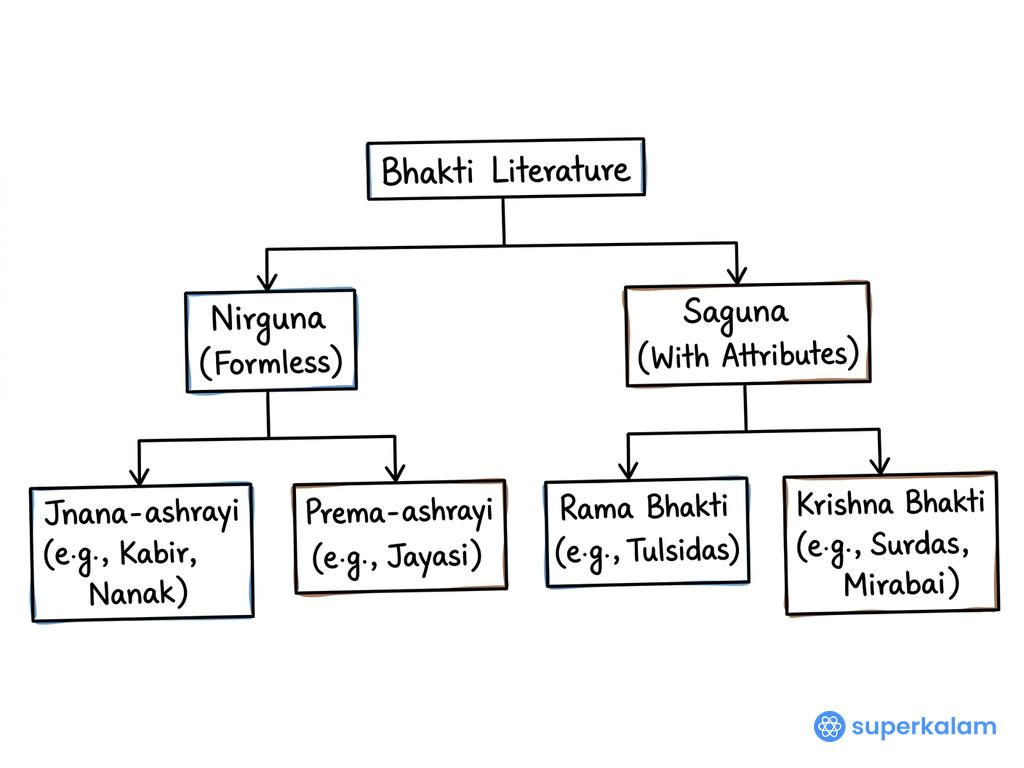
Bhakti Literature Hierarchical Flowchart Explained
Nature of Bhakti Literature
-
Linguistic Accessibility: Written in regional languages like Tamil, Marathi, Hindi, Bengali, breaking Sanskrit's monopoly and making spiritual knowledge accessible to common people regardless of caste or education.
-
Literary Forms: Employed simple yet powerful mediums - dohas, abhangas, bhajans, kirtans - easily memorized and sung by devotees, ensuring widespread transmission across generations.
-
Thematic Philosophy: Emphasized personal devotion (bhakti), direct divine communion, rejection of ritualistic orthodoxy, and spiritual equality transcending social barriers.
-
Emotional Expression: Characterized by intense devotional fervor, using metaphors of love, separation, union to describe the devotee-divine relationship.
-
Inclusivity: Welcomed all devotees irrespective of gender, caste, or social status, promoting spiritual democracy.
Contributions to Indian Culture
Religious Transformation
- Sectarian Unity: Fostered Vaishnavism, Shaivism synthesis while accommodating Islamic mysticism through saints like Kabir and Guru Nanak.
- Temple Culture: Enhanced temple traditions, festivals, and pilgrimage practices still prevalent today.
Social Reform Impact
- Gender Empowerment: Women saints like Mirabai, Andal, Akka Mahadevi challenged patriarchal norms, inspiring women's spiritual participation.
- Caste Liberation: Saints like Ravidas, Tukaram questioned Brahmanical hierarchy, promoting social equality through devotional practice.
Cultural Integration
| Aspect | Contribution | Example |
|---|---|---|
| Language Development | Enriched vernacular literature | Tulsidas's Ramcharitmanas |
| Musical Traditions | Created devotional music forms | Carnatic and Hindustani bhajans |
| Art Forms | Influenced painting and sculpture | Rajasthani miniature paintings |
Contemporary Relevance
- Digital Preservation: Government's Digital India initiative allocates ₹50 crore annually for digitizing ancient manuscripts including Bhakti texts.
- Cultural Festivals: Modern celebrations like World Poetry Day feature Bhakti literature, connecting youth with traditional wisdom.
Bhakti Literature remains India's most democratizing cultural force, creating a composite tradition that harmonizes diverse religious streams while promoting social equality and spiritual universalism.
Answer Length
Model answers may exceed the word limit for better clarity and depth. Use them as a guide, but always frame your final answer within the exam’s prescribed limit.
Evaluate this PYQ now
Write your answer & evaluate in just 60 seconds




500+ students evaluated
Model Answers from
- 2021Modern History15 MarksView Answer
Bring out the constructive programmes of Mahatma Gandhi during Non-Cooperation Movement and Civil Disobedience Movement.
- 2021Modern History15 MarksView Answer
To what extent did the role of the moderates prepare a base for the wider freedom movement? Comment.
- 2021Modern History10 MarksView Answer
Trace the rise and growth of socio-religious reform movements with special reference to Young Bengal and Brahmo Samaj.
Model Answers by Subject


Crack UPSC with your
Personal AI Mentor
An AI-powered ecosystem to learn, practice, and evaluate with discipline



