The broader aims and objectives of
WTO are to manage and promote
international trade in the era of
globalization. But the Doha round of
negotiations seems doomed due to
differences between the developed
and the developing countries.” Discuss
from the Indian perspective.
The broader aims and objectives of
WTO are to manage and promote
international trade in the era of
globalization. But the Doha round of
negotiations seems doomed due to
differences between the developed
and the developing countries.” Discuss
from the Indian perspective.
The World Trade Organization (WTO), established in 1995, aims to create a rules-based multilateral trading system. However, the Doha Development Round, launched in 2001, remains stalled due to fundamental disagreements between developed and developing nations.
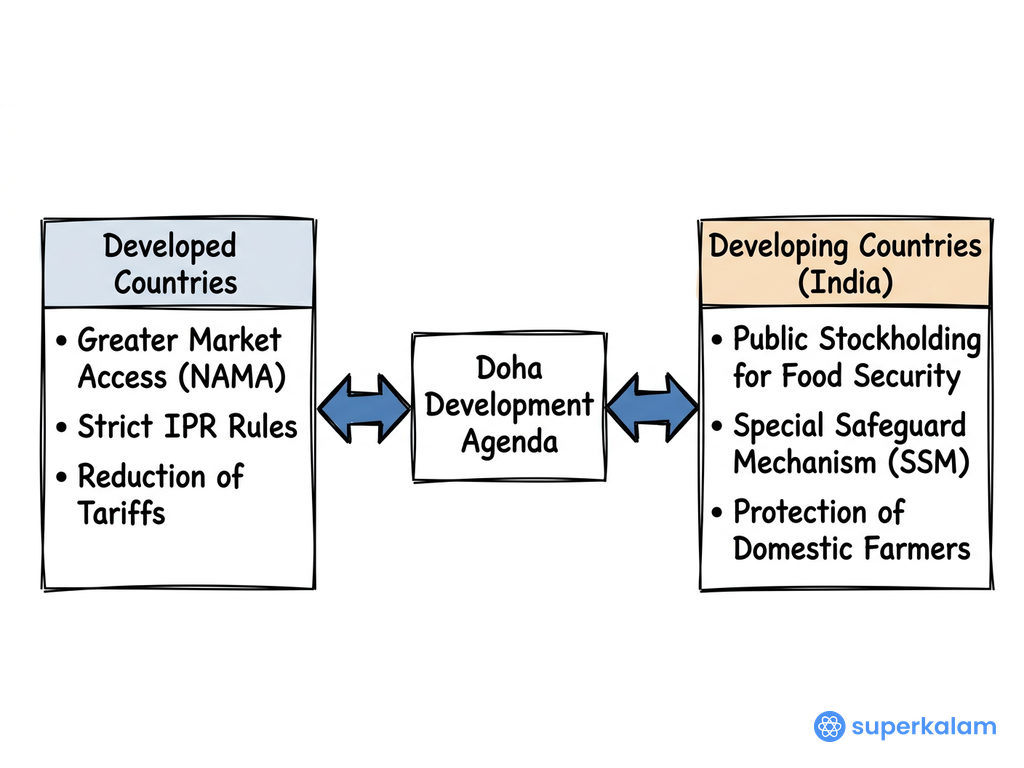
Doha Round Deadlock Structure Diagram Analysis
WTO's Broader Aims and Objectives
- Trade Liberalization: Reducing tariffs, quotas, and non-tariff barriers through multilateral negotiations
- Non-Discrimination Principles: Implementing Most Favored Nation (MFN) and National Treatment principles
- Dispute Resolution: Providing binding mechanisms for resolving trade disputes between member countries
- Technical Assistance: Supporting developing countries in building trade-related institutional capacity
- Policy Transparency: Ensuring predictable and transparent trade policies through regular reviews
Reasons for Doha Round Deadlock
Agricultural Subsidies Dispute
- Developed Countries: EU provides €58 billion and US provides $20 billion annually in farm subsidies
- Developing Countries: Demand significant reduction in trade-distorting domestic support
- India's Position: Seeks exemption for food security programs under public stockholding
- Market Access: Disagreement over tariff cuts and Special Safeguard Mechanism (SSM)
Services and Industrial Goods
- NAMA (Non-Agricultural Market Access): Developed countries push for deeper cuts in industrial tariffs
- Services Trade: Pressure for liberalization in banking, telecommunications, and retail sectors
- Mode 4 Services: India demands easier movement of professionals, facing visa restrictions
Indian Perspective and Concerns
Food Security vs. WTO Rules
- India's National Food Security Act 2013 covers 813 million people
- Public Distribution System faces WTO constraints on procurement and subsidies
- Amber Box subsidies exceed 10% of agricultural production value limits
- Peace Clause extension sought for developing countries' food programs
Trade Performance Impact
- India's merchandise trade deficit reached $263.9 billion in 2023-24
- Services surplus of $156 billion partially offsets merchandise deficit
- Agricultural exports face tariff escalation in developed markets
- Generic drug exports threatened by stricter TRIPS-plus provisions
India's Strategic Approach
- G-33 Leadership: Leading coalition of 47 developing countries on agricultural issues
- South-South Cooperation: Promoting trade agreements like BRICS and RCEP alternatives
- Bilateral Strategy: Pursuing Comprehensive Economic Partnership Agreements with key partners
- WTO Reform Advocacy: Supporting restoration of two-stage dispute settlement system
Way Forward
India must balance multilateral commitments with developmental priorities. The focus should shift toward plurilateral agreements within WTO framework while protecting policy space for inclusive growth. Recent initiatives like IndiaUAE CEPA and India-Australia ECTA demonstrate India's pragmatic approach to trade liberalization.
The Doha Round's revival requires addressing the development dimension genuinely, ensuring that trade rules support rather than constrain developing countries' growth aspirations and food security objectives.
Answer Length
Model answers may exceed the word limit for better clarity and depth. Use them as a guide, but always frame your final answer within the exam’s prescribed limit.
Evaluate this PYQ now
Write your answer & evaluate in just 60 seconds




500+ students evaluated
Model Answers from
- 2016International Relations12.5 MarksView Answer
What are the aims and objectives of the
McBride Commission of UNESCO?
What is India’s position on these? - 2016International Relations12.5 MarksView Answer
Increasing cross-border terrorist attacks in India and growing interference in the internal affairs of member-states by Pakistan are not conducive for the future of SAARC (South Asian Association for Regional Cooperation).” Explain with suitable examples
- 2016International Relations12.5 MarksView Answer
Evaluate the economic and strategic
dimensions of India’s Look East Policy
in the context of the post-Cold War
international scenario.
Model Answers by Subject


Crack UPSC with your
Personal AI Mentor
An AI-powered ecosystem to learn, practice, and evaluate with discipline