The use of the internet and social media
by non-state actors for subversive
activities is a major security concern.
How have these been misused in the
recent past? Suggest effective guidelines
to curb the above threat.
The use of the internet and social media
by non-state actors for subversive
activities is a major security concern.
How have these been misused in the
recent past? Suggest effective guidelines
to curb the above threat.
The internet and social media have become primary vectors for non-state actors to conduct subversive activities, threatening national security and social cohesion across democratic societies.
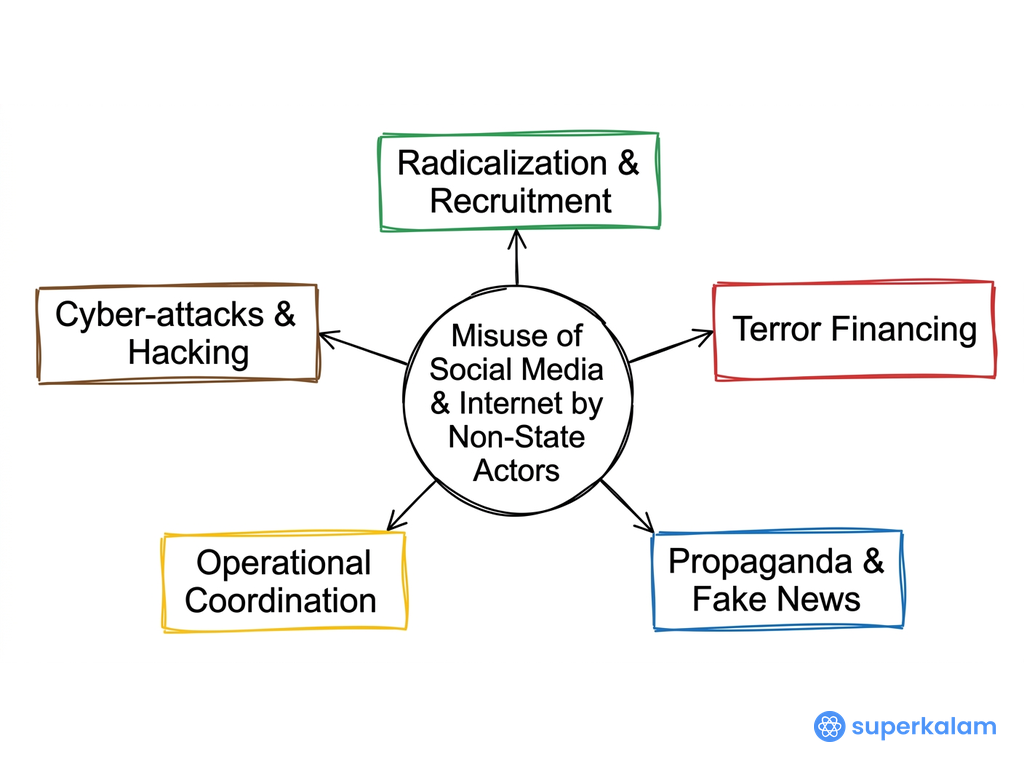
Misuse of Social Media by Non State
Recent Misuse of Internet and Social Media
Disinformation and Propaganda Campaigns
- COVID-19 misinformation: Spread of false cures and vaccine hesitancy content during 2020-2023, affecting public health responses
- Electoral manipulation: Use of deepfakes and AI-generated content during 2024 Lok Sabha elections to spread false narratives about candidates
- Communal discord: WhatsApp forwards and Facebook posts inciting violence during festivals and religious events in 2023-2024
- Anti-government propaganda: Coordinated campaigns by extremist groups using encrypted messaging apps like Signal and Telegram
- Foreign interference: Chinese and Pakistani disinformation networks targeting Indian social media users through fake accounts
Recruitment and Radicalization
- ISIS recruitment: Use of encrypted platforms for recruiting youth from Kerala, Karnataka, and other states during 2022-2024
- Naxal propaganda: Online recruitment drives in tribal areas of Chhattisgarh and Odisha through social media platforms
- Cyber terrorism: Dark web networks facilitating training materials and coordination for terrorist activities
- Lone wolf attacks: Social media-inspired violence, including attacks on religious minorities and police personnel
- Cross-border terrorism: Pakistani handlers using social media to coordinate attacks and recruit operatives in J&K
Effective Guidelines to Curb These Threats
Legal and Regulatory Framework
- IT Rules 2021 enhancement: Mandatory fact-checking units and content takedown within 24 hours for social media intermediaries
- Digital Personal Data Protection Act 2023: Implementation to prevent misuse of personal data for targeted disinformation
- Bharatiya Nyaya Sanhita provisions: Strengthening cyber crime laws with specific provisions for online terrorism and sedition
- Platform accountability: Legal liability for social media companies failing to remove harmful content within stipulated timeframes
- Content traceability: Mandatory identification of message originators on encrypted platforms during investigations
Technological Solutions
- AI-powered monitoring: Real-time detection of hate speech, terrorist content, and disinformation using machine learning algorithms
- Blockchain verification: Implementation of content authenticity verification systems to combat deepfakes and manipulated media
- Digital forensics infrastructure: Enhanced capabilities at state and national levels for cyber crime investigation
- Cyber threat intelligence: Integration of domestic and international intelligence networks for proactive threat detection
- Automated content flagging: Deployment of advanced algorithms to identify and flag suspicious content before viral spread
Multi-stakeholder Approach
- Public-private partnerships: Collaboration between government agencies and tech companies for threat intelligence sharing
- International cooperation: Bilateral agreements with countries like USA, Israel, and Singapore for cyber security expertise
- Civil society engagement: NGOs and fact-checking organizations integrated into national response framework
- Media literacy programs: Educational initiatives in schools and communities to enhance digital awareness
- Industry self-regulation: Social media platforms developing and enforcing community standards aligned with national security interests
Addressing online subversive activities requires balancing security imperatives with digital rights while strengthening both technological capabilities and international cooperation frameworks under Article 19 guidelines.
Answer Length
Model answers may exceed the word limit for better clarity and depth. Use them as a guide, but always frame your final answer within the exam’s prescribed limit.
Evaluate this PYQ now
Write your answer & evaluate in just 60 seconds




500+ students evaluated
Model Answers from
- 2016Internal Security12.5 MarksView Answer
Border management is a complex
task due to difficult terrain and hostile
relations with some countries.
Elucidate the challenges and strategies
for effective border management. - 2016Internal Security12.5 MarksView Answer
Terrorism is emerging as a competitive
industry over the last few decades.”
Analyse the above statement. - 2016Internal Security12.5 MarksView Answer
The terms ‘Hot Pursuit’ and ‘Surgical
Strikes’ are often used in connection
with armed action against terrorist
attacks. Discuss the strategic impact of
such actions.
Model Answers by Subject


Crack UPSC with your
Personal AI Mentor
An AI-powered ecosystem to learn, practice, and evaluate with discipline