Krishnadeva Raya, the king of Vijayanagar, was not only an accomplished scholar himself but was also a great patron of learning and literature. Discuss.
Krishnadeva Raya, the king of Vijayanagar, was not only an accomplished scholar himself but was also a great patron of learning and literature. Discuss.
Krishnadeva Raya (1509-1529 CE) epitomized the ideal of a scholar-king, combining personal literary excellence with magnificent royal patronage to create the golden age of South Indian culture and learning.
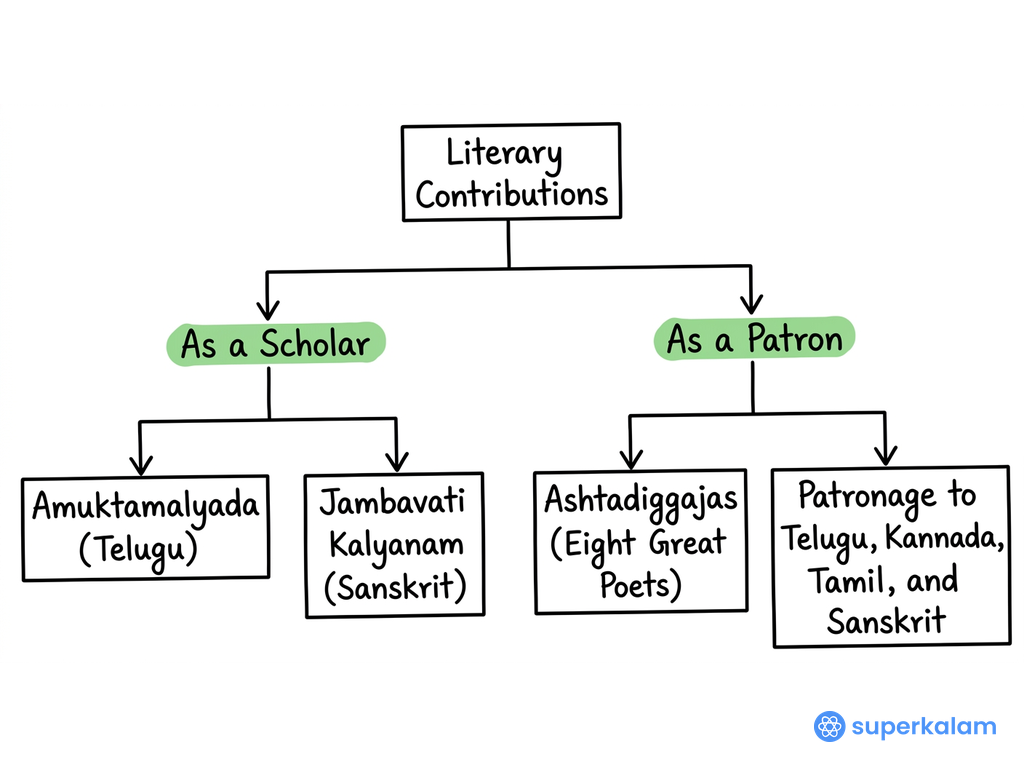
Literary Contributions of Krishnadeva Raya
Personal Scholarly Achievements
-
Multilingual Mastery: Proficient in Telugu, Sanskrit, Kannada, and Tamil, demonstrating exceptional linguistic scholarship across South Indian languages.
-
Literary Masterpieces: Authored the renowned Telugu epic "Amuktamalyada" depicting Goda Devi's devotion to Vishnu, showcasing poetic brilliance and religious devotion.
-
Sanskrit Works: Created multiple Sanskrit compositions including "Madalasa Charita", "Satyavadu Parinaya", "Rasamanjari", and "Jambavati Kalyana", establishing versatility across genres.
-
Philosophical Understanding: His works reflect deep knowledge of Vaishnavism, statecraft, and classical literature, blending spiritual wisdom with practical governance.
-
Personal Study Habits: Maintained extensive libraries and engaged in scholarly debates, setting an example for court intellectuals.
Royal Patronage of Learning
| Aspect | Contributions |
|---|---|
| Ashtadiggajas | Eight great Telugu poets including Allasani Peddana (Andhra Kavita Pitamaha) and Tenali Ramakrishna |
| Court Languages | Patronage extended to Sanskrit, Telugu, Kannada, Tamil scholars |
| Literary Forms | Supported epics, devotional poetry, historical chronicles, philosophical treatises |
| Educational Infrastructure | Established libraries, learning centers, and residential facilities for scholars |
Cultural Renaissance Impact
-
Literary Golden Age: His reign witnessed unprecedented growth in Telugu literature, with over 100 literary works produced under his patronage.
-
Cross-cultural Exchange: Facilitated translation projects between regional languages, promoting cultural unity across South India.
-
Institutional Support: Created Agrahara settlements for Brahmins and scholars, ensuring sustainable intellectual communities.
-
International Recognition: Foreign visitors like Domingo Paes documented the intellectual vibrancy of his court, attracting scholars from across India.
-
Artistic Integration: Combined literature with music, dance, and sculpture, creating holistic cultural expression in Vijayanagara.
Krishnadeva Raya's dual role as scholar and patron created a unique model of enlightened rulership, where personal intellectual pursuits enhanced royal patronage effectiveness. His legacy demonstrates how rulers can foster cultural renaissance through both example and support, establishing Vijayanagara as the beacon of South Indian civilization that continues influencing Indian cultural traditions today.
Answer Length
Model answers may exceed the word limit for better clarity and depth. Use them as a guide, but always frame your final answer within the exam’s prescribed limit.
Evaluate this PYQ now
Write your answer & evaluate in just 60 seconds




500+ students evaluated
Model Answers by Subject


Crack UPSC with your
Personal AI Mentor
An AI-powered ecosystem to learn, practice, and evaluate with discipline



