In respect of India — Sri Lanka relations, discuss how domestic factors influence foreign policy.
In respect of India — Sri Lanka relations, discuss how domestic factors influence foreign policy.
India-Sri Lanka relations demonstrate how domestic politics significantly shape foreign policy decisions. Recent developments, including Sri Lanka's 2022 economic crisis and India's $4 billion assistance package, highlight this dynamic interplay.
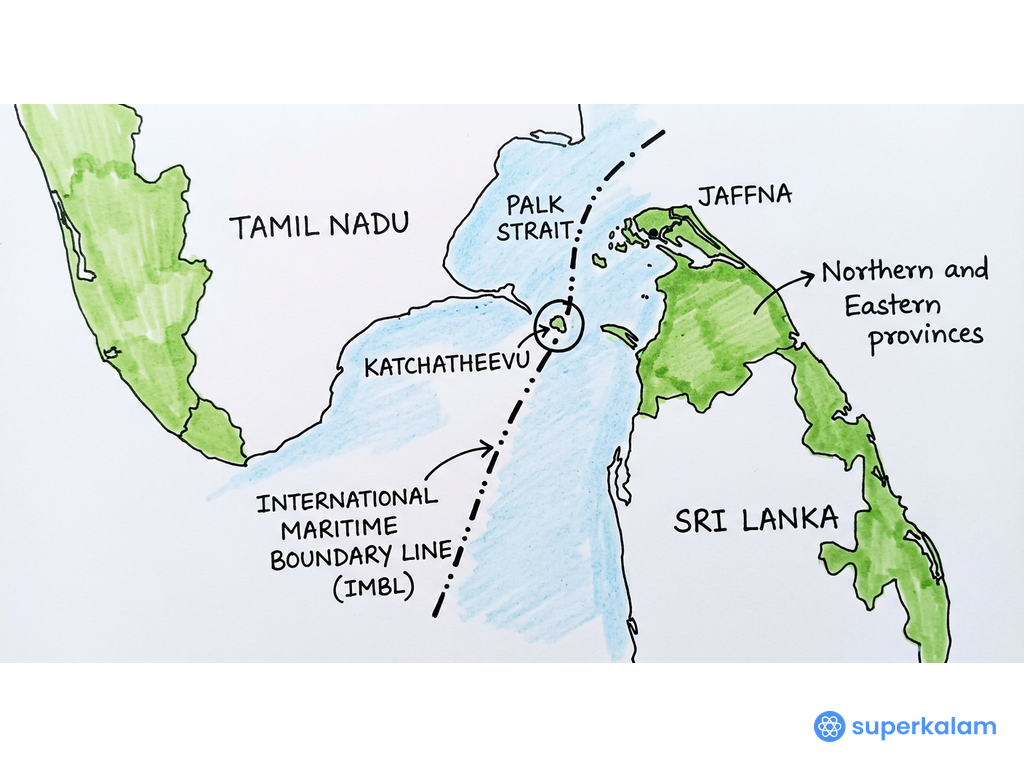
Tamil Nadu and Sri Lanka Map
Tamil Nadu's Political Influence
- Electoral Politics: Tamil Nadu parties like DMK and AIADMK consistently pressure the central government on Sri Lankan Tamil issues, directly influencing India's diplomatic stance.
- 13th Amendment Advocacy: State politicians demand implementation of constitutional provisions for Tamil provincial autonomy in Sri Lanka.
- Fishermen's Issues: Regular conflicts over fishing rights in Palk Bay create domestic pressure, forcing New Delhi to balance Tamil Nadu concerns with bilateral relations.
- Refugee Rehabilitation: Over 1 lakh Tamil refugees in Tamil Nadu camps influence India's humanitarian approach toward Sri Lanka.
- Cultural Connections: Shared Tamil heritage creates emotional bonds that political parties leverage to influence foreign policy decisions.
Economic and Strategic Domestic Factors
- Business Lobbies: Indian corporate interests in Sri Lankan infrastructure projects (like Adani Group's wind power projects) shape economic diplomacy.
- Maritime Security Concerns: Domestic security establishments worry about Chinese naval presence in Colombo and Hambantota ports, influencing India's strategic responses.
- Energy Dependencies: India's growing energy needs drive cooperation in renewable energy projects and LNG terminals in Sri Lanka.
- Trade Relationships: ISFTA and bilateral trade worth $5.5 billion (2023) create domestic constituencies supporting closer ties.
- Defense Cooperation: Indian Navy's training programs and Dornier aircraft supply reflect domestic security priorities.
Public Opinion and Social Dynamics
- Buddhist Diplomacy: India leverages shared Buddhist heritage, with 70% of Sri Lankans being Buddhist, influencing cultural exchanges and religious tourism.
- Diaspora Influence: Large Sri Lankan Tamil diaspora in India affects public opinion and political discourse.
- Media Coverage: Domestic media narratives in both countries shape public perception and government responses.
- Youth Exchanges: Educational partnerships and scholarship programs build long-term goodwill despite political tensions.
Domestic factors will continue shaping India-Sri Lanka relations, requiring careful balance between internal political pressures and strategic partnerships through initiatives like Neighbourhood First Policy.
Answer Length
Model answers may exceed the word limit for better clarity and depth. Use them as a guide, but always frame your final answer within the exam’s prescribed limit.
Evaluate this PYQ now
Write your answer & evaluate in just 60 seconds




500+ students evaluated
Model Answers from
- 2013International Relations10 MarksView Answer
The World Bank and the IMF, collectively known as the Bretton Woods Institutions, are the two inter-governmental pillars supporting the structure of the world’s economic and financial order. Superficially, the World Bank and the IMF exhibit many common characteristics, yet their role, functions, and mandate are distinctly different. Elucidate.
- 2013International Relations10 MarksView Answer
What is meant by the Gujral doctrine? Does it have any relevance today? Discuss.
- 2013International Relations10 MarksView Answer
Discuss the political developments in Maldives in the last two years. Should they be of any cause of concern to India?
- 2013International Relations10 MarksView Answer
The protests in Shahbag Square in Dhaka in Bangladesh reveal a fundamental split in society between the nationalists and Islamic forces. What is its significance for India?
- 2013International Relations10 MarksView Answer
Economic ties between India and Japan while growing in recent years are still far below their potential. Elucidate the policy constraints that are inhibiting this growth
- 2013International Relations10 MarksView Answer
What do you understand by ‘The String of Pearls’? How does it impact India? Briefly outline the steps taken by India to counter this.
Model Answers by Subject


Crack UPSC with your
Personal AI Mentor
An AI-powered ecosystem to learn, practice, and evaluate with discipline



