Strategic Autonomy vs Non-Alignment: India's Foreign Policy Evolution - UPSC Notes
Discover how India evolved from Cold War non-alignment to multi-alignment across the Quad, BRICS, and SCO to maximize its sovereign decisional space.
Aug, 2026
•12 min read
Overview
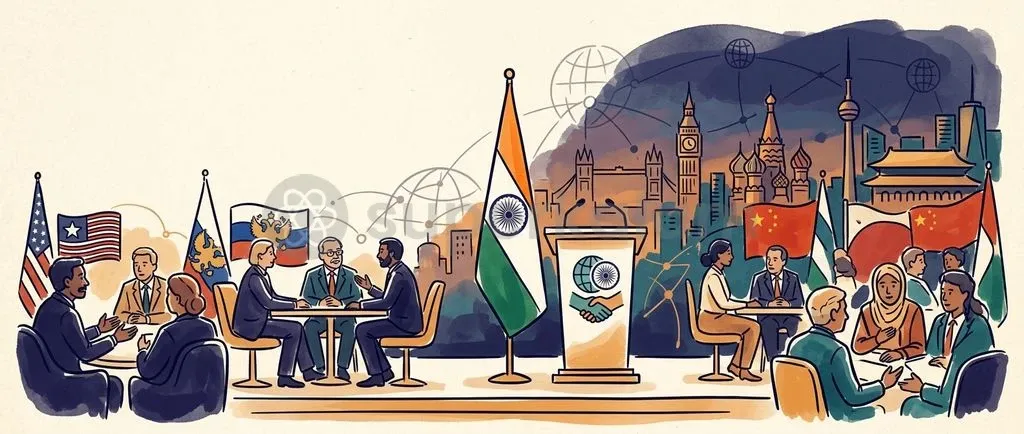
Fig: India's foreign policy transition reflects a move toward pragmatic multi-alignment in a multipolar world.
India's transition from Cold War non-alignment to contemporary strategic autonomy represents a pragmatic evolution in foreign policy. New Delhi has replaced ideological equidistance with issue-based multi-alignment across groupings like the Quad, BRICS, and the Shanghai Cooperation Organisation. This strategy aims to maximise sovereign decisional space while advancing national development goals.
According to the Ministry of External Affairs, this shift allows India to engage major powers simultaneously. It balances strategic partnerships with Western economies, maintains historical ties with Russia, and amplifies the Voice of the Global South. As External Affairs Minister S. Jaishankar articulated in 'The India Way', multi-alignment is an energetic framework that aligns diplomatic engagements directly with domestic economic statecraft and security imperatives in an increasingly multipolar global order.
Why India's Foreign Policy Shift Matters Now
The Ministry of External Affairs navigates an increasingly fractured geopolitical landscape through issue-based multi-alignment across competing global blocs. As of July 2026, intense geopolitical friction across the Indo-Pacific and Middle East tests India's capacity to maintain independent strategic choices.
India balances its participation in Western-led security arrangements alongside major Eurasian groupings. According to the Ministry of External Affairs, India maintains simultaneous active membership in the Quadrilateral Security Dialogue alongside non-Western platforms such as BRICS and the Shanghai Cooperation Organisation. This strategy seeks to preserve multipolar flexibility while securing critical energy, supply chain, and defence interests.
Tracing the Arc: From Moral Non-Alignment to Pragmatic Autonomy
India's policy moved from post-independence moral equidistance to pragmatic national interest under strategic stress.
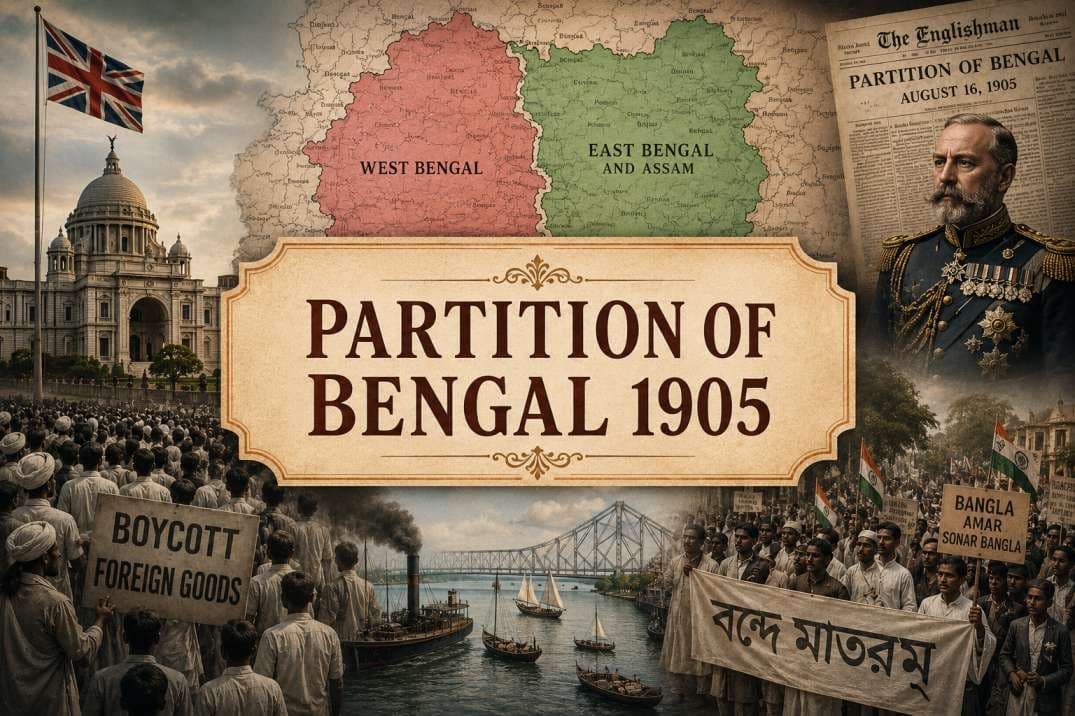
The Non-Aligned Movement officially emerged at the 1961 Belgrade Conference under Prime Minister Jawaharlal Nehru as a doctrine of ideological non-involvement in Cold War military blocs.
This foundational phase prioritised anti-colonial solidarity and moral equidistance between the United States and the Soviet Union. However, operational realities repeatedly tested strict non-alignment during critical security crises:
- 1961 Belgrade Doctrine: Established ideological non-involvement in Cold War military blocs under Prime Minister Jawaharlal Nehru.
- 1962 Sino-Indian War: In November 1962, Prime Minister Nehru sent urgent letters to US President John F. Kennedy requesting American air support, revealing the operational limits of non-involvement.
- 1971 Indo-Soviet Treaty: Signing the 1971 Indo-Soviet Treaty of Peace, Friendship and Cooperation compromised strict Cold War non-alignment to secure urgent national defence guarantees.
Analysts like C. Raja Mohan observe that while non-alignment was designed as a flexible policy, it became dogmatised into a restrictive ideology during the 1970s and 1980s.
Discuss with Superkalam
Can you recall the year and conference in which the Non-Aligned Movement officially emerged under Prime Minister Jawaharlal Nehru?
Ask NowTactical Adaptation or Paradigm Rupture? Evaluating the Transition
External Affairs Minister S. Jaishankar defined strategic autonomy as an active framework requiring multi-alignment across rival international powers.
In 'The India Way', External Affairs Minister S. Jaishankar argued that multi-alignment involves engaging America, managing China, cultivating Europe, reassuring Russia, and bringing Japan into play simultaneously. This approach appears far more energetic and participative than non-alignment's historical posture of abstention or non-involvement.
Scholars remain divided on whether this shift marks a structural rupture or a tactical evolution:
- Ideological Departure: Scholar Harsh V. Pant contends that non-alignment as a political ideology is dead, noting that Prime Minister Narendra Modi redefined strategic autonomy toward issue-based alignment and strategic convergence with the United States against China.
- Structural Continuity: Political scientist Christophe Jaffrelot argues that while modern plurilateralism reflects strategic autonomy, its emphasis on domestic economic self-reliance under Atmanirbhar Bharat shares structural roots with Nehruvian self-sufficiency.
Former Foreign Secretary Vijay Gokhale noted that being aligned on an issue-based, non-ideological basis grants India decisional and strategic autonomy. Similarly, in the 2021 policy study 'India's Path to Power', analysts including Shivshankar Menon and Shyam Saran replaced 'non-alignment' with strategic autonomy, establishing economic strength as the primary pillar of foreign policy.
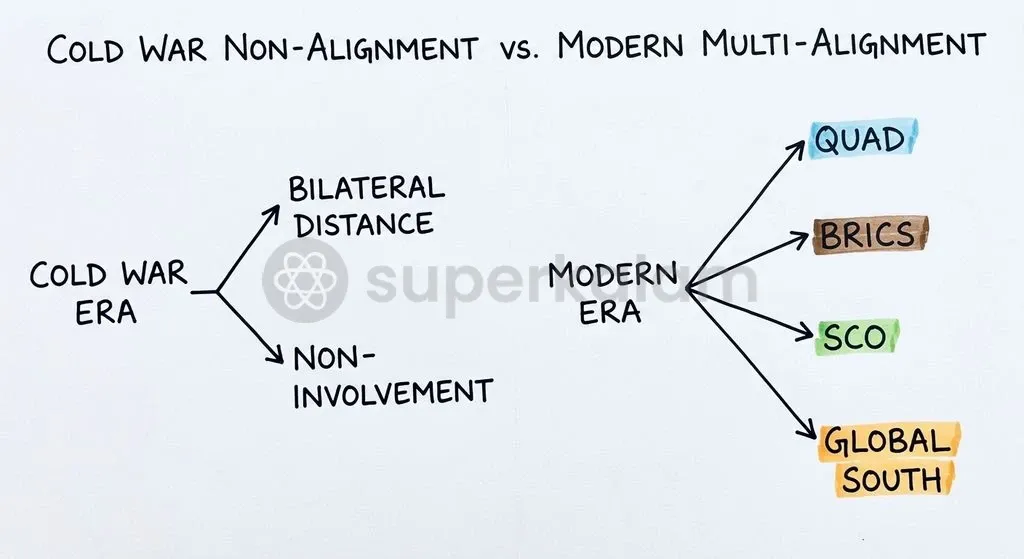
Fig: The structural evolution of Indian foreign policy from rigid non-involvement to multi-alignment.
Side-by-Side Comparison: Cold War Non-Alignment vs Multi-Alignment
The Centre for Policy Research contrasts historical non-alignment's ideological stance with contemporary multi-alignment's pragmatic focus on national interest and economic capacity.
| Dimension | Cold War Non-Alignment (1947–1990) | Contemporary Multi-Alignment (2014–Present) |
Core Objective | Ideological equidistance and avoidance of superpower military alliances | Maximising decisional autonomy through flexible, issue-based partnerships |
Diplomatic Stance | Focus on non-involvement, abstention, and moral persuasion | Energetic engagement, issue-based alignment, and plurilateral participation |
Primary Instruments | Non-Aligned Movement summits, United Nations diplomacy, moral solidarity | Minilateral groupings (Quad), economic statecraft, digital diplomacy |
Economic Anchor | State-led import substitution and external development aid | Domestic self-reliance (Atmanirbhar Bharat) integrated with global supply chains |
Major Power Dynamics | Structural distance from both US and Soviet blocs (hedged via treaties) | Simultaneous engagement with US, Russia, European Union, and Global South |
The New Instruments of Engagement: Economic Statecraft and Minilateralism
The Quadrilateral Security Dialogue is a primary minilateral vehicle for advancing maritime security and supply chain resilience without formal military alliance obligations.
Minilateral platforms allow flexible engagement tailored to specific functional needs. According to the Ministry of External Affairs, India balances Western-facing partnerships like the Quad with participation in non-Western forums including BRICS and the Shanghai Cooperation Organisation.
India also deploys economic statecraft as a core instrument of modern foreign policy:
- Digital Public Infrastructure: Remarks by External Affairs Minister S. Jaishankar at the B20 Summit highlighted how exporting Digital Public Infrastructure and building domestic manufacturing capabilities through Atmanirbhar Bharat creates real geopolitical leverage.
- Global South Bridge: According to Press Information Bureau releases, India convened three editions of the virtual Voice of Global South Summit between January 2023 and August 2024, involving over 100 developing nations.
- Multilateral Inclusion: During its G20 Presidency in 2023, India successfully championed the African Union's full membership into the G20 at the New Delhi Summit.
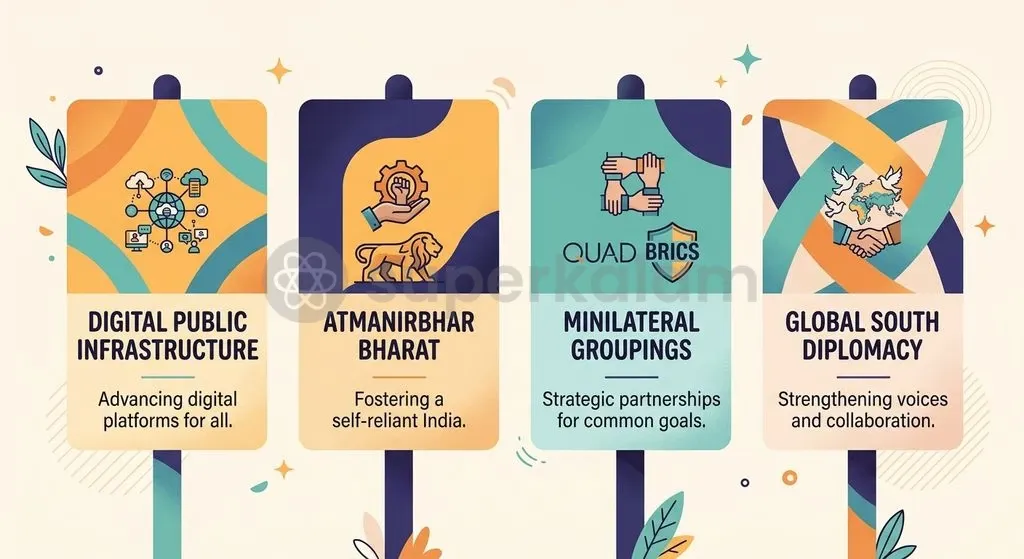
Fig: Key pillars of India's contemporary strategic autonomy, combining minilateralism with economic statecraft.
Discuss with Superkalam
Explain in your own words how issue-based multi-alignment differs from historical Cold War non-involvement.
Ask NowChallenges on the Horizon: Managing Major Power Rivalries
The Ministry of External Affairs faces escalating strategic friction while balancing traditional defence partnerships against expanding Western security alignments.
Managing major power relations involves several complex fronts:
- Russia-US Balancing: Western partners have raised concerns over India's continued acquisition of Russian defence systems and discounted crude oil following the 2022 Ukraine conflict. India asserts its strategic autonomy to prioritise domestic energy security and maintain defence readiness, even as Russia's growing economic alignment with China complicates Eurasian security balances.
- China-Indo-Pacific Stance: Strategic scholar Rajesh Rajagopalan describes India's Indo-Pacific posture as evasive balancing. This combines military cooperation in the Quad with diplomatic efforts to manage relations with China. Despite ongoing military standoffs along the Line of Actual Control in Eastern Ladakh since 2020, India maintains substantial bilateral trade and multilateral interaction with China within BRICS and the Shanghai Cooperation Organisation.
- West Asian Connectivity: In May 2024, India signed a 10-year contract to operate the Chabahar Port terminal in Iran to secure trade access to Central Asia and Afghanistan.
- Sanctions Risks: Operating Chabahar requires navigating persistent risks of secondary sanctions from Western allies while preserving critical Eurasian transit routes.
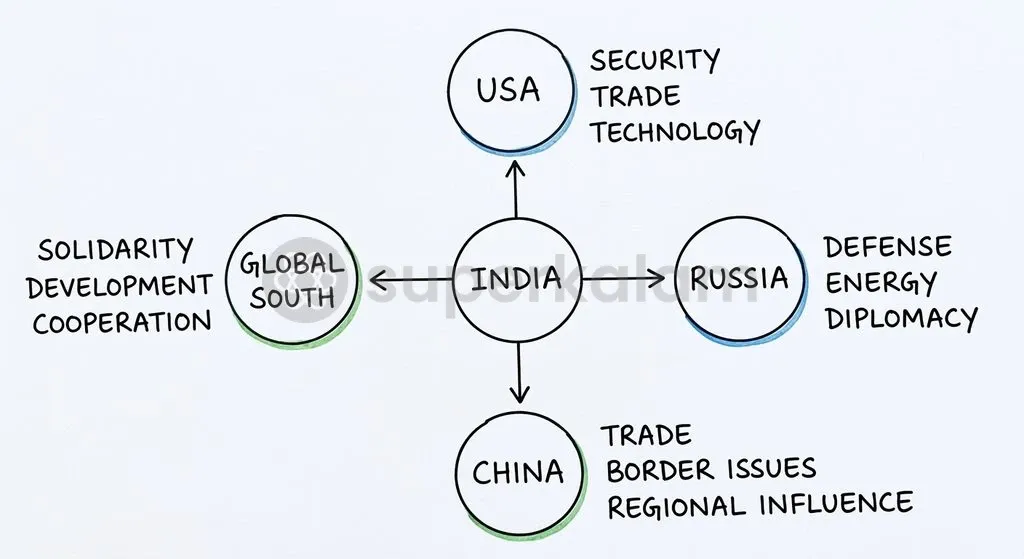
Fig: Navigating major power rivalries through issue-based partnerships.
The Way Forward for India's Global Stance
The Ministry of External Affairs must strengthen internal economic capabilities while maintaining flexible, issue-based coalitions to navigate intensifying systemic rivalry.
To sustain strategic autonomy in a fragmented international system, policy execution must focus on four structural priorities:
- Strengthening Domestic Economic Foundations: Foreign policy leverage depends on domestic industrial capability. Accelerating manufacturing under Atmanirbhar Bharat and scaling Digital Public Infrastructure exports will convert domestic market scale into diplomatic bargaining power.
- Deepening Plurilateral Engagement: Expanding participation in functional minilaterals like the Quad while remaining active in Eurasian platforms prevents structural entrapment in rival superpower blocs.
- Managing Defence Diversification: India must step up domestic defence production while balancing legacy military hardware dependencies with advanced Western technology transfers.
- Institutionalising Global South Leadership: Consolidating leadership across developing nations—building on the G20 African Union accession and the Voice of Global South Summits—provides a broad coalition to resist external coercive pressure.
Key Takeaways
- Shift from Ideology to Pragmatism: Contemporary strategic autonomy replaces Cold War non-alignment's ideological non-involvement with active, issue-based multi-alignment to safeguard national security.
- Plurilateral Balancing: India actively participates in Western-facing groupings like the Quad alongside Eurasian forums such as BRICS and the Shanghai Cooperation Organisation.
- Economic Statecraft as Leverage: Exporting Digital Public Infrastructure and building domestic manufacturing under Atmanirbhar Bharat serve as central pillars of modern geopolitical strength.
- Managing Power Friction: Sustaining strategic autonomy requires navigating West-Russia tensions over energy and defence imports while managing security standoffs with China.
- Global South Bridge Builder: Leadership in championing the African Union's G20 membership and hosting the Voice of Global South Summits positions India as a vital diplomatic bridge.
Mains Question
India's foreign policy posture in the Indo-Pacific has been characterized by strategic scholars as 'evasive balancing' amidst ongoing standoffs along the Line of Actual Control and expanding Western security ties. Critically examine the diplomatic trade-offs and structural challenges involved in maintaining strategic autonomy under these conditions. (15 marks)
Evaluate Now