Yuge Yugeen Bharat Museum: Relocation Challenges and Conservation Risks
As India readies the world's largest museum, shifting 200,000 sovereign relics tests constitutional mandates, statutory safeguards, and conservation capacity.
Nov, 2026
•11 min read
Overview
Over 200,000 national antiquities from New Delhi's National Museum will move into the upcoming Yuge Yugeen Bharat National Museum. The massive shift hinges on science-led preventive conservation to protect fragile sovereign holdings against transit and microclimatic decay.
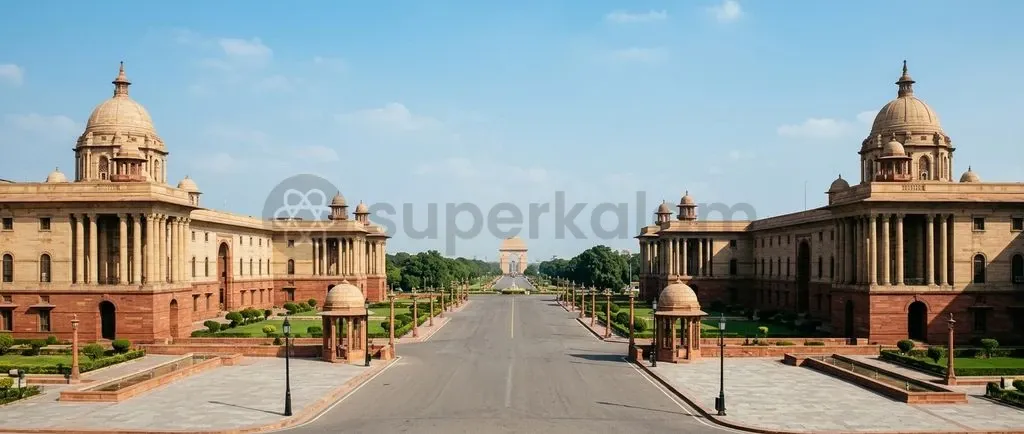
Spanning nearly 1.78 lakh square metres across the historic North and South Blocks, the ₹3,230-crore project will establish the world's largest museum complex chronicling 5,000 years of Indian history. Moving delicate artefacts introduces serious logistical vulnerabilities.
Items at risk include the c. 2500 BCE Mohenjo-daro Dancing Girl, fragile Central Asian frescoes, and ancient palm-leaf manuscripts. Statutory compliance, scientific handling, and transparent condition monitoring must precede physical relocation.
Why in the News?
The Union Cabinet approved the ₹3,230-crore development of the Yuge Yugeen Bharat National Museum within the heritage North and South Blocks in New Delhi on 11 November 2026. As of November 2026, the Cabinet Committee on Economic Affairs sanctioned this adaptive reuse project to absorb the complete repository of the National Museum, Janpath.
Under the approved schedule, the initial thematic gallery dedicated to 'Adornment' will open in the North Block in late 2027. This timeline has intensified technical scrutiny from heritage professionals, conservation scientists, and parliamentary committees regarding the safety of collections during decanting, transit, and re-installation.
The Grand Vision: Inside the Proposed Yuge Yugeen Bharat Museum
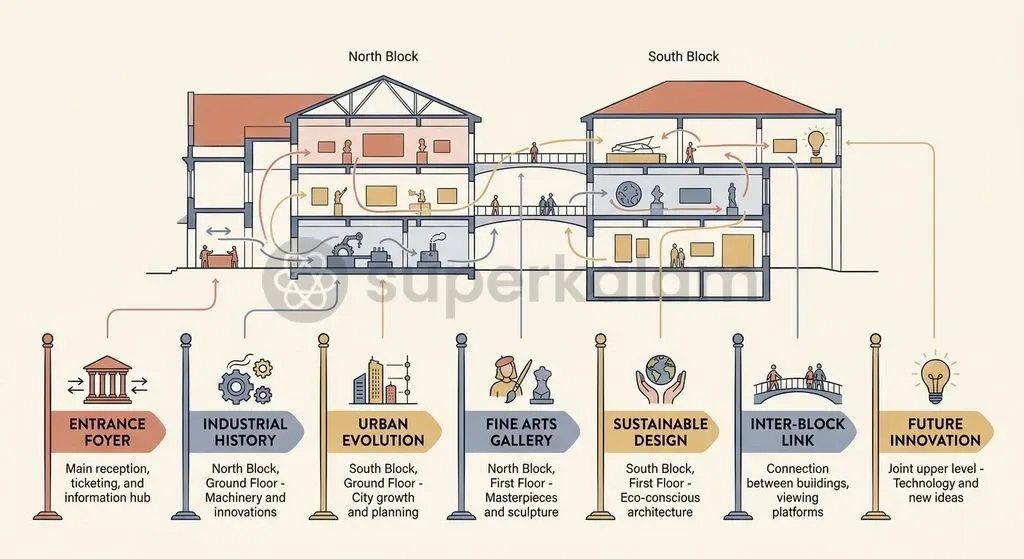
The Yuge Yugeen Bharat Museum will span up to 1.78 lakh square metres across 950 rooms, creating the world's largest museum complex chronicling 5,000 years of civilisational history. The institution plans to display India's composite heritage through digital exhibits, modern scenography, and immersive public spaces.
Four curatorial and architectural priorities define the master plan:
- Thematic Zoning: The master layout encompasses eight thematic zones covering ancient Indian philosophy, scientific contributions, maritime trade, and classical arts, according to the Ministry of Culture.
- Adaptive Heritage Reuse: The project repurposes the historic North and South Blocks on Raisina Hill, designed by British architect Herbert Baker. Built in the 1930s in the Indo-Saracenic Revival style, the structures remain subject to strict heritage conservation charters that legally bar irreversible structural alterations, masonry cutting, or excessive floor loading.
- Structural Retrofitting: The Central Public Works Department floated civil and electrical retrofitting packages exceeding ₹1,000 crore to prepare the vacant secretariat spaces before any artefact arrives.
- International Collaboration: In December 2024, the Ministry of Culture entered a bilateral agreement with France Muséums Développement to provide expert advisory services for spatial layout, museography, and preventive conservation planning.
A central curatorial challenge lies in avoiding the homogenisation of regional folk, adivasi, and subaltern traditions into a single monolith. The UNESCO Recommendation Concerning the Protection and Promotion of Museums and Collections affirms that national institutions must maintain pluralistic regional representation while displaying civilisational evolution.
Discuss with Superkalam
Recall the optimal relative humidity threshold specified to prevent the reactivation of bronze disease in copper-alloy artefacts.
Ask NowThe Conservation Gamble: Fragile Materials, Microclimates, and Transit Hazards
The National Museum repository contains over 200,000 rare antiquities whose diverse materials face degradation risks during mass packing, climate disruption, and road haulage. Moving masterworks exposes delicate chemical substrates to mechanical micro-vibrations, thermal shock, and rapid shifts in relative humidity (the ratio of moisture in the air relative to the maximum amount air holds at that temperature).
The Mohenjo-daro bronze Dancing Girl (c. 2500 BCE) presents acute conservation sensitivities during transit. Road vibrations can widen microscopic fissures. Uncontrolled relative humidity triggers dormant 'bronze disease'—a destructive chemical cycle driven by copper chlorides reacting with atmospheric moisture and oxygen.
The Sir Aurel Stein collection of Central Asian wall paintings presents equal peril. These early-medieval frescoes, composed of mineral pigments applied over fragile mud-plaster and clay supports, possess extreme friability (a tendency to crumble under light mechanical pressure). Any sudden environmental shift prompts salt efflorescence, causing paint layers to flake irreversibly from their porous plaster backings.
Sacred artefacts demand specialised ritual protocols alongside engineering safeguards. The 5th–4th century BCE Piprahwa Buddhist bone relics and inscribed steatite reliquaries call for consecrated handling paired with anti-shock enclosures to prevent impact micro-fracturing.
Organic and composite treasures display distinct chemical and environmental vulnerabilities, as detailed below:
| Artefact Collection / Material | Key Material Vulnerability | Optimal Environmental Threshold | Primary Risk During Relocation |
|---|---|---|---|
| Mohenjo-daro 'Dancing Girl' (Copper-Bronze alloy) | Cuprous chloride pockets within core patina | Below 45% Relative Humidity | Road vibration fractures; reactivation of active bronze disease |
| Central Asian Wall Paintings (Mud-plaster & mineral pigments) | Porous, brittle clay ground with loose pigment adhesion | Stable 50% Relative Humidity; 20°C–22°C | Salt efflorescence and catastrophic pigment flaking |
| Piprahwa Relics (Bone fragments & steatite) | Porous calcified bone tissue and brittle mineral stone | Hermetically sealed; inert micro-atmosphere | Mechanical shock; surface abrasion; micro-fissuring |
| Palm-leaf & Birch-bark Manuscripts (Organic cellulose) | Hygroscopic contraction (expansion/shrinkage with humidity) | 50%–55% Relative Humidity; 20°C–22°C | Cellular brittleness; splitting; ink delamination |
| Tanjore Paintings (Wood, gesso, gold leaf) | Differential thermal expansion across composite media | 50%–55% Relative Humidity; 21°C–23°C | Board warping; detachment of raised gold embossing |
| Nizam of Hyderabad Jewellery (173 gems, Jacob Diamond) | High-value target for illicit diversion and impact damage | Climate-monitored secure vault parameters | Security breaches; custodial loss during transfer |
Cellulose-based manuscripts suffer permanent damage outside tightly regulated climate bands. Fluctuating humidity causes organic sheets to curl, crack, or shed pigment. Tanjore paintings mounted on wooden boards with gesso face differential thermal expansion, where wood, glue ground, and gold leaf expand at uneven rates, loosening delicate relief details.
High-security collections impose parallel logistical hurdles. The Nizam of Hyderabad Jewellery collection, which includes the 184.5-carat Jacob Diamond, demands central paramilitary protection and secure transit vaults under strict Reserve Bank of India custodial covenants.
Discuss with Superkalam
Explain how differential thermal expansion can cause structural damage to composite art objects like Tanjore paintings.
Ask Now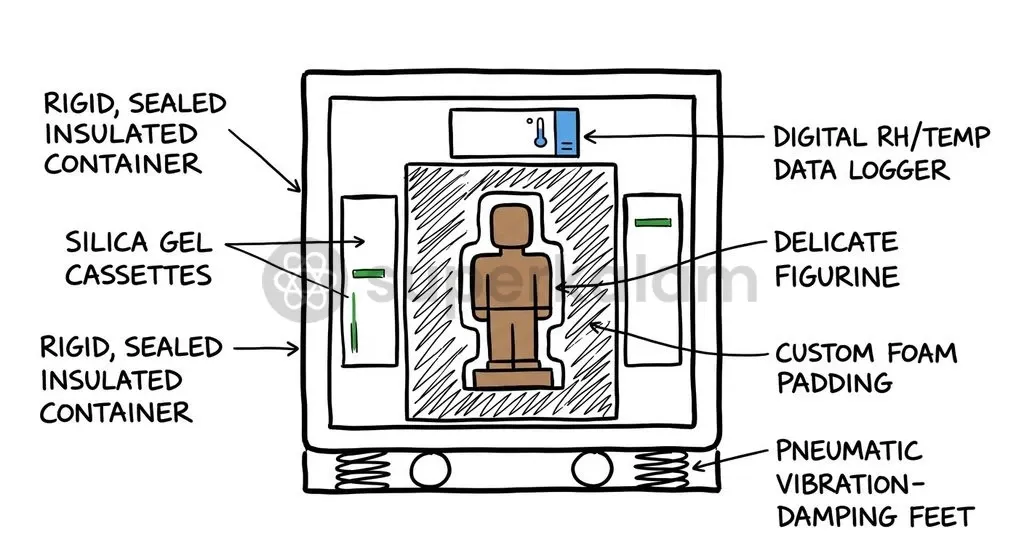
Statutory Rules and Scrutiny: The Antiquities Act and Parliamentary Warnings
The Antiquities and Art Treasures Act, 1972 establishes strict statutory controls that mandate formal regulatory permissions whenever sovereign cultural artefacts undergo physical relocation or custodial reassignment. Under Section 24 of the Act, the Director General of the Archaeological Survey of India holds the statutory authority to determine whether an object constitutes an antiquity or art treasure.
Under Section 17 of the Antiquities and Art Treasures Act, 1972 and Rule 13 of the 1973 Rules, transfer of ownership of a registered antiquity must be intimated to the Registering Officer, and the certificate of registration is conditional on communicating any change in the antiquity location. Relocating the National Museum's holdings requires an exhaustive statutory audit to track every registered specimen moving between Janpath and Raisina Hill.
Constitutional directives establish the legal duty for heritage protection:
- Article 49 (Directive Principles of State Policy): Obligates the State to protect every monument, place, or object of artistic or historic interest declared of national importance from spoliation, disfigurement, destruction, removal, or unauthorised export. While non-justiciable in court, this directive sets fundamental governance standards for public administration.
- Article 51A(f) (Fundamental Duties): Enjoins every citizen to value and preserve the rich heritage of the nation's composite culture. This provision reinforces the civic responsibility of public administrators holding sovereign collections in public trust.
Parliamentary committees have examined the state of museum conservation in India, including the Standing Committee on Transport, Tourism and Culture 2021 report on the development and conservation of museums and archaeological sites. Readiness for a mass transfer depends on conservation capacity and storage standards.
Technical staffing is a further constraint. Limited technical staff strains the institutional capacity required to unmount, document, package, and transport fragile collections safely.
Discuss with Superkalam
If you were designing a transit plan for the 5th–4th century BCE Piprahwa relics, how would you balance mechanical vibration damping with ritual protocols?
Ask NowGlobal Precedents: How Cairo and Berlin Handled Large Museum Moves
International mega-museum relocations demonstrate that decades of scientific planning, multi-spectral condition mapping, and vibration-damped transit vehicles are essential to prevent catastrophic damage to sovereign collections. When major national institutions transfer irreplaceable collections, preventive conservation takes precedence over administrative deadlines.
The Egyptian Ministry of Tourism and Antiquities undertook a multi-year phased relocation to move artefacts from the historic Tahrir Square Museum and other collections to the Grand Egyptian Museum (GEM) in Giza, whose collection is expected to reach fifty thousand artefacts on display. The Tutankhamun treasures were among the objects moved.
A major foundation of Egypt's success was its partnership with the Japan International Cooperation Agency (JICA), which provided technical cooperation to the Grand Egyptian Museum Conservation Center (GEM-CC), established in June 2010, covering conservation, restoration, packing and transportation of artefacts.
In Berlin, the Museum Island masterplan has stretched over decades, and the Pergamon Museum refurbishment is led by the Federal Office for Building and Regional Planning (BBR).
Planners sequenced conservation and building works rather than rushing them.
| Relocation Dimension | Grand Egyptian Museum (GEM), Cairo | Museum Island Masterplan, Berlin | Yuge Yugeen Bharat Project, New Delhi |
|---|---|---|---|
| Scale of Movement | Collection expected to reach 50,000 artefacts on display | Monumental holdings (Pergamon Museum, Neues Museum) | Around 1.8 million objects identified for display (PIB) |
| Preparatory Timeline | Conservation centre operating since 2010 | Phased over decades under a long-running masterplan | Target initial phase scheduled for opening in late 2027 |
| Conservation Facilities | Dedicated conservation centre (GEM-CC, est. 2010) with JICA support | Phased works under a long-running masterplan | Project includes collection storage and conservation facilities (PIB, 11 Nov 2026) |
| Transit Technology | Packing and transport methods developed with JICA support | Handled within the masterplan works | Not yet specified publicly |
| Governing Ethos | Pre-transit scientific consolidation before structural works | Phased decanting tied to meticulous structural retrofitting | Adaptive reuse of Grade-I British colonial secretariat blocks |
Ethical guidelines from the International Council of Museums (ICOM) reinforce these technical precautions. The ICOM Code of Ethics for Museums treats preventive conservation of collections as a core professional duty of museum authorities.
Discuss with Superkalam
Compare the conservation challenges of relocating porous, friable mud-plaster frescoes versus high-security mineral treasures like the Nizam jewellery.
Ask Now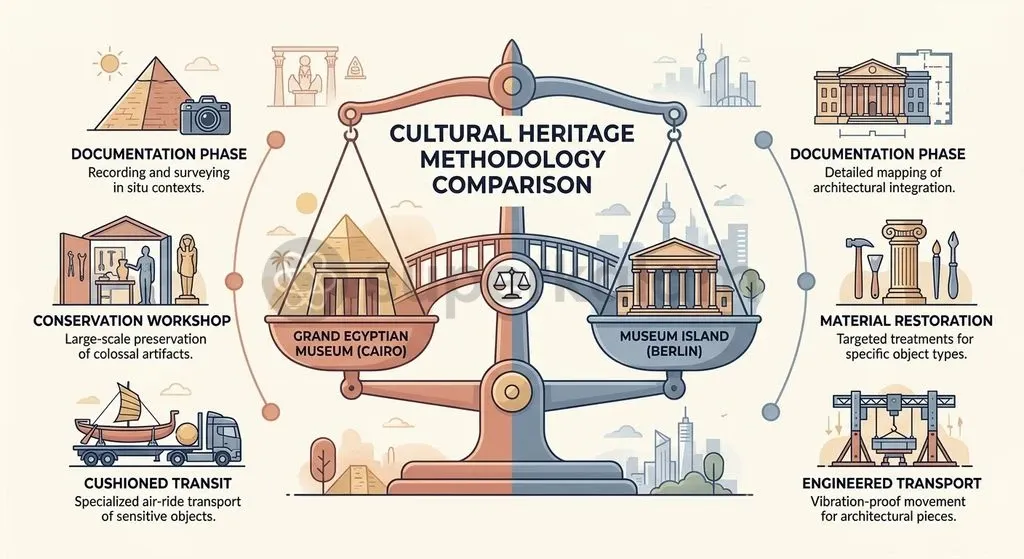
Way Forward: A Protocol-First Strategy for Preserving Sovereign Artefacts
Preserving India's tangible civilisational memory requires the Ministry of Culture to enforce an auditable, science-based decanting roadmap before moving any artefact into the renovated secretariat complexes. Relocating irreplaceable antiquities demands institutional patience, rigorous empirical documentation, and transparent scientific safeguards.
To secure national treasures during transit, authorities must implement several critical policy interventions:
- Auditable Baseline Condition Reports: Implement high-resolution multispectral photogrammetry (capturing light spectra beyond human vision to detect subsurface fractures) for every antiquity before unmounting, establishing legally auditable baselines per ICCROM-UNESCO technical standards.
- Dedicated Transit Infrastructure: Procure specialised climate-sealed trucks equipped with pneumatic air suspensions, secondary battery backups for climate controls, and three-axis accelerometers to record physical shocks in real time.
- Emergency Cadre Recruitment: Address shortfalls in technical staff across conservation cadres by engaging qualified conservators on fast-track assignments, ensuring every fragile item receives professional conservation care.
- Adaptive Environmental Stabilisation: Complete retrofitting across Herbert Baker's heritage blocks before moving collections, ensuring new heating, ventilation, and air-conditioning systems maintain steady 50% relative humidity and 20°C–22°C temperatures under continuous monitoring.
- Decentralised Exhibition Strategies: Distribute select reserve collections among regional and state museums through long-term custodial loans, reducing central storage density while enriching local access across India's federal structure.
Public institutions balance civic pride with custodial integrity. Grounding the Yuge Yugeen Bharat initiative in transparent scientific methods ensures India honours both the spirit of Article 49 and the material legacy of its ancient past.
Discuss with Superkalam
Given the staffing constraints in conservation cadres, evaluate whether meeting an expedited opening timeline compromises statutory and conservation safeguards.
Ask NowKey Takeaways
- The Union Cabinet approved ₹3,230 crore on 11 November 2026 to establish the Yuge Yugeen Bharat Museum across 950 rooms in North and South Blocks.
- Over 200,000 antiquities from the National Museum will transfer to the new facility, beginning with the 'Adornment' gallery scheduled for late 2027.
- Fragile antiquities face extreme environmental and physical hazards during transit, including bronze disease in Harappan bronzes, salt efflorescence on Central Asian frescoes, and hygroscopic damage to ancient manuscripts.
- The Antiquities and Art Treasures Act, 1972 and its 1973 Rules require registered antiquities to be reported to the Registering Officer on transfer of ownership or change of location.
- Parliamentary committee reviews of Indian museums have underlined the importance of conservation capacity and storage standards.
- International precedents, including Cairo's Grand Egyptian Museum and Berlin's Museum Island, emphasise multi-year scientific preparation, and dedicated conservation centres before moving collections.
Mains Question
"Mega-relocations of cultural collections demand scientific conservation capacity, adequate storage and trained technical staff." In light of this observation, critically examine the institutional preparedness and statutory challenges in executing mega-relocations of sovereign cultural antiquities. (15 Marks)
Evaluate NowMains Question
The adaptive reuse of historic administrative edifices into modern cultural spaces necessitates balancing architectural preservation with stringent preventive conservation requirements. Elucidate with reference to the proposed transformation of the North and South Blocks. (10 Marks)
Evaluate NowPractice MCQs
QUESTION 1
Regarding the statutory and constitutional provisions governing cultural antiquities in India, consider the following statements:
- Under Section 24 of the Antiquities and Art Treasures Act, 1972, the Director General of the Archaeological Survey of India has the statutory power to decide if an object constitutes an antiquity or art treasure.
- The Antiquities and Art Treasures Rules, 1973 mandate notifying the Registering Officer whenever registered antiquities undergo a change in location or transfer of ownership.
- Article 49 of the Constitution establishes an enforceable Fundamental Right guaranteeing civic access to national monuments and antiquities.
Which of the statements given above are correct?
QUESTION 2
Consider the following statements regarding the physical conservation vulnerabilities of historical artefacts:
- The reactivation of bronze disease in copper-alloy objects is primarily accelerated by uncontrolled relative humidity reacting with cuprous chloride.
- Central Asian wall paintings with mud-plaster supports are prone to salt efflorescence and pigment flaking under fluctuating environmental conditions.
- Tanjore paintings are particularly susceptible to differential thermal expansion between their wooden boards, gesso ground, and gold foil.
Which of the statements given above is/are correct?
QUESTION 3
With reference to the proposed Yuge Yugeen Bharat National Museum project, consider the following statements:
- The project entails an adaptive reuse of the historic North and South Blocks, which were designed in the Indo-Saracenic Revival style.
- The master plan envisions eight thematic zones covering subjects such as ancient Indian philosophy, scientific contributions, and classical arts.
- France Muséums Développement was engaged to provide advisory services on spatial layout, museography, and preventive conservation.
Which of the statements given above are correct?
QUESTION 4
With reference to the statutory framework governing the movement of antiquities in India, consider the following statements:
- The Antiquities and Art Treasures Act, 1972 requires transfer of ownership of a registered antiquity to be intimated to the registering officer.
- Under Section 24 of the Act, a question whether an object is an antiquity is referred to the Director General of the Archaeological Survey of India.
- Complete absence of statutory mechanisms under the Antiquities and Art Treasures Act, 1972 to regulate physical transfers.
Select the correct answer using the code given below:
QUESTION 5
In the context of the conservation of organic antiquities like palm-leaf and birch-bark manuscripts during transit, what is the primary physical risk highlighted in the text?