NTPC Exam Cancellation: Constitutional Accountability in PSU Recruitment
When public enterprises abruptly cancel recruitment drives, opaque vendor oversight clashes directly with constitutional guarantees under Article 16.
Nov, 2026
•8 min read

Overview
NTPC Limited's sudden cancellation of its November 2026 Assistant Officer recruitment examination exposes a serious governance strain across India's Central Public Sector Enterprises. Fragile vendor outsourcing and opaque administrative actions threaten the constitutional guarantee of equal access to public employment under Article 16. State-owned corporations operate commercially, yet Supreme Court jurisprudence firmly treats them as the State under Article 12.
Arbitrary cancellations without reasoned explanations inflict heavy financial and career damage on candidates. Rebuilding trust requires enforcing statutory safeguards under the Public Examinations (Prevention of Unfair Means) Act, 2024 alongside strict vigilance norms.
Why in the News: The NTPC Exam Cancellation
NTPC Limited cancelled its recruitment drive for 15 Assistant Officer posts on 21 November 2026. The decision came right after a national screening test across five examination centres. Management confirmed application fee refunds, but offered no commitment or timeline for a re-examination.
As of November 2026, the lack of an official explanation has triggered intense distress among registered candidates. On 24 November 2026, affected applicants submitted a formal representation to Union Power Minister Manohar Lal Khattar, demanding an independent inquiry and procedural transparency.
The dispute centres on two immediate candidate grievances:
- Abrupt cancellation without recourse: The enterprise scrapped the examination immediately after completion, offering no date for a fresh test.
- Administrative silence: Officials issued fee refunds while withholding the factual grounds for voiding the exercise.
This cancellation is not an isolated administrative misstep. It exposes a durable structural vulnerability in public sector undertaking (PSU) recruitment frameworks, where opaque decision-making erodes institutional accountability and public trust.
Discuss with Superkalam
Which landmark 1979 Supreme Court ruling established the 'instrumentality of the State' doctrine governing public corporations?
Ask NowBackground: How PSUs Hire and Why These Jobs Matter
Central Public Sector Enterprises conduct recruitment under Department of Public Enterprises rules to ensure open, merit-based hiring. Department of Public Enterprises guidelines mandate that enterprise recruitments must adhere to non-discriminatory procedures, published eligibility criteria, and structured selection matrices.
Two regulatory pillars govern this framework:
- Preventive vigilance protocols: Central Vigilance Commission directives require public enterprises to enforce preventive vigilance protocols during personnel induction.
- High-value vendor contracts: Enterprises must execute Integrity Pacts with all major testing vendors and maintain oversight through designated Chief Vigilance Officers.
Public sector jobs remain uniquely valued in India. Beyond stable employment, they offer statutory pay scales, guaranteed social security, and institutional prestige. When an enterprise abruptly scraps a recruitment exercise, the disruption reverberates across the entire public employment ecosystem.
Are PSUs Held to Constitutional Hiring Standards Under Article 12?
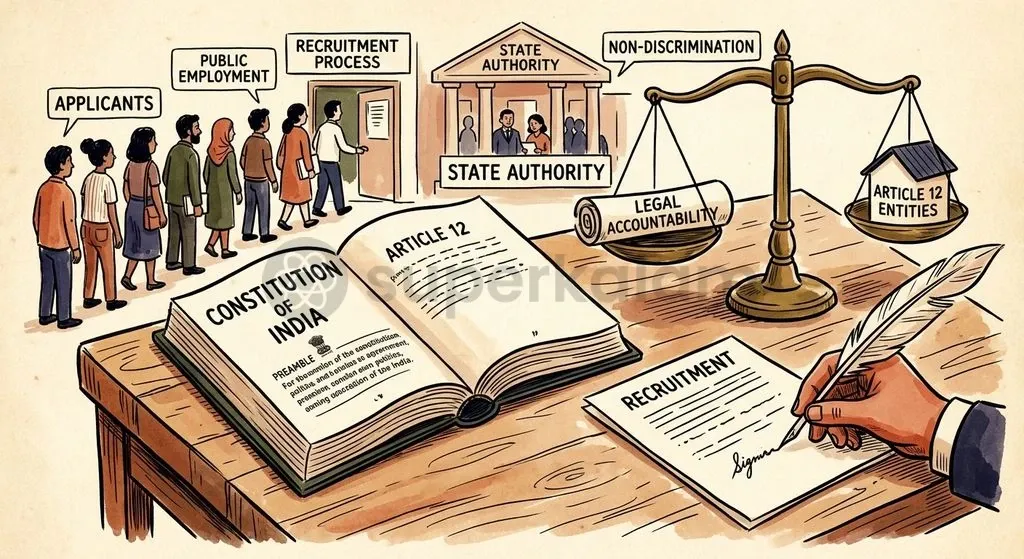
Public sector undertakings fall strictly within the definition of the 'State' under Article 12 of the Constitution, making their recruitment processes judicially enforceable under fundamental rights provisions. The Supreme Court laid the groundwork for this doctrine in Sukhdev Singh v. Bhagatram (1975), ruling that statutory corporations and public sector enterprises constitute 'other authorities' under Article 12.
Judicial scrutiny expanded further in Ramana Dayaram Shetty v. International Airport Authority of India (1979). The Supreme Court formulated the instrumentality of the State doctrine, holding that public corporations must observe the same constitutional discipline under Article 14 as administrative departments.
In Ajay Hasia v. Khalid Mujib Sehravardi (1981), the apex court crystallised a six-point test to determine whether a corporation is an agency of the State. Deep and pervasive state control, extensive financial assistance, and the monopoly status of a corporation bring its administrative conduct squarely under the discipline of Part III.
| Constitutional Dimension | Central Public Sector Undertakings (PSUs) | Private Sector Corporations |
|---|---|---|
| Constitutional Status | Governed as 'State' under Article 12 | Governed purely by private corporate and labour statutes |
| Fundamental Rights Scrutiny | Bound by Article 14 equality and Article 16 opportunities | Exempt from Part III writ jurisdiction; driven by contractual terms |
| Notification Norms | Mandatory nationwide advertisement under the K.B.N. Visweshwara Rao ruling | Discretionary public or private sourcing channels |
| Vigilance & Oversight | Bound by Central Vigilance Commission oversight and Integrity Pacts | Internal compliance committees and company board charters |
| Cancellation Standards | Subject to judicial review requiring reasoned administrative orders | Governed by private corporate prerogative without public duty |
Under Article 16(1), every citizen enjoys an enforceable guarantee of equality of opportunity in appointments to any office under the State. In Excise Superintendent v. K.B.N. Visweshwara Rao (1996), the Supreme Court ruled that public vacancies cannot be filled solely through employment exchanges; posts must be published widely across national circulation to satisfy constitutional standards.
Discuss with Superkalam
Explain how relying strictly on lowest-cost (L1) commercial bidding can degrade cybersecurity standards during large-scale computer-based tests.
Ask NowWhere the System Breaks Down: Vendor Outsourcing and Testing Gaps
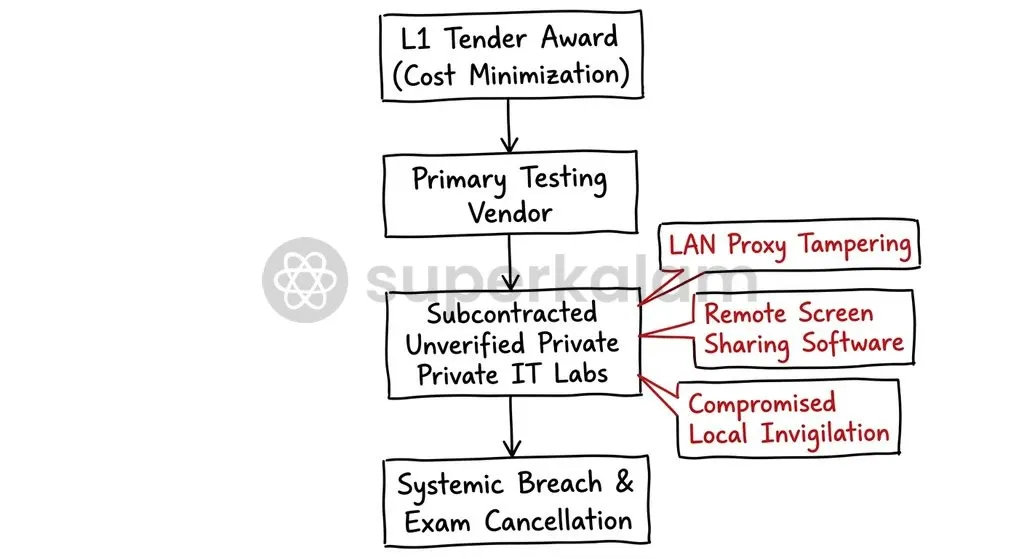
Computer-Based Tests conducted by public undertakings frequently encounter severe systemic vulnerabilities due to commercial lowest-bidder procurement rules. Parliamentary Standing Committee on Education Report No. 382 flagged examination centres sub-contracted to unaccredited private computer institutes as a weak link in examination security.
Technical vulnerabilities compromise test integrity in several ways:
- Network proxy interference: Documented examination-fraud investigations show that technical vulnerabilities in test delivery involve Local Area Network proxy interference, hardware keystroke manipulation, and remote desktop mirroring via applications like AnyDesk or UltraViewer operating through compromised firewalls.
- Low-cost vendor selection: Relying on unvetted subcontractors compromises server perimeters during national exams.
- Deficient cybersecurity auditing: Procuring entities frequently skip physical server isolation checks before launch.
Procurement norms under the General Financial Rules (GFR) 2017 and Central Vigilance Commission guidelines urge public procuring entities to shift from L1 pricing to Quality-and-Cost-Based Selection (QCBS). Expert reform proposals call for independent cybersecurity audits of testing agencies to ensure physical server isolation and operational resilience.
The Human Cost: Youth Trust, Delays, and Economic Setbacks
Job applicants face severe socio-economic distress and uncompensated inter-state travel expenditure whenever major public corporations summarily scrap recruitment drives without notice. Candidates frequently spend substantial personal savings travelling to designated urban centres across state borders, surrendering daily wages and incurring lodging debts.
The real fallout hits candidates on three fronts:
- Direct economic loss: Aspirants absorb travel and lodging expenses without any reimbursement mechanism.
- Prolonged career hiatus: Extended recruitment cycles leave candidates stranded between study breaks and shrinking private hiring opportunities, accelerating widespread disillusionment.
- Enterprise capacity shortages: Chronic recruitment delays leave core operational positions unstaffed, undermining overall organisational productivity.
Discuss with Superkalam
Evaluate the dilemma faced by public authorities when an examination is compromised: is a blanket cancellation more ethical than attempting to isolate tainted candidates?
Ask NowEthical Dilemmas: Meritocracy, Accountability, and Procedural Fairness
Administrative decisions that cancel competitive tests without reasoned explanations violate the core tenets of natural justice. In Mohinder Singh Gill v. Chief Election Commissioner (1978), the Supreme Court established that statutory authorities cannot justify adverse public actions through belated explanations, affirming that principles of natural justice apply to all administrative determinations.
This breakdown manifests in two primary ethical conflicts:
- Institutional opacity: Public authorities are trustees of the public interest. Deploying opaque executive decisions without disclosing whether integrity was breached compromises institutional legitimacy.
- The innocent candidate's dilemma: While compromised exams cannot stand, punishing honest test-takers through blanket cancellations without quick re-examinations destroys faith in merit-based selection.
Reforming PSU Recruitment: Independent Audits to Anti-Cheating Laws
The Public Examinations (Prevention of Unfair Means) Act, 2024 establishes stringent statutory deterrents to safeguard public sector recruitment from organised crime and technical tampering. Enforced with effect from 21 June 2024, the statute targets paper leaks, systemic fraud, and technical collusion across national screening assessments.
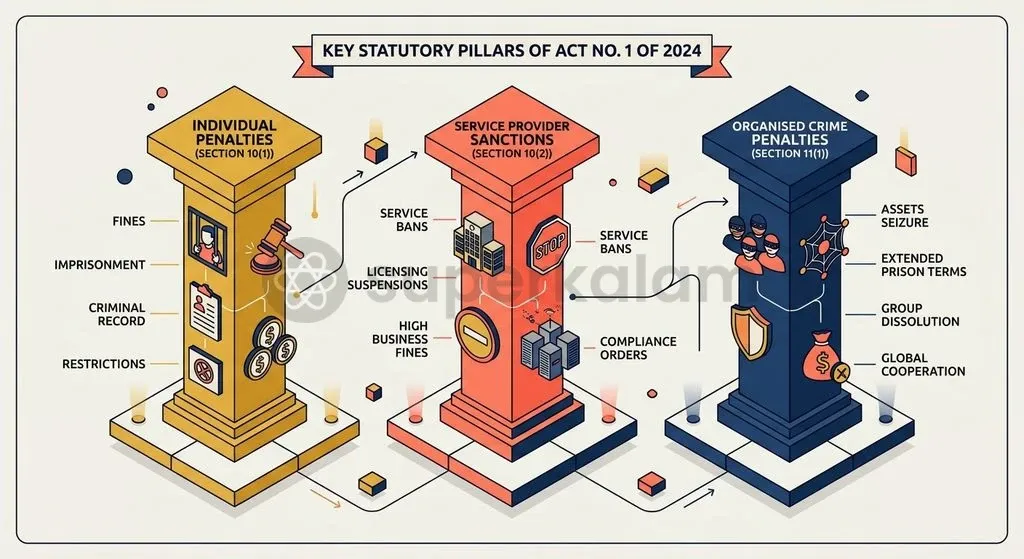
Section 3 of the Act criminalises 15 designated activities, including unauthorised access to question banks, computer network manipulation, candidate impersonation, and falsifying examination records. Section 10(1) prescribes imprisonment between three and five years alongside fines up to ₹10 lakh for individual offenders.
Commercial service providers face decisive financial and operational sanctions under the 2024 framework:
- Section 10(2) empowers authorities to impose fines up to ₹1 crore on negligent or complicit service providers, recover examination expenses, and impose a four-year statutory debarment from public testing operations.
- Section 11(1) targets organised examination cartels, mandating prison terms of five to ten years and minimum monetary penalties of ₹1 crore.
- Section 12 classifies all statutory offences as cognizable and non-bailable, preventing compromised entities from securing immediate bail or compounding offences.
Structural recommendations proposed by the High-Level Committee of Experts chaired by Dr. K. Radhakrishnan provide an actionable blueprint for long-term reform. The panel's October 2024 report submitted 101 systemic recommendations urging the phasing out of unaccredited private examination centres in favour of dedicated government-managed testing hubs.
Supreme Court proceedings in August 2026 highlighted the urgency of these structural safeguards, directing the Union Government to file a formal compliance affidavit detailing steps taken to implement the Radhakrishnan panel and Nandan Nilekani task force proposals. Key technical safeguards outlined by the Radhakrishnan Committee include:
- Deploying multi-stage Aadhaar-linked biometric verification to eliminate impersonation.
- Implementing Computer-assisted Secure Paper Testing (CPPT) protocols featuring end-to-end encrypted distribution.
- Establishing dedicated cybersecurity and vigilance vertical divisions within test-conducting enterprises.
Discuss with Superkalam
Propose three structural procurement safeguards that a public enterprise can implement to prevent unauthorized subcontracting of testing venues.
Ask NowKey Takeaways
- NTPC Limited cancelled its November 2026 recruitment for 15 Assistant Officer vacancies, refunding application fees without scheduling a firm re-examination date.
- Public sector undertakings qualify as the 'State' under Article 12 pursuant to the Supreme Court's rulings in Sukhdev Singh, R.D. Shetty, and Ajay Hasia, making recruitment subject to Article 14 and Article 16.
- The Public Examinations (Prevention of Unfair Means) Act, 2024 provides rigorous statutory penalties, including fines up to ₹1 crore and four-year blacklisting for errant examination service providers.
- Department of Public Enterprises policies and Central Vigilance Commission guidelines require structured, transparent recruitment matrices and mandatory Integrity Pacts.
- Systemic examination resilience demands transitioning from lowest-cost L1 vendor bidding to Quality-and-Cost-Based Selection coupled with the Radhakrishnan Committee's government-managed testing hub model.
Mains Question
'Public sector undertakings, being instrumentalities of the State under Article 12, are bound by constitutional discipline and cannot exercise unfettered commercial prerogative in recruitment.' In light of Supreme Court jurisprudence from R.D. Shetty to Mohinder Singh Gill, examine the procedural and constitutional safeguards mandated when public examinations are cancelled. (15 Marks)
Evaluate NowMains Question
The Parliamentary Standing Committee on Education Report No. 382 identified sub-contracting of examination venues to unaccredited private centres as a major weak link in examination security in public recruitment. Critically analyse the systemic vulnerabilities introduced by vendor outsourcing and evaluate Quality-and-Cost-Based Selection (QCBS) as a corrective mechanism. (10 Marks)
Evaluate NowPractice MCQs
QUESTION 1
With reference to the constitutional status of Central Public Sector Enterprises (CPSEs) under Article 12 of the Constitution of India, consider the following statements:
- In Sukhdev Singh v. Bhagatram (1975), the Supreme Court ruled that statutory corporations and public sector enterprises fall within the purview of 'other authorities'.
- The 'instrumentality of the State' doctrine, requiring public corporations to adhere to Article 14, was formulated in the Ramana Dayaram Shetty case.
- The six-point test laid down in Ajay Hasia v. Khalid Mujib Sehravardi considers factors such as deep and pervasive state control and monopoly status to determine if a corporation is an agency of the State. Which of the statements given above are correct?
QUESTION 2
Regarding recruitment norms and procurement safeguards in Indian public sector enterprises, consider the following statements:
- The Supreme Court held in Excise Superintendent v. K.B.N. Visweshwara Rao (1996) that public vacancies must not be filled solely through employment exchanges and require wide national circulation.
- General Financial Rules (GFR) 2017 and Central Vigilance Commission guidelines advise moving from Lowest Cost (L1) selection to Quality-and-Cost-Based Selection (QCBS) for complex services.
- Expert committees have recommended independent cybersecurity auditing of testing agencies to verify server isolation. Which of the statements given above is/are correct?
QUESTION 3
Consider the following statements regarding the legal and administrative principles governing exam cancellations in the public sector:
- The Supreme Court in Mohinder Singh Gill v. Chief Election Commissioner (1978) established that statutory authorities cannot justify adverse administrative decisions through belated explanations.
- Central Public Sector Undertakings are exempt from writ jurisdiction under Part III of the Constitution when operating in purely commercial capacities.
- Central Vigilance Commission directives mandate the execution of Integrity Pacts with major testing vendors during recruitment. Which of the statements given above is/are correct?
QUESTION 4
The Parliamentary Standing Committee on Education Report No. 382 highlighted which of the following primary structural vulnerabilities in Computer-Based Tests (CBTs) conducted for public recruitments?
QUESTION 5
Consider the following technical vulnerabilities identified in computer-based testing per documented examination-fraud investigations:
- Local Area Network (LAN) proxy interference
- Hardware keystroke manipulation
- Remote desktop mirroring via applications operating through compromised firewalls Which of the above mechanisms have been cited as compromising testing perimeters?