WTO Plurilateral Agreements: India's IFD Stance Explained
India's opposition to adding the IFD agreement to the WTO framework tests how plurilateral deals fit a consensus-based multilateral system.
Sep, 2026
•9 min read
Context
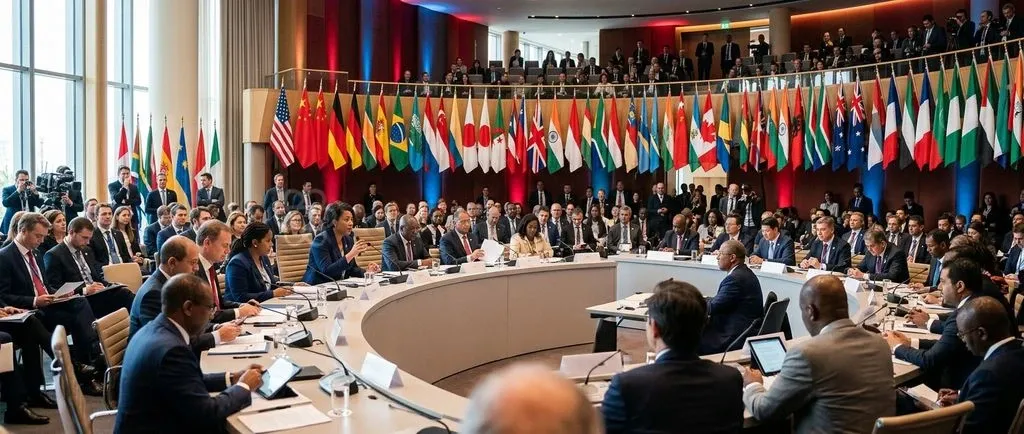
The World Trade Organization faces a deep structural rift. Developed nations champion plurilateral Joint Statement Initiatives to bypass negotiating deadlocks. In contrast, India insists that multilateral consensus remains vital to safeguard developing countries' policy space and treaty rights under the Marrakesh Agreement.
As emerging economies navigate this institutional fragmentation, the BRICS New Delhi Declaration highlighted legitimate legal pathways for open plurilateral initiatives without eroding the multilateral trading system. India's stance seeks to preserve foundational Special and Differential Treatment provisions while tackling institutional paralysis in the WTO Appellate Body.
Why in the News: The BRICS Declaration and WTO Reform Debates
The BRICS New Delhi Declaration placed multilateral trade reforms at the top of the global agenda. Member nations emphasised creating lawful pathways for plurilateral initiatives within the World Trade Organization. As of September 2026, member nations reaffirmed their commitment to an open, transparent, and rules-based multilateral trading system.
This declaration brought fresh focus to three pressing structural flashpoints:
- Multilateral Mandate vs Informal Tracks: Negotiating deadlocks at recent WTO Ministerial Conferences, including MC13 in Abu Dhabi, have accelerated the shift toward plurilateral coalitions. Developing nations worry that informal tracks dilute the core developmental agenda.
- Dispute Settlement Paralysis: Institutional gridlock has weakened trade enforcement across the membership.
- Two-Tier Appellate Restoration: BRICS nations jointly advocate for the prompt appointment of Appellate Body members and the immediate restoration of an accessible, two-tier dispute settlement mechanism.
Discuss with Superkalam
Recall the two active plurilateral trade agreements currently listed in Annex 4 of the Marrakesh Agreement.
Ask NowWhat Are Plurilateral Agreements and How Do They Differ from Multilateral Deals?
Multilateral agreements under the Marrakesh Agreement bind all 166 WTO members as a Single Undertaking. In contrast, plurilateral agreements bind only signatory members upon unanimous consensus of the entire membership.
Under Article IX:1 of the Marrakesh Agreement Establishing the WTO, decisions proceed strictly by consensus. This means no member present formally objects to a proposed decision.
Plurilateral agreements follow a distinct legal path. Under Article X:9 of the Marrakesh Agreement, an agreement is added to Annex 4 only when the Ministerial Conference decides exclusively by consensus.
Annex 4 of the Marrakesh Agreement currently contains only two active Plurilateral Trade Agreements:
- Agreement on Government Procurement (GPA): Sets rules for open, transparent government procurement markets among participating members.
- Agreement on Trade in Civil Aircraft: Eliminates import duties on civil aircraft and specified components among signatories.
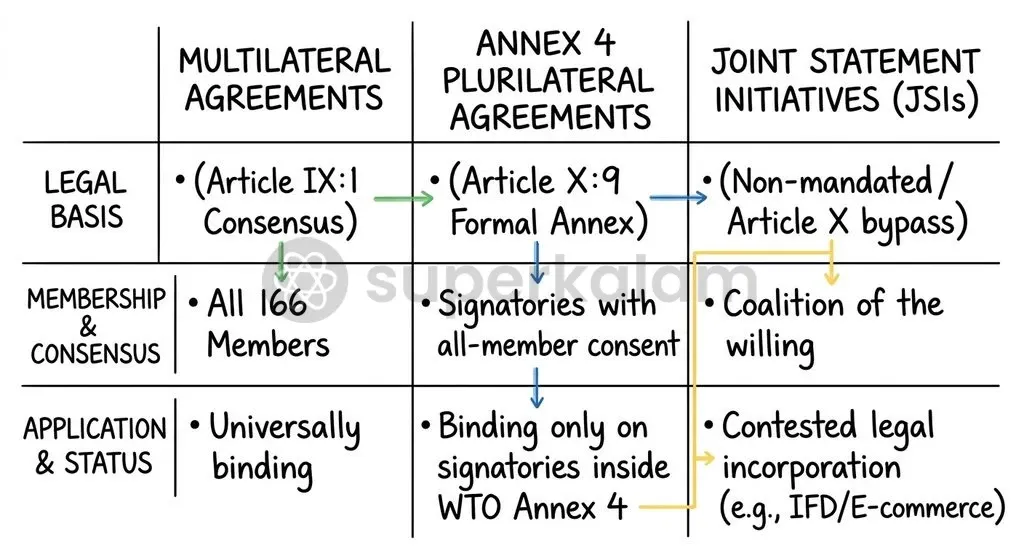
Joint Statement Initiatives (JSIs) differ from formal Annex 4 agreements. They represent open coalitions of members negotiating rules outside formal multilateral mandates. Initiated at the 11th Ministerial Conference (MC11) in Buenos Aires in December 2017, JSIs cover subjects such as e-commerce, investment facilitation, and services domestic regulation.
Comparing Multilateral and Plurilateral Approaches at the WTO
Trade agreements at the World Trade Organization diverge fundamentally across legal scope, consensus rules, and systemic impact.
| Feature / Dimension | Multilateral Agreements | Annex 4 Plurilateral Agreements | Joint Statement Initiatives (JSIs) | Regional Free Trade Agreements (FTAs) |
|---|---|---|---|---|
| Legal Basis | Article II:2 of Marrakesh Agreement | Article II:3 and Article X:9 of Marrakesh Agreement | Contested; negotiated outside formal multilateral negotiating mandates | GATT Article XXIV and GATS Article V exceptions |
| Membership Scope | All 166 WTO Members | Only signatory members | Participating coalitions of members | Bilateral or regional signatories |
| Binding Nature | Single Undertaking (binds all members) | Binds only signatories | Intended to bind participants | Binds treaty partners only |
| Consensus Threshold | General consensus under Article IX:1 | Unanimous consensus required for Annex 4 entry | Negotiated without full multilateral consensus | Negotiated outside WTO framework |
| Treatment of Non-Parties | Standard MFN treatment applies universally | Benefits generally restricted to signatories | Can be applied on an MFN basis or conditionally | Preferential access restricted to FTA parties |
Certain plurilateral initiatives have sought integration without Annex 4 consensus through schedule modifications. For example, the Reference Paper on Services Domestic Regulation (SDR), concluded in December 2021 by 67 members, was incorporated via Most-Favoured-Nation (MFN) additional commitments under GATS Article XVIII rather than via Annex 4.
Discuss with Superkalam
Explain how incorporating trade disciplines via GATS Article XVIII schedules differs from creating a formal Annex 4 Plurilateral Agreement.
Ask NowWhy India Has Resisted Key Plurilateral Initiatives like IFD and E-Commerce
India opposes incorporating non-mandated Joint Statement Initiatives into the formal World Trade Organization rulebook. This stance protects developmental policy flexibility and foundational multilateral consensus.
In February 2021, India and South Africa circulated a joint communication (WT/GC/W/819). The submission challenged the legal status of JSIs as inconsistent with the Marrakesh Agreement.
India's resistance to specific negotiations rests on clear substantive grounds:
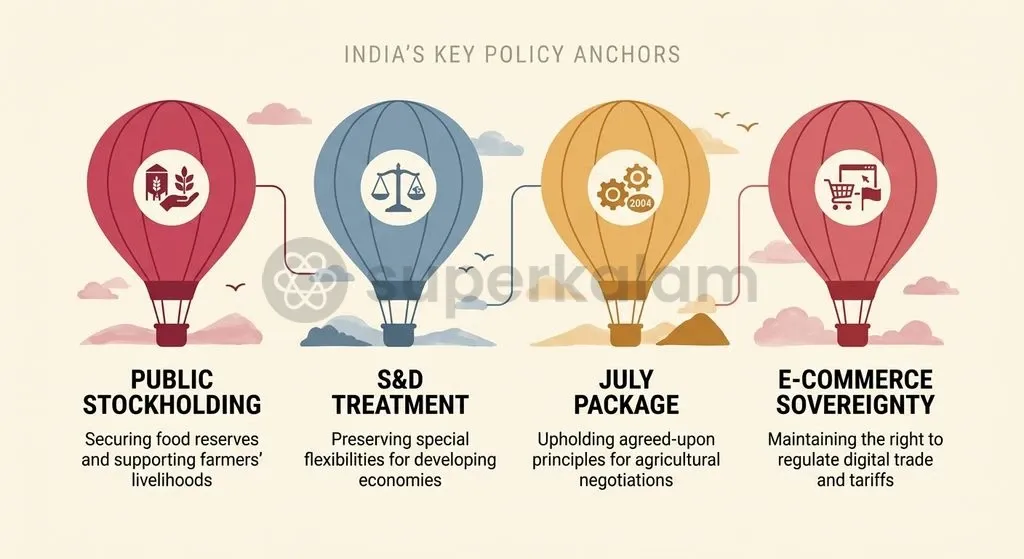
- Investment Facilitation for Development (IFD): India blocked consensus against incorporating the plurilateral IFD Agreement into Annex 4 at MC13 in Abu Dhabi. India's objection rests on the 2004 WTO General Council Decision (the 'July Package'), which explicitly removed investment from the Doha Development Agenda work programme.
- E-Commerce Moratorium: The WTO Moratorium on Customs Duties on Electronic Transmissions, originally instituted in 1998, was extended at MC13 until March 31, 2026, or the 14th Ministerial Conference, whichever is earlier. India contends that the moratorium restricts domestic policy space and causes tariff revenue losses for developing nations.
- Special and Differential Treatment (S&DT): India maintains that S&DT provisions are non-negotiable treaty rights for developing countries and LDCs that plurilateral JSIs tend to bypass.
- Food Security Priority: India prioritises achieving a Permanent Solution on Public Stockholding for food security purposes over entering non-mandated plurilateral negotiations.
Decoding 'Pathways' in the BRICS Declaration: Bridge or Compromise?
The BRICS New Delhi Declaration sought a balanced approach between traditional multilateralism and newer negotiating tracks by proposing structured legal pathways within the World Trade Organization. The declaration reaffirmed the primacy of an inclusive, rules-based multilateral system while acknowledging plurilateral efforts among interested members.
Legal scholars and policy institutes highlight two core structural hurdles that these proposed pathways must resolve:
- Entrenched Treaty Rules: A study by the South Centre reported that Article IX:1 and Article X:9 are entrenched provisions under Marrakesh Agreement Article X:2. Consequently, amendments to them require acceptance by all WTO Members.
- Institutional and Budgetary Limits: The International Institute for Sustainable Development (IISD) identified that open plurilateral initiatives face systemic legal challenges if they create institutional obligations or draw on WTO common budget resources without multilateral consensus.
The BRICS 'pathways' concept aims to reconcile these differences. It ensures that plurilateral outcomes respect existing treaty rights and avoid burdening non-participating members.
Discuss with Superkalam
Analyze why developing countries like India argue that the WTO E-Commerce Moratorium restricts domestic fiscal and regulatory policy space.
Ask NowGlobal Perspectives: Developed vs Developing Country Priorities
World Trade Organization members remain deeply divided over negotiating mandates, dispute settlement priorities, and the preservation of special flexibilities.
Developed economies, including the European Union and the United States, argue that the consensus rule paralyses WTO rule-making on modern commercial issues. They favour flexible plurilateral JSIs to advance agreements on digital trade, environmental sustainability, and investment rules. In contrast, developing nations argue that plurilateralism undermines the multilateral character of the WTO and marginalises development priorities. They emphasise concluding unfinished Doha mandates, securing agricultural safeguards, and protecting domestic regulatory sovereignty.
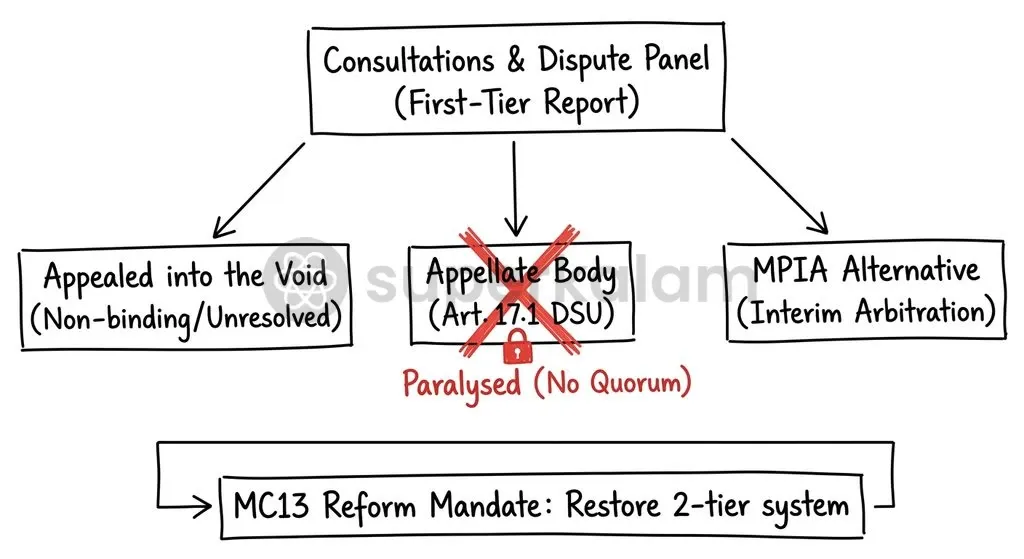
| Dispute Settlement Dimension | Current Institutional Status | Legal & Operational Framework |
|---|---|---|
| Appellate Body Gridlock | Inquorate since December 10, 2019 | Lacks the statutory 3-member quorum required under DSU Article 17.1 |
| Interim Plurilateral Fallback | Operationalised in April 2020 | Multi-Party Interim Appeal Arbitration Arrangement (MPIA) under DSU Article 25 |
| Multilateral Restoration Mandate | Target set for end of 2024 | Mandated at MC13 to restore a fully functioning dispute settlement system accessible to all members |
Enforcement remains contentious across the membership. The WTO Appellate Body has been unable to hear new appeals since December 10, 2019, due to vacancies preventing the statutory three-member division quorum required under Article 17.1 of the Dispute Settlement Understanding.
The Multi-Party Interim Appeal Arbitration Arrangement (MPIA), operationalised in April 2020 under DSU Article 25, is a voluntary plurilateral fallback for participating members while the Appellate Body remains inquorate. However, the MC13 Ministerial Declaration mandated WTO members to conduct discussions to achieve a fully functioning dispute settlement system accessible to all members by the end of 2024.
Way Forward: Balancing India's Strategic Trade Interests with Multilateral Rules
India can navigate the evolving international trade architecture by combining a principled defence of multilateralism with pragmatic bilateral and regional engagement. A forward-looking trade strategy balances sovereign policy autonomy with active participation in shaping international trade rules.
- Defending Multilateral Consensus and S&DT: India must continue to uphold Article IX:1 and Article X:9 of the Marrakesh Agreement, ensuring that non-consensual initiatives do not bypass multilateral treaty rights or dilute S&DT flexibilities.
- Prioritising Agricultural Food Security: Securing a Permanent Solution on Public Stockholding for food security remains vital to protect domestic welfare programmes and procurement mechanisms.
- Establishing Clear Criteria for Plurilateral Integration: India can actively help shape the 'pathways' outlined in the BRICS Declaration by insisting that plurilateral agreements apply benefits on an unconditional MFN basis and create no financial or administrative burdens for non-signatories.
- Accelerating Bilateral and Regional FTAs: Utilising standard exceptions under GATT Article XXIV and GATS Article V allows India to deepen trade relationships, attract manufacturing investment, and integrate into global supply chains while multilateral negotiations evolve.
- Restoring the Dispute Settlement Mechanism: Working alongside BRICS partners to revive the two-tier binding dispute mechanism ensures an accessible, predictable trade enforcement system for all developing nations.
Discuss with Superkalam
Evaluate whether the 'pathways' proposed in the BRICS Declaration can reconcile plurilateral efficiency with the foundational principle of multilateral consensus.
Ask NowKey Takeaways
- The BRICS New Delhi Declaration emphasized exploring legitimate legal pathways for plurilateral initiatives while upholding the primacy of the multilateral trading system.
- Multilateral agreements bind all 166 members as a Single Undertaking, whereas Annex 4 plurilateral agreements bind only signatories and require unanimous consensus for inclusion under Article X:9.
- India opposes non-mandated Joint Statement Initiatives (JSIs) like the Investment Facilitation for Development (IFD) Agreement to protect developmental policy space and the 2004 Doha 'July Package' mandate.
- The WTO E-Commerce Moratorium on customs duties on electronic transmissions was extended at MC13 until March 31, 2026, or MC14.
- The WTO Appellate Body has been inquorate since December 10, 2019, prompting voluntary arrangements like the MPIA while BRICS members advocate for a restored, two-tier dispute settlement mechanism.
Mains Question
"The incorporation of plurilateral Joint Statement Initiatives (JSIs) without multilateral consensus risks bypassing foundational treaty rules and eroding development flexibilities." In light of India and South Africa's communication (WT/GC/W/819), examine the legal and developmental challenges posed by informal plurilateral tracks at the WTO. (10 Marks)
Evaluate NowMains Question
"While developed economies favour flexible plurilateral tracks to navigate modern trade disciplines, developing nations emphasize consensus, unfinished Doha mandates, and structural reform of the dispute settlement system." Discuss the key divergences between developed and developing nations at the WTO and evaluate the feasibility of the 'pathways' outlined in the BRICS New Delhi Declaration. (15 Marks)
Evaluate NowPractice MCQs
QUESTION 1
With reference to the legal framework of the World Trade Organization (WTO), consider the following statements:
- Multilateral agreements under the Marrakesh Agreement bind all 166 WTO members as a Single Undertaking.
- An agreement can be added to Annex 4 of the Marrakesh Agreement only when the Ministerial Conference decides exclusively by consensus under Article X:9.
- The Agreement on Government Procurement and the Agreement on Trade in Civil Aircraft are currently the only active Annex 4 Plurilateral Trade Agreements.
Which of the statements given above are correct?
QUESTION 2
Consider the following statements regarding India's positions at the WTO:
- India blocked consensus against incorporating the Investment Facilitation for Development (IFD) Agreement into Annex 4 at the 13th Ministerial Conference (MC13).
- India's opposition to the IFD Agreement cites the 2004 General Council 'July Package' decision that removed investment from the Doha Development Agenda.
- In joint communication WT/GC/W/819, India and South Africa endorsed Joint Statement Initiatives (JSIs) as legitimate multilateral tracks.
Which of the statements given above is/are correct?
QUESTION 3
Consider the following statements regarding WTO negotiating tracks and legal provisions:
- Joint Statement Initiatives (JSIs) were initiated at the 11th Ministerial Conference (MC11) in Buenos Aires in December 2017.
- The Reference Paper on Services Domestic Regulation was incorporated into the WTO rulebook through Annex 4 plurilateral consensus.
- Under Article IX:1 of the Marrakesh Agreement, consensus is defined as no member present formally objecting to a proposed decision.
Which of the statements given above is/are correct?
QUESTION 4
With reference to the WTO Dispute Settlement Mechanism and institutional reform debates, consider the following statements:
- The WTO Appellate Body has been inquorate since December 10, 2019, due to lack of the statutory three-member quorum under DSU Article 17.1.
- The Multi-Party Interim Appeal Arbitration Arrangement (MPIA) was operationalised under Article 25 of the Dispute Settlement Understanding.
- South Centre studies note that Articles IX:1 and X:9 are entrenched provisions under Marrakesh Agreement Article X:2 requiring acceptance by all members for amendment.
Which of the statements given above are correct?
QUESTION 5
At the 13th WTO Ministerial Conference (MC13) in Abu Dhabi, the Moratorium on Customs Duties on Electronic Transmissions was extended until: